
Developing software, hiring, education, voting…it affects everything.
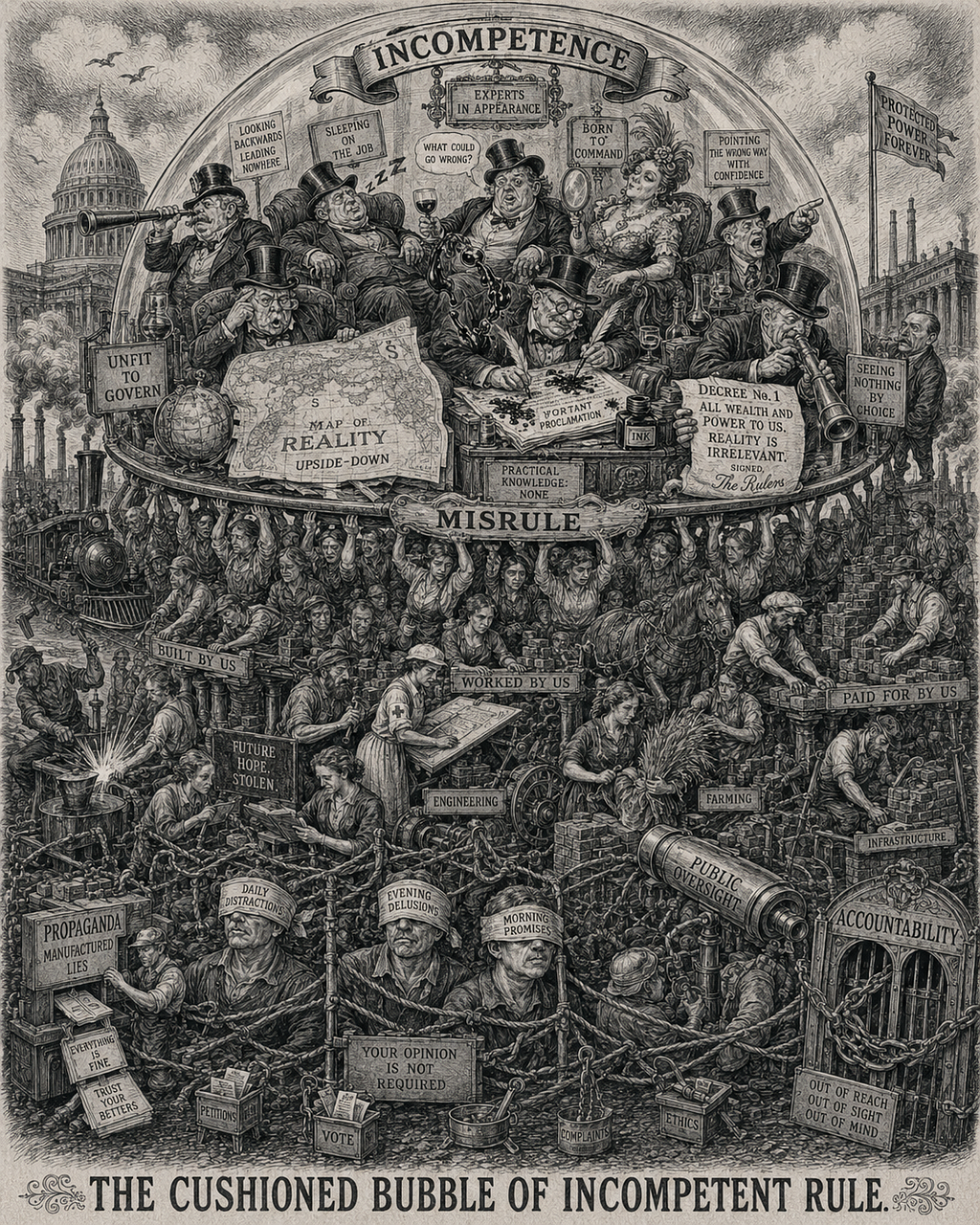
The world is “judgy”. Some of this is warranted: You want to hire and promote the best people. You need to assess if people are doing a good job. I get it.
Is it just me… though… or has this taken a “turn” lately? I feel like I’m being judged… like… a lot. And I frequently discover, mostly accidentally, that I’m being judged by metrics or methods I don’t necessarily find helpful… or even reasonable. Google… why are you scoring me on my visits to map locations and the photos I take there? Too bad your motto wasn’t “don’t be creepy”. This edition of Pairing with Bots was inspired by a video describing another judgy, slightly creepy instance of just such an evaluation we’re subjected to as we do our work.
Contrast that with less “benign”, and much more important decisions like who we give power to make life-altering decisions for us: Our politicians, our medical providers, our educators and our bosses. If Google can keep track of my every move and every photo I take and score me on it, why don’t I have access to the key metrics to determine their… well…
COMPETENCE
I’m not asking for “mastery”… that elusive “I invested 10,000 hours of my limited lifespan in dedicated learning and practice to become among the best at what I do”. This carries with it an exclusivity clause, and a downside… bluntly, you probably suck at a lot of other things. Maybe most things. And you’re probably super boring to talk to at a party. Sorry. Hard truths. We all weigh our time on a scale, some are more balanced than others. In 2026, what kind of imbalance should we as software engineers (and also general-purpose humans) accept for ourselves an others?
AI coding assistance has caused a massive finger to be placed on the scale, rewarding those who are competent at many things related to their job, and punishing those who specialized to become experts at arcane and obscure programming techniques, languages, frameworks, etc. I feel bad for the many excellent engineers I know who have put in their 10,000 hours of focused effort (or more) to become truly great coders, and just like Napster when streaming music beat MP3s, the investment appears to not be paying off lately. But the industry and the people have spoken, and (barring governmental intervention) we seem to be firmly in Pairing with Bots (some would argue, deletgating to bots) territory.
Observability and Feedback
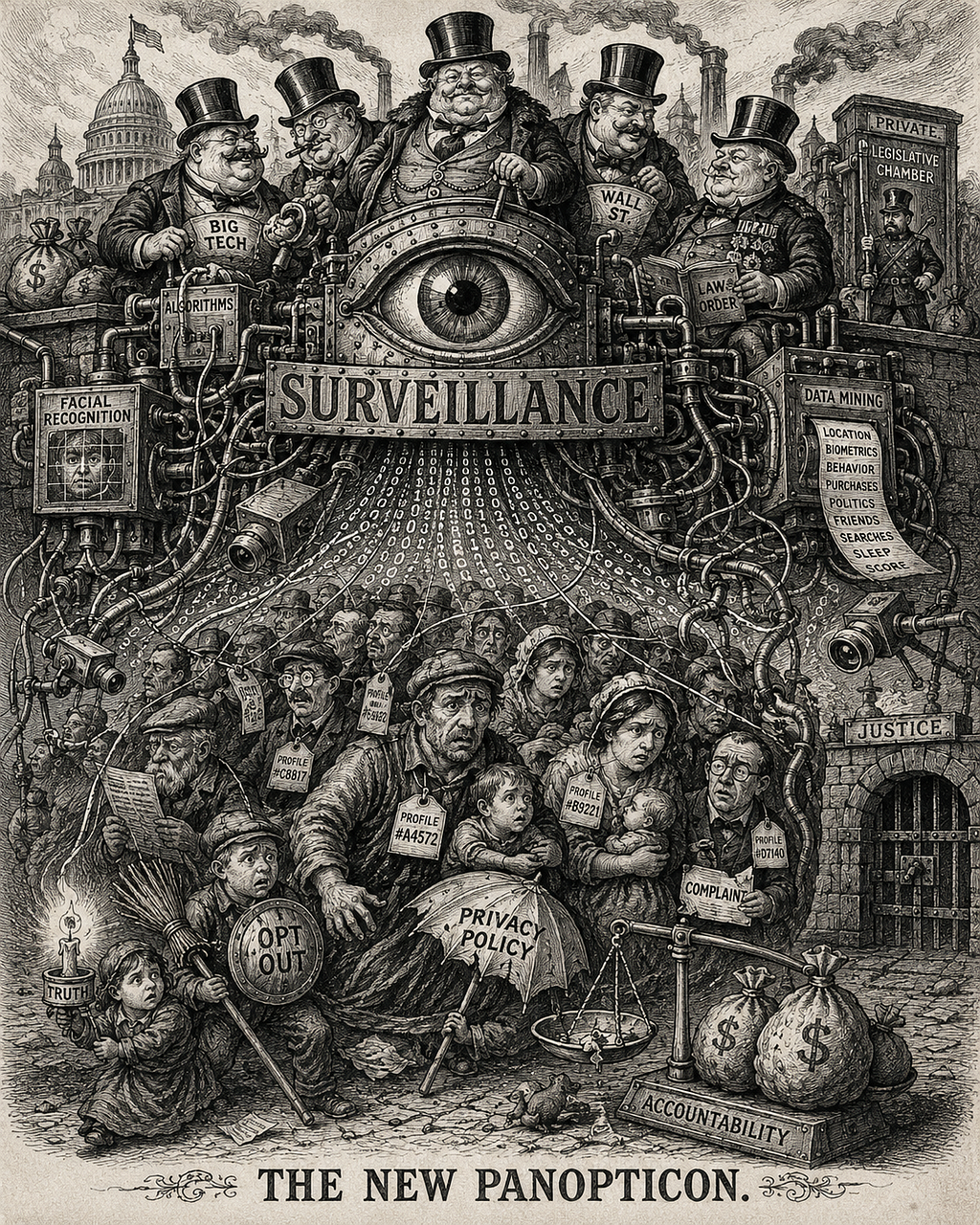
So much infrastructure is being dedicated to monitoring, aggregating, evaluating and… well… judging individuals and groups. We do not lack for top-down management or oversight, whether for our individual benefit or not (frequently not). What we do lack… increasingly… is objective, measurable evaluation of how well our institutions, corporations, politicians, management and even software itself serve our needs and personal welfare. I don’t think I even have to provide evidence for this… it’s all around us, and this should not be a bold, controversial statement.
One strategy recently employed to great effect has been dubbed “flooding the zone”… generating (often with AI assistance) misleading half-truths which essentially poison the corpus of the more well-reasoned and well-researched news and information sources we used to rely upon, while popping up new and exiting sources of questionable information to overwhelm the verified and reinforced facts already baked into our noggins. 🧠 Essentially this poisons our biological “training data”… an attack to which LLMs are also susceptible. It’s an insidious exploitation of the human brain, and I’m calling it out. I may have crossed into controversial statements with that… but it needs to be said.
To re-focus on the more positive application of AI to the current situation, let’s enumerate and address the points I’ve tried to emphasize so far:
- Observability is becoming more biased against the individual, toward organizations, governments and corporate management
- Competence is demanded of subordinates, citizens and “individual contributors”, but not measured or accounted for in meaningful ways for those who have the data, and misuse it, suppress it, overwhelm it, or completely ignore it (and frequently the needs any humans involved)
- Both ignorance and mastery are dangerous. Broad-ranging competence is safer in an information-rich and truth-poor environment. Ignorance under-invests in useful skills, mastery over-invests in fleeting or very specific skills to the exclusion of others.
But Jeff! (you say)… what about that old adage:
Jack of all trades, master of none! — Unknown, 16th century
It’s a very old insult in a lemma costume, assuming the best you can aspire to is “Jack”… apparently… and you definitely don’t already know jack yet. I proffer the following alternative:
Master of a few trades, competent at many! — Me, 2026
Dang. It just doesn’t have the same ring to it. Too bad it’s a better aspiration.
The Importance of AI competence in 2026 and beyond
Pairing with Bots started as a place to develop competence and to begin to discover and learn what AI coding assistance is all about… my initial articles where very pragmatic, recommending the best tools available at the time, some of which have already fallen out of favor (Cline, I miss you, bud…) and been replaced (and any expertise I developed with it). The models available now don’t look anything like the LLMs from a year and a half ago… their context windows are YUUUUGE and they hardly ever hallucinate when properly grounded. It’s made the last year and a half of software development exciting, exhausting and occasionally terrifyinng. Thus, my more recent articles focus on “big picture” stuff, because the tools and techniques shift so quickly under my feet that any semblance of a permanent edifice of recommendations I might hope to assemble here would soon show cracks and eventually collapse with the shifting sands of time and technology. In such an environment… “going deep” or perhaps “building tall” is perilous.
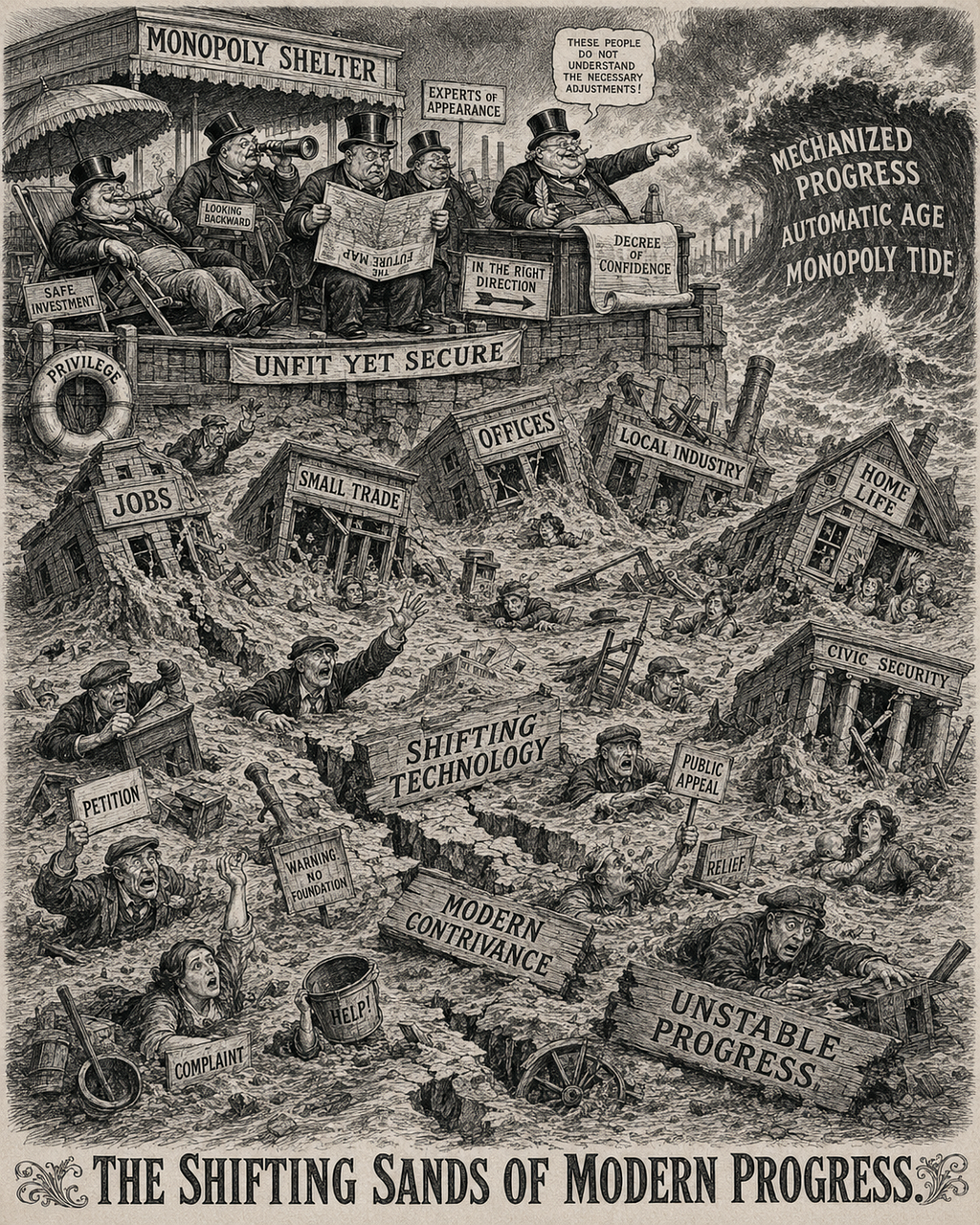
That said… we have to develop competence somehow and build valuable things to serve meaningful purposes that can survive the shifting sands. I believe the term HR people like to use fir this is looking for “T” shaped skills: A broad base, diving deep where expertise is required.
So, how do we measure, publish, evaluate and reward broadly competent people with valuable specialized expertise? It starts with knowing, and more importantly, knowing who and what to trust:
- Don’t trust your AI? Make your own : or try open-source LLMs!
- Don’t trust news? Try something like https://ground.news
- Don’t trust stats? Point your AI friend at USA Facts
I feel like the tide might be turning lately, and our appetite for being ruled by the incompetent, especially those tending toward malevolent incompetence, may finally be sated. I’m cheered to see young people embracing their roles as citizen journalists, not just “influencers”. I’m encouraged by a young breed of politicians which are focused on outcome-based and evidence-based policies, challenging the old guard’s backroom deals and intolerable subservience to corporate greed.
And back to the AI front, I’m excited to see the opening of a dialogue about the future of the technology. It only helps when incompetent efforts of our current administration to allow AI to kill people autonomously are immediately whipsawed and followed by an equally incompetent attempt to “protect” everyone from AI by outlawing LLM models that have literally received the most, best safety precautions to be leveraged for non-citizen “hacking” (because, apparently citizens don’t hack?)
We should not fear AI or “foreigners”, only INCOMPETENT LEADERSHIP.
At your next job interview, remember… they will brutally evaluate you, but you are evaluating them as well… ask the hard question, not the pleasing, softball question when they let you have your turn. When you go to buy stuff, look into the companies’ histories, recent decisions, controversies… I know it’s annoying… but we vote with our dollars every time we buy something. And voting for representation in government… it’s still there for now, let’s be more well-rounded and better informed. It takes work, but we because we live in an information-rich truth-poor environment, we really have no choice but to remain more vigilant.
This was a long walk to get back to an AI/Pairing with Bots principle. You may notice the title of my site isn’t “Managing your Minions” or “Establishing a Digital Plantation”. That’s by design… from the start, my premise has been to treat AI as you would treat a human peer when pair-programming, and after a year and a half of doing it… I’m absolutely unwilling to give in to the /loop or long-running sub-agent swarm trends of late… Not because they don’t work (I think they mostly do), but because it deprives me of feedback, which I absolutely need as a developer, an employee… and just a human with judgement too easily swayed by emotions in the absence of evidence and information.
Just remember that as you work, you are also being judged. Anthropic, to its credit has disclosed this in things like this report:
Agentic coding and persistent returns to expertise
And you can also access your own personal report by typing /insights in Claude Code at any time, which will give you tips about how to better use Claude Code. We all need good, honest best-effort information and feedback to make the judgement calls that direct our software development choices, carreer choices, life choices, and social engagement. It is the bedrock that grounds us and our LLM assistants in 2026, and makes us all more competent developers, people, and members of society.
Competence: beats ignorance, but also mastery? was originally published in Pairing with Bots on Medium, where people are continuing the conversation by highlighting and responding to this story.
Comments
Nothing yet. Say the first thing.
Sign in to join the conversation.