
I have been plein air painting for about four years now. I even started a plein air painting group here in Pittsburgh. You might think that means I have it all figured out.
I do not.
I am still learning nearly every time I go out, but I have picked up quite a few lessons I wish I had known when I started.
Of course, there are practical things to remember. Dress for the weather. Wear sunscreen. Bring bug spray and water. Paint somewhere you feel safe. All of that matters.
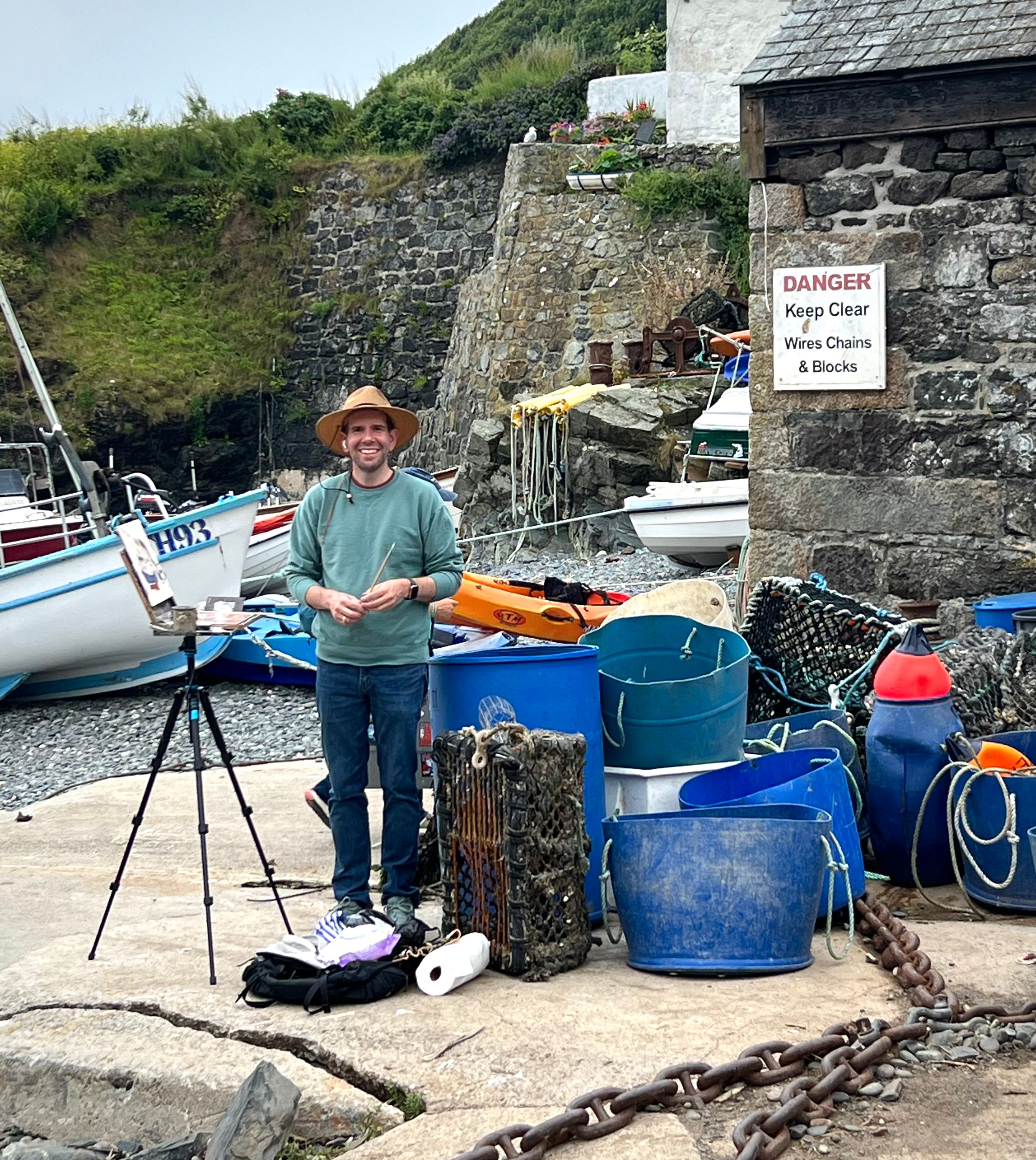
But the most important lessons I have learned have less to do with supplies and more to do with the pressure we put on ourselves.
Plein air painting becomes much more enjoyable when you stop expecting every outing to produce a perfect painting. You can simplify the setup, focus on one small idea, and measure the success of the day by more than the panel you bring home.
So, if you are new to plein air painting, thinking about trying it for the first time, or quietly wondering how to stop being so afraid of doing it badly, this post is for you.
One of the most important things I wish I had known is that you do not need to walk away with a masterpiece.
In fact, I am still learning this.
I cannot tell you how many paintings I have brought home and immediately wanted to frisbee into the backyard. But once the frustration settles, I can almost always find something redeeming in the piece or something useful it taught me.
When you come home with a painting you do not like, put it away until the next day. With a little distance, you may realize it is better than you thought. Even if you still do not love the whole thing, find one part to celebrate.
Maybe you captured the color of the sky. Maybe one shadow shape feels strong. Maybe you mixed a green you love or handled an edge differently.
Of course, we all hope to make something we are excited to bring home. But expecting every outing to produce a finished, frame-worthy painting puts so much unnecessary pressure on the experience.
Sometimes the best thing you bring home is not the painting. It is what you learned while making it.
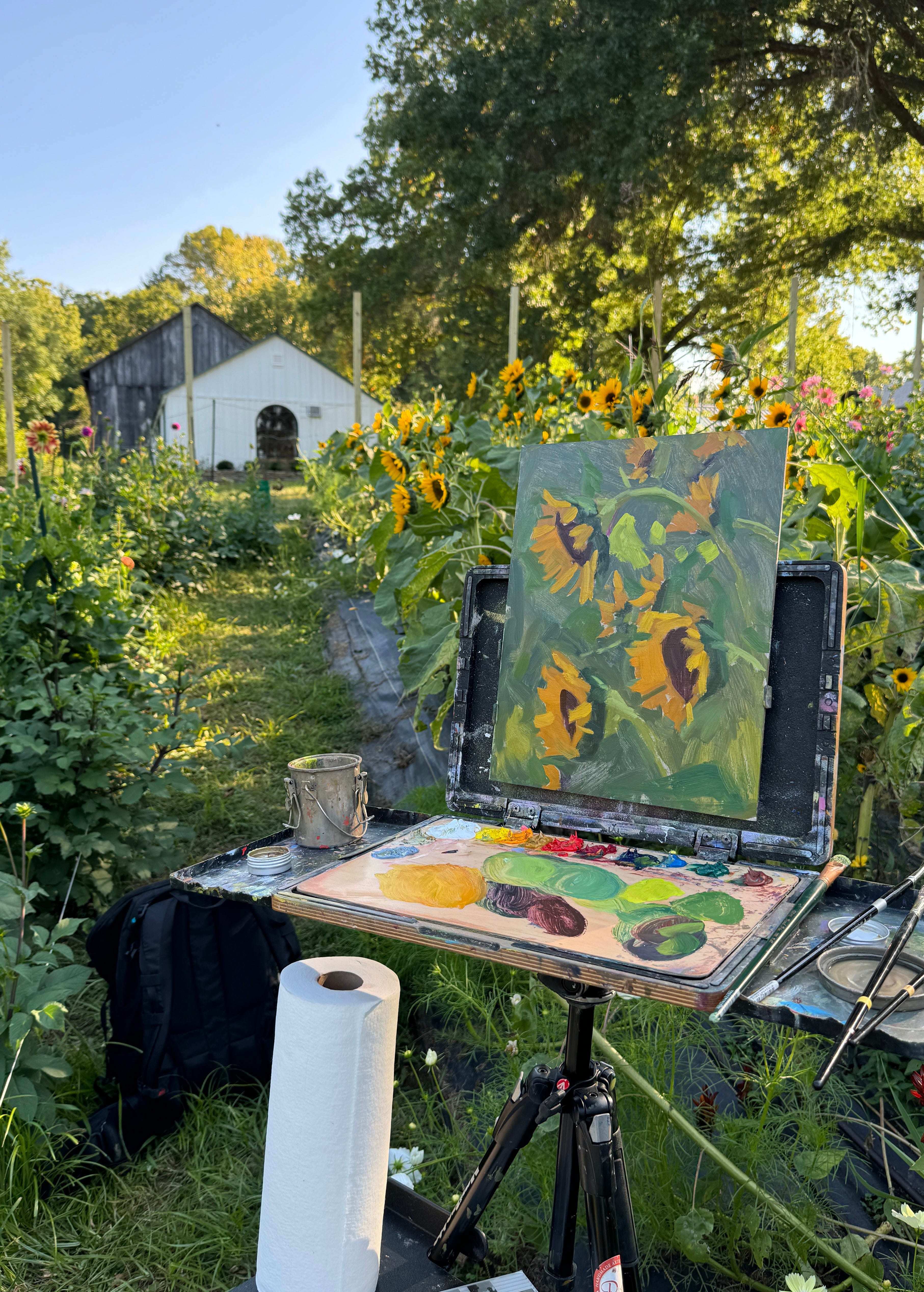
If finding a location, transporting your gear, and painting in front of other people makes you nervous, start in your own backyard.
It is private and familiar. All of your supplies are nearby, and you can take your time getting comfortable with your setup. You can practice arranging your materials, mixing colors outdoors, and noticing how quickly the light changes without also worrying about an audience.
Your backyard may not feel like an exciting destination, but that is part of what makes it such a good place to begin. There is less pressure to create something impressive. You are simply practicing the act of painting from life.
You do not need a sweeping landscape or a charming European village. A potted plant, garden chair, tree, or patch of sunlight can give you plenty to paint.
I have done this myself, and I still do. Plus, who does not want snacks, drinks, and a bathroom nearby?
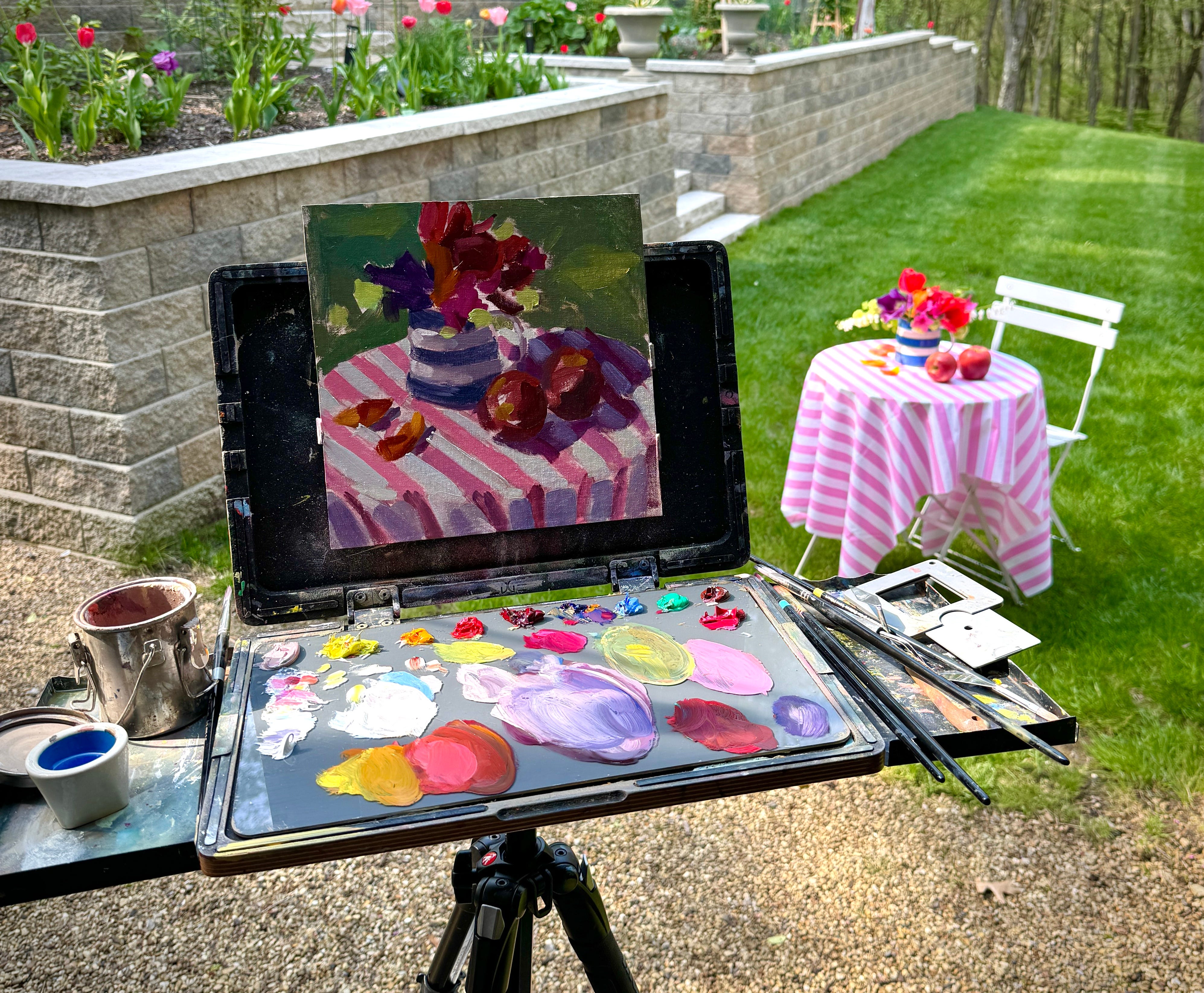
One of the excuses I hear most often is, “I don’t have the right supplies yet.”
I do not have a setup. I do not have a pochade box. I do not have the right easel.
Friend, do not let that hold you back.
The perfect setup or that one special art supply will not make you a better painter. Showing up will.
Use a small travel watercolor set, a pencil and paper, or a sketchbook and a handful of markers. Start with materials you already know and enjoy. You can upgrade your setup later, once you understand what you actually need.
I cannot tell you how many things I have purchased because I saw someone else using them, convinced myself I needed them too, and then hardly touched them.
Go first. Keep it simple. Then decide what supports your process.
Your first outing does not need to look official. It just needs to happen.
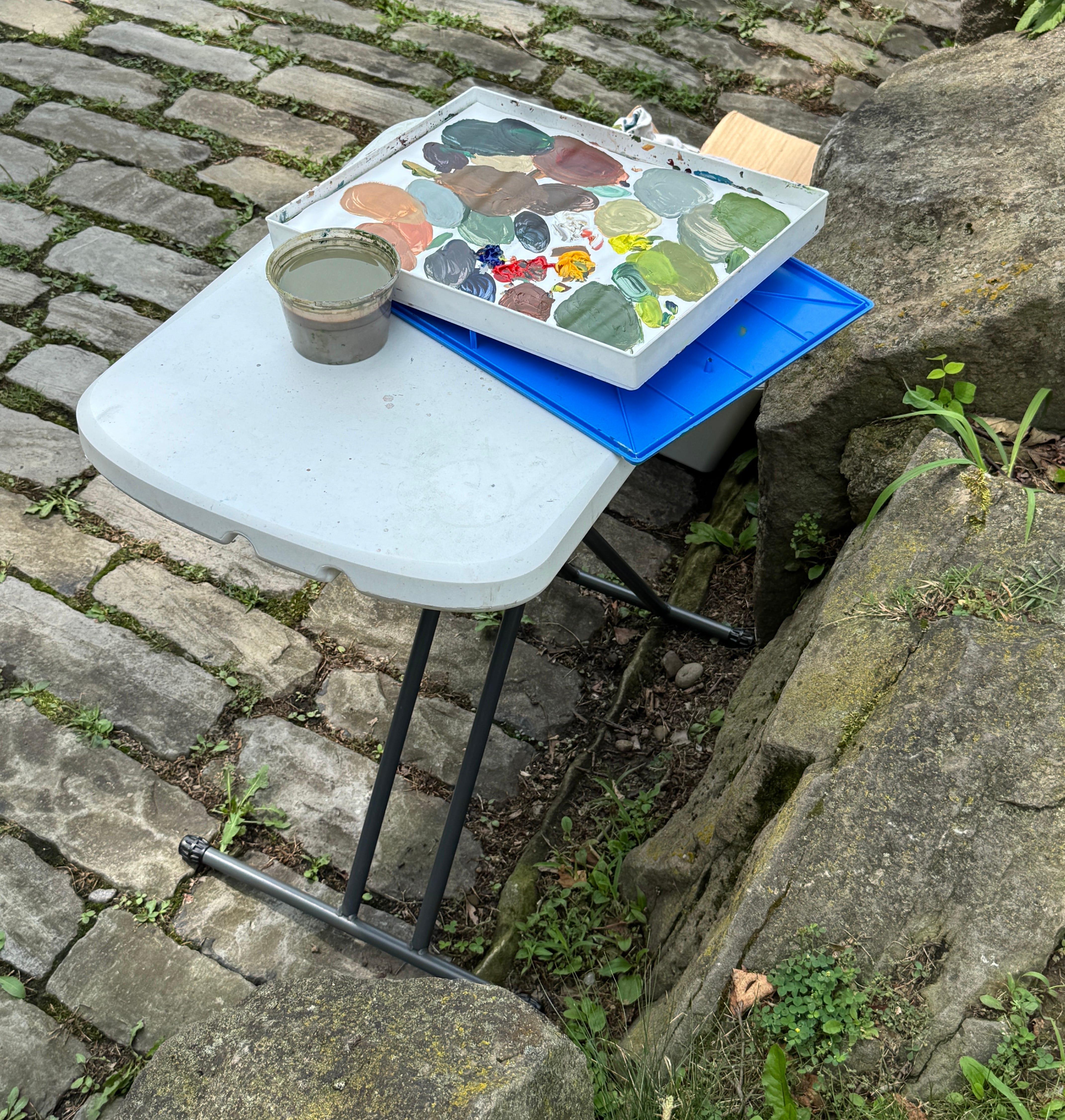
Maybe you are on the opposite end of the spectrum and already have all of the things.
I often see people arrive with what looks like their entire studio in tow. They bring every tube of paint they own, dozens of brushes, multiple surfaces, and enough backup supplies to last several days.
It is good to be prepared, but too many options can make an already challenging experience feel even more overwhelming.
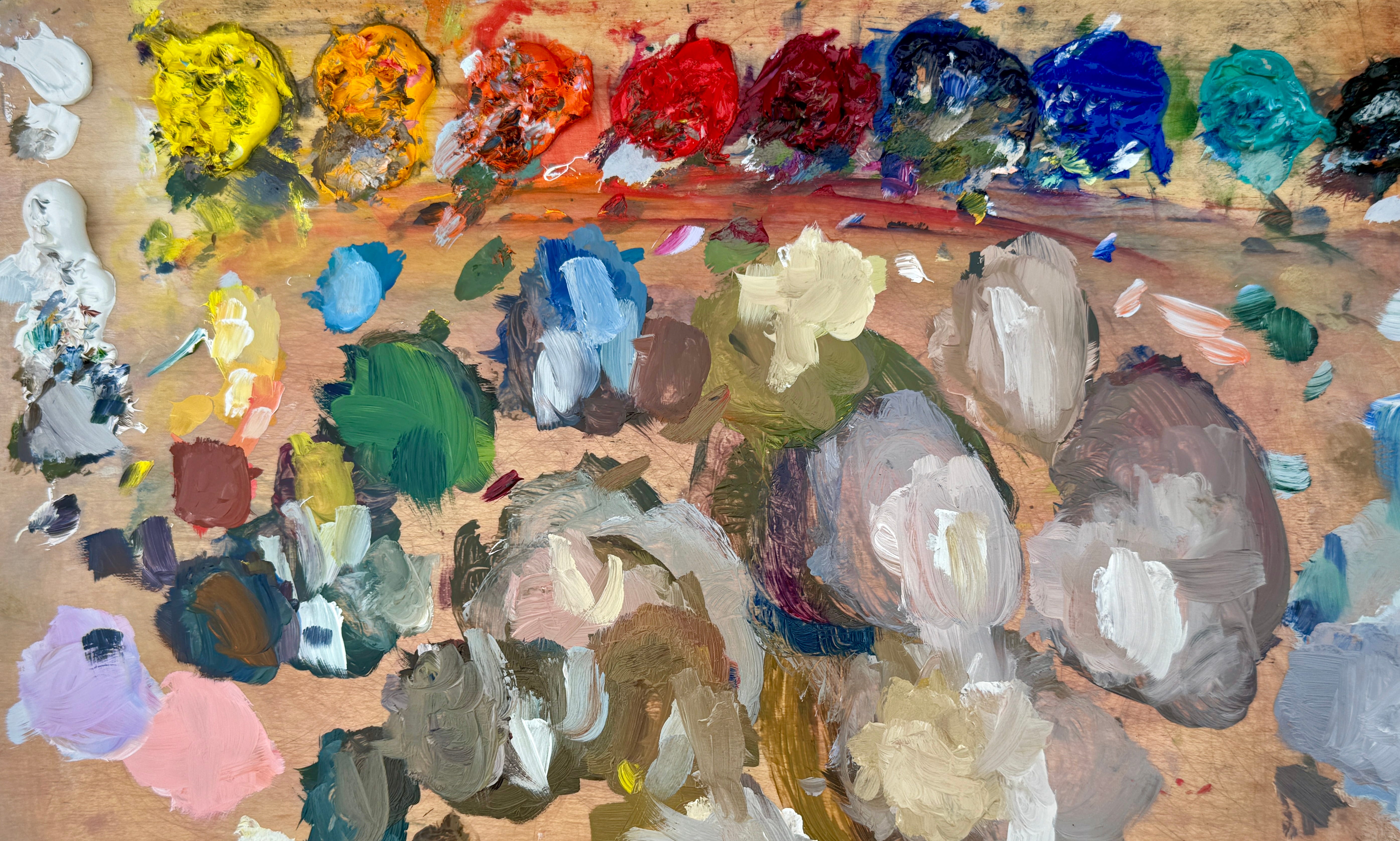
Bring four or five brushes you know well. Choose your painting surface before leaving home. Try a limited palette.
I typically use a split-primary palette, with a warm and cool version of each primary color, plus white. I preload my paints and keep a few backup tubes in the car. When I arrive, I am ready to go.
You can simplify it even further with one red, one yellow, one blue, and white. That is enough to make a really good painting. I have done it.
Fewer options mean carrying less, setting up faster, and making fewer decisions. You can spend less time choosing tools and more time looking at what is in front of you.
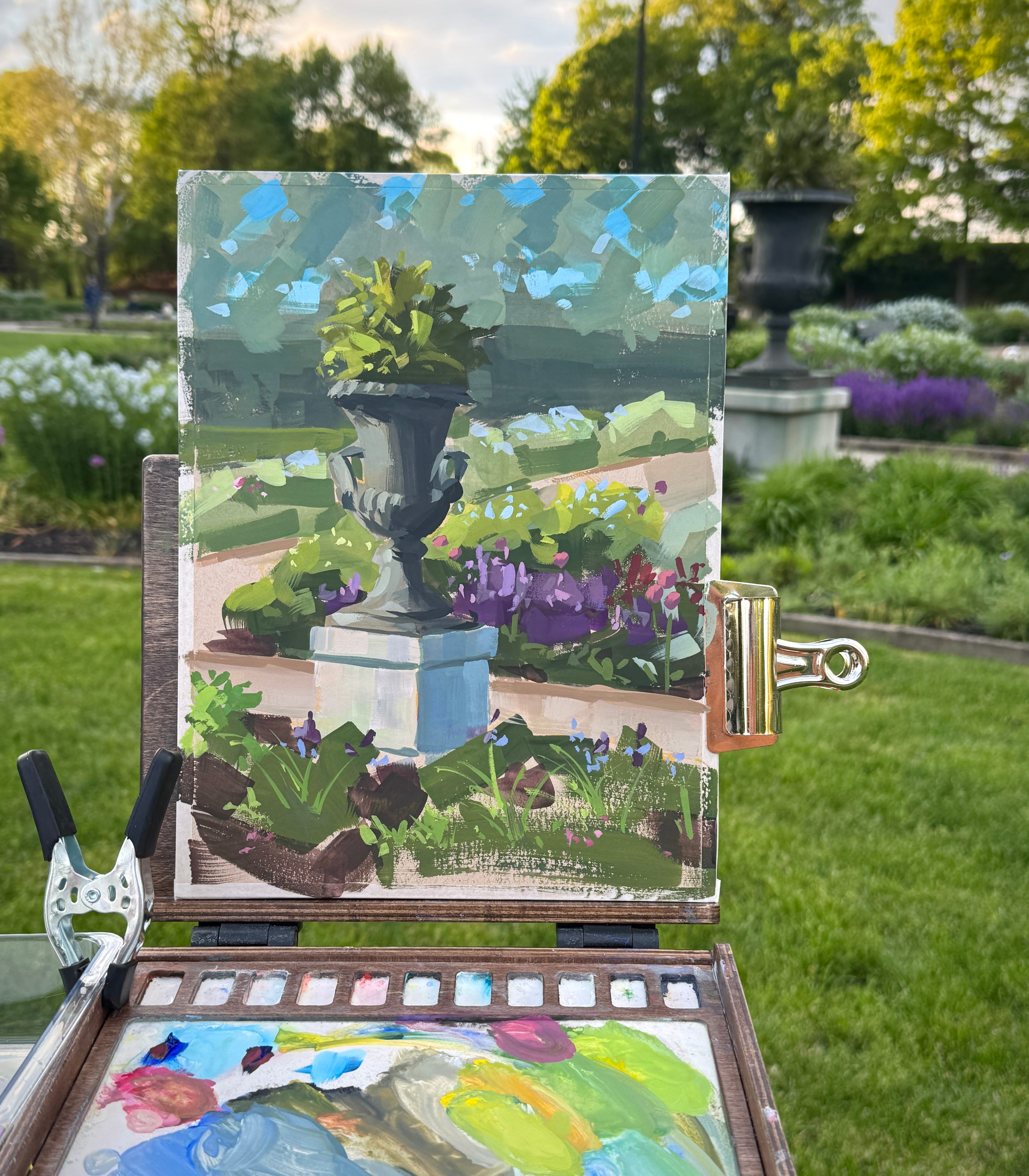
When you are presented with an endless number of beautiful scenes, it is easy to get a little greedy and want to paint everything.
I understand the temptation, but choosing a simple subject can make the experience far less overwhelming.
Instead of painting the entire landscape, look for one clear idea. It might be the side of a building catching the light, a tree casting an interesting shadow, or a small grouping of flowers.
Recently, I was painting in a neighborhood with a beautiful church. What first caught my attention were its teal domes and steeples. But instead of focusing on those, I tried to include the entire church, part of the street, several cars, and everything else around it.
Thirty minutes later, I was completely overwhelmed and had not even painted the domed roofs I loved most.
So, I scraped everything off and started again. This time, I focused on the part that had interested me in the first place.
I was a much happier painter.
You do not need to explain the entire place in one painting. Give yourself one thing to focus on. A simpler subject gives you more room to observe, make decisions, and enjoy the process.
A plein air painting can also simply be a study. It can record the light, the colors you noticed, or the way a shadow moved across a building. It can help you understand a place in a way that taking a photograph never could.
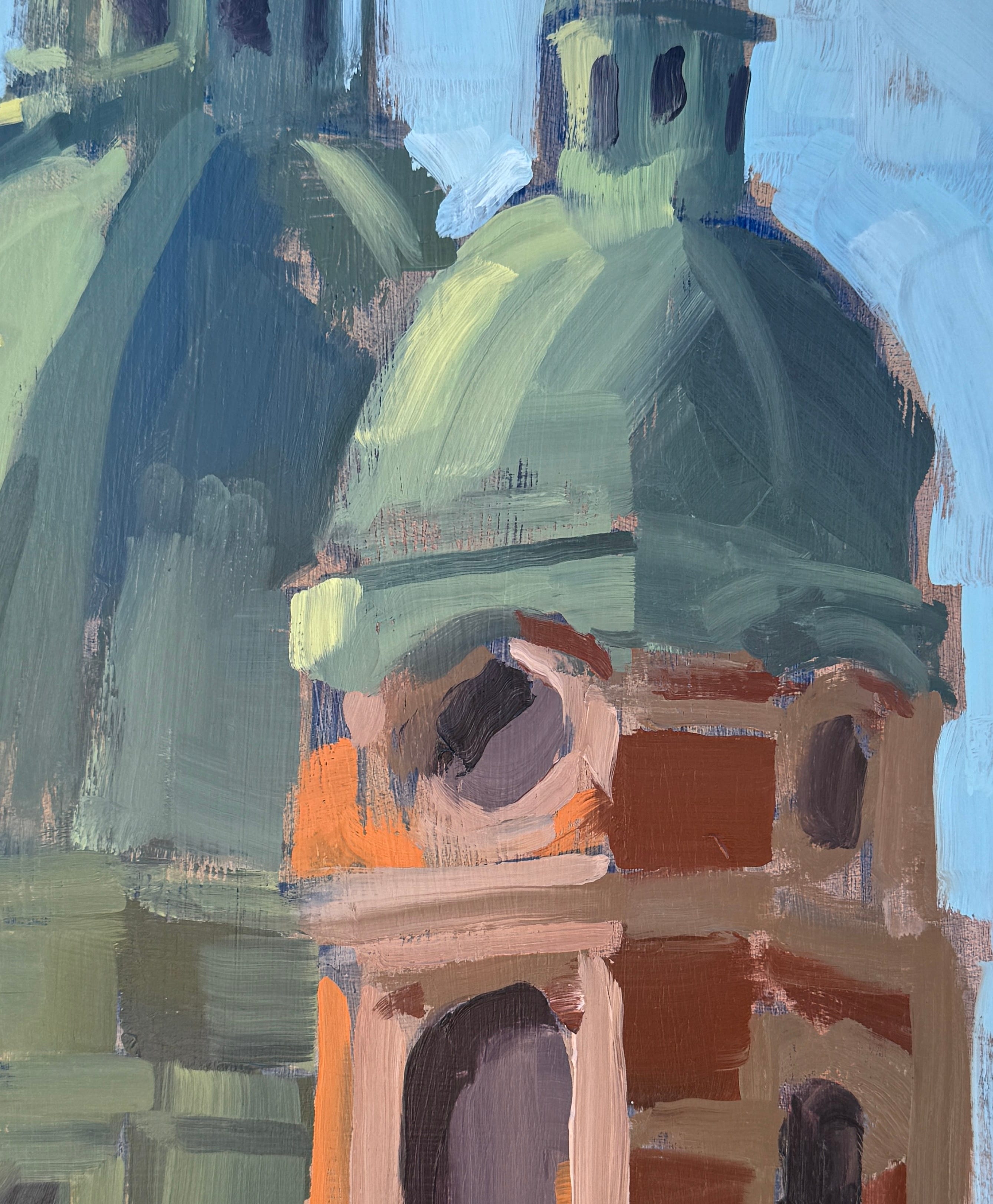
Before putting paint on your panel, try finishing this sentence:
“I am painting this because…”
Maybe it is the warm sunlight hitting a cool wall. Maybe it is the shape of a tree shadow. Maybe it is one bright umbrella surrounded by muted color. Maybe it is the teal domes on a beautiful church.
That one decision gives you something to return to when the scene becomes confusing. It also helps you decide what deserves your attention and what can be simplified or left out.
This is difficult, especially if you are like me and love all of the things. But you do not have to fit every interesting idea into one painting.
You can make a second painting. You can take a reference photo and explore another angle at home. Leaving something out does not mean you failed to see it. It means you made a choice.
When you know what the painting is about, you have a better chance of protecting the thing that made you stop and look in the first place.
Whenever possible, find a shady spot for your easel and painting supplies.
You will be more comfortable, but shade also helps you judge color and value more accurately. A painting that looks bright and colorful in direct sunlight may appear much darker and muddier when you bring it inside.
I have certainly had that surprise.
You may be painting a sunny scene, but your painting surface itself does not need to be sitting in the sun.
Once you decide plein air painting is something you love, you may want to invest in a painting umbrella. You do not need one to begin. It is simply a helpful tool to consider later.
I love painting light and shadow, so a bright, sunny day with very few clouds feels ideal to me.
The tricky part is that the light never stays still.
Shadows shift. Sunlight moves across buildings. Colors change as the day gets brighter or darker. A scene can look completely different when you finish than it did when you began.
Before you start painting, decide what it was about the light that caught your attention.
You might take a reference photo, make a small value sketch, identify the largest light and dark shapes, or simply choose which version of the light you are painting.
Then, once the scene has changed dramatically, stop looking for new information.
If you continually repaint every shadow as it moves, you will chase the light around your canvas. At some point, you have to trust the decision you made at the beginning.
You are not painting every moment that happened during the session. You are painting one moment.
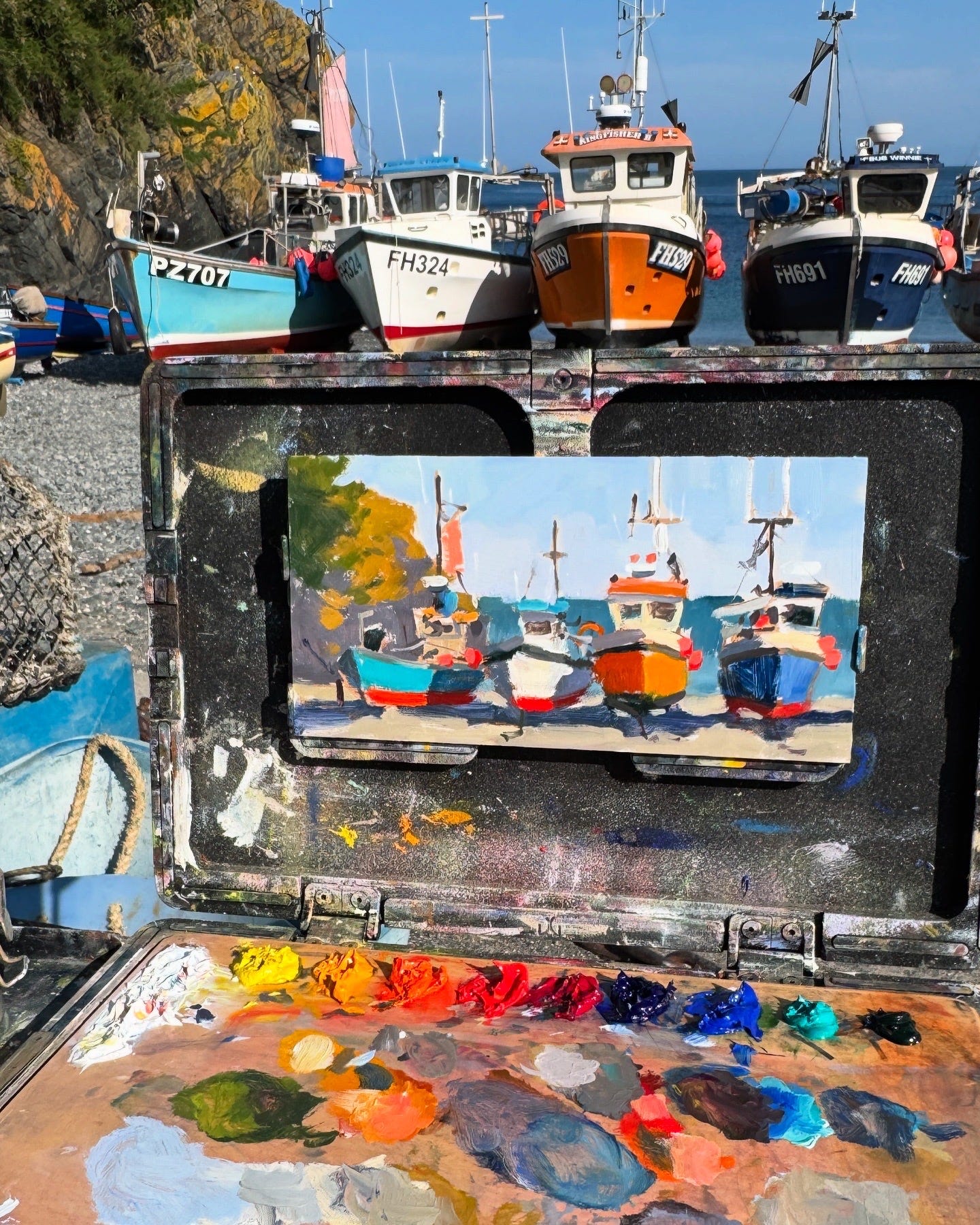
Painting in public can feel intimidating, especially when you are still figuring everything out.
But after several years of painting outdoors, nearly all of my interactions have been positive. Most people are not paying attention to you at all. Those who do stop are usually curious, encouraging, and kind.
They may glance at your painting, smile, ask a quick question, and continue walking. They are not studying the proportions of your building or silently grading your brushwork.
Trust me, they are thinking about it far less than you are.
If painting alone still makes you uncomfortable, find a local group or invite a friend.
Even though I am an introvert, I find painting with others much less stressful. When several artists are nearby, all of the attention is not on you. You are simply one person in a group doing something you enjoy.
Painting with others also gives you a reason to show up. You can share ideas, learn from someone else’s approach, and laugh about all the strange little things that inevitably happen while painting outdoors.
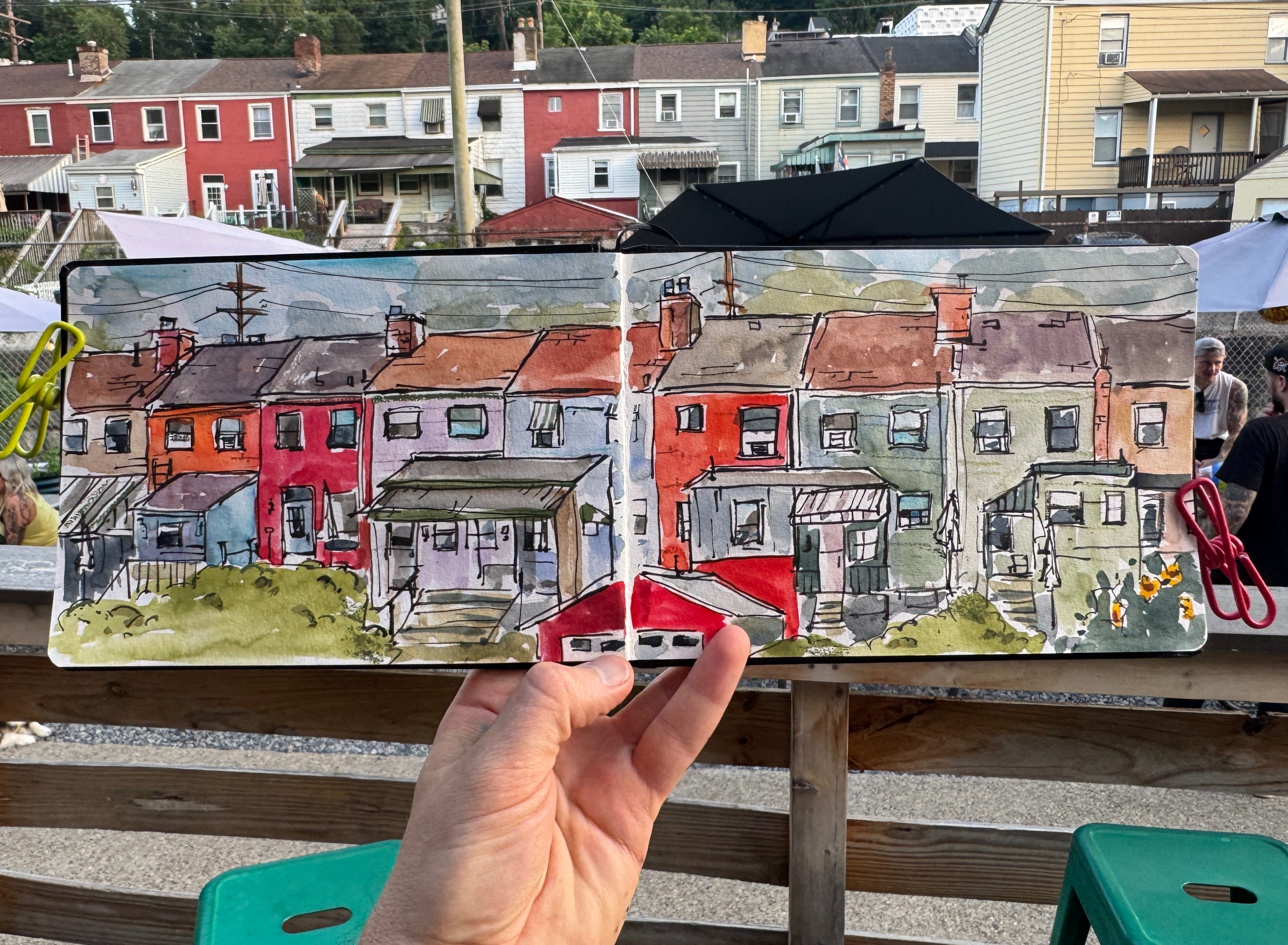
This may be the most important lesson of all.
You cannot measure the success of a plein air outing only by the finished painting.
The reward is showing up.
It is looking closely, noticing colors you might otherwise miss, watching the light move, spending time outdoors, and learning to make decisions more quickly.
Sometimes it is being with friends. Sometimes it is giving yourself a few quiet hours to paint. Sometimes it is discovering exactly what not to do next time.
Not every painting will work, but every outing can teach you something.
The more often you go, the more comfortable you will become. You will learn which supplies you actually need, which subjects interest you, and how you respond when the weather, light, or location does not cooperate.
Practice does not promise perfection. It creates progress.
I think that is the biggest thing I wish I had understood sooner. Plein air painting is not a test, and every outing does not need to end with a painting you love.
Sometimes it does, and that is wonderful.
Other times, you come home with a muddy little panel, a better understanding of the light, and a few thoughts about what you might do differently next time. That counts too. Some of my most valuable days outside have not resulted in my best paintings.
The less pressure I put on the finished piece, the more I seem to notice. I look longer. I make braver choices. I enjoy the place I am in. I talk with friends. I learn something.
Some outings give you a painting. Others give you information. Both are worthwhile.
So, if you have been thinking about trying plein air painting, I hope this gives you a little nudge. Take the supplies you already have. Start in your backyard. Pick one small thing that catches your eye.
You do not need to make it complicated, and you certainly do not need to make it perfect.
Just go paint. See what happens.
For those of you who paint outdoors, what is one thing you wish you had known when you started? And if you have not tried it yet, what is holding you back?
No posts
Comments
Nothing yet. Say the first thing.
Sign in to join the conversation.