
If you’re anything like me, you’re probably trying to figure out how to put a little less pressure on yourself and your art. How to feel more free and less stressed while you’re making it. How to enjoy the practice more and worry a little less about whether every single thing you create is good. It’s the story of my life. Ha!
I’ve been thinking about this a lot lately as a few struggles and frustrations have crept into my own art practice. And I’m starting to realize something: the more art I make, the less pressure any one piece has to carry.
Because the more important I make a painting, the harder it becomes to actually paint it. Suddenly, I’m not just making something. I’m trying to improve, prove something to myself, build a body of work, create something worth selling, figure out my style, and somehow make a good painting at the same time. The struggle is real, my friend.
In the end, that is a lot for one little painting to carry. And it got me thinking that maybe one of the best ways to take some of that pressure away is incredibly simple: make more art.
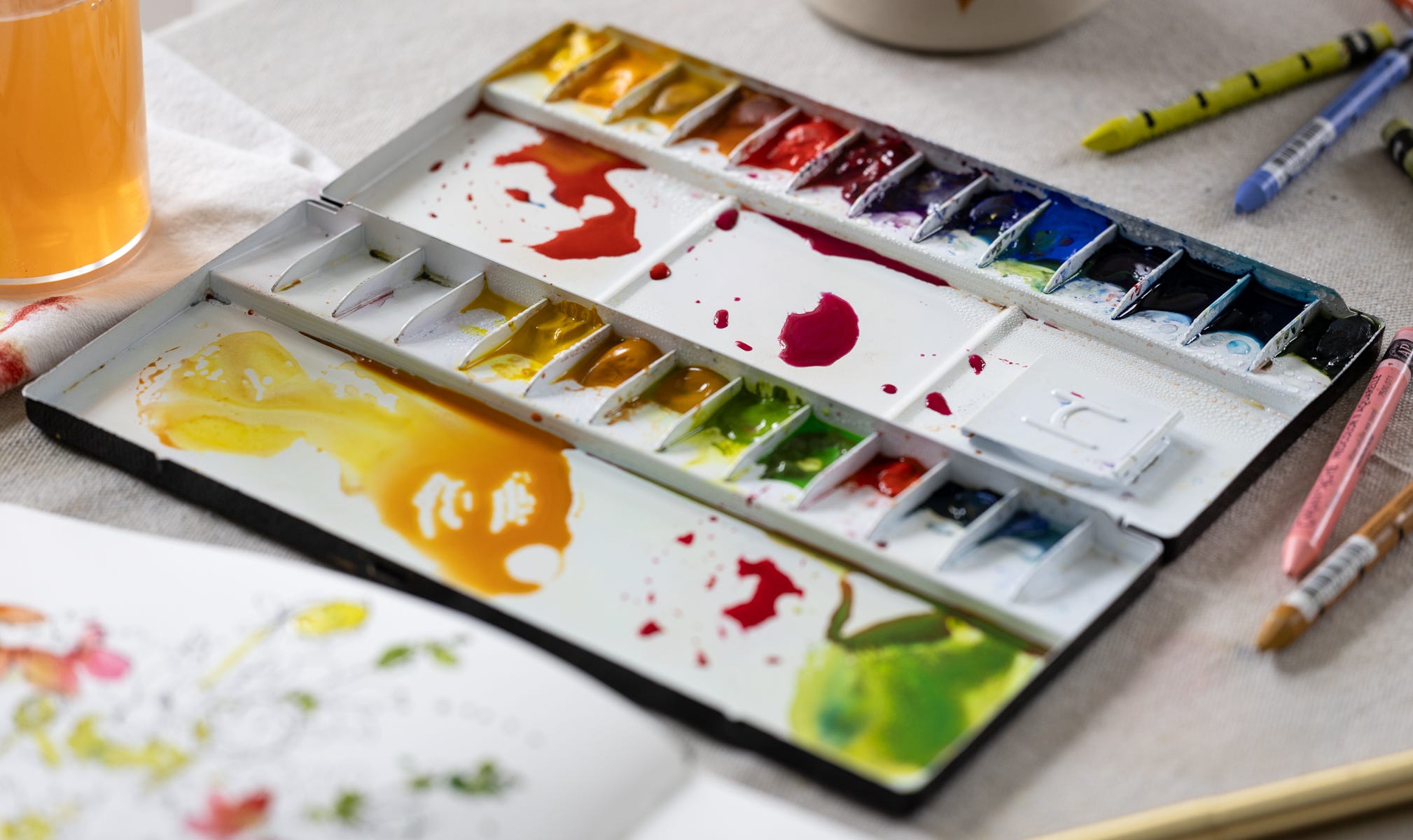
Think about it. If this is one of 10 things you’re going to make, you’re probably going to be pretty precious about it. If it’s one of 100, or even 1,000, suddenly the stakes feel very different. And I don’t think it’s just about quantity either. I think things get especially tricky when we start asking individual paintings to somehow support all of our bigger goals as artists.
I really need this one to turn out.
If I don’t figure out this technique now, when will I?
How am I ever going to find my style if I can’t even figure out the basics?
I want to sell my work, and here’s another painting that isn’t good enough to sell.
Suddenly, the painting in front of you doesn’t just need to be a painting. It needs to prove that you’re improving, that you’re becoming the artist you want to be, and that you’re moving forward. My goodness. No wonder we freeze up.
I’ve been comparing that feeling to my relatively new daily sketching practice, where I show up almost every day and do a small ink and watercolor sketch. There’s so much less pressure there because I know another one is coming. Today’s drawing doesn’t need to prove anything because I get to try again tomorrow. And maybe we aren’t even fully aware of all these expectations while we’re working. I think some of them are just hanging out quietly in the background, making everything feel a little heavier than it needs to.
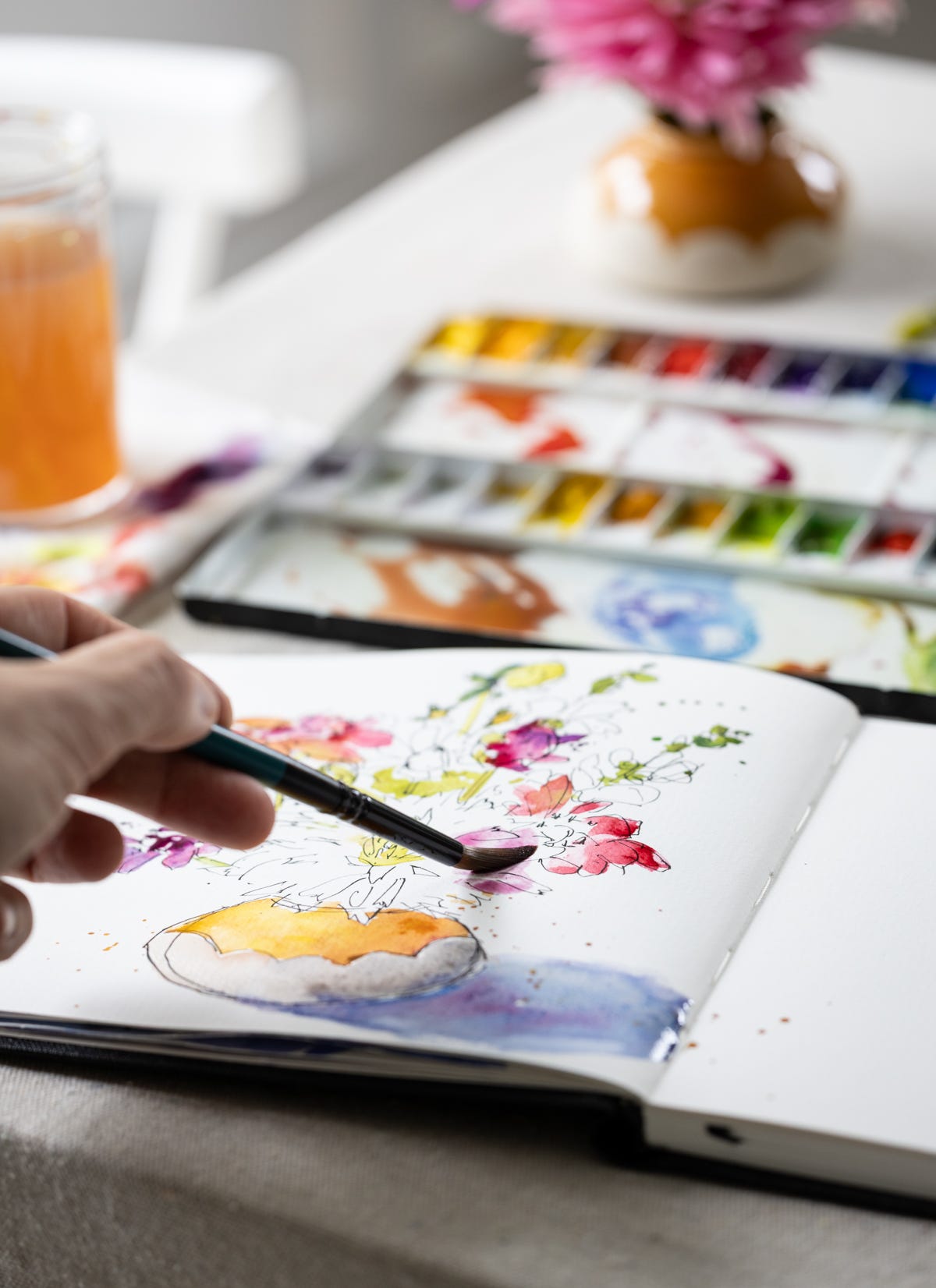
I don’t really use the phrase “practice makes perfect” anymore. I prefer “practice makes progress.” There’s something about “practice makes perfect” that feels like pressure to me. And who needs that? It suggests there’s some perfect destination we’re supposed to reach. But does that even exist?
“Practice makes progress” feels much better. Every time you show up, you’re learning something. And the more you show up, the more chances you have to experiment, improve, mess up, try again, and figure things out. I prefer those odds.
Making more art also reminds you that no individual painting will be your only masterpiece. A bad sketch gets followed by another sketch. A crappy painting gets followed by another crappy painting. And then perhaps something you love might come right after that one.
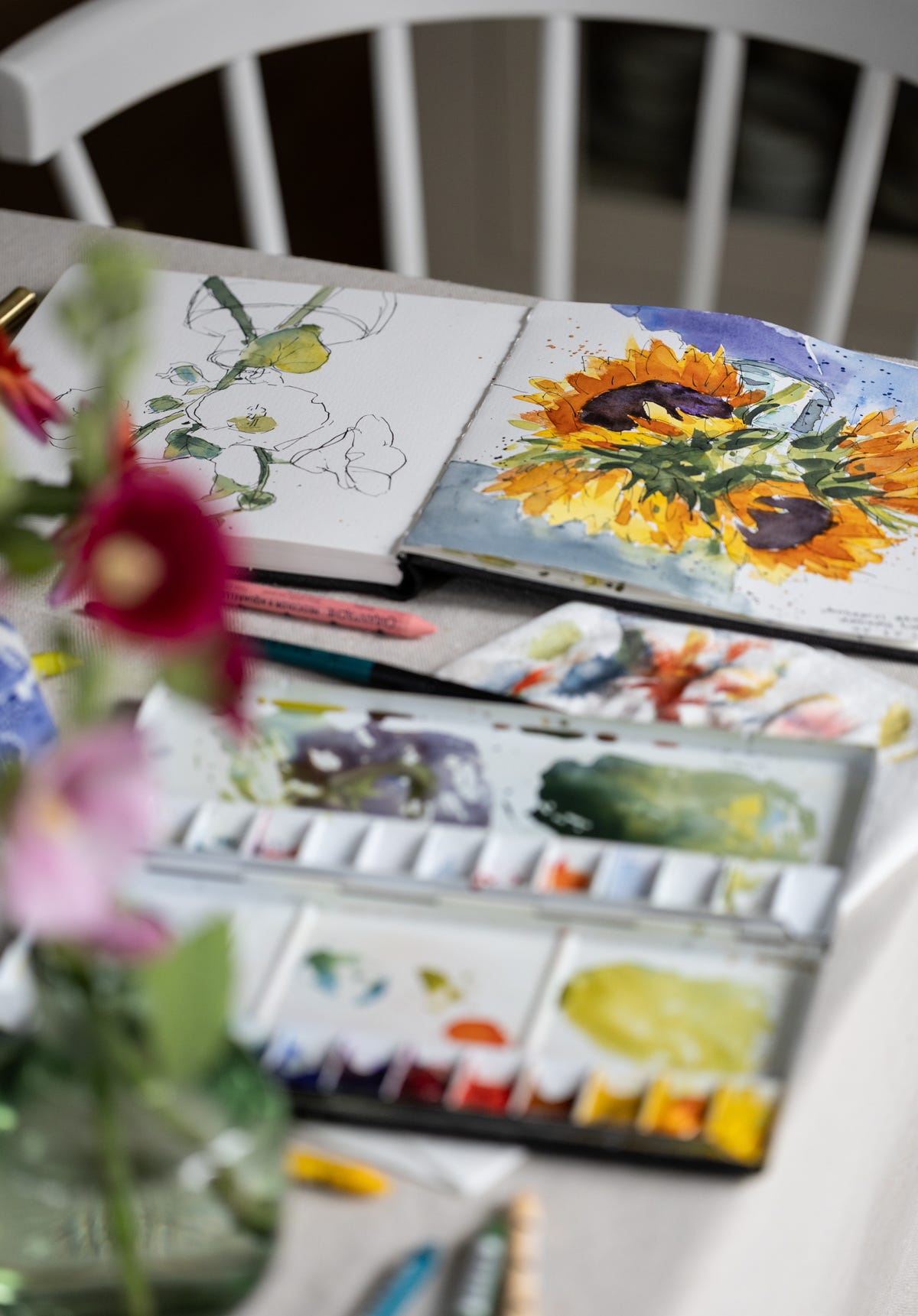
I experienced this recently while painting sunflowers for a workshop I’m taking. The first painting was a struggle. The second was better. By the third, I finally felt like I had found something. I had arrived!
Had that first painting needed to be my masterpiece, I probably would have reworked it for hours trying to force it into becoming something it would never be. I would have gotten more and more frustrated, and I might never have gotten to the third painting, the one I actually loved.
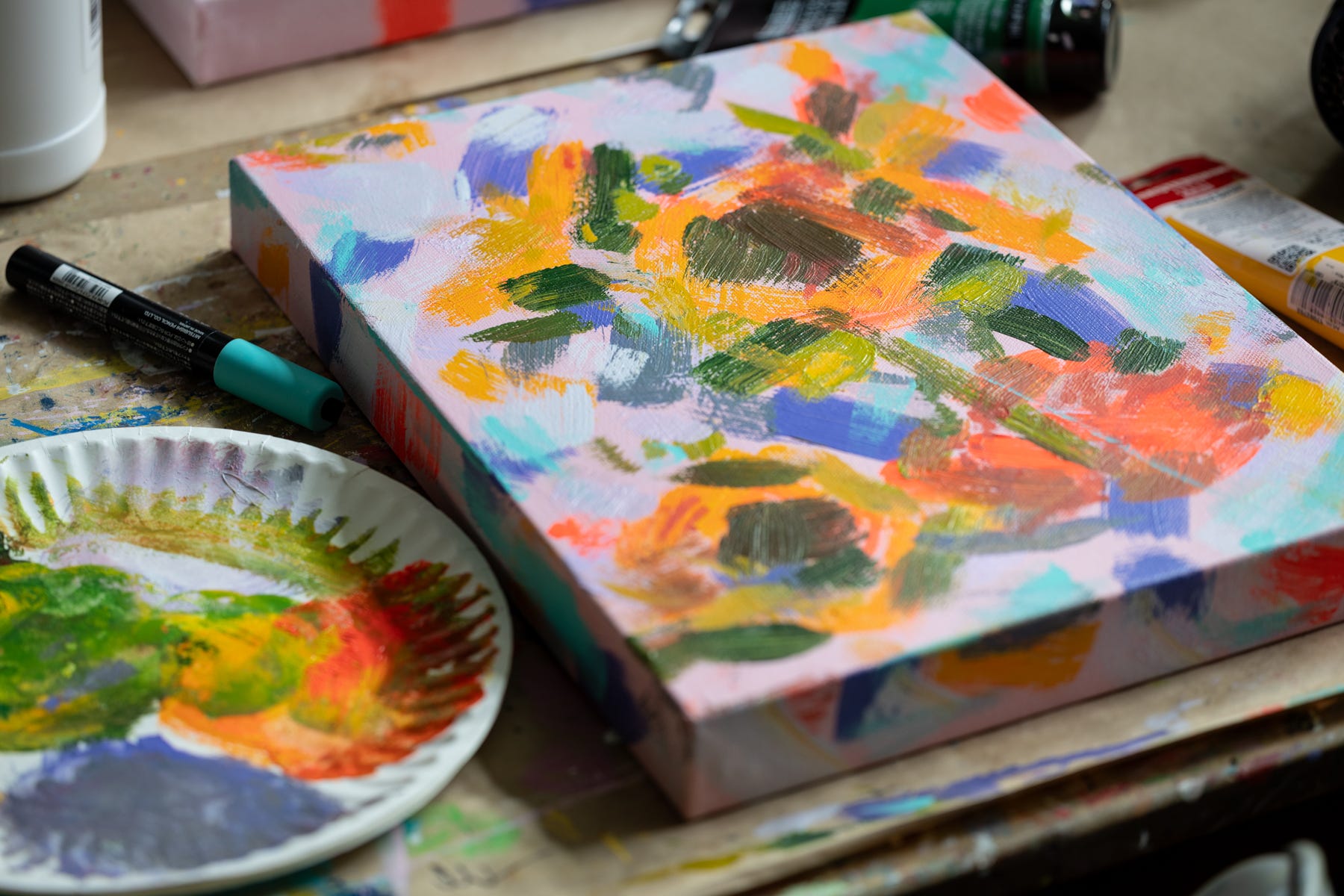
There comes a point when trying to make a painting work stops being useful. You keep adjusting, correcting, repainting, and reworking because you desperately want this one to succeed. I’ve been there dozens and dozens of times. Trust me. It can be one of the most frustrating places to be, both with the painting itself and in your own head.
Sometimes the better move is: stop, take what you learned, and make another one.
This happened recently with an oil painting of snapdragons I was working on. I kept going back into it, reworking the same areas again and again, and I wasn’t getting anywhere. Honestly, I was just making a hot mess. The whole thing had stopped being productive, I was miserable, and my paint was getting tacky enough that I was fighting the surface too.
Eventually, I scraped off what I didn’t like, put the painting away to dry, and moved on. Maybe I’ll come back and finish it. Maybe it will become the underpainting for something completely different. Or maybe I frisbee it out the window into my backyard. Who knows.
It doesn’t matter. What matters is the time I spent on the painting. The journey. I’m certain I learned something even if I don’t realize it. And maybe more importantly, I kept going instead of letting one frustrating painting completely derail me.
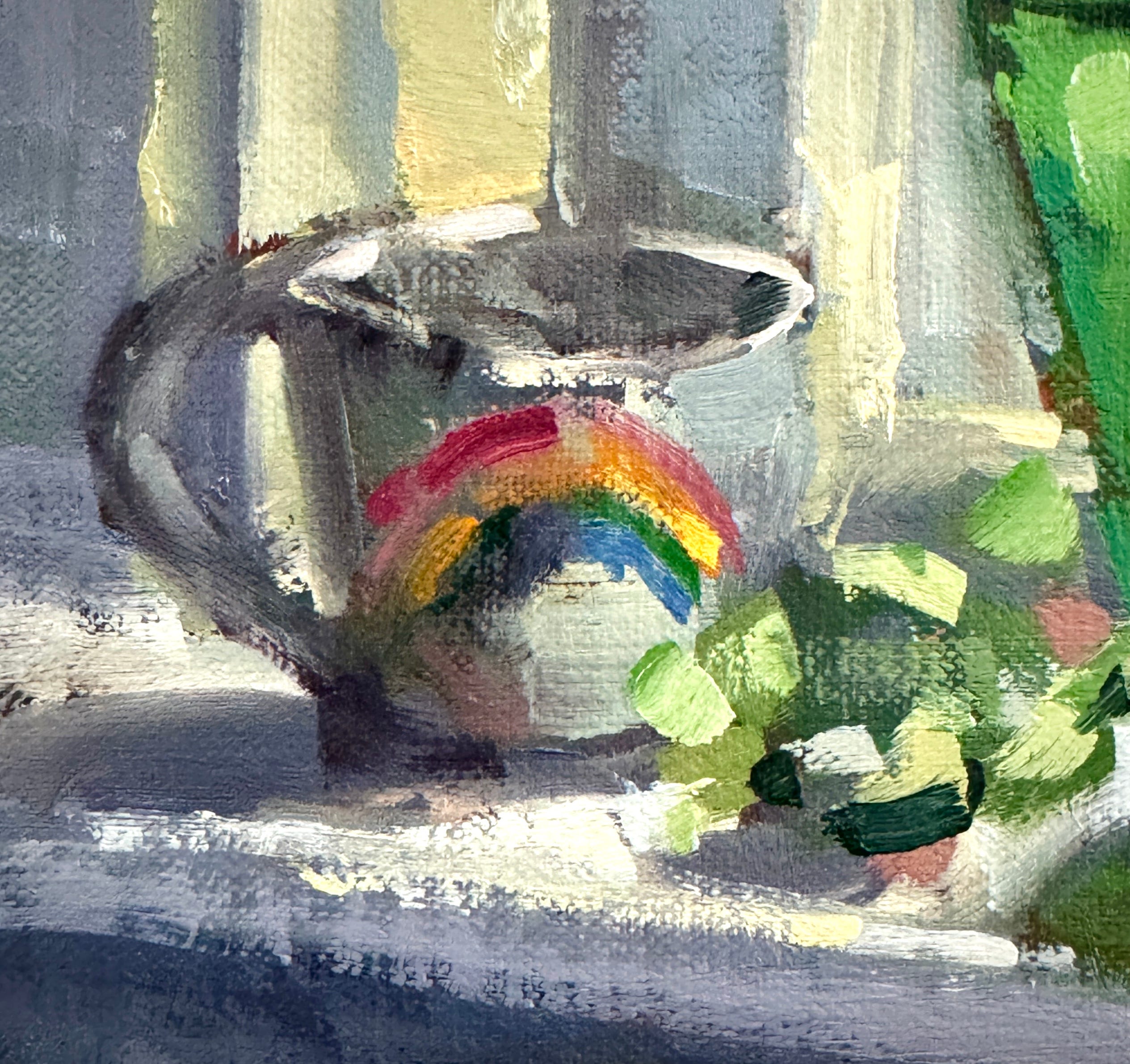
You may even come back to that painting and realize that while you don’t love it in its entirety, there’s still a little part of it that you do. Like I did with a recent painting of mine. It didn’t quite work out, but I love this little mug with a rainbow.
I cannot recommend curiosity, play, and experimentation enough. Give yourself some part of your art practice where the results truly don’t matter. Remember how I didn’t want to learn watercolor? This is why.
Not everything you make needs to become something to sell, put in an art show, help you find your style, or prove that you’re getting better. Maybe it’s a sketchbook. Maybe it’s doodling in a notebook. Maybe it’s artwork you never show anyone.
I think one reason my daily sketching practice has worked so well for me is that those drawings aren’t trying to become anything but sketches in a book. A daily journal in art form. They’re allowed to just exist. Nothing is tied to them being “good enough,” and that gives me so much more freedom to try things, make mistakes, keep things loose, use a weird color, draw something completely wonky, or just see what happens.
I also think that kind of practice helps the work that does matter. It gives you somewhere to play without consequences. You can try something strange, make a mess, discover something you love, and then maybe bring a little bit of that into the rest of your work.
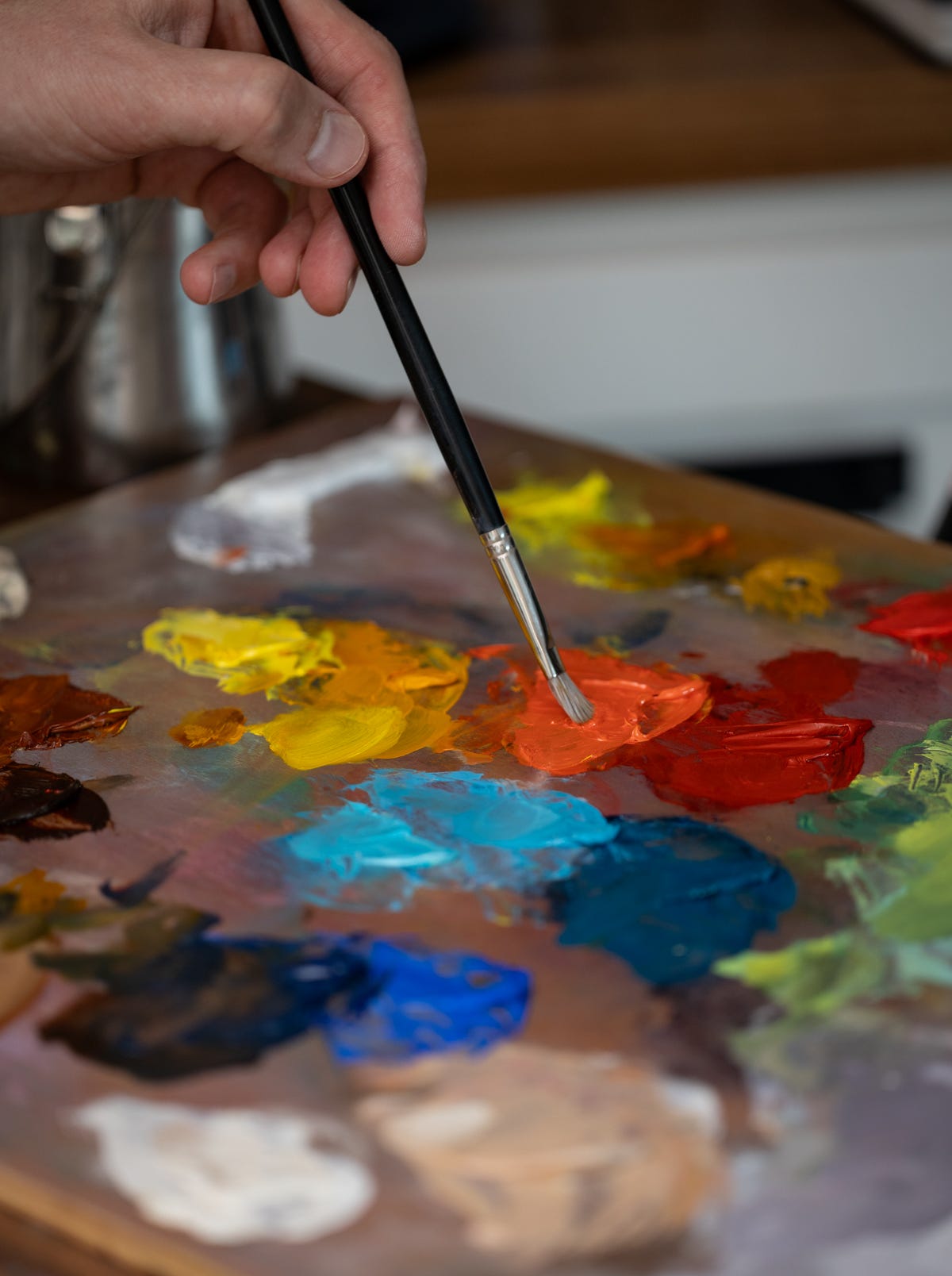
So how do you actually make more art without turning making more art into yet another giant goal you need to accomplish? We don’t want that.
For me, it’s mostly about making the process easier, smaller, and more repeatable. Here are a few things that have helped:
Work smaller. A tiny painting or sketch feels easier to begin, easier to repeat, and easier to move on from when it isn’t working. Even switching from a big surface to a small sketchbook can completely change how much pressure you feel.
Set a quantity goal instead of a quality goal. Instead of making one painting and trying to make it great, make four small ones. Give yourself several chances to work something out instead of asking one painting to do everything.
Repeat subjects. Paint the same flowers, mug, landscape, or location several times. If you get bored, change the composition, move your viewpoint, crop it differently, or change the light. You don’t have to reinvent everything every single time you sit down to paint.
Give yourself a stopping point. Twenty minutes. Only so many shapes. A limited number of brushstrokes. Sometimes a boundary is exactly what I need to stop endlessly adjusting things. You make the best decisions you can, and then you move on.
Keep something ready to use. My dining room sketching setup has taught me this one. My supplies are already there, so there are very few steps between thinking about making art and actually making it. Prep panels ahead of time. Keep your brushes clean. Leave your sketchbook somewhere you can see it. Whatever works for you, just make it easier to begin.
If you want to care less about each individual result, give yourself more chances. And if you want even more ideas for doing that, I recently wrote a post called 10 Simple Things That Will Help You Make More Art. It goes a little deeper into making art more regularly, and I think it fits really well with everything we’re talking about here.
Because, of course, you care about your art. I care a lot too. I want to improve. I want to make work I’m proud of. I want to sell paintings. I want art to become a bigger part of what I do. Maybe you want some of those things too.
None of that is the problem. The problem is when all of those hopes and expectations get piled onto whatever happens to be sitting on the easel today.
Sometimes you’ve given a painting everything you know how to give it. You’ve adjusted it, scraped it, repainted it, stepped away, come back, stared at it for far too long, and genuinely done your best. Moving on doesn’t mean you failed. It might simply mean that painting has given you what it had to give. And that’s enough.
Maybe it taught you something you needed for the next one. Maybe the next painting will be better. Maybe it won’t. Maybe five paintings from now something suddenly clicks and you realize all those frustrating paintings were part of getting you there.
So maybe the answer isn’t really learning to care less about your art. Maybe it’s learning to put a little less pressure on every individual thing you make.
Because there will be another painting. And another. And another.
There will be so many more paintings.
No posts
Comments
Nothing yet. Say the first thing.
Sign in to join the conversation.