
I think I could create an entire Substack devoted to loosening up your artwork. Ever since I started painting, it has been one of the most elusive things to me. Just when I think I’m getting close to figuring it out, I somehow end up wandering down another hallway of mystery and confusion.
It’s not so much that I don’t know how to loosen up my artwork. I understand the general idea. Use bigger brushes. Make fewer marks. Stop fussing with everything.
The part I haven’t figured out is how much to loosen up.
How do you paint loosely while still creating something that reads clearly and holds itself together? How do you leave enough information for the viewer without explaining every single thing? How do you make a painting feel exciting, mysterious, expressive, impressionistic, and, well, loose?
So, should you be looking for the definitive answer to that question, I’m afraid I don’t have it. Maybe I never will. But I promise you this: should I ever figure it out, or even get kind of close, I will shout it from the rooftops.
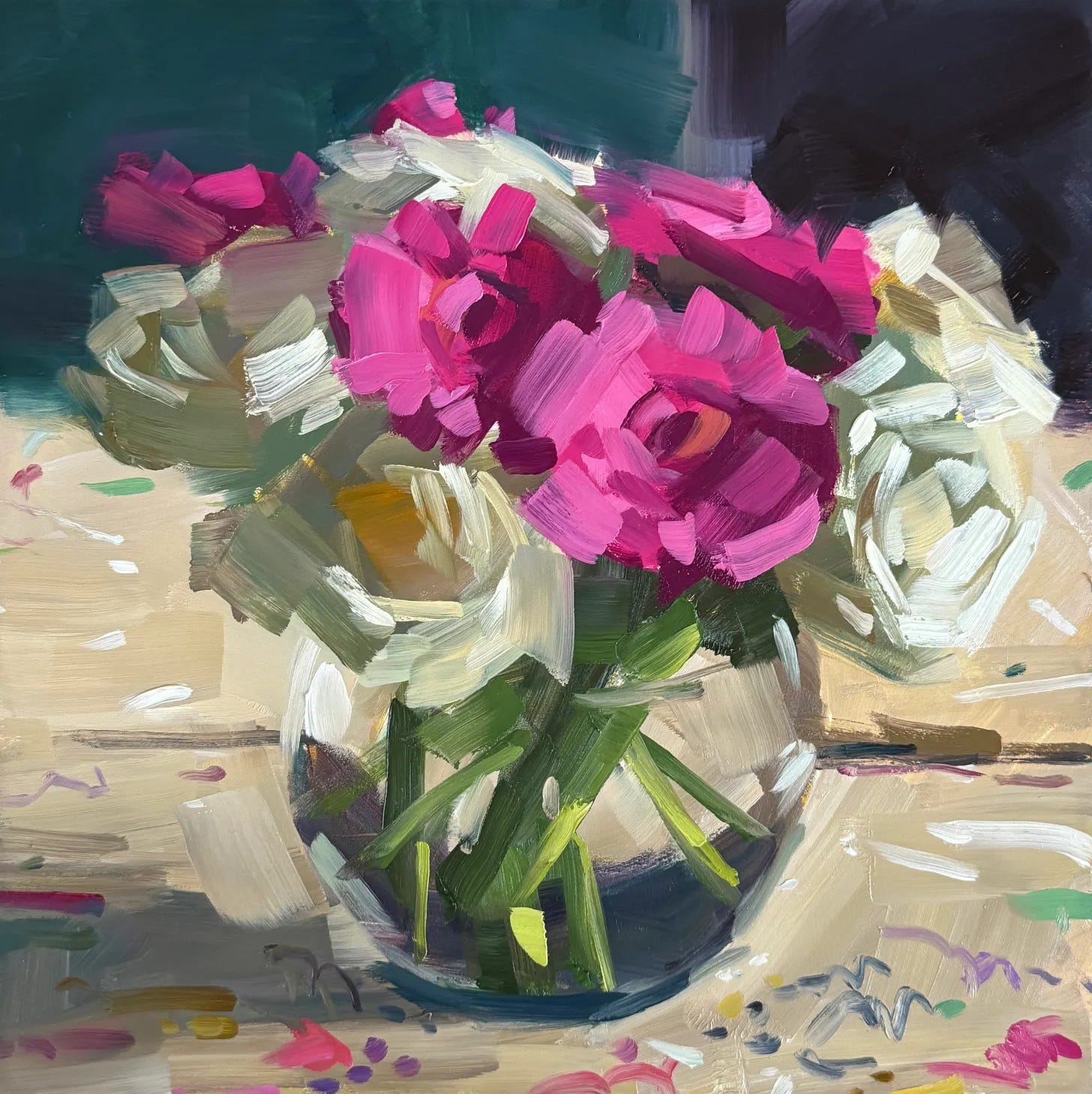
What I do have are a few exercises I’ve learned along the way. They have helped me stay a little looser and, perhaps even more importantly, have stopped my brain from overthinking quite so much. Overthinking is probably my biggest culprit when it comes to tightening up.
Most of us are not intentionally trying to make tight, overworked artwork. We simply fall back on the movements, decisions, and ways of seeing that feel most comfortable.
These exercises make things a little less comfortable. They take away some control, introduce a few limitations, and encourage us to respond more instinctively.
Some will produce artwork you love. Some may produce complete disasters. And don’t tell anyone, but some of my loose, wonky, weird, even downright bad work has become some of my favorite.
With that covered, let’s get into this list of exercise..
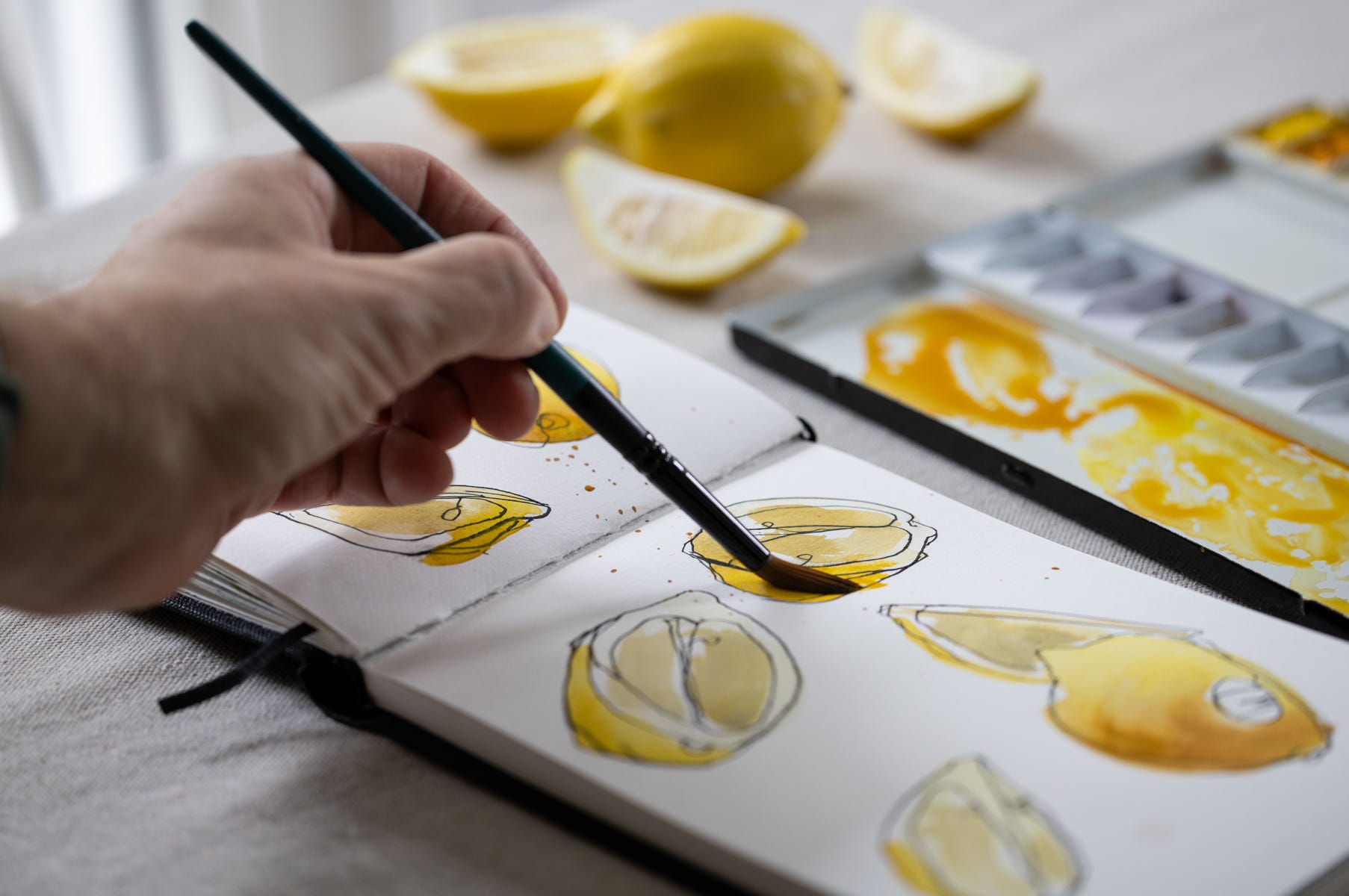
A continuous line drawing is exactly what it sounds like. Once your pen, pencil, or brush touches the paper, you do not lift it until the drawing is finished. I’ve been doing a few of these as part of my daily dining room sketching practice.
Instead of carefully drawing and correcting each individual object, you have to keep moving. You begin to think about how one shape connects to the next. Your line may loop back on itself, wander through an object, or travel across an area you would normally leave untouched.
That wandering line is part of the charm.
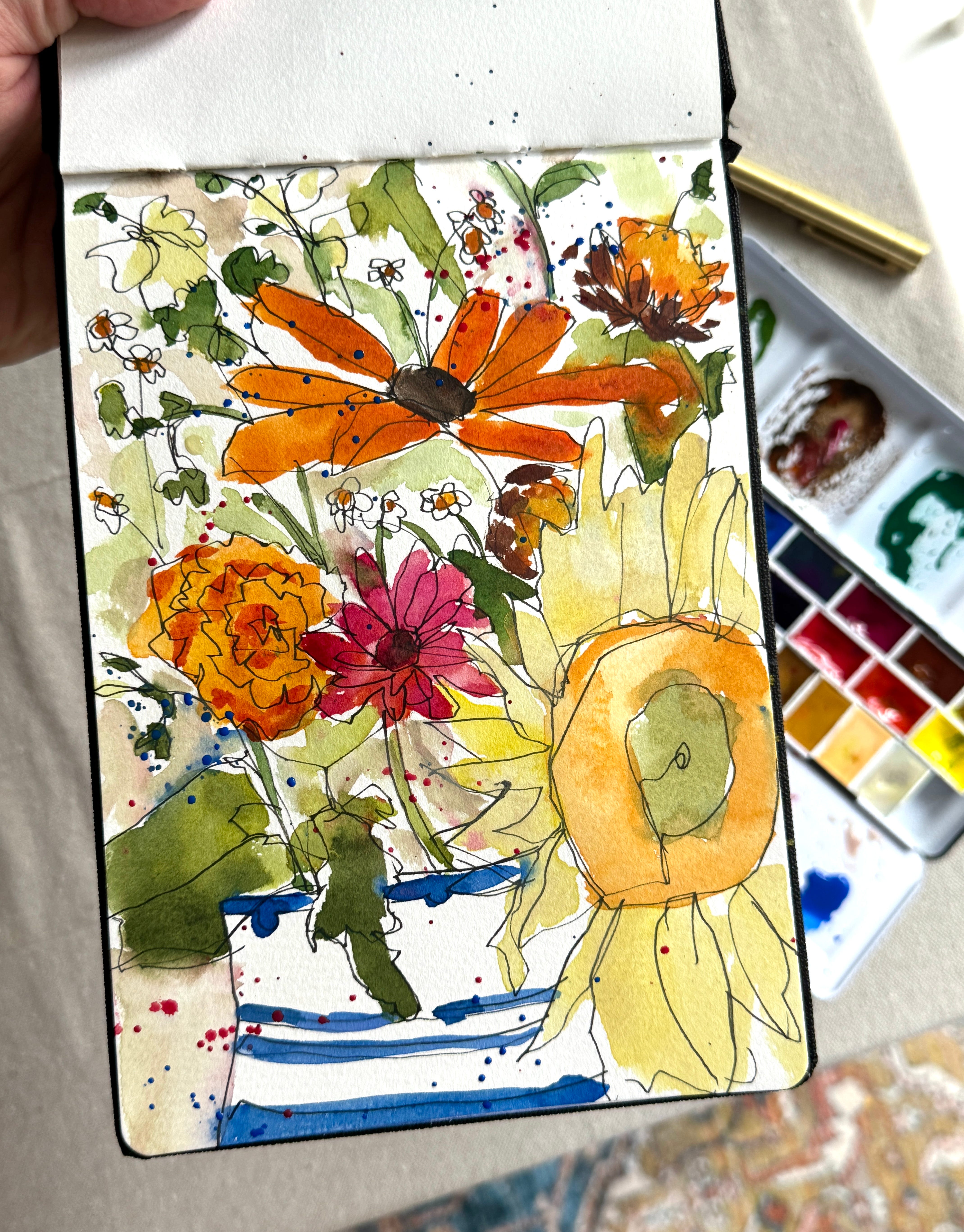
I especially love this exercise for flowers, interiors, and still lifes. Subjects with overlapping shapes give the line plenty of places to travel.
Your drawing probably will not be perfectly accurate, but accuracy is not really the point. You are practicing movement, observation, and connection. You are also learning that a drawing can still feel lively and complete even when the lines are imperfect.
This drawing is one I created recently as part of a simple sketching practice that got me making art every day.
Switch your pen, pencil, or brush to the hand you do not normally use.
Almost immediately, you will lose some control. Your lines may shake. Your brushstrokes may land somewhere you did not intend. Shapes will be harder to perfect. That is exactly why this can be so helpful.
When you cannot rely on your usual coordination, you have to simplify. You stop trying to finesse every edge and begin focusing on the general direction of the line or the overall shape of the object.
There is often a freshness in these awkward marks that is difficult to recreate intentionally with your dominant hand. This is the magic, my friend. These are the lines I love.
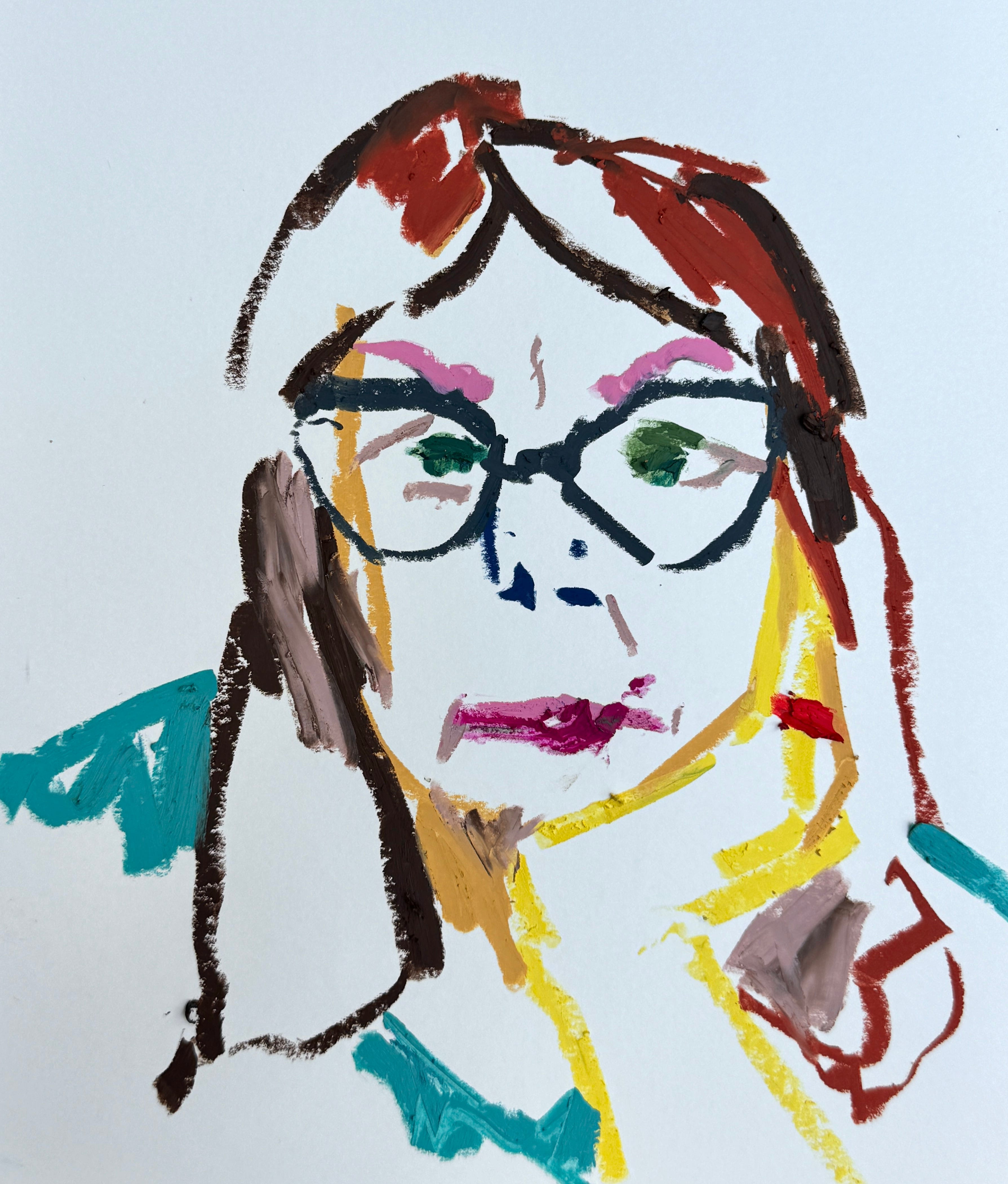
You do not need to complete an entire painting this way. Try a five-minute drawing, use your non-dominant hand for the initial sketch, or paint one small study. You might even switch hands for only part of the piece.
It will probably feel frustrating at first. Stay with it for a few minutes and see what happens.
Before you begin painting, choose a specific number of brushstrokes you are allowed to make. This is a practice I learned from the amazing Anne Blair Brown.
I believe her number was 40 brushstrokes, but I’ve taken classes with her where she challenged us to paint simpler subjects in only 10 strokes. Sometimes even five.
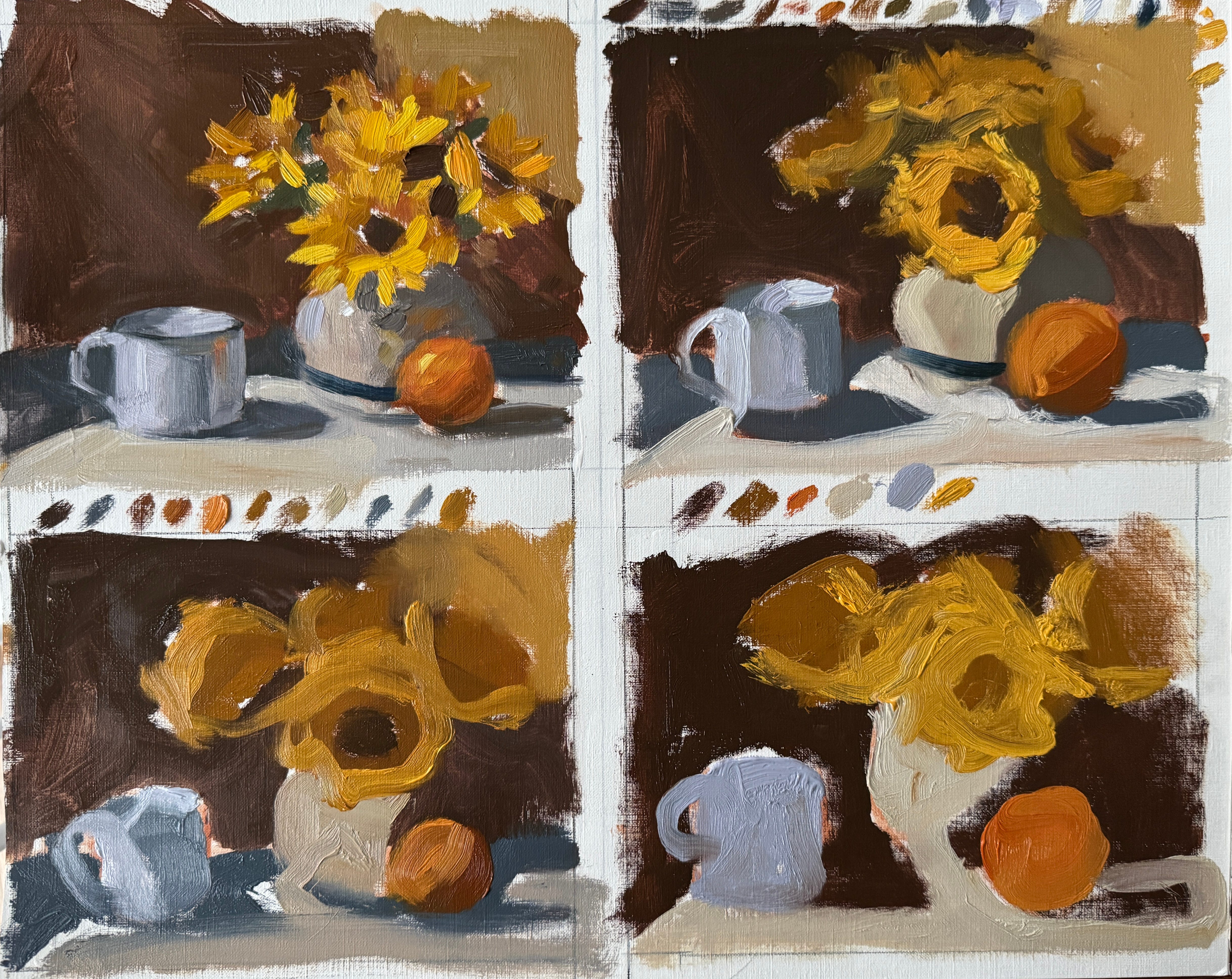
Draw your subject first. Then load your brush with paint and make the largest mark you can, moving it around the surface to fill in the shape. Make a little tick mark along the side of your surface each time your brush touches it to help you keep count.
This quickly makes every brushstroke feel more important. You cannot spend 17 strokes perfecting the edge of a single leaf when the entire painting still needs to be completed.
You have to decide what truly matters.
Which shapes describe the subject? Where does the value change? What can be suggested instead of fully explained?
Rather than repeatedly dabbing at an area, you begin looking for one confident stroke that can do the work of several smaller ones.
Will every brushstroke land perfectly? Absolutely not. But you may discover that the imperfect stroke is more interesting than the carefully corrected one.
Choose a brush that feels too large, too stiff, too soft, too unruly, or otherwise completely inappropriate for what you are trying to paint.
I can hear Peggi Kroll Roberts saying, “Use a brush that’s too big for the job.” It’s a phrase and technique she uses often, and you can see how beautifully that approach serves her work. (Her Patreon is one of my favorites, if not my very favorite.)
A large brush will not allow you to paint every tiny petal. A floppy brush will refuse to create a perfectly controlled edge. A stiff, worn-out brush may leave broken, unpredictable marks.
The brush becomes a limitation, but it can also become a collaborator.
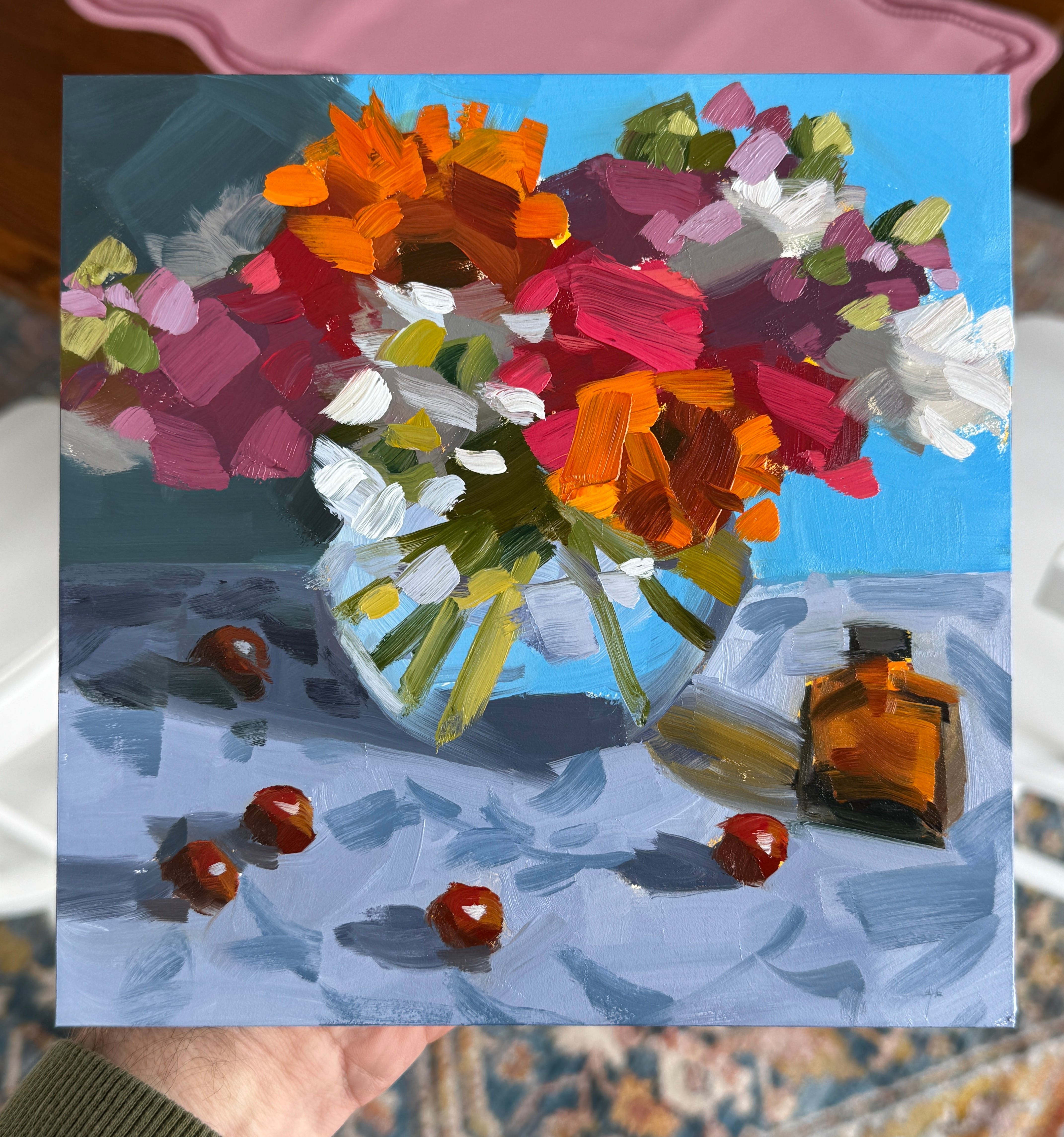
It may create textures, edges, and shapes you would not have thought to make on your own. Rather than forcing it to behave like your favorite brush, pay attention to what it naturally wants to do.
This is one reason I have started appreciating brushes that are a little wild. They keep me from becoming too precious with the painting.
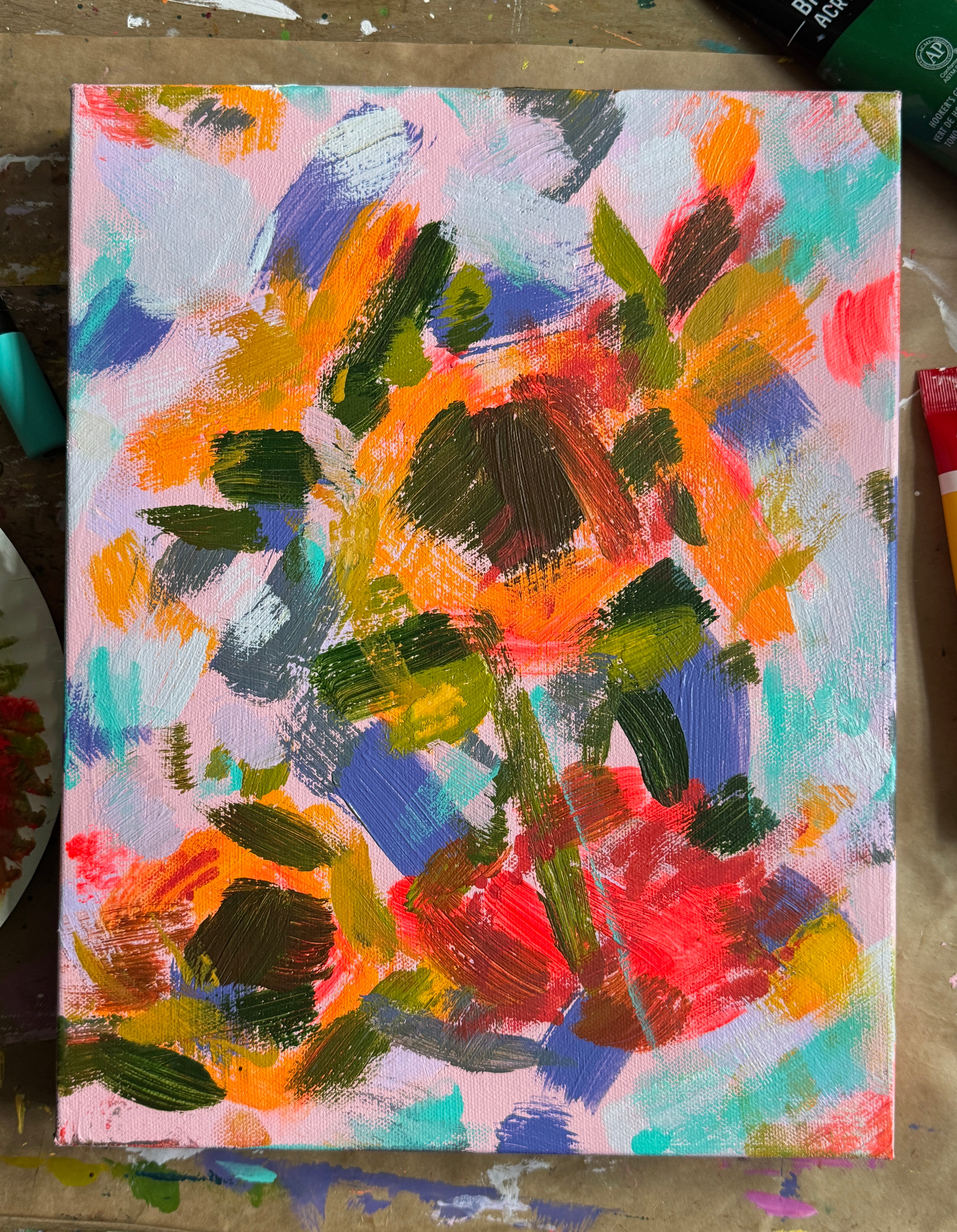
I’ve recently been using a one-inch chip brush to create the underpaintings for my collage work. It is definitely not a delicate tool, and that is exactly why I like it.
When the tool cannot make a perfect mark, I can stop expecting perfection from myself.
If you want to learn more about this exercise. I wrote an entire article about how using a larger brush can loosen up your artwork.
Most of us instinctively hold a brush close to the ferrule, especially when we want precision. It gives us maximum control.
For this exercise, move your hand farther down the handle. You can start by holding the brush around the middle. As you become more comfortable, move even closer to the end. Should you want to get really crazy, I’ve even seen people tape a brush to a yardstick to create even more distance.
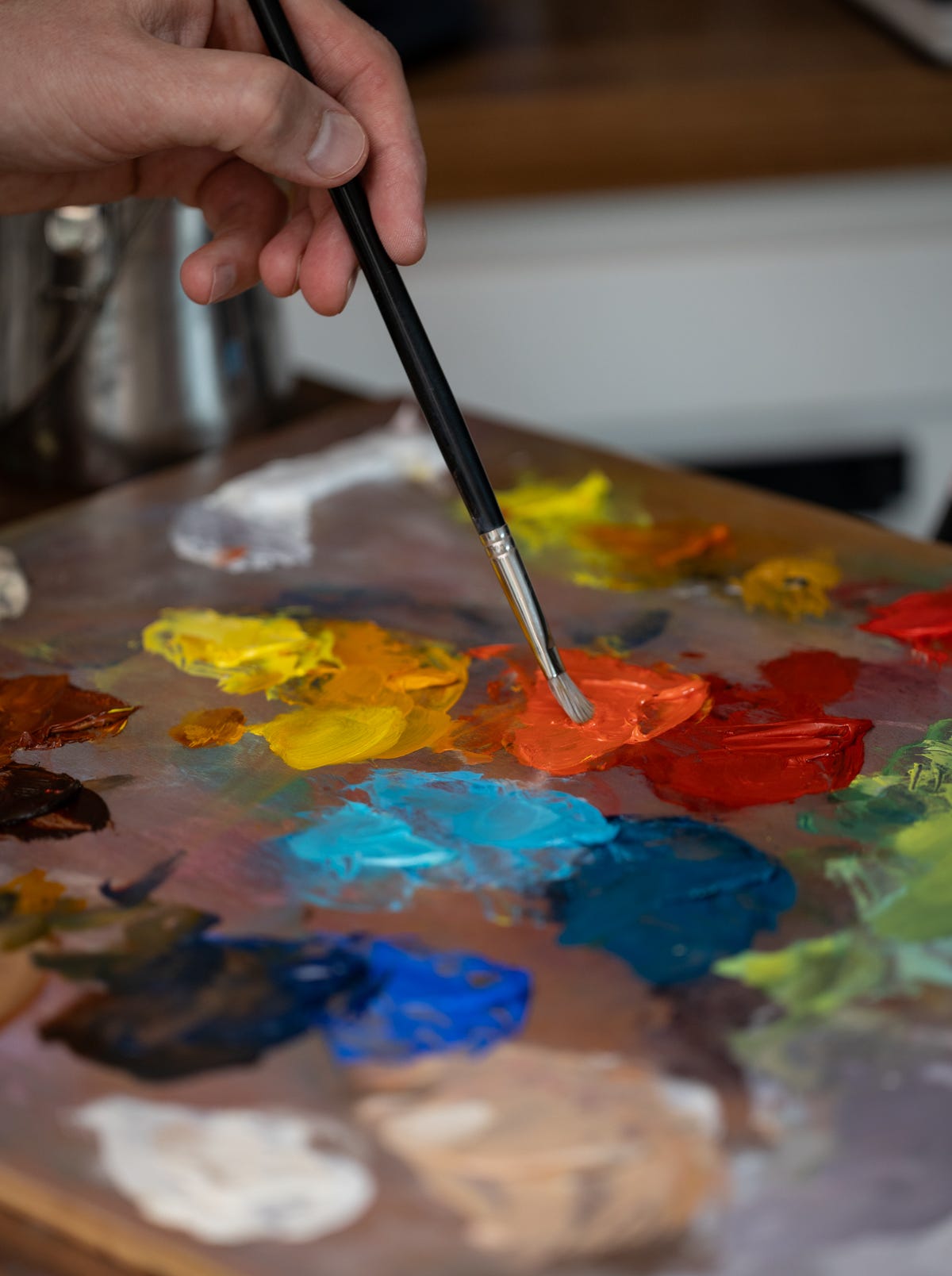
This small change creates a surprising difference in the way you paint. Your movements begin coming from your arm and shoulder rather than only your fingers and wrist. The brushstrokes become broader, more fluid, and slightly less predictable.
It also creates some physical distance between you and the painting. You are less likely to lean in and fuss over a tiny section when you cannot easily reach it.
Standing back helps too. The farther you are from the surface, the easier it becomes to see the painting as a whole rather than a collection of little problems that need fixing.
Give yourself less time than you think you need.
Try a three-minute drawing, a ten-minute watercolor, or a twenty-minute painting. Set an actual timer so you cannot quietly decide that twenty minutes really means forty-five.
A couple of years ago, I made dozens of small oil painting studies in my living room. The practice was inspired by the late artist Marjorie Hicks. She was a brilliant artist and an incredibly kind human being.
I’m forgetting what she called them, but she created these little studies almost daily before beginning her main painting practice. Limited time. Limited palette. Some of those studies are still among my favorite works.
A time limit forces you to make decisions. You cannot carefully investigate every object or endlessly mix the perfect color. You have to identify what feels most important and get it onto the page.
The goal is not necessarily to create a finished piece, though many times you will. Think of it as a study of your first response to the subject.
What did you notice immediately? Which shapes felt essential? Where did you place the strongest contrast? What did you leave out?
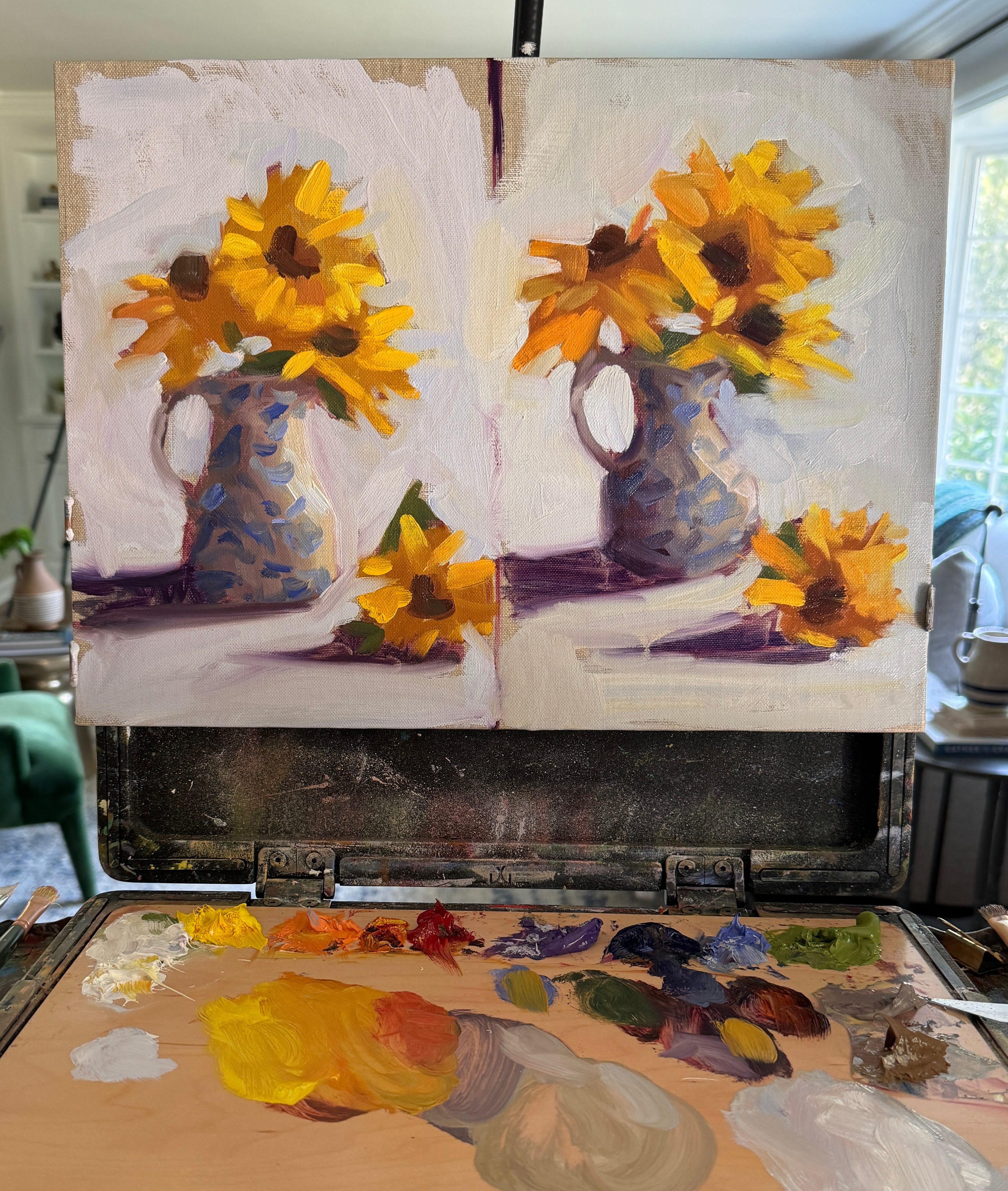
Sometimes a painting made in twenty minutes has more life than one I have worked on for several hours. I wish I knew exactly why that happens, but once again, we have arrived at the hallway of mystery and confusion.
I will figure this out one of these days if it’s the last thing I do!
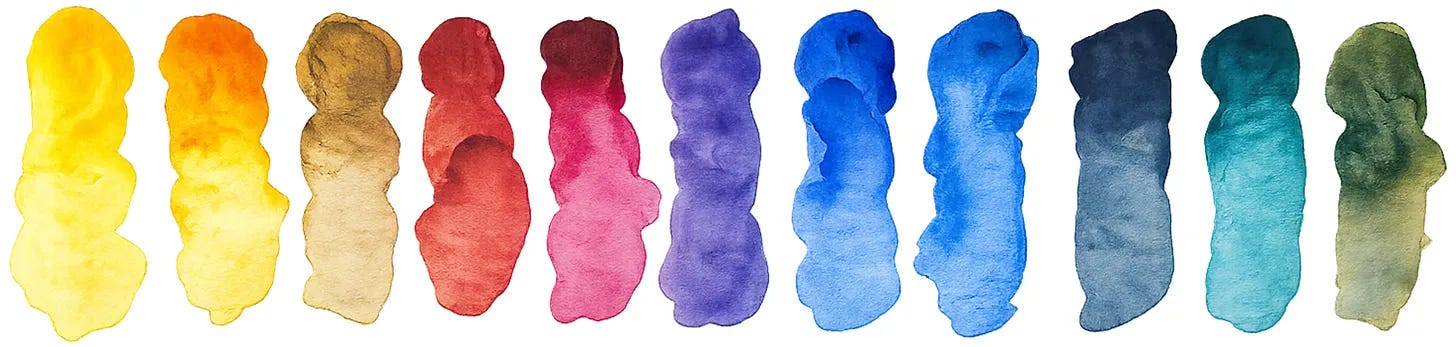
Choose three colors plus white, or an equally small selection that works for your medium.
My go-to combination is Cadmium Yellow Lemon or Cadmium Yellow Light, Quinacridone Rose, and Ultramarine Blue. I also like Indian Yellow, Scarlet Lake, and Phthalo Blue.
A limited palette removes some decisions before you begin. Instead of searching through every color you own, you have to mix and respond with what is already in front of you. This can create a more unified painting, but it can also help you work more freely.
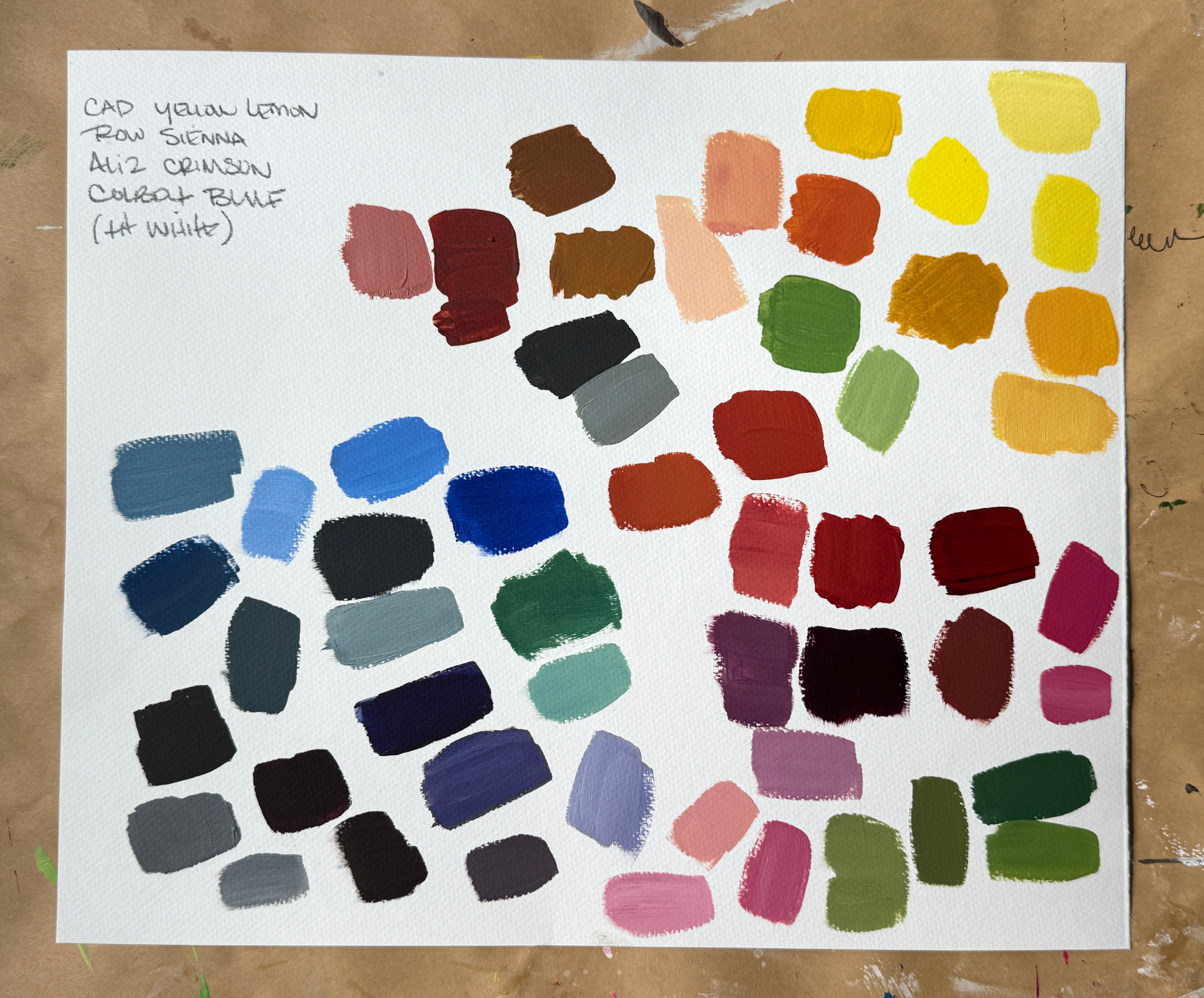
When you do not have the exact color of the flower, vase, building, or shadow, you have to interpret it. You begin thinking less about matching and more about relationships.
Is this shape warmer or cooler than the one beside it? Is it lighter or darker? Can this blue lean a little more toward green? Can this red be softened with something already on the palette?
A limited palette also makes it easier to remix a color when you need it again. There are fewer possible ingredients involved, which means less time spent nervously attempting to recreate the exact mixture you made ten minutes ago.
When something feels wrong, our instinct is to correct it. Then we correct the correction. Then we soften the correction because it looks too corrected. Before long, we have spent fifteen minutes attempting to repair an area no one else would have noticed.
Try allowing a few mistakes to remain. Or at least give them a chance. Leave the crooked line. Keep the unexpected color. Let one flower be a little too large. Resist the urge to straighten every edge and polish every awkward section.
Of course, there are times when something genuinely needs to be changed for the artwork to work. The challenge is learning the difference between a necessary correction and our desire to make everything feel safe.
Sometimes the strange mark is what gives the piece its personality. I am trying to remind myself that not every part of a painting needs to be equally resolved. A loose area beside a more clearly defined one creates contrast. It allows the viewer to participate instead of spelling out every detail for them.
That is the theory, at least. Putting it into practice is another story.
Now this one is just for fun.
I’ve picked up this idea from a few artists, including Emily Powell and, once again, Peggi Kroll Roberts.
I did a couple of workshops with Emily Powell. In one, we painted birds and were challenged to make their bodies WAY bigger than everything else. In another, we made their heads ginormous.
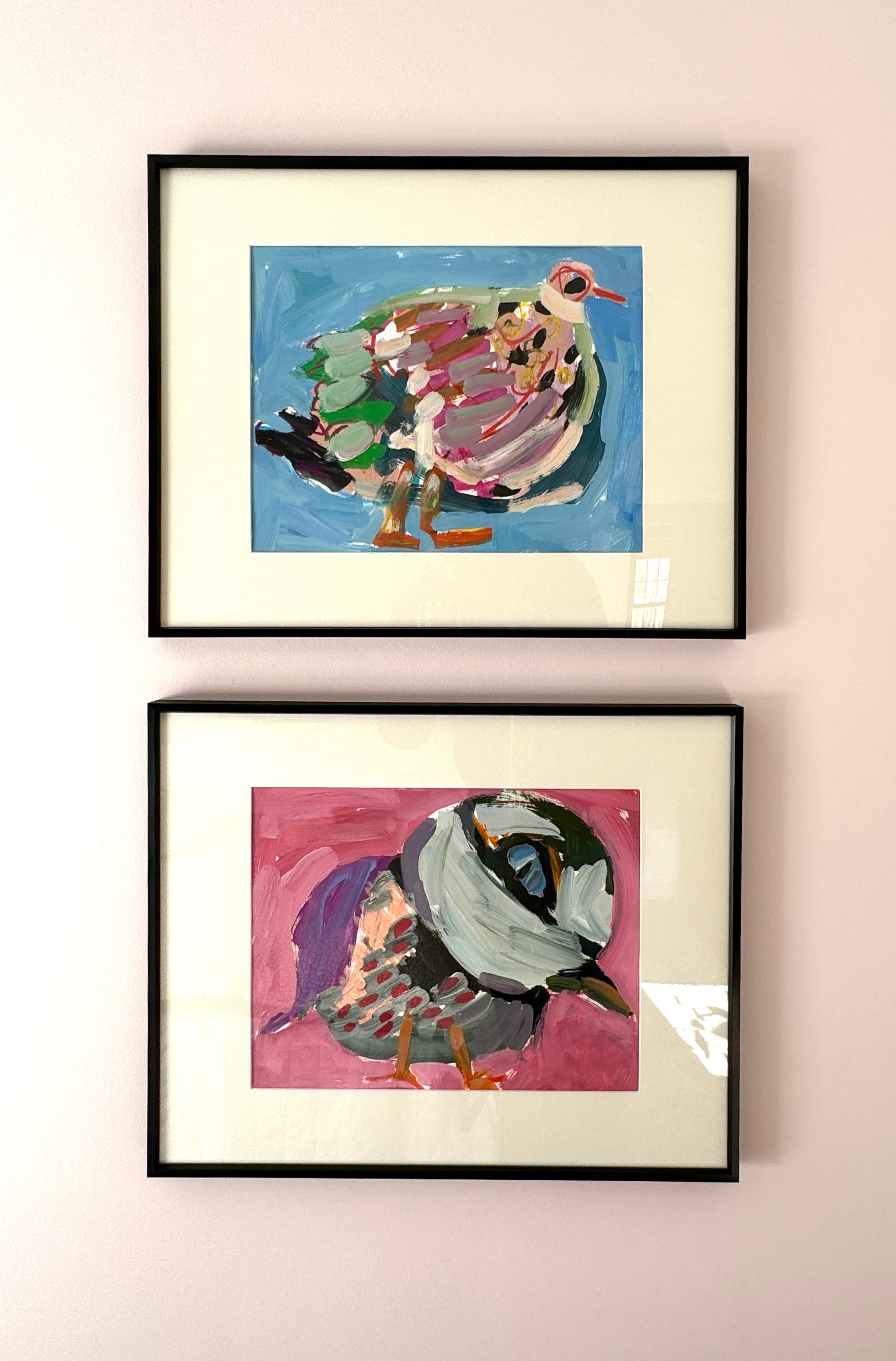
The pieces are completely wacky, but I love them so much that I framed them and hung them in one of my bedrooms.
Peggi has exercises like this too. You might paint a figure with longer legs, longer arms, a shorter torso, or a much bigger head. You could also paint an ordinary object, such as a paper clip or thumbtack, so large that it feels almost monumental. Of course, you can do the same thing with flowers, a still life, a landscape, or anything else.
You could also intentionally break the rules we are so often told to follow. Create a bunch of tangents. Paint everything a color it isn’t. Make the sky pink, the grass orange, and the ocean purple. The point is to screw up your brain a little. Make it think differently.
Perhaps when certain things are intentionally wrong, all the other “wrong” things in the painting will not matter quite so much.
Before beginning, squint at your subject. Squinting reduces detail and helps the subject break into larger masses of light and dark. Instead of seeing every petal, leaf, window, or branch, you begin seeing the bigger structure underneath it all.
Paint those shapes and stop.
Here is an example of a study I completed during a workshop. I would not call it a finished painting, but I really like what I have here. I have another painting hanging in my kitchen that is made up of very simple, flat shapes. I love it.
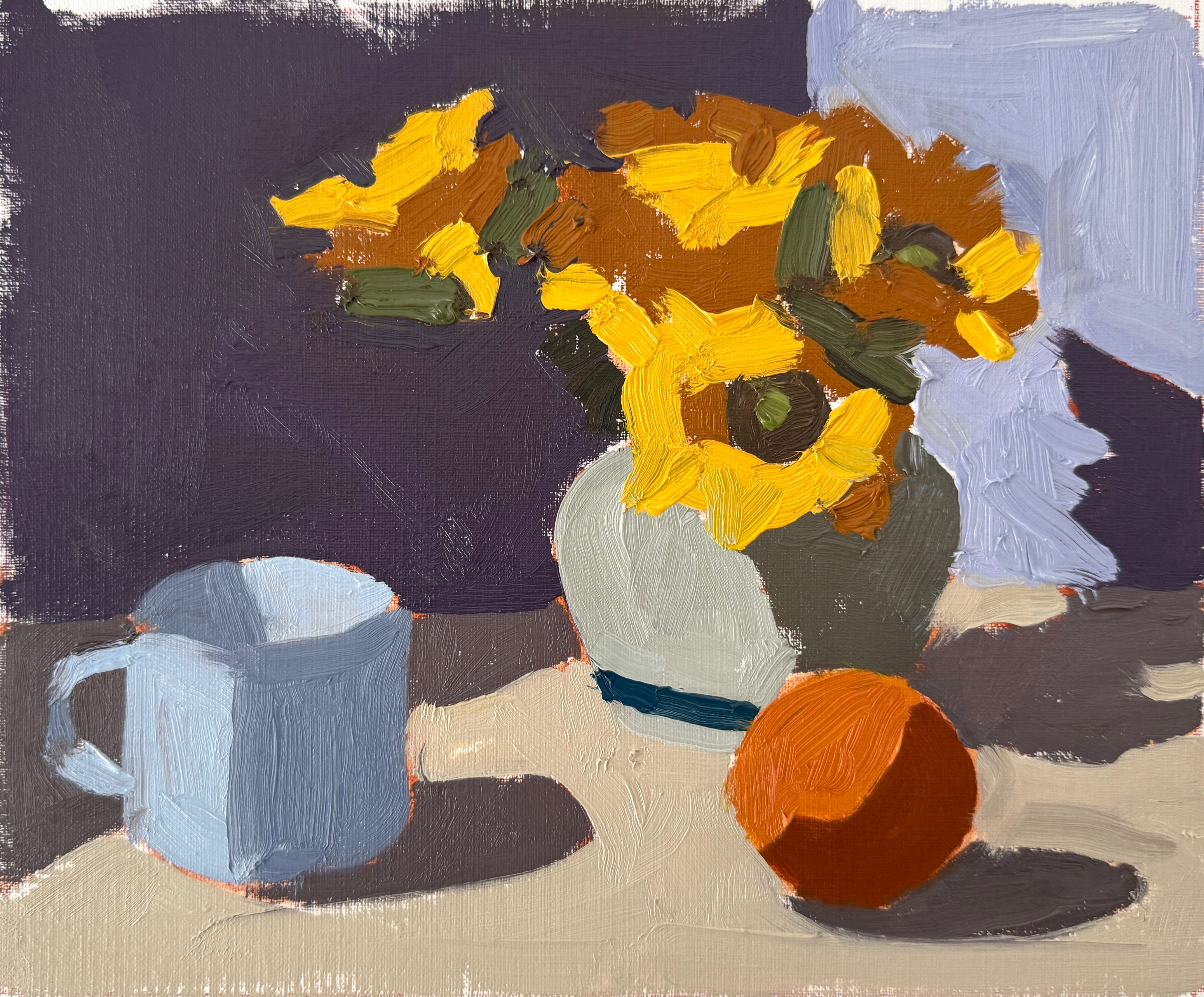
Do not add the tiny highlights. Do not draw every individual leaf. Do not outline each flower. See whether the larger shapes can carry the painting on their own. You might limit yourself to five or six major shapes. Maybe you can do it in two or three. You can also use a larger brush so you are not tempted to sneak in extra information.
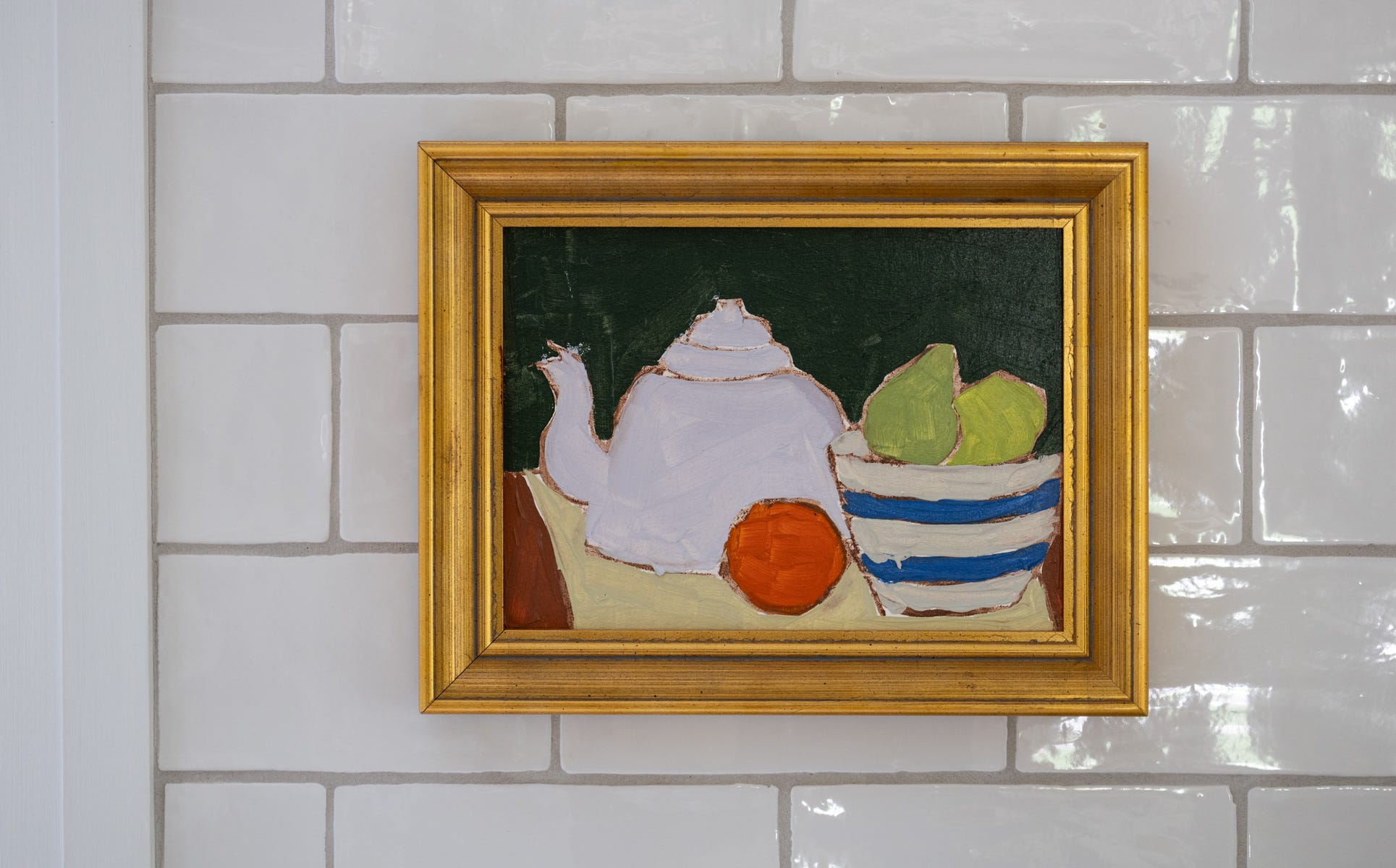
This exercise can feel surprisingly uncomfortable because we often depend on details to make the subject recognizable. But when the big shapes are working, the viewer needs much less information than we think.
And when the big shapes are not working, more detail usually will not save us.
MAKE MORE ART! Seriously. Make more art. And then go make more.
When the piece in front of you feels like one of only ten things you are going to make, it is easy to become precious with it. Every mark feels important. Every mistake feels permanent.
But when it is one of 1,000 pieces you plan to make, the pressure starts to disappear. You can experiment, take a few risks, and let things get a little weird because you already know you are going to make another one.
And should you need a little help making that happen, I recently shared an article with 10 simple things that will help you make more art.
Listen, the more bad art you allow yourself to make, the easier it becomes to let go. You will learn more, improve faster, and become much less afraid of getting it wrong.
Pinky promise.
I sometimes wonder whether part of the struggle is that loose artwork is difficult to define.
It does not necessarily mean fast, messy, unfinished, or careless. A loose painting can still be thoughtfully designed. The values can be accurate. The shapes can be intentional. The artist may have spent years developing the ability to make one seemingly effortless brushstroke.
Perhaps looseness is less about the appearance of the final artwork and more about the decisions made while creating it.
It may be the willingness to simplify. To allow a mark to remain. To suggest instead of explain. To respond rather than control. To trust that the viewer can understand the painting without being given every single piece of information.
I am certainly still learning how to do all of that. Some days I feel like I am making progress. Other days I find myself using a smaller brush than I should to carefully correct the edge of something no one will ever notice.
Stop it, Michael!
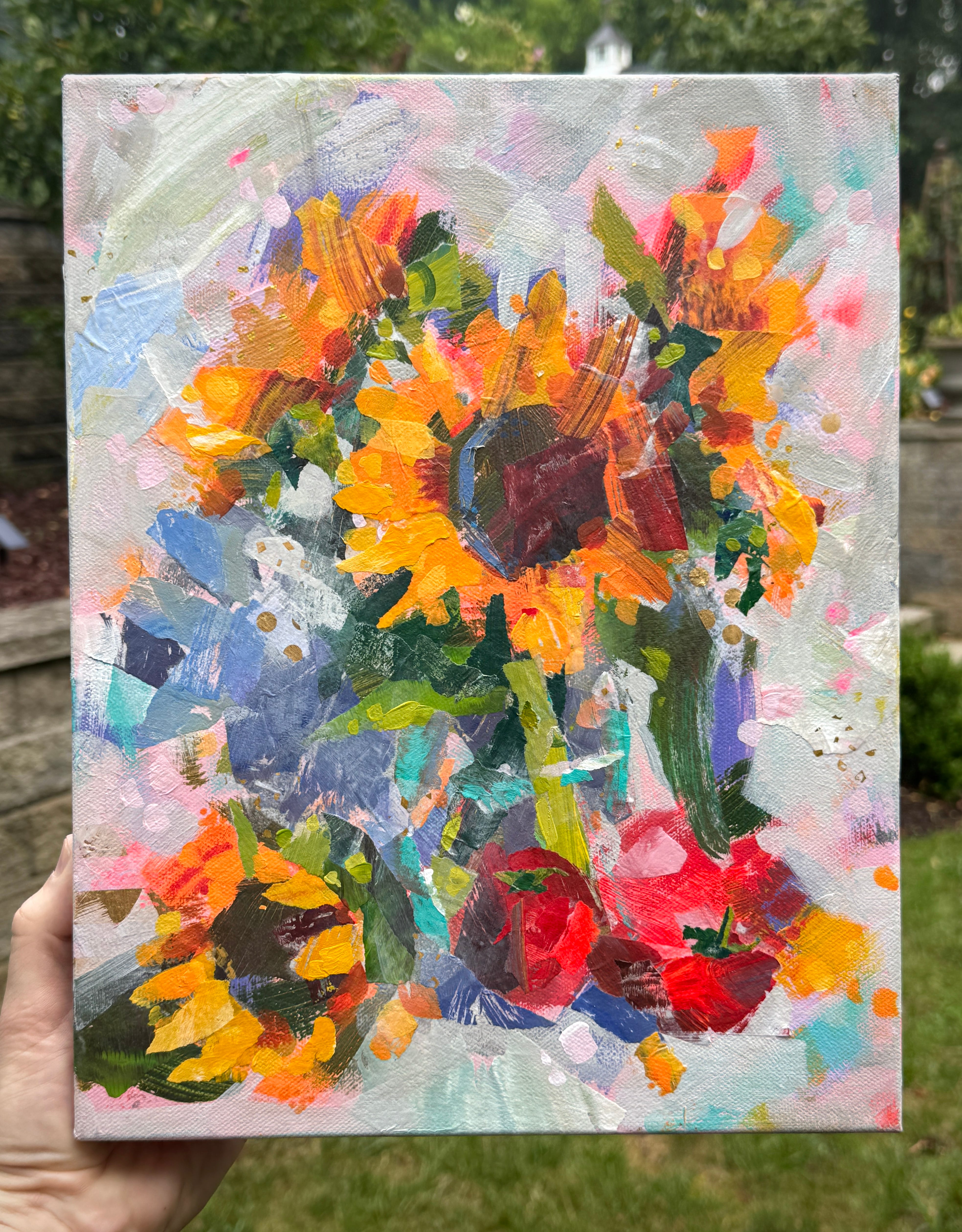
But that is why these exercises are useful. They interrupt the habits that quietly pull us back toward control. They give us permission to experiment without expecting every result to become a finished piece of artwork.
Pick one and try it for ten minutes. Fill a page with awkward drawings. Make a painting with a brush that refuses to cooperate. Set a timer and stop when it rings, even when every part of you wants five more minutes.
You do not have to love what you make. The practice itself is the point. And perhaps somewhere inside those crooked lines, oversized brushstrokes, unfinished shapes, and uncorrected mistakes, you will find a little more freedom.
I’m still looking for it too.
What helps you loosen up your artwork? Share your favorite exercise, reminder, or trick in the comments. Perhaps together we can get a little closer to figuring this out.
No posts
Comments
Nothing yet. Say the first thing.
Sign in to join the conversation.