
So many of my friends have a parent or loved one experiencing dementia. It is a terrible, drawn-out grief like no other. But dementia doesn’t have to take everything from us. We can hold on to our shared existence with a loved one, and I choose to believe that our lived experiences—for my mom, her love of reading—exist and persist within us even when a memory fades.
I learned to love reading from my mom.
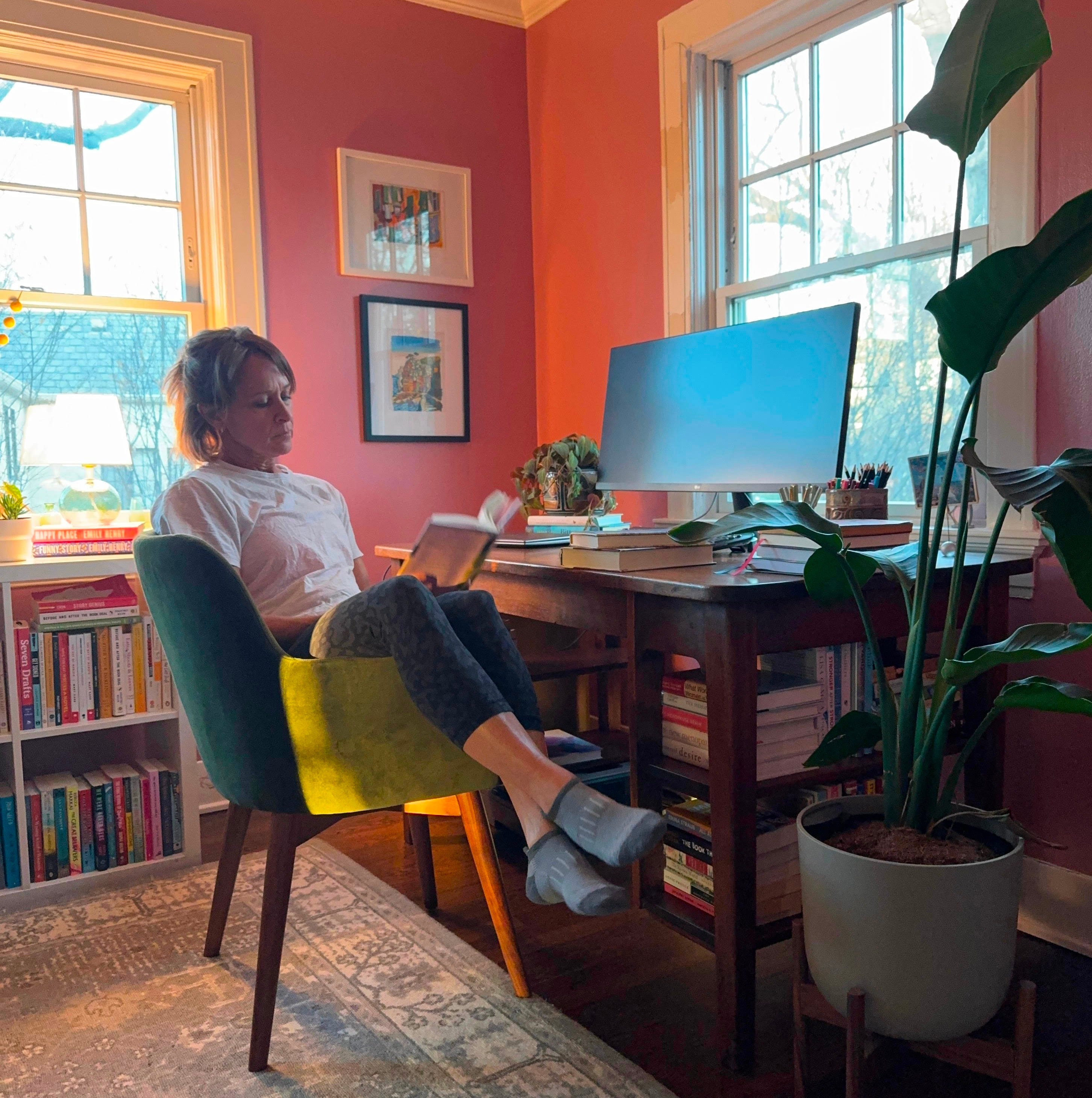
As a child I could reliably find my mom in the study next to her bedroom reading in a deep and cozy blue chair. There were stacks of books on the table next to her chair, more books in a large wicker basket that spilled out onto the floor. She read romance novels and mysteries, selections from Oprah’s book club. Reading was her retreat from the world, from raising three kids, from life in a small town. My mom was always relaxed and happy when she was reading.
She introduced me to Anne of Green Gables and Little Women, then Rebecca, Gone with the Wind, and Wuthering Heights. I remember spending hours in my childhood bedroom reading, aware that my mom was just down the hall in her blue chair.
As I grew older, my mom and I traded books back and forth. When I came home from college or graduate school, whether I lived close or far away, she always saved a pile of her favorites for me to read. Since her diagnosis with Alzheimer’s Disease a decade ago, Mom’s stacks of books are a mix of ones she has and hasn’t read. I look through them asking her which ones I can take. She tells me she can’t remember what she’s read, to take any I’d like.
I know my mom isn’t keeping track of characters and settings and entire plots in books anymore. But if I ask her, she tells me she still loves to read. I don’t remember all the names, and I have to re-read things, she says. But she reads, often for hours at a time. As she spends less time going to lunch and playing bridge with friends, as she is no longer able to drive herself around town, reading is a familiar habit that brings her comfort. Reading is an escape from the noise and chaos of a world that moves too fast, a world where time slips and slides at will, leaving her confused and uncertain.
The books I collect from her now are all marked with lines. She underlines whole sections, sometimes puts stars next to a paragraph, a random arrow points to one line or another. There is no rhyme or reason to the marks. It is her effort to remember where she left off, or to at least know she has passed through a particular page in a book. She has no other way of knowing what she has read. The story starts over each time she picks up a book no matter where she places her bookmark.
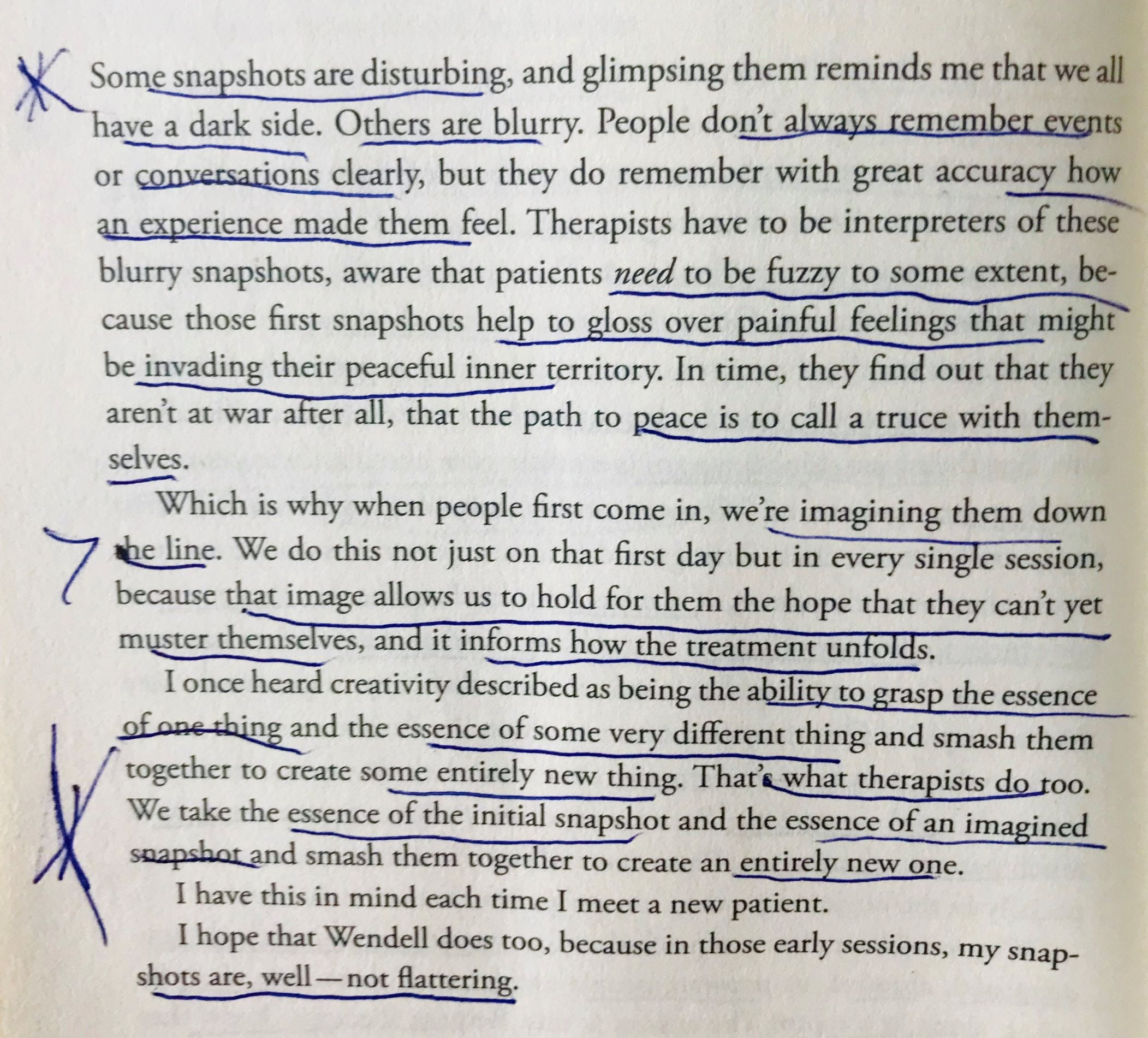
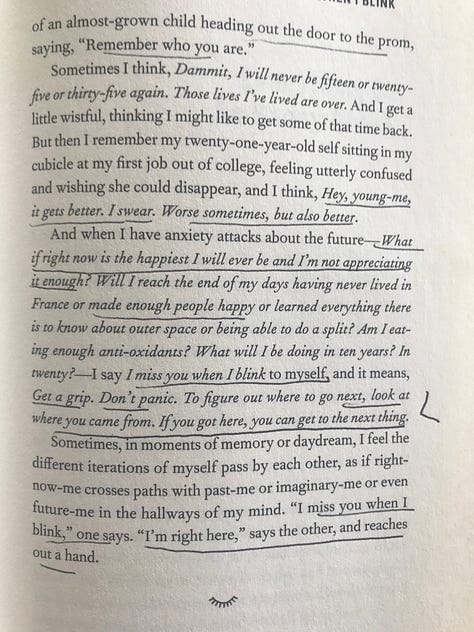
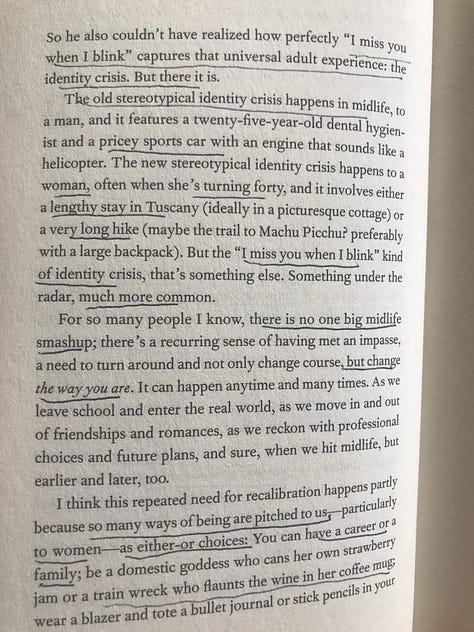
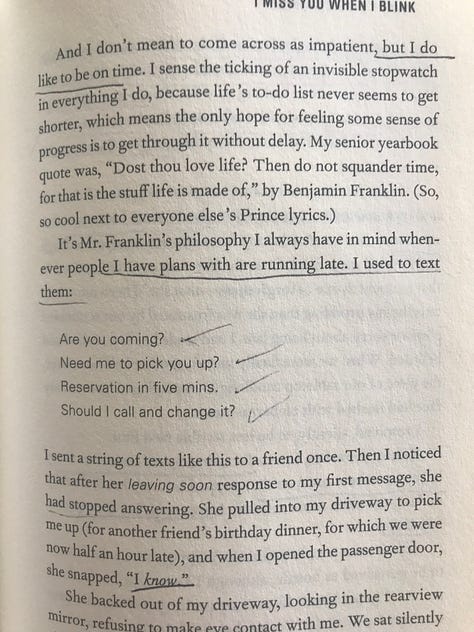
The random marks that fill the pages of her books fill me with sadness. They are visible reminders of all she has lost, the lines like shadows of who she used to be. She wanted to be a writer once. When I was in high school, she wrote a series of short stories with characters based on me and my siblings. She has a novel tucked away in a drawer somewhere that I’ve never read. I don’t know why she gave up on her dream of being a writer, and now it is too late to ask.
If we are lucky, the stories we read live on in us forever. We can draw upon an idea or a feeling evoked by a good book whenever we choose, turning an ordinary moment into something extraordinary. Like layers of skin we cannot see, we carry the experience and impression of stories with us always. Narratives have the power to pull us beyond what we know, to lead us to new ideas, new places, new understanding. We are better for the stories that live stacked in our memory, like a liminal library we can draw upon at will.
But what happens when we no longer remember stories we’ve read? Like the lines on the pages of my mom’s books, without the memory of all we’ve read are we just a shadow of who we used to be? Maybe. Perhaps. I don’t know.
I choose to believe stories persist beyond our remembering of them. That dementia— though it robs my mom of her ability to recall a story—can’t fully remove the fundamental experience from her. I imagine all the books we read in a lifetime live within us, imprinted like thousands of tiny stamps across our hearts. For my mom, they form a library she can no longer access, but that exists all the same.
I had the opportunity to share my mom’s story recently on a show about brain health produced by our university hospital. I felt privileged to sit alongside the host, Alexis del Cid, who bravely discussed the loss of her father to Alzheimer’s Disease last year. There is a unique pain embedded in witnessing a loved one gradually fade before your eyes. Some days the prolonged and relentless grief is overwhelming. But there has also been so much joy. Mom’s smile and spirit haven’t faded. It is truly a gift.

The episode has some fascinating information about brain donation. Did you know the process is separate from all other organ donations? Listen to the full episode to find out more, get an update on our heat therapy clinical trial for Alzheimer’s Disease prevention, and check out my mom’s smile.
Keep reading, writing, and loving. xx, Paige
No posts
Comments
Nothing yet. Say the first thing.
Sign in to join the conversation.