
Surgeons have started pulling plastic out of human arteries.
Not from cadavers in a teaching lab, but from the neck arteries of living patients, mid-operation.[1]
This should, of course, unsettle you.
But let’s see what the data really shows and what it might mean for your risk for heart disease, and what you can actually do about it.
In a 2024 study in the New England Journal of Medicine, they took plaque cut out of the carotid arteries of just over 250 patients and searched it for micro and nanoplastics.[1]
More than half the samples had them, at 58.4 percent to be exact.[1]
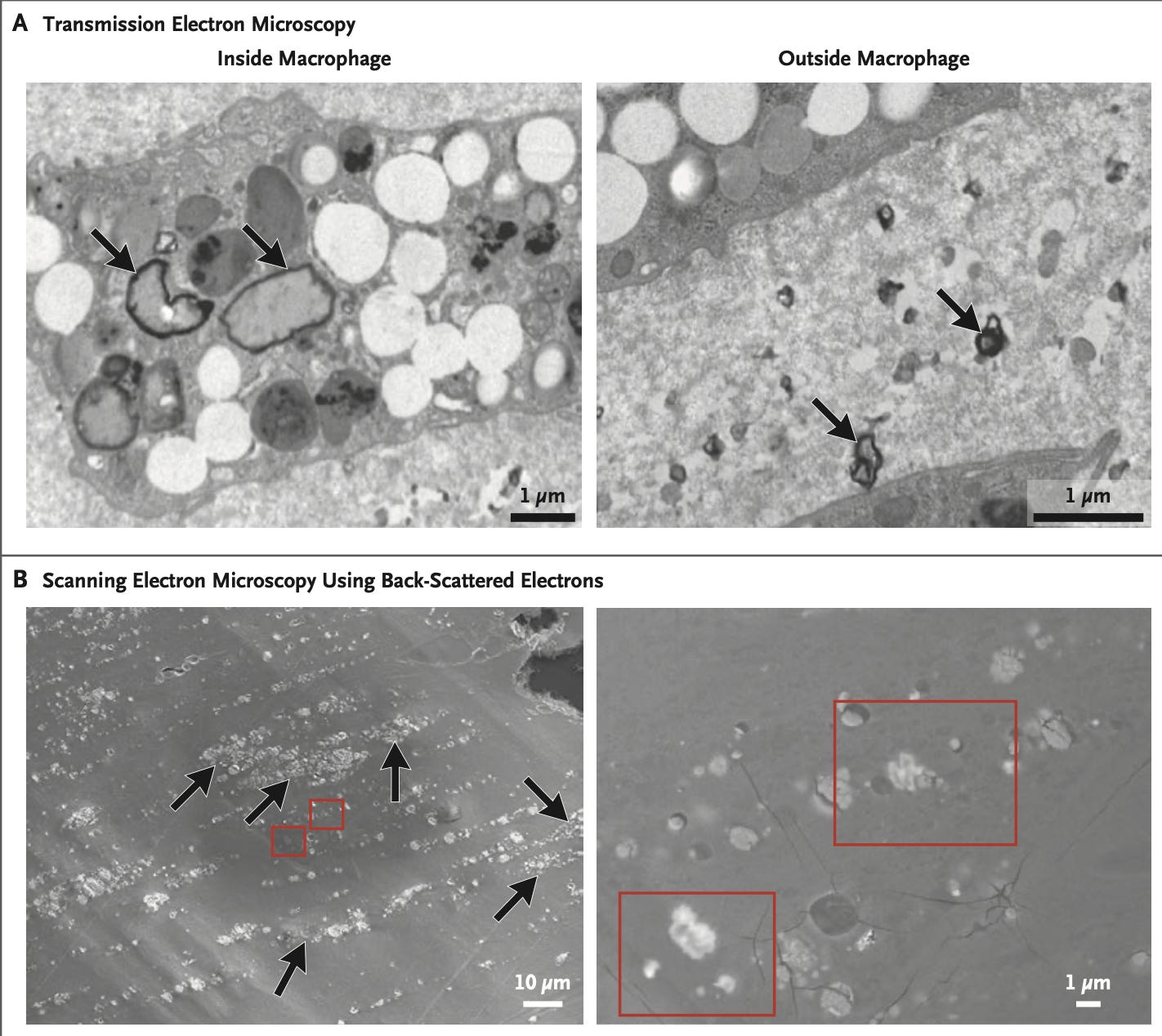
Under an electron microscope you could see the particles sitting inside the immune cells that build a plaque.[1]
They then followed these patients for about three years.[1]
Those with evidence of microplastics were about 4 and a half times more likely to have a future cardiovascular event.
This was even after adjusting for the usual confounders.
Not good.
A 2026 paper in the European Heart Journal reported plastic in the coronary blood of 84 percent of heart-attack patients versus roughly a third of people with normal arteries.[2]
In both studies, the plastic travelled with more inflammation.[1][2]
So is this an open and shut case.
Microplastics are causing heart attacks.
Let’s look at things more closely.
The particles are there. They track with worse outcomes.
And there is a coherent biological story for how they might inflame a vessel wall and weaken a plaque.[4]
And yet.
Just because microplastics are showing up in arterial plaques does not mean that they are either causing atherosclerosis or causing these plaques to rupture.
They might be. But we don’t know for sure.

The investigators of these studies are explicit that their data cannot prove cause.[1][2]
Take the most obvious rival explanation first.
An inflamed, damaged, leaky plaque may simply be better at catching stray particles than a smooth healthy artery is, which would make the plastic a marker of a bad plaque rather than the reason it went bad.[5]
This could be a classic example of reverse causation.
Then look at what other factors plastic accumulation is linked with.
In the coronary study, the only factor that independently predicted plastic in the blood was smoking, at nearly six times the odds (OR 5.69, 95% CI 1.33 to 26.63).[2]
People with heavier long-term exposure to air pollution carried more of it too.[2]
Smoking is both a plausible way for particles to reach the blood through the lungs and one of the strongest risk factors for heart disease.[3]
Try separating the plastic from the smoke. You can’t, not yet.
There’s even an argument about whether the machines are measuring what they claim.
These studies infer plastic from the chemical signature of heated tissue, and some analytical chemists have pointed out that your own body fat can show a similar signature.[3]
The plastic in people’s arteries is a real phenomenon.
What it means is unknown. A particle in the plaque is a clue, not a smoking gun (No pun intended).
This brings us to what you actually do about microplastics and your risk of heart disease.
Firstly, you cannot measure your own plastic burden in any way that means anything, and the blood tests being marketed for it are, right now, close to worthless, counting particles without telling you their size or type.[5]
Nobody has shown that lowering your burden lowers your risk.[5]
What about microplastics in our food?
Most of what you swallow leaves fast, with roughly 99 per cent of ingested plastic gone in the stool within 24 to 72 hours, so the game is reducing what accumulates.[5]
Stop heating food in plastic, because heat and acid are precisely what coax the particles and their chemical passengers out of the container.[5]
Keep leftovers in glass or steel, filter your drinking water, and pay attention to the quality of indoor air.[5]
None of these suggestions requires you to completely reorganise your life.
All of these approaches are inexpensive and require very little effort.
You’d be glad you bothered even if the risk turns out modest.
What I wouldn’t do is let this issue dominate your day-to-day life.
Focus on the fundamentals first.
If you haven’t stopped smoking, dialled in your lipids and blood pressure, optimised your sleep, and not hit your exercise or weight targets, then please put microplastics to the back of the queue.
Prevention has always been about acting before the evidence is fully in.
But that is why you should pull the major levers we have huge amounts of evidence for first.
The evidence on microplastics and cardiovascular risk is real.
The steps you need to take, however, to minimise your risk are minimal.
The data will continue to evolve and give us a better picture of the degree of risk (If any) microplastics really do contribute to lifelong cardiovascular risk.
For now, just focus on the fundamentals of cardiovascular risk and the simple steps to minimise microplastics and try not to be completely freaked out by the next microplastics article you see.
We will get an answer here, and we will continue to update the research on how much risk is at play.
Marfella R, Prattichizzo F, Sardu C, et al. Microplastics and nanoplastics in atheromas and cardiovascular events. N Engl J Med. 2024;390(10):900–910.
Paolisso P, Scisciola L, Belmonte M, et al. Micro- and nano-plastics in the coronary circulation and air pollution exposure in ischaemic heart disease presentation. Eur Heart J. 2026;ehag447.
Science Media Centre / Scimex. Expert reaction: Micro- and nano-plastics in blood linked to heart attack. 15 July 2026. (Commentary of Prof. Kevin Thomas and others; Oxford University Press news release.)
Gu E, Devorkin B, Chu M. Emerging links between cardiovascular disease and microplastics exposure — a narrative review. Hellenic J Cardiol. 2026 (in press). (Narrative, non-systematic review; cited for mechanistic overview only.)
Attia P. AMA #67: Microplastics, PFAS, and phthalates — understanding health risks and a framework for minimizing exposure. The Peter Attia Drive. 20 January 2025. (Expert podcast; cited for exposure/elimination figures, blood-test limitations, and risk-reduction framework.)
No posts
Comments
Nothing yet. Say the first thing.
Sign in to join the conversation.