
Today we’re launching a report I’ve really been looking forward to. It’s a juicy blend of myth-busting and fascinating data. Data that is way more positive than I’d expected it to be, considering the news floating around.
What’s this all about?
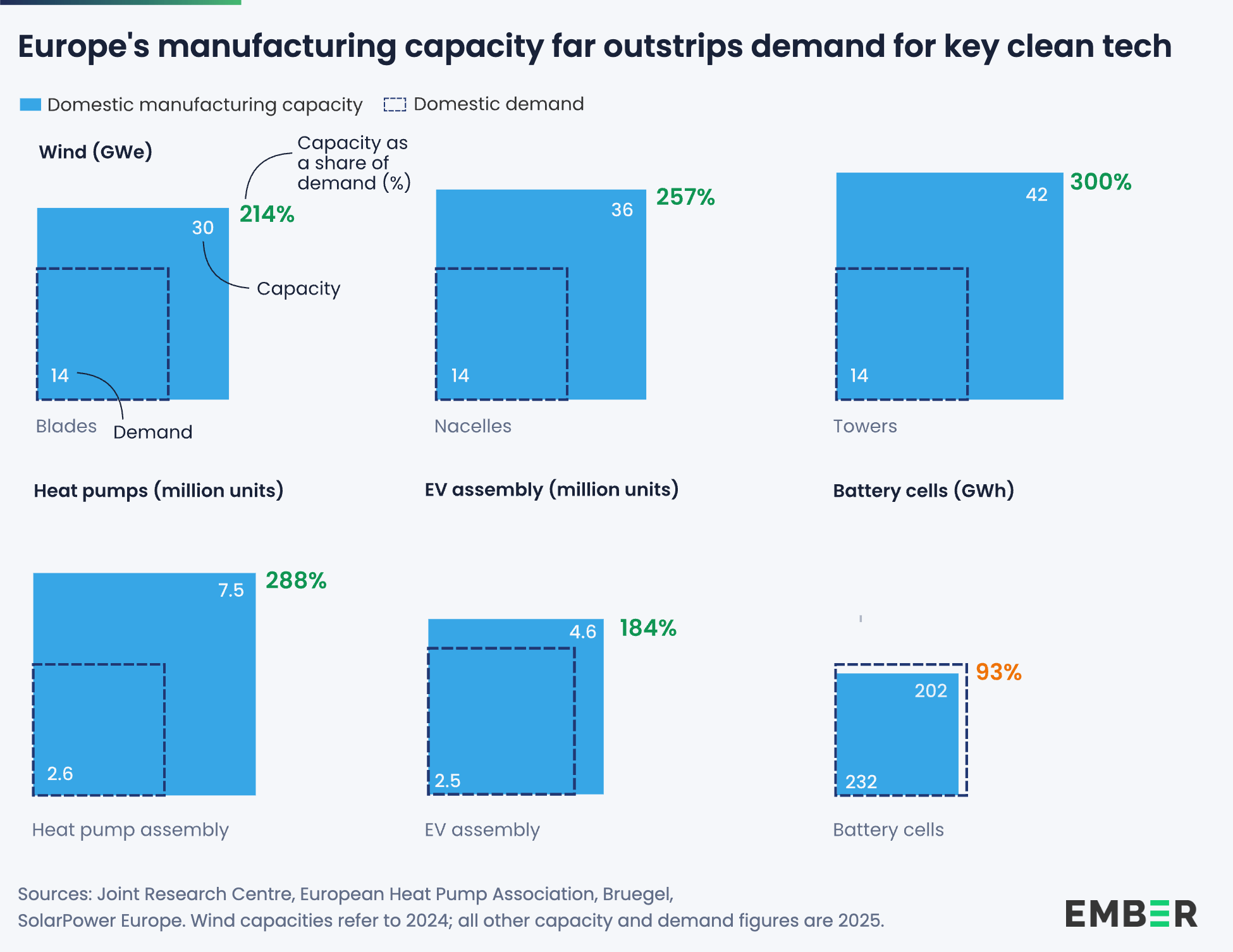
I’m going to cut to the chase: Europe can domestically produce twice as many electric vehicles and wind turbines as it deploys annually, and triple the number of heat pumps.
I was genuinely surprised when I first saw the results from the team’s great work.
Europe is not just able to domestically build the vast majority of the clean tech that it needs. We’ve actually exported €3 billion worth of wind turbines, and €29 billion worth of EVs.
But, despite these numbers, here’s the typical coverage of this topic. In this case it’s the Guardian. Our report shows such claims are, to say the least, biased.
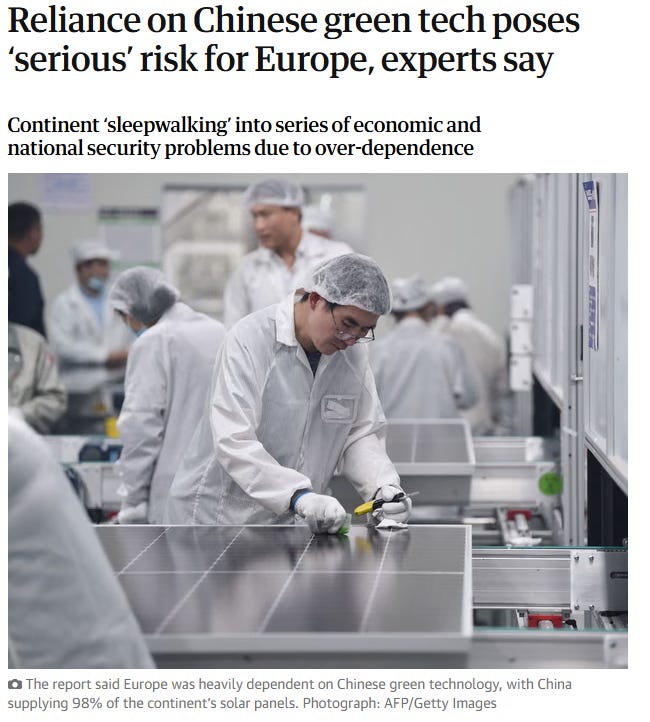
Solar panels are indeed an exception from today’s positive story. The majority of them are produced in China. Like almost everything else I have in my house, and I imagine you do too.
Why is the Guardian and every other newspaper so worried about solar panels?
They claim it’s about security risks. But see, solar panels don’t have a brain. So there is no “kill-switch“ in them. They are less smart (and less of a risk) than my vacuum cleaner.
There’s a cybersecurity risk related to, specifically, solar inverters - the components managing the solar plant and feeding electricity from the panels to the grid. More on that later.
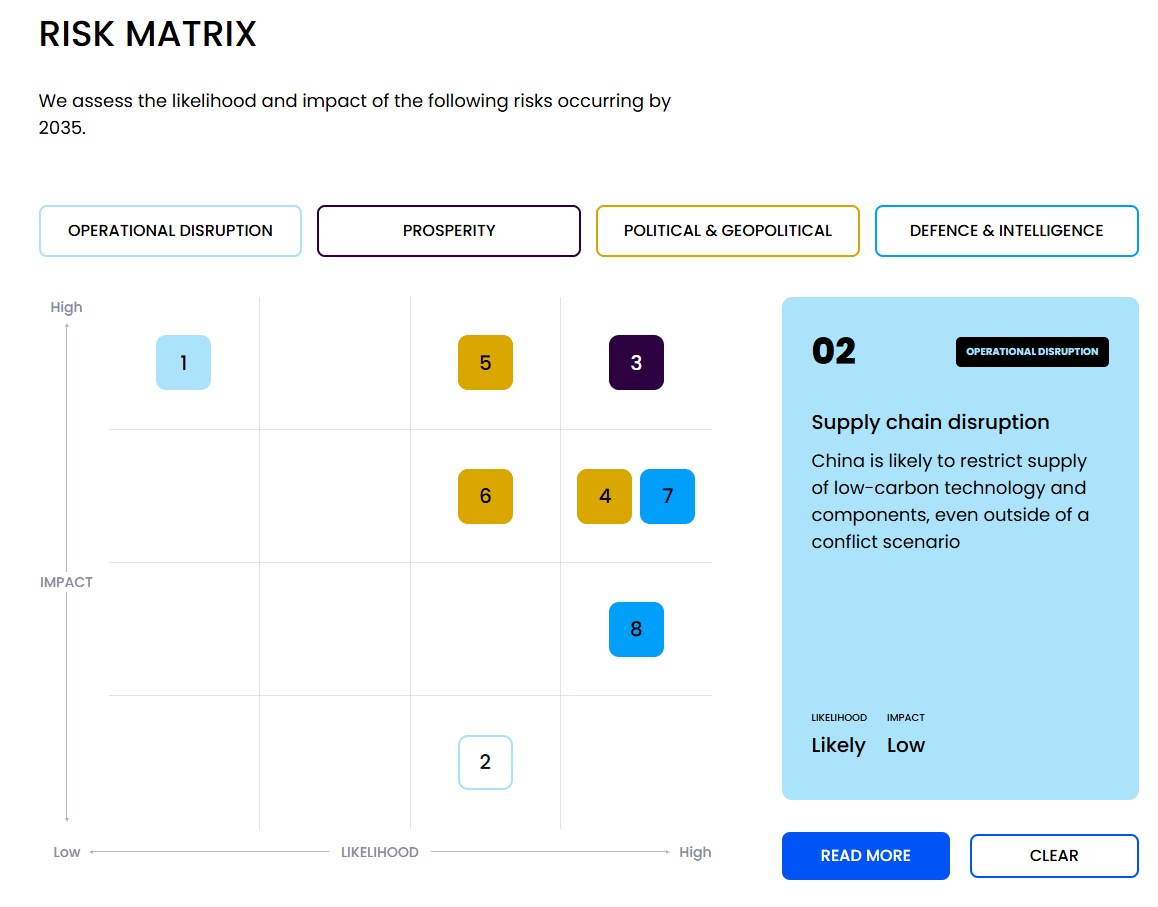
Another risk is supply chain disruption. As highlighted, for example, in the widely covered Loom report.
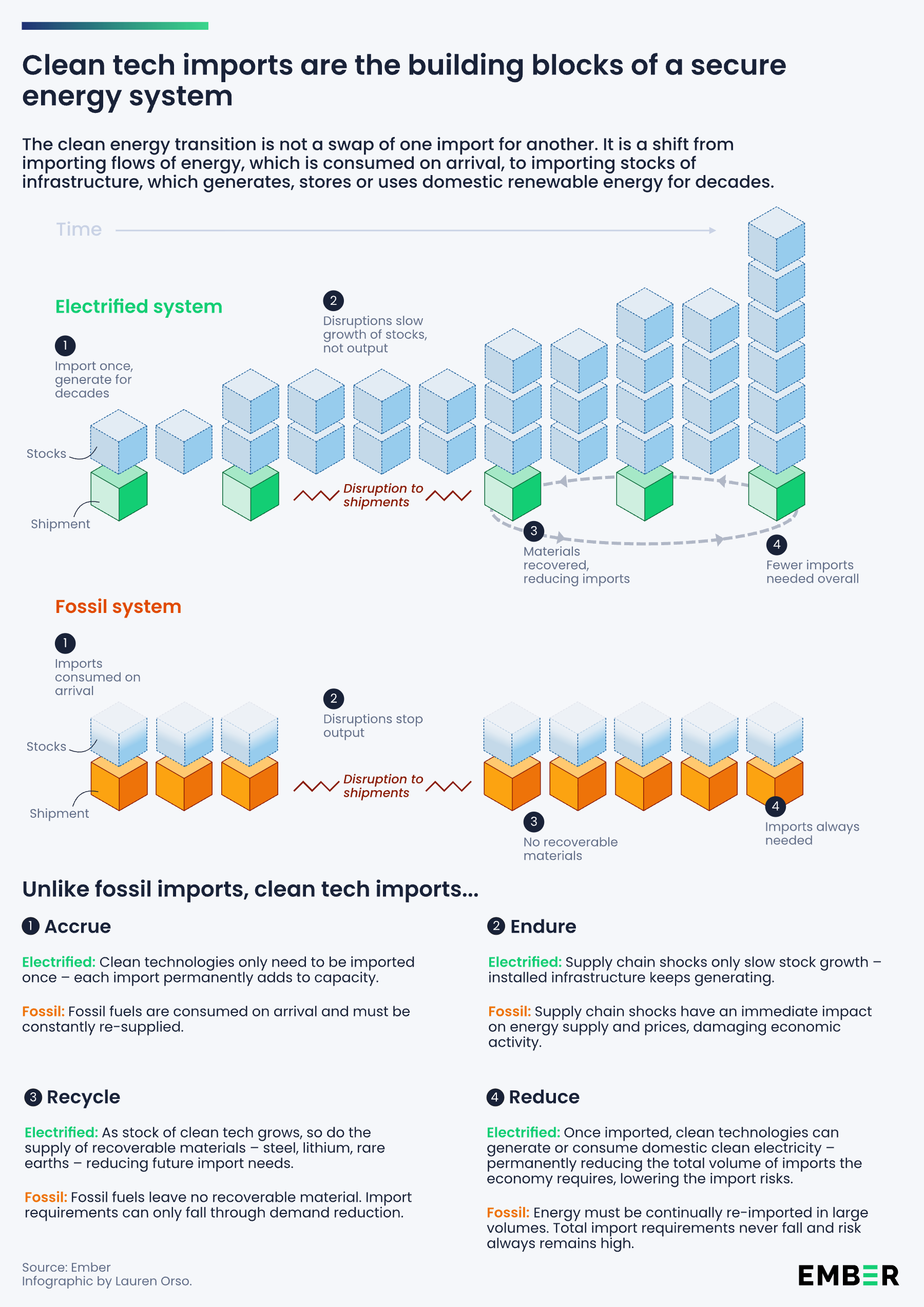
But here’s the beauty of solar, wind, and an electrified economy. Even if China stops shipments of tech to Europe (for reasons I find difficult to define), the power from the already installed capacity keeps flowing. Powering electric transport and heating too.
This is a game changer compared to oil and gas. Look at the Hormuz crisis. A disruption to oil and gas supply immediately translates to price spikes - starting with energy, ending with food and transport.
This is exactly why EU sales of EVs surged in March.
Here’s a politically incorrect comment: who in the past few months threatened to both attack a European ally, and to cut LNG shipments to Europe? After disrupting the world’s top LNG supply route? Hint: it wasn’t China.
That’s a security risk I am indeed worried about. An erratic global leader who seems to like Russia more than Europe. The only way to hedge against that is getting off his gas as soon as possible.
But gas is not the only problem.
Almost every computer in Europe runs on US software. Almost every institution uses US cloud services. From ministries, through hospitals, to defense (!). We’re finally starting a debate on kill-switches coming not from the East, but from the West. That debate needs to include US energy projects in Europe…
The cybersecurity risks include solar inverters - the brains of the solar plants. But actually, Europe’s inverter manufacturing potential (82 GW) is more than the solar capacity we added last year (65 GW). So solving that seems easy enough with a mix of incentives, public procurement and funding, and perhaps software screening for the existing inverter fleet. The EU has already made first moves on this, banning inverters from high-risk suppliers in EU-funded projects.
I know this was supposed to be a newsletter about energy. But I am a software guy (not to be confused with tech-bro), and I see cyberattacks among the top short-term national and energy security risks. A few months back I covered one attack that was close to cutting off a heat and power plant in Poland.
Summing up: there’s things we should worry about, like Mr. P. + Mr. T. dividing Europe over a vodka-budweiser, and cybersecurity. All the rest seems much less scary to me. Some of the popular claims on Europe’s clean tech dependence are just incorrect.
There’s things we are solving already: like solar inverters and Europe’s overreliance on US gas and software.
There’s more things we should solve: leveraging defense spending for clean tech projects and grid resilience, working on Europe’s recycling capacity, boosting midstream industries, improving local-content criteria.
But overall, as usual, the story becomes much more positive if you actually look at the numbers.
There’s a lot more in the Ember report, I do highly recommend it. The graphics are stunning too.
No posts
Comments
Nothing yet. Say the first thing.
Sign in to join the conversation.