
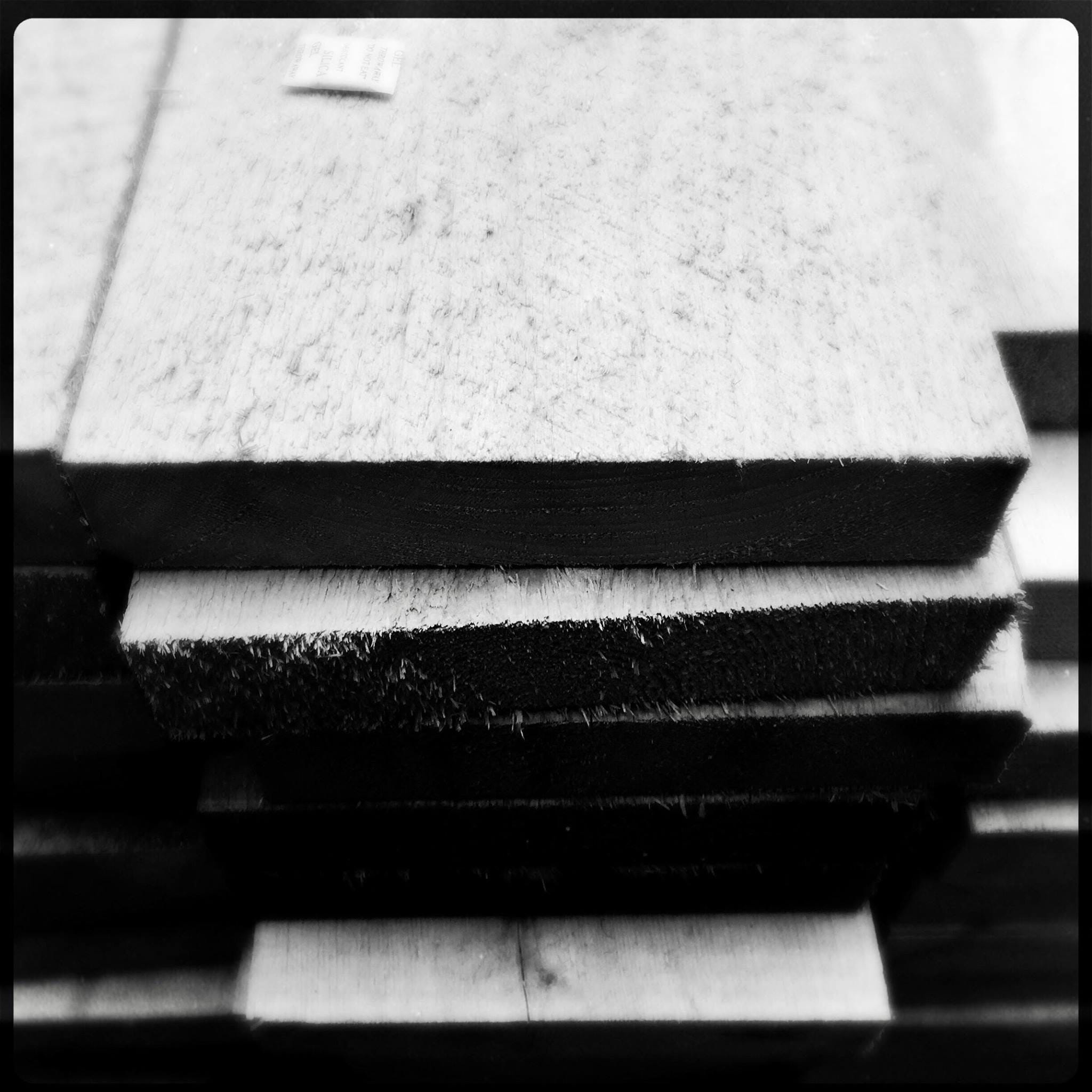
I had come to Wilton Manors after the move from Manchester. The decision had been abrupt. One morning the humidity refused to lift and by noon I was driving south from a brief stop in Montreal with the windows down and the radio off. I was thirty-six that summer. The house sat on a short rise above the canal, light coming hard off the metal roofs at four in the afternoon. I wore the same denim shirt every day, the cuffs worn from where I wiped the sawdust. There was a man named Tomas who delivered the lumber in a faded red pickup. He was in his fifties, thick through the shoulders, blue-collar in the way that suggested years of loading docks and early mornings. He wore no wedding ring. I noticed this the first time he leaned against the truck bed. He had a way of standing with one boot on the running board, talking about the price of pine as if it were the weather. I listened. I measured twice.
I bought the saw at the hardware store on Wilton Drive. The clerk wrapped it in brown paper and tied the package with string the way they still did then. That first evening I laid out the new planks across sawhorses in the yard. The sun was low and the light caught the edges, making them look sharper than they were. I cut them to length and fitted them into place. By dusk the floor was level again. I stood in the doorway and felt the give under my feet had vanished.It satisfied.
Tomas came the next week with a load of cedar for the exterior trim. We unloaded in silence at first. His hands were broad and scarred across the palms, the forearms corded from years of lifting. He told me about a job he had done years earlier on a property farther north where the owner had insisted on using only reclaimed timber from an old dock. The wood had been full of nails and hidden rot but the man wanted the look of age. Tomas said he had spent three days pulling splinters from his forearms after that job. I nodded. I understood the appeal of the reclaimed. There was something in the way old wood remembered its shape.
The neighbors watched from across the lane. There was a man named Russell who lived in the house with the blue shutters. He wore a coral pink cotton shirt most mornings and he would stand on his porch with a coffee cup in one hand, shading his eyes with the other. His partner worked the night shift at one of the clubs on Wilton Drive and he kept the yard swept even though the dust came back by midmorning, the small ritual of it suggesting arrangements that had already begun to come apart. One afternoon Russell crossed the lane carrying a plate of biscuits still warm from the oven. He set it on the sawhorse and asked if I needed help with the trim. I said no. He lingered anyway. He told me about the couple that had lived in my house before me. They had planted hibiscus along the fence but the iguanas ate them down to the stems every spring. Russell spoke of his own household with the same careful neutrality, as if naming the facts might keep them from shifting. I listened while I fitted the next board. His voice had the flat cadence of someone who had lived in the neighborhood all his life. He had learned not to expect too much from the hours after dark. When he left I brushed dust and debris from the sawhorse and noticed a thin splinter lodged in the pad of my thumb. I pulled it out with my teeth and the blood came quick and bright.
The work gave me something steady to hold to. I could take a length of pine and see the finished window frame before the first cut. I kept the boards swept and the joints tight. The floorboards no longer shifted when I crossed the room at night. I began to repair the porch railing where it had rotted at the base. I mixed the preservative in an old coffee can and brushed it on in long strokes. The liquid soaked in dark and even. By the time the sun dropped the railing looked new. I sat on the steps with my back against the post and watched the light fade from the metal roofs across the canal. The air cooled slowly. A truck passed at the end of the street. Its headlights swept the yard for a moment then vanished. The house felt steadier underfoot, anchored. I thought then that some part of the day had stayed in my hands.
Tomas returned with more lumber toward the end of July. The heat had settled in and the canal ran low. He wiped his forehead with a bandanna and said the forecast called for wind by the weekend. I paid him in cash from the envelope I kept in the kitchen drawer. He counted the bills twice out of habit. Before he left he pointed to the new trim and said it looked professional. I thanked him. I was conscious again of the way I looked at him, at the set of his shoulders and the line of his jaw, at the absence of any ring on his left hand. He met my eyes for a moment longer than necessary. That same faint amusement crossed his face, nothing cruel in it, only a kind of knowing tolerance. After the truck pulled away I stood in the yard and ran my palm along the cedar again. The grain was tight. There was no give. That night I dreamed of the ship canal and the way the fog used to press against the windows of the old flat. When I woke the room was still and the floorboards held my weight without complaint.
Russell came again a few days later. He stood in the yard and watched me work for a time, his shoulders set against the heat. He said the wind was already stirring the dust in construction along Kensington Place. I could see it rising in thin plumes beyond the fence. When he left I swept the porch and found a splinter the size of a needle embedded in the wood near the railing. I pried it free and held it to the light. It caught the afternoon sun and looked almost translucent.
The wind came on Saturday as Tomas had predicted. It started low in the morning and built through the afternoon. By evening it was pushing against the house with a steady pressure. I stood at the front window and watched the dust swirl across the yard. The boards stayed in place but the new trim creaked once or twice. I went outside and checked the nails. They held. Russell’s shutters banged against the blue siding across the lane. He came out in a sweater pulled over his shirt and tried to fasten them. The wind tore the fabric from his hands. I crossed the lane and helped him. His fingers were cold against mine. We got the shutters latched and stood for a moment in the lee of the house. He said his partner had called from the club and told him to stay inside; the words came out hard, the way instructions do when they follow something harder to say. Back in my own yard I saw that one of the hibiscus stems Russell had mentioned earlier had broken loose and lay across the path. I picked it up and carried it to the trash. Brittle and stiff it scratched my palm but I did not feel it until later.
The next morning the air was still. I walked the boards and saw where the wind had shifted one an eighth of an inch out of line. I pried it up and reset it. The grain had twisted slightly overnight. I sanded the high spot until it lay flush again. Tomas drove by and slowed the truck. He waved once and kept going. I worked through the morning fitting the last pieces of baseboard in the front room. The radio played low in the kitchen. The announcer spoke of storms arriving in the keys to the south. I paid no attention. The wood absorbed the words and lay silent.
I watched Russell from the porch later that week and felt something give a little in the usual order of things. The boards were true but the lives around them kept their own pace. I saw then how the wood had given me the illusion of order while everything else moved toward its own unraveling.
By late August the house was finished inside and out. The floors gleamed in the early morning sun. The windowsills fit tight against the frames. I walked from room to room and the sound of my steps was solid. Russell came one final time. He stood on the porch and ran his hand along the new railing. He said it looked like something built to last. His coral pink shirt had a tear at the hem where the wind had caught it weeks earlier. I offered him a chair but he shook his head. He said he had to get back before the club shift ended. I watched him cross the lane. The light slanted low and caught a swarm of lovebugs dancing in the air.
I left Wilton Manors in September. The house stood empty again but the boards remained. I packed the saw in the trunk and drove south again. The radio played the same station until the signal faded. I thought about the splinter in my thumb that first day and how it had healed without a scar. The control I had felt was real enough while it lasted. The wood had obeyed. The rest had not. In the rearview mirror the neighborhood receded under a clear sky. I did not look back again. The wind would find the loose nails soon enough. The dust would settle into the new joints and the floors would shift once more. It was the way of things in that place. I kept driving until the scent of salt was gone and the light changed to something softer. What I carried with me was quieter than I had expected. The superpower had been temporary. I had shared a house, and a bed, but I was alone that summer.
Comments
Nothing yet. Say the first thing.
Sign in to join the conversation.