
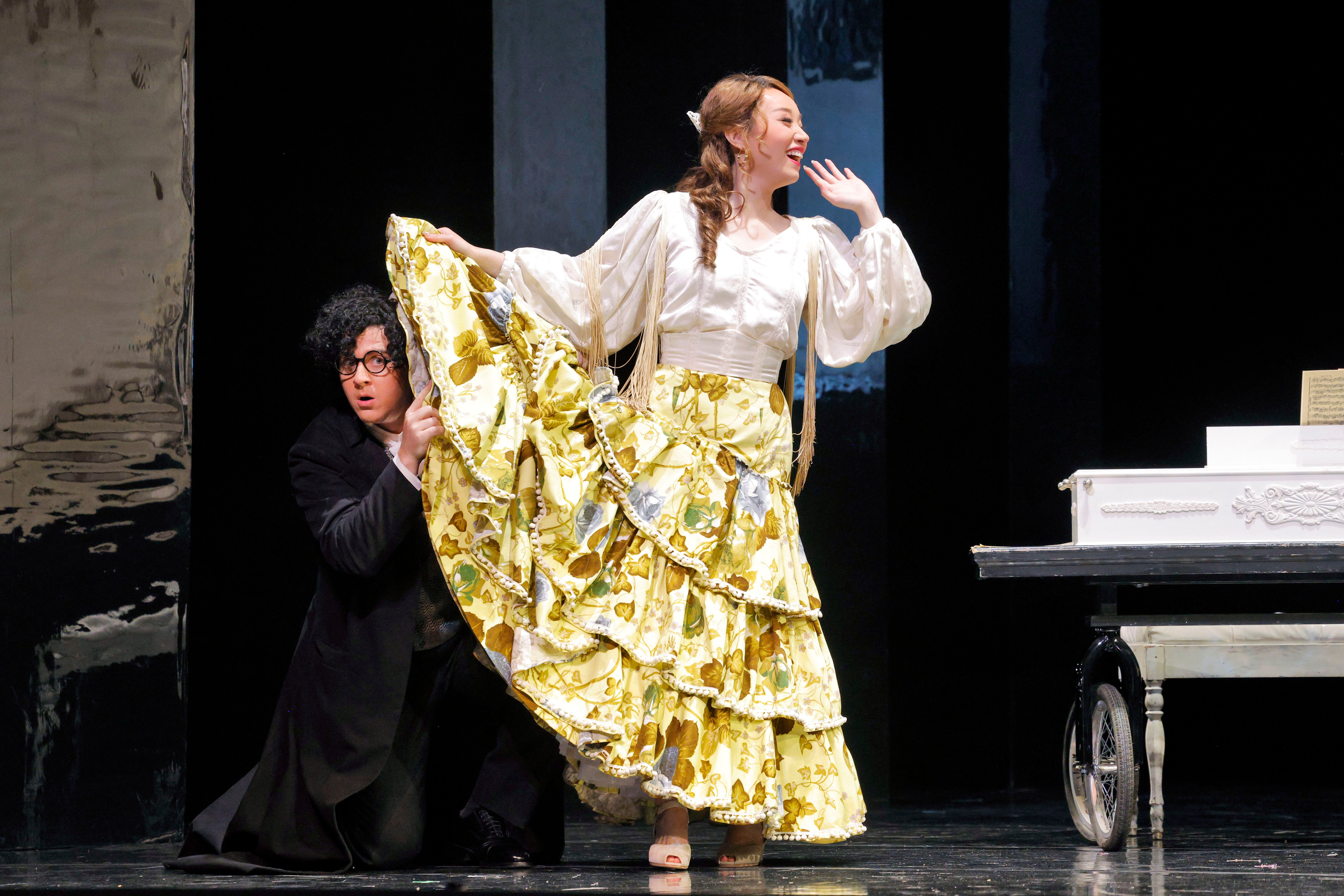
I always like it when the San Francisco Opera mounts a revival of a standard-rep item — La Bohème, La Traviata, or whatnot — with two completely different casts in alternation. From the company’s perspective, of course, it’s a way to squeeze in multiple performances of a reliable crowd-pleaser and maximize the old revenue stream. But for some of us, it’s an excuse to visit and revisit familiar favorites, and especially to do a little compare-and-contrast as we watch different singers put their particular spin on the same roles.
The double-barreled revival of Rossini’s Barber of Seville now on offer at the War Memorial Opera House provides all those pleasures and more. You could haggle over the respective merits of one artist or another — maybe this one takes a broader, more declamatory approach while that one shapes the part with more intimate directness. But you can’t really go wrong with either cast, and the endlessly ebullient charm and wit of Rossini’s score makes the whole thing a pleasure.
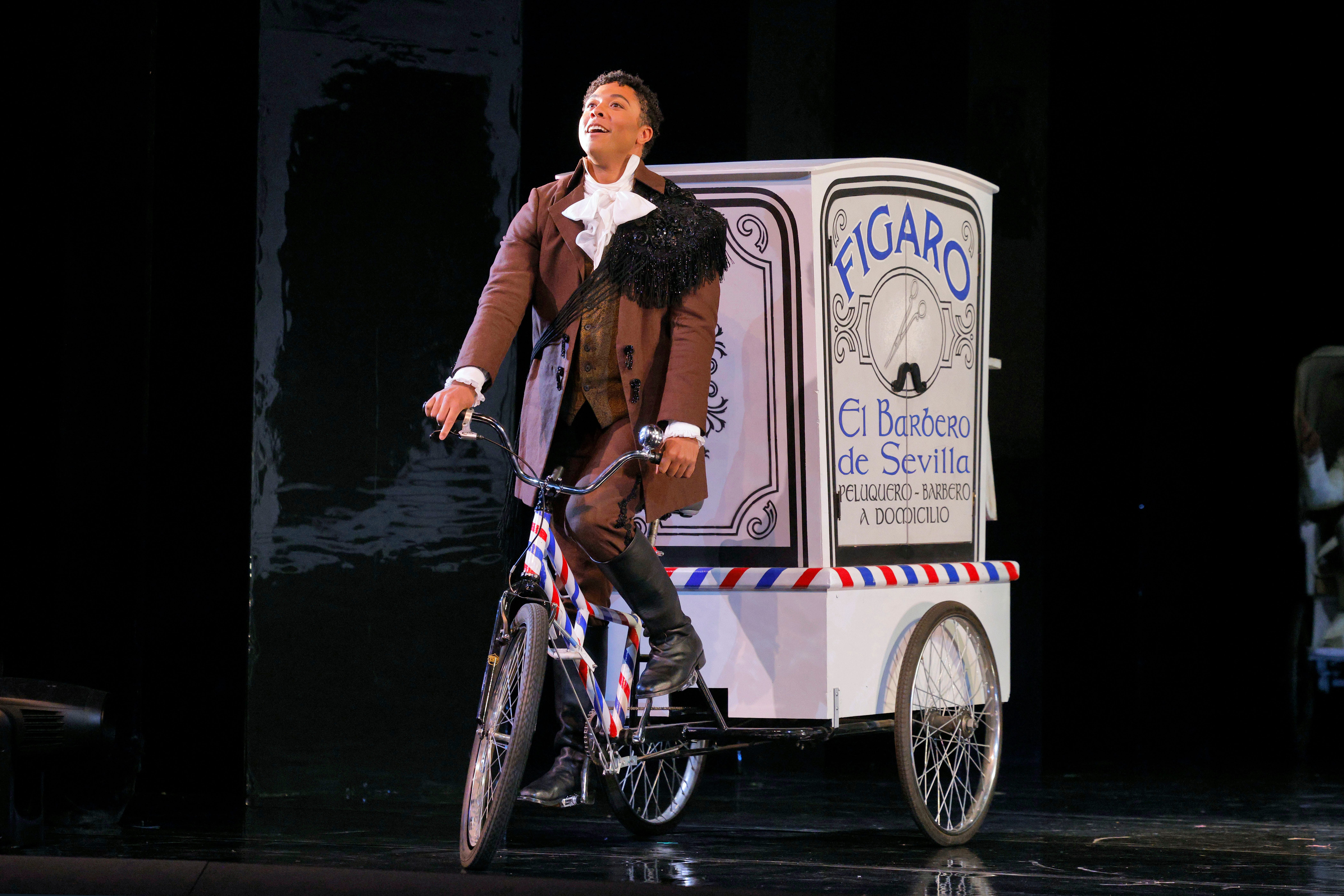
Perhaps the sharpest contrast was between the two inhabitants of the title role. Joshua Hopkins opted for a more traditionally hammy Figaro, giving “Largo al factotum” the full-on theatrical treatment and just generally making himself a presence throughout Act 2. It works because his voice is so robust and mellifluous, but I confess I was taken with the finer-grained approach of debuting baritone Justin Austin. It’s rare to hear a singer whittle the role down to a manageable size rather than trying to fill the entire hall, and Austin’s Figaro, which made you lean in for the complete payoff, was a marvel of delicacy and tact.
Both Maria Kataeva and Hongni Wu wrung every ounce of coquettish charm out of Rosina, but Wu did it while celebrating the rigors and glitter of Rossini’s coloratura writing. In “Una voce poco fa,” she seemed to be inviting the audience behind the scenes to show us how the magic happened — here’s my trill, here’s another one, now watch as I string them all together — but with results that were as musically coherent as anyone could wish. The American tenor Jack Swanson made a superb company debut as Almaviva, as did his fellow debutant Levy Sekgapane. If there was a significant difference between the Bartolos (sorry, Bartoli) of Renato Girolami and Patrick Carfizzi, it went over my head; both of them gave resplendent voice to the character’s curmudgeonly outrage, and were well partnered with the insinuating Don Basilio of Riccardo Fassi.
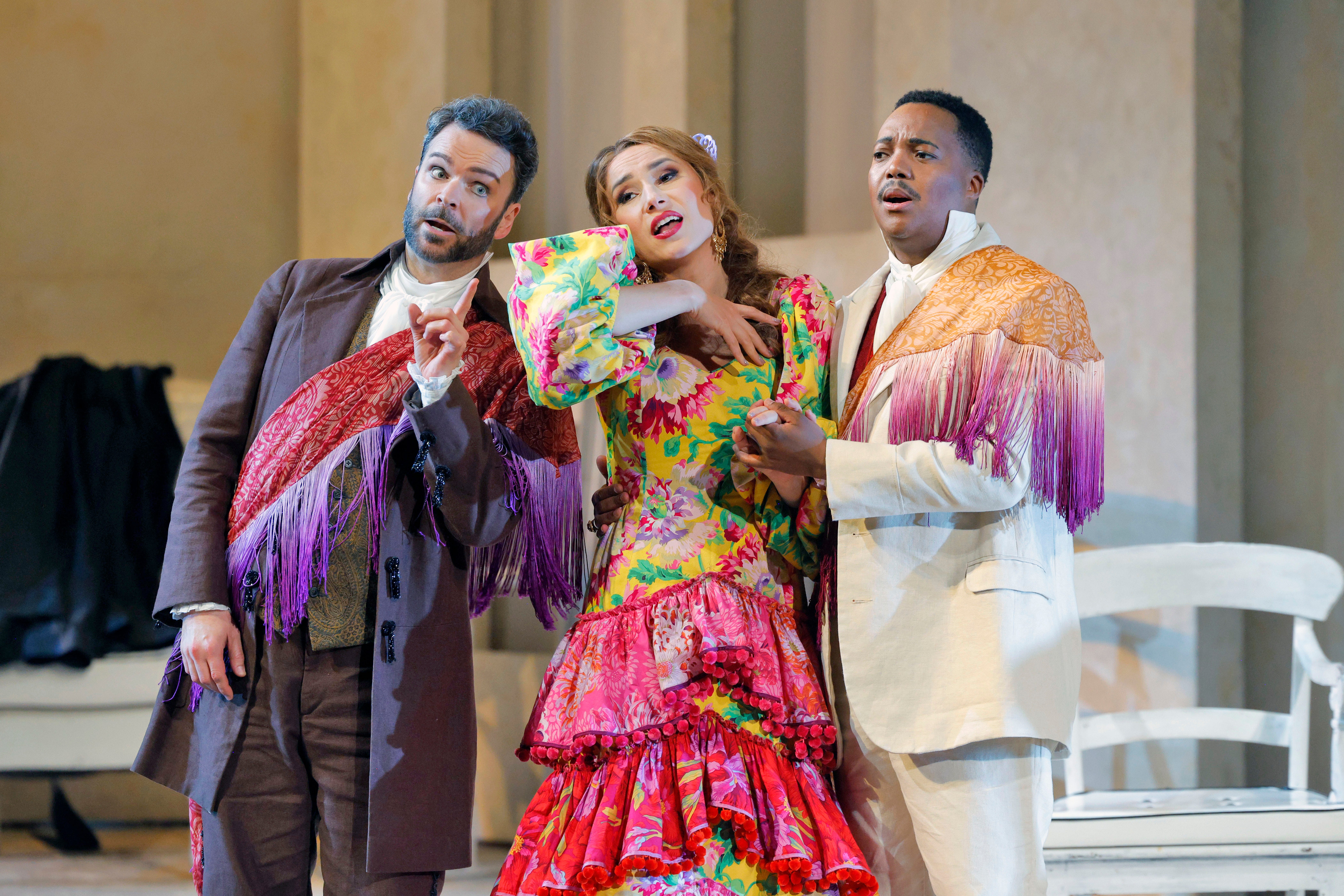
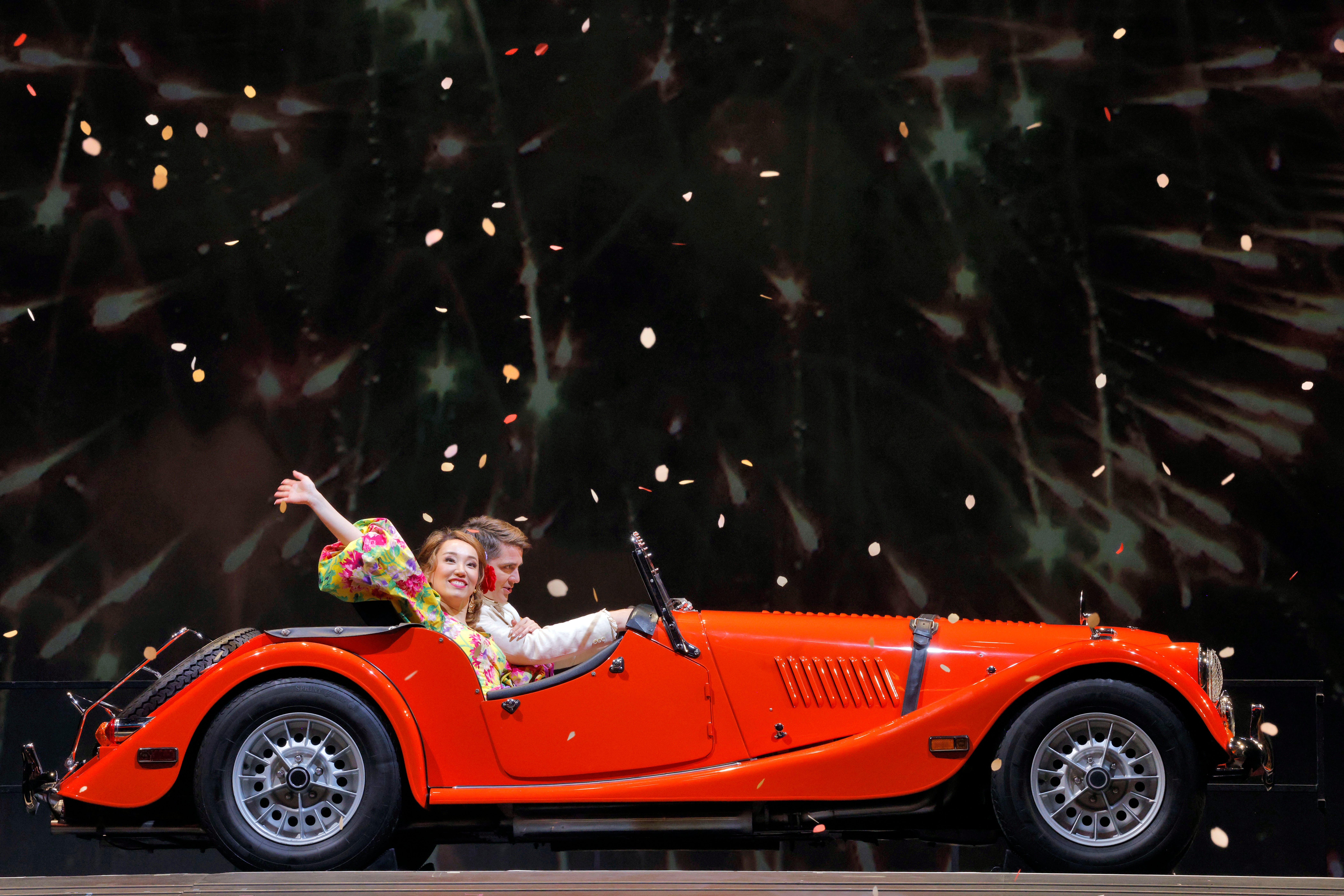
I can’t say I quite understand the point of Emilio Sagi’s production, with its extra-Spanish flamenco theme, the souped-up getaway car for the newlyweds, and the weird semi-gutter underneath the main set where characters and props emerge like sewer clowns from some operatic adaptation of Stephen King’s It. But it gets the job done, so let it pass.
If there’s one serious fly in the operatic ointment — and there is — it’s in the pit, where conductor Benjamin Manis spent two nights tripping over his own feet in an ill-fated attempt to keep the musical action both swift and on track. His tempos were frequently unsteady, the orchestral balances were unpredictable, and singers often seemed to be left to find the downbeat as best they could or else make one up for themselves.
Finally, because it’s been at least 15 minutes since we last celebrated the presence in our community of the great Catherine Cook, it’s worth rejoicing yet again over her appearance as the maid, Berta. It’s a signature role for her, and she does it with such panache, such vocal bravura, that you have to just sit back in wonder. Also, she does a bit of wordless clowning in front of the curtain before Act 2 that is both wholly gratuitous and completely irresistible. If every opera devoted three minutes after intermission to letting Catherine Cook do her thing, the world would be a happier place.
PS: I forgot to mention it in last week’s review of Elektra, but if you catch either of those operas this summer, be sure to pick up a program and do the crossword puzzle by yours truly.
The Barber of Seville: San Francisco Opera, through June 27. www.sfopera.com.
Elsewhere:
Steven Winn, San Francisco Chronicle/SFCV: “Making her U.S. debut on opening night, Russian mezzo-soprano Maria Kataeva made Rosina a delectable chameleon — a swoony lover one moment, an antic clown the next, and then a knowing mock-innocent. Her sensuous voice, with its purring warmth in the lower register and a steely top, was form-fitted to the buffeted but determined heroine.”
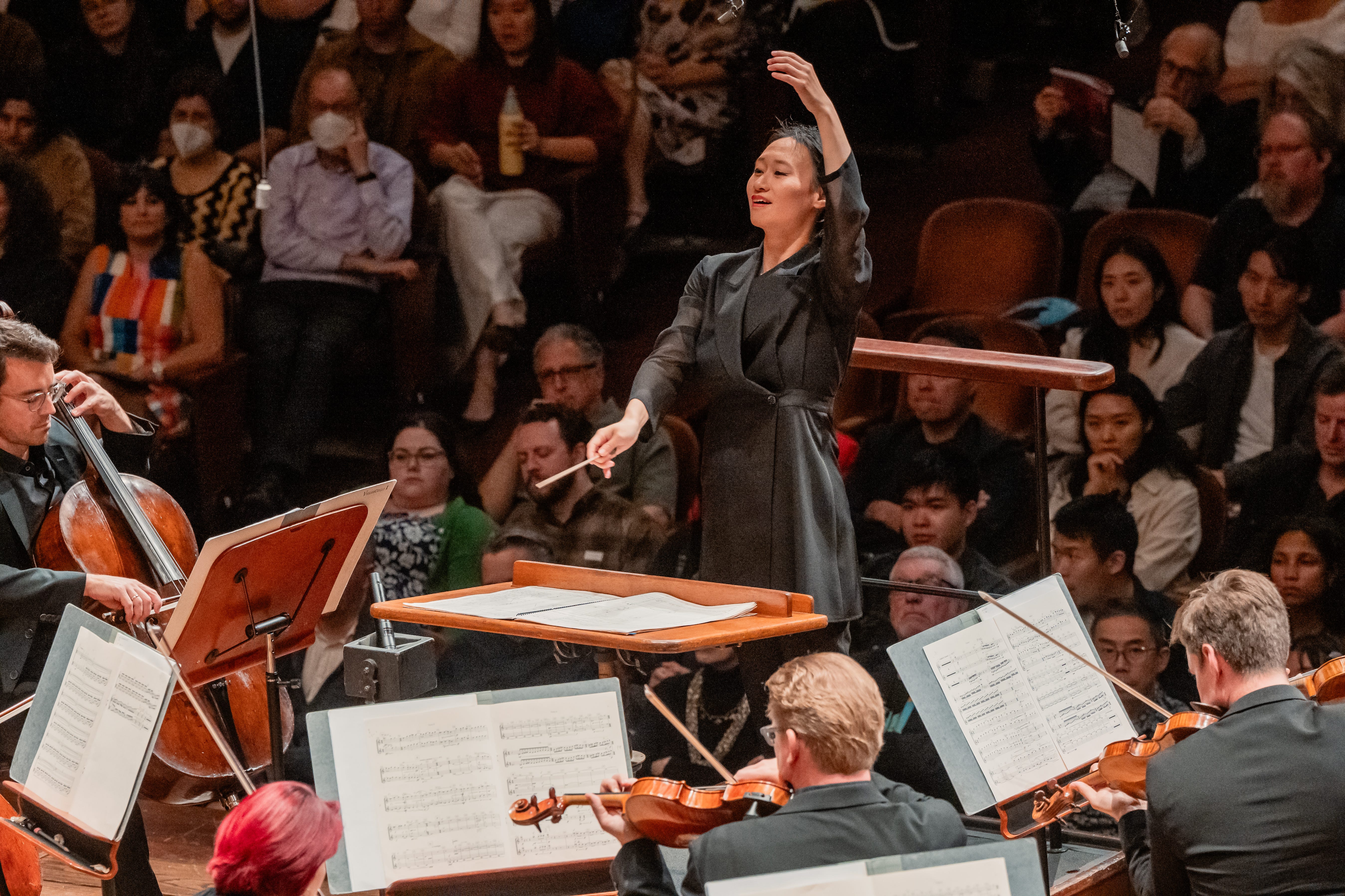
Saturday’s San Francisco Symphony concert was one of the orchestra’s least successful undertakings of recent months. Guest artists, programming, execution — none of it did anyone involved much credit.
Conductor Tianyi Lu, in her Symphony debut, displayed an impressive podium technique, by which I mean an ability to get the orchestra to play just the way she wanted. Unfortunately, what she wanted was rarely very persuasive or interesting. Rimsky-Korsakov’s Scheherazade, after a glorious duo opening featuring concertmaster Alexander Barantschik and harpist Katherine Siochi, proceeded to galumph its way across the stage, turning the score’s component narratives into one thunderous technicolor epic after another.
Lu’s insistence on a high-impact reading generally didn’t pay off. Tempos were too fast for Barantschik to unspool the title character’s violin soliloquies with the requisite spaciousness. The initial orchestral section was clearly meant to be an impressive call to attention; instead, it sounded like someone struggling to get a heavy aircraft safely off the ground. The evening’s curtain-raiser, an ingratiating tone poem by the Iranian Canadian composer Iman Habibi titled Zhiân, got off to winning start only to fall quickly into glib platitudes.
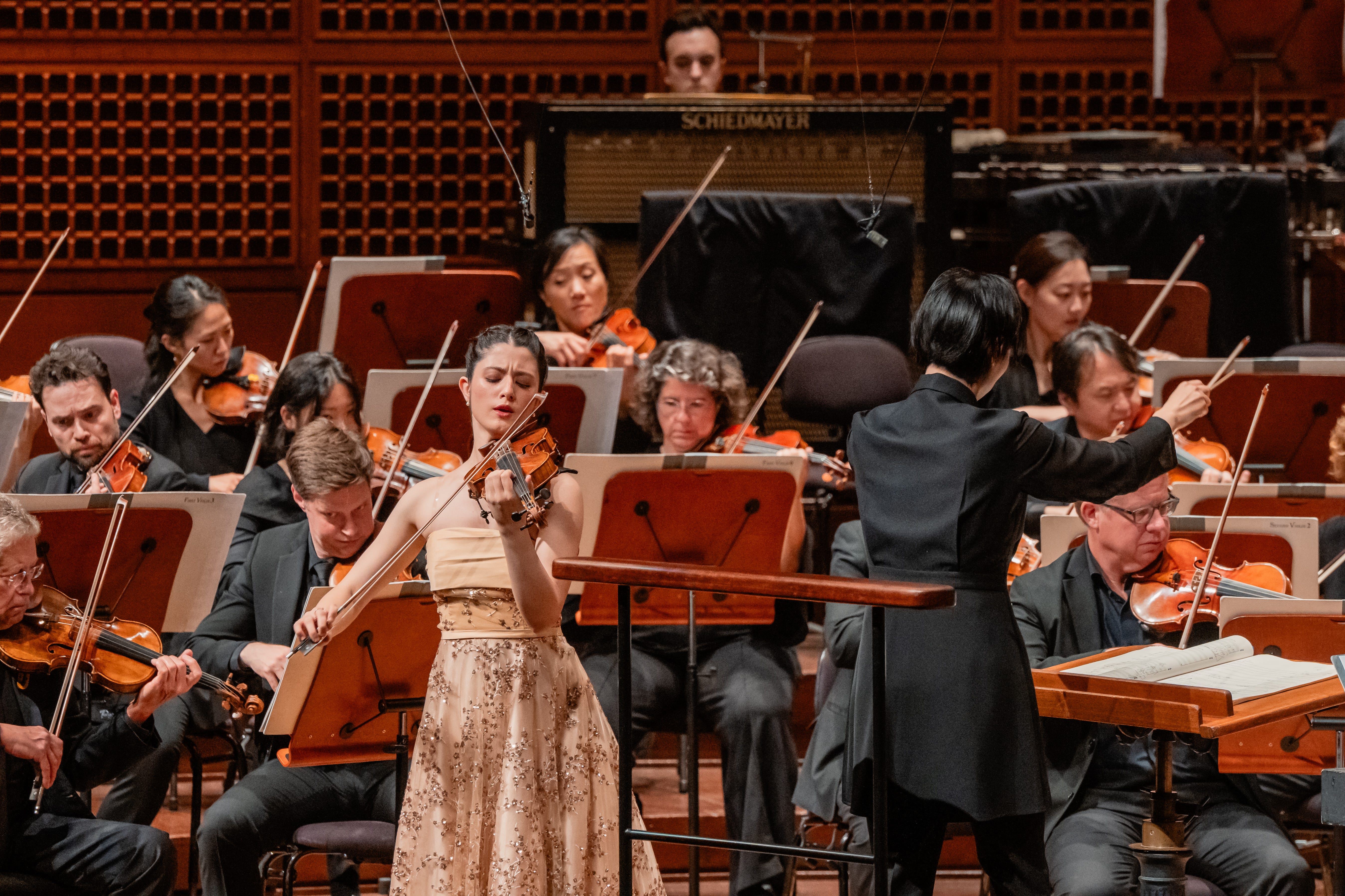
Most dismaying, though, was the performance of Erich Wolfgang Korngold’s Violin Concerto with the young Spanish violinist María Dueñas as soloist. When Dueñas made a premature Symphony debut at the age of 16, the inconsequentiality of her artistry was of less moment than the sheer fact of a child being put onstage — something that’s regrettable almost by definition. Nearly seven years later, one could remark instead on her technical and interpretive weaknesses, including scrawny string tone, flawed intonation, and rhetorical blurriness. Korngold’s ragtag concerto, cobbled together out of various excerpts from his film scores, is a hard sell even when a performer as brilliant as Hilary Hahn takes it on; under these circumstances, it fell utterly flat.
Elsewhere:
Steven Winn, San Francisco Chronicle/SFCV: “A week after Elim Chan made her high-impact debut as music director designate of the San Francisco Symphony, guest conductor Tianyi Lu led an ill-conceived, overstuffed program at Davies Symphony Hall.”
From Out of Left Field #324 by Henri Picciotto and me, sent to subscribers last Thursday:
River where you might refill your Cup o’ Noodles? (7)
Last week’s clue:
Bishop on whaler smuggling drugs? To begin with, it is something you should stop doing (3,5)
Solution: BAD HABIT
Bishop: B (chess)
whaler: AHAB
smuggling: container indicator
drugs, to begin with: D
it: IT
something you should stop doing: definition
• San Francisco Symphony: James Gaffigan leads the orchestra in a program dedicated to the memory of Michael Tilson Thomas. It features Beethoven’s Ninth — the centerpiece of MTT’s 1995 inaugural program as music director — along with his own Agnegram, and music by Brahms and Ives. June 18-21, Davies Symphony Hall. www.sfsymphony.org.
• Bay Area Rainbow Symphony: Conductor Robert Mollicone, who took his first bow as the orchestra’s new music director in December, returns to lead the annual Pride Concert. At the centerpiece is the San Francisco premiere of Jake Heggie’s song cycle Good Morning, Beauty, with a text by Taylor Mac and featuring mezzo-soprano Nikola Printz as soloist. Harold Arlen’s concert suite from The Wizard of Oz and Brahms’ Third Symphony complete the program. June 20, San Francisco Conservatory of Music. www.bars-sf.org.
No posts
Comments
Nothing yet. Say the first thing.
Sign in to join the conversation.