
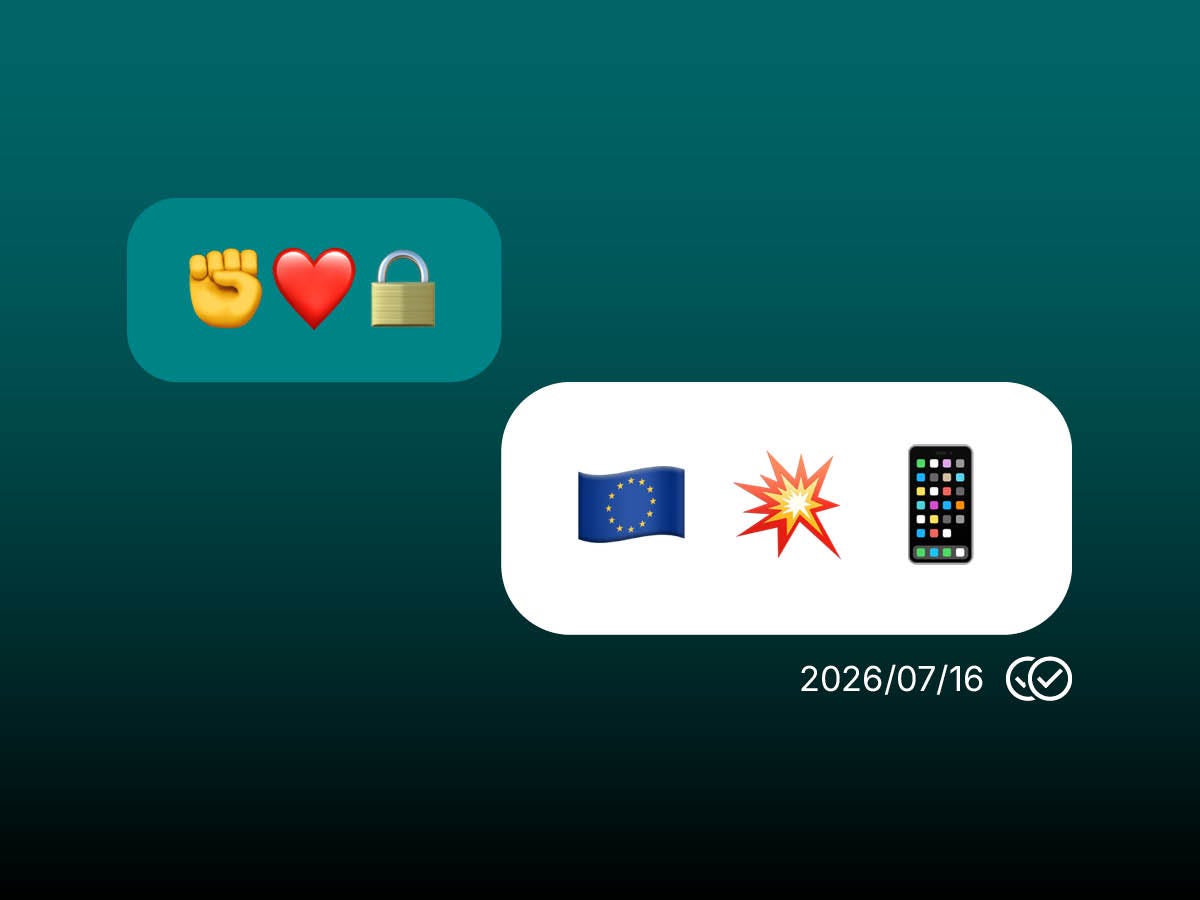
There is a specific moment when you realize that an era has come to an end. For smartphones, that moment arrived with the European Commission’s complaint against Google regarding Gemini and Android. As a recent analysis in The Cryptonomist points out, Brussels isn’t asking for mere technical adjustments: it’s ordering the dismantling of the vertical integration that has defined the mobile experience for twenty years. The message is brutal but necessary:
You can no longer sell a “closed” device where the hardware, operating system, and AI services are a single, inseparable entity.
If you want to sell in Europe, you must accept that the infrastructure (your phone) must be neutral with respect to the services (your AI, your voice assistant).
Apple knows this. Google fears it. They’re all crying foul, talking about the “end of innovation” and “compromised security.” But it’s a convenient lie. They’re not defending the user; they’re defending their monopoly over how your data is collected, processed, and monetized.
Here’s what will happen: You’ll be able to choose your own voice assistant. No more preinstalled and default “Hey Google” or “Hey Siri” – instead, you’ll be able to say “Jarvis” (or whoever else you choose) and have your phone recognize your voice without having to go through the operating system owner’s filter.
The European Commission is calling for:
Hardware should not natively favor the manufacturer’s services.
Voice recognition models should be able to run in isolated processes managed by third parties.
Users should have real control over which AI processes their biometric data.
Why does this terrify Big Tech? Because until recently, their secret weapon was integration. They sold you a “perfect” phone because the AI was built right into the device’s silicon. It was convenient, sure. But it was also a trap. You couldn’t switch providers without switching phones. You couldn’t decide whether your voice data was processed by a company that respects privacy or one that sells it to advertisers.
Now Europe is saying: enough is enough. If the hardware is yours, the data is yours. The operating system is just a bridge, not a customs officer.
Apple and Google’s warning is always the same: “If we open up the system, security will collapse.” It’s the same excuse used to block DMA in Europe and now to resist AICOA in the U.S.
But this logic is flawed. A truly secure architecture does not depend on everything being controlled by a single, closed entity. It depends on transparent protocols, process isolation, and open standards. If the security of a voice assistant requires that you cannot uninstall or replace it, then that is not security – it is digital imprisonment.
To paraphrase the central concept of Meishi’s manifesto on individual freedom versus centralized control: “We are not seeking the perfection of a closed ecosystem, but the sovereignty of a free individual.”
Europe is finally recognizing what we’ve known for years: data sovereignty isn’t a technical option – it’s a human right. If you can’t choose who processes your voice, your photos, or your locations, then you don’t own your device. You’re just renting a room in someone else’s building, where the landlord decides who comes in and what they do.
Analysts are talking about “the end of the smartphone as we know it today.” They’re right – but not in the way the tech giants fear. The end of a device that treats you like a product to be exploited is the beginning of a device that treats you like a human being to be respected.
Imagine a future where:
Your phone is a neutral computer.
You can install AI that respects your privacy (such as AI based on local or open-source models) without the manufacturer blocking you.
Your biometric data remains under your control, not in a corporate cloud.
This scenario terrifies those who have built empires on surveillance. For them, fragmentation is chaos. For us, it’s freedom.
The battle in Europe is just the beginning. The big tech companies will try to resist, to circumvent the rules, to convince you that complexity is a bad thing and that the simplicity of a closed ecosystem is the only way to live.
But the question is simple: do you want a device that works well only as long as you obey the owner’s rules, or one that works for you, regardless of who made it? Europe has struck the first blow to break the chains. Now it’s up to us to make sure the door stays open.
Don’t settle for an “integrated product.” Demand your autonomy.
The concept of Data Sovereignty in the Meishi Manifesto is missing here. If access to our data is restricted for commercial, regulatory, power, or security reasons, are we owners or just renters of our own lives? Data Sovereignty isn’t a gift – it’s a right we build ourselves. While you wait for the next post, I ask you:
Who do you want to control your data?
5–7 Big Tech companies
200+ governments
You
Choose wisely!
✊❤️🔒
Own Your Data
Marco Parisi
No posts
Comments
Nothing yet. Say the first thing.
Sign in to join the conversation.