
Regarding the failure to launch Siri AI in Europe, Apple cites the restrictions imposed by the DMA, which requires interoperability solutions: in practice, the EU wants users to be able to decide for themselves which assistant to use on their device, regardless of whether the operating system is iOS, Android, or another platform. Apple accuses regulators of failing to consider its proposal to use a sort of intermediary: a system called the Trusted System Agent, designed to allow third-party virtual assistants to securely access the same device features used by Siri AI. The European Commission’s response to this accusation was swift. Spokesperson Thomas Regnier, speaking to reporters, stated:
The decision not to roll out Siri AI in the European Union is Apple’s and Apple’s alone. Apple has simply been unable to develop interoperability solutions that meet essential European privacy and security standards. Instead of seeking an appropriate compliance solution, Apple has simply asked the European Commission to exempt it from its interoperability obligations. That is not an option.
Who is right? Apple, which claims that the only way to avoid technical issues and guarantee its high standards for user privacy and data security is to act as the guarantor – because it is more secure and “privacy-first” (who decided that?) than other virtual assistants – or the EU, which, in order to leave control in the hands of users, is blocking the rollout of innovative features demanded by Europeans?
As for the decision not to launch Siri AI in China, however, the tone is that of a simple statement of fact. No accusations, no specific in-depth articles – just a tiny footnote in the main news story that reads as follows:
Siri AI and the other new Apple Intelligence features will not be available in China while Apple works through regulatory requirements.
In this case, it would be pointless to ask who is right. There is no dialogue or room for negotiation: the Chinese government decides, foreign companies either accept it or leave the Chinese market, and Chinese users bear the consequences. Period. For each of these two markets, the approach is diametrically opposed. In the first case, it raises its voice; in the second, it speaks softly.
It doesn’t want to hand it over to you because of pressure from European regulations or because of those who take control for granted – like the Chinese government. Why? The reason is that, although Apple presents itself to the world as a company that cares about user data privacy, the reality is more nuanced than that: Apple protects you from third-party exploitation of your data; it wants to keep you within its ecosystem – its walled garden – by selling you the idea that it’s for your own safety, but those guarantees end there. The data it manages to collect – no matter how much it might deny it ad nauseam – is gold even for Apple, which intends to exploit it in a less blatant way than other companies, such as Google, to offer you products and services tailored to you.
For better or worse, the result is that these companies and governments are trying to impose limits on one another. Big Tech wants to limit governments’ encroachment on privacy. Governments want to limit Big Tech’s excessive power over data. In both cases, end users – who are never directly consulted – are the ones who suffer. The EU decides for us what’s best, and so does China – but with different goals: the former wants to take control away, while the latter wants to keep it for itself. And what about the United States? With the federal government’s recent emergency order blocking Claude Mythos on “national security” grounds, a third front in this same conflict has emerged: no one – neither private companies nor governments – wants to entrust you with your own intelligence. They all claim to do this in the interest of citizens. Citizens, however, find themselves caught in the middle between companies and governments that are fighting over data that does not belong to them – for various reasons, such as avoiding the erosion of profit margins, accusing one another of threatening user privacy or national security, or obeying the orders of their adversary based on geopolitical and power dynamics. In all these cases, the result for users is the same: control over their data is not in their hands and remains – or passes – into the hands of companies or governments, while we users watch from the sidelines without having a say in the matter.
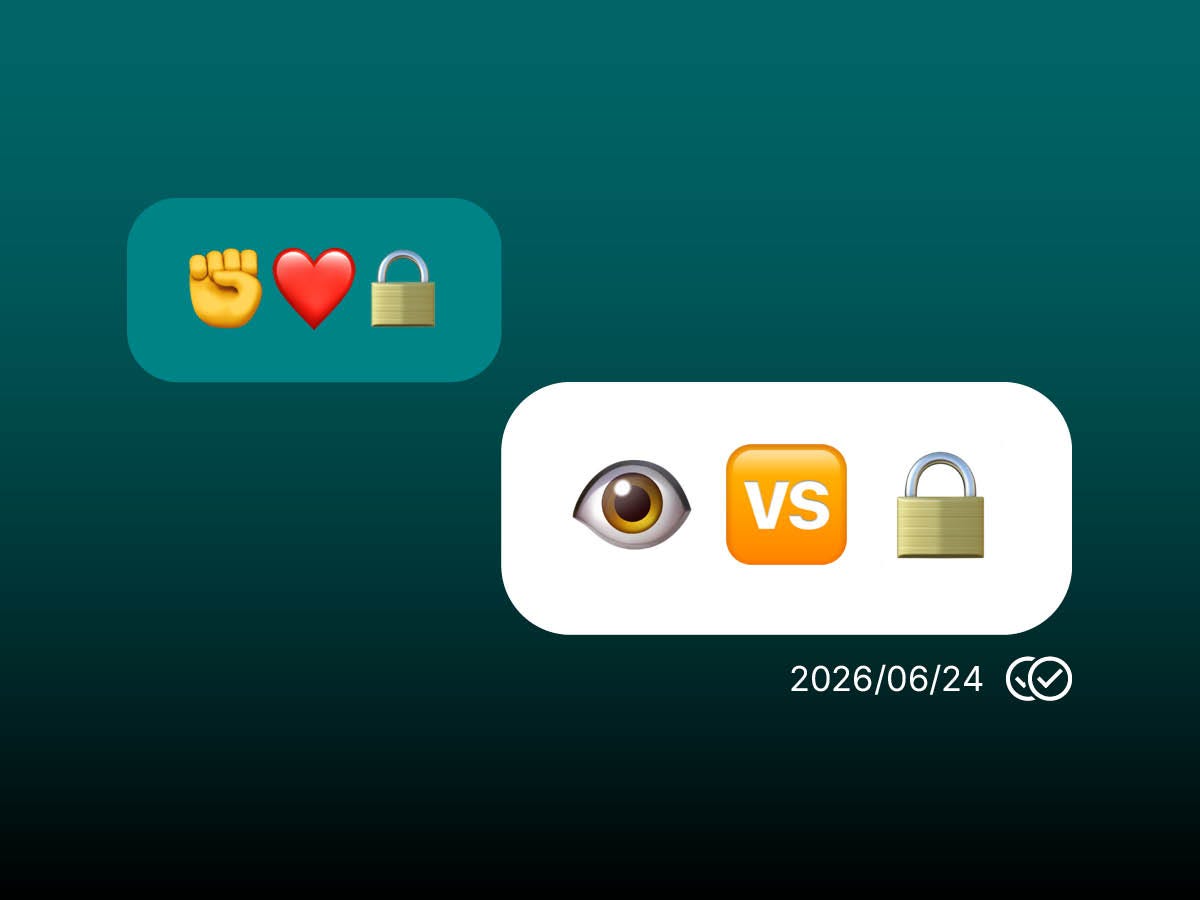
The concept of Data Sovereignty in the Meishi Manifesto is missing here. If access to our data is restricted for commercial, regulatory, power, or security reasons, are we owners or just renters of our own lives? Data Sovereignty isn’t a gift – it’s a right we build ourselves. While you wait for the next post, I ask you:
Who do you want to control your data?
5–7 Big Tech companies
200+ governments
You
Choose wisely!
✊❤️🔒
Own Your Data
Marco Parisi
No posts
Comments
Nothing yet. Say the first thing.
Sign in to join the conversation.