
When most buyers see a commercial property with a loan that matures in two years, they see a deadline.
I see something different:
A two-year runway.
That distinction matters.
Because when you’re buying commercial real estate in Los Angeles today, the question shouldn’t simply be:
“What’s the purchase price?”
You should also be asking:
“What financing am I buying with this property—and what can I accomplish before that financing matures?”
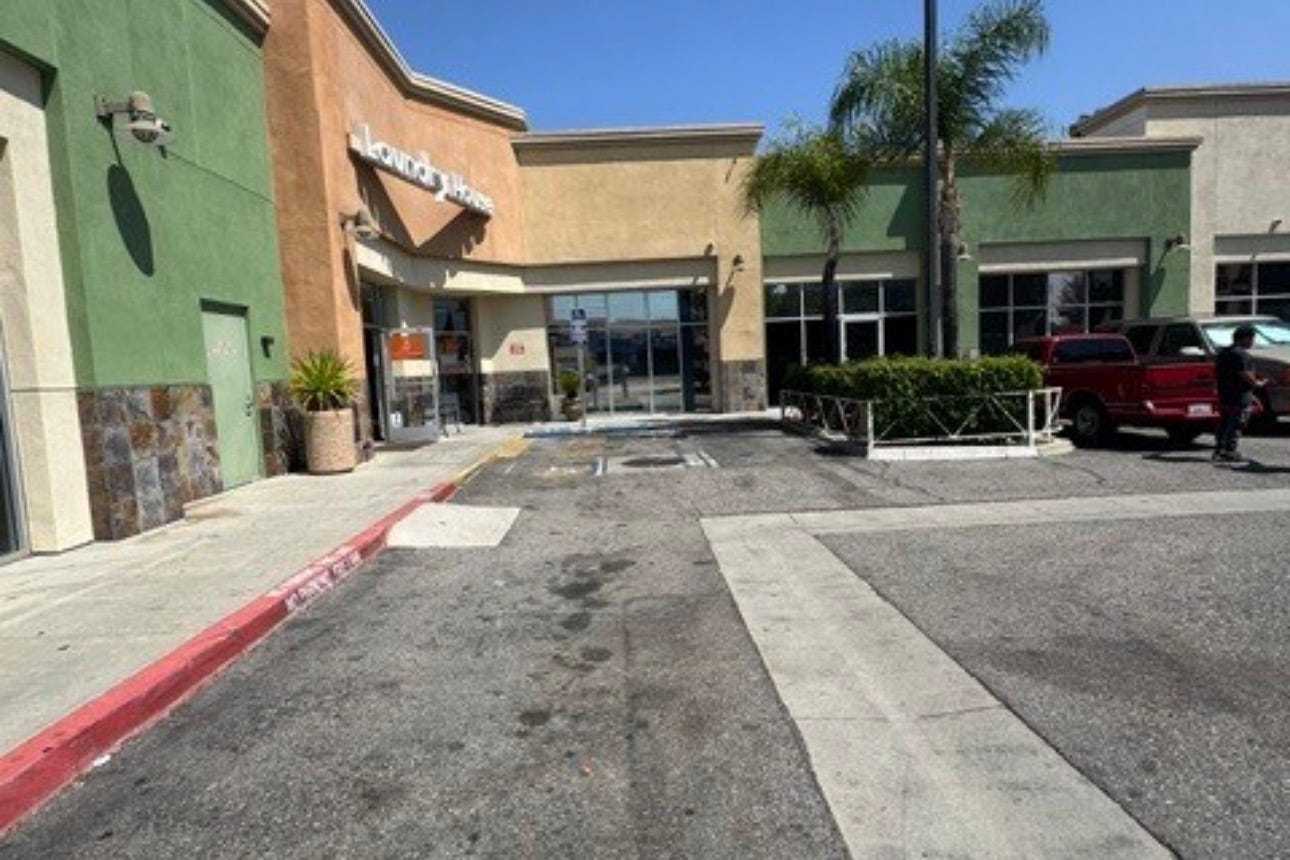
That’s where 601 N. Avalon Blvd. in Wilmington gets interesting.
The property is currently offered at $2.4 million, with an existing commercial loan balance of approximately $800,000 that may be assumable, subject to lender approval and the specific terms of the loan.
And that changes the conversation.
Don’t Just Buy the Building. Look at the Capital Stack.
Commercial real estate buyers naturally focus on price.
$2.4 million.
But the purchase price is only one part of the transaction.
The capital structure can be just as important.
What is the existing debt?
What is the interest rate?
What is the monthly payment?
How much equity does the buyer need to bring?
When does the loan mature?
Can it actually be assumed?
And most importantly:
What can you accomplish before the loan matures?
If the existing financing has attractive terms compared with the cost of new financing, assuming that debt could give a qualified buyer something that is difficult to manufacture:
Time.
Time to lease.
Time to stabilize.
Time to increase NOI.
Time to build operating history.
Time to potentially increase value.
That is where the strategy begins.
The Two-Year Window Is the Opportunity
601 Avalon has approximately 5,100 square feet of vacant end-cap space.
Most buyers will immediately see the vacancy as a negative.
Vacant space means income that isn’t being collected today.
But vacancy can also represent an opportunity.
The buyer could potentially acquire the property, assume the existing financing if approved, and then use the next two years to:
Lease the vacant end caps
Improve the tenant mix
Increase rental income
Stabilize the property
Increase NOI
Build a stronger operating history
The goal isn’t simply to own the property for two years.
The goal is to change the financial profile of the property during those two years.
That’s a completely different way of looking at a commercial acquisition.
You’re Not Refinancing the Same Property
This is the part I think many buyers miss.
Imagine buying a commercial property today with significant vacancy and immediately trying to refinance it.
The lender sees the property as it exists today.
Vacancy.
Current NOI.
Current leases.
Current operating history.
Current debt-service coverage.
Now fast-forward two years.
The 5,100 square feet has been leased.
The tenant mix is stronger.
The property is generating more income.
The leases are in place.
The operating history is established.
NOI has potentially increased.
The property may be worth more.
You’re no longer walking into a lender’s office saying:
“I just bought this building.”
You’re saying:
“Here’s an income-producing commercial property with established cash flow.”
That’s a different financing conversation.
Of course, none of this guarantees that interest rates will be lower in two years, that the property will appreciate, or that a refinance will be available on favorable terms.
That’s why the strategy needs to be underwritten conservatively.
But the concept is important:
You can use the time between acquisition and maturity to improve the asset before the next financing event.
Price Is a One-Time Number. Rate Is a Monthly Number.
Here’s another way to think about commercial real estate.
Buyers will spend weeks negotiating over $50,000 or $100,000 in purchase price.
But they sometimes overlook the financing terms attached to the transaction.
Interest rate affects your payment every month.
And when you’re dealing with an existing loan balance of approximately $800,000, the economics of that debt matter.
That’s why I believe buyers should evaluate a commercial property based on more than its asking price.
Think about:
Purchase price + financing terms + existing income + future NOI potential.
Not just:
Purchase price.
A property with a slightly higher purchase price and better financing terms can potentially be a better acquisition than a cheaper property that requires expensive new debt.
That’s not always the case.
But it is absolutely worth running the numbers.
There Is Already Income Supporting the Property
There’s another important piece of the 601 Avalon story.
The property already has an operating laundromat tenant.
So the buyer isn’t necessarily starting from zero.
There is existing income.
There is existing tenancy.
There is existing debt.
And there is approximately 5,100 square feet of vacant space that could potentially produce additional income.
Here’s where the opportunity gets more tangible.
Nearby comparable space in the submarket is renting for roughly $1.75–$2.00 per square foot.
Apply that range to 5,100 square feet and you’re looking at approximately:
$8,925–$10,200 per month
or roughly:
$107,000–$122,000 per year in potential additional gross rent.
That’s not guaranteed.
Lease-up takes time. Tenant improvements may be required. Actual rents will depend on the tenants, lease terms, condition of the space and market conditions.
But it gives a buyer something important:
A number to underwrite.
You’re no longer saying:
“Maybe I can lease the vacant space someday.”
You’re saying:
“If I can lease approximately 5,100 square feet at market rents, there’s potentially more than $100,000 of additional annual gross rent sitting inside the vacancy.”
That’s what makes the two-year runway interesting.
Put those pieces together and the strategy becomes:
Existing income + assumable financing + vacant space + time = potential stabilization.
You’re not betting entirely on what the property might become someday.
You’re starting with an existing income stream and using the vacant space as the opportunity to create additional NOI.
Why Assumable Commercial Loans Matter
Here’s something many buyers don’t realize:
Commercial loans are not automatically assumable.
Most commercial loan documents contain provisions restricting the transfer of ownership without lender approval.
That’s why an assumable loan can be valuable.
If the existing financing has terms that are more attractive than what a buyer could obtain with new debt, the ability to assume that financing can potentially become an important part of the acquisition strategy.
But there is an important distinction:
Assumable does not mean automatic.
The buyer may have to qualify with the lender.
There may be assumption fees.
There may be underwriting requirements.
There may be guarantees or other conditions.
And the economics depend on the actual loan documents.
That’s why I wouldn’t tell a buyer:
“Just assume the loan.”
I’d tell them:
“Let’s analyze the loan as part of the acquisition.”
There’s a big difference.
What Happens When the Loan Matures?
This is where the two-year maturity becomes interesting.
Don’t wait until month 23 to start thinking about refinancing.
Work backward from the maturity date.
Ask:
Where do I want this property to be when I refinance?
Maybe the answer is:
The two vacant end caps are leased.
The tenant mix is stabilized.
NOI has increased.
The property has established operating history.
The asset has potentially increased in value.
The buyer has built additional equity through principal reduction and/or appreciation.
The property is now easier to finance than it was at acquisition.
That’s the strategy.
You’re using the existing financing to buy time to create value.
This Is the Difference Between Buying and Investing
Anybody can look at 601 Avalon and ask:
“Is $2.4 million a good price?”
An investor asks a different set of questions.
What am I actually buying?
What debt comes with it?
What does that debt cost?
What income exists today?
What income can I create?
What happens to NOI if I lease the vacant space?
What does the property look like two years from now?
What will a lender see when the existing loan matures?
That’s how I think buyers should evaluate commercial real estate in today’s market.
Because financing isn’t something you arrange after you find the property.
Financing is part of the property.
And sometimes, the financing itself is part of the opportunity.
The Buy-Now, Refi-Later Strategy
I’m not suggesting that every property with a two-year loan maturity is a good investment.
It isn’t.
The numbers have to work.
The existing debt has to make sense.
The assumption has to be approved.
The vacant space needs a realistic leasing strategy.
The buyer needs sufficient reserves.
And the future refinance needs to be modeled conservatively.
But when those pieces line up, a short loan maturity doesn’t necessarily mean:
“I have to refinance soon.”
It can mean:
“I have two years to make this property better before I have to refinance.”
That’s a very different mindset.
Don’t Just Look at the Price
When you’re evaluating commercial real estate, don’t stop at the asking price.
Look at the capital stack.
Look at the existing debt.
Look at the rate.
Look at the monthly payment.
Look at the maturity.
Look at the existing income.
Look at the vacancy.
And most importantly:
Look at what you can change between today and the next financing event.
That’s the part of commercial real estate investing that often gets overlooked.
A property isn’t just a building.
It’s an income stream.
It’s a capital structure.
It’s a collection of leases.
And it’s an opportunity to create value over time.
At 601 Avalon, the two-year loan maturity isn’t necessarily the end of the story.
It may be the beginning of the strategy.
If you want to look at the financing structure, existing loan, vacant end caps, and potential buy-now/refi-later strategy for 601 N. Avalon Blvd., DM me or call me at 818-430-8497.
I’ll walk you through the numbers.
If you’re buying a strip center, warehouse, retail building, or other commercial property and want to explore seller financing, assumable debt, SBA financing, or other capital-stack strategies:
Gary Mittin Commercial Real Estate Broker | CA DRE #01177574 GaryMittin.com glmittin@gmail.com
YouTube | LinkedIn | Instagram | TikTok | Facebook
This content is for informational and educational purposes only and does not constitute legal, tax, or investment advice. Financing structures discussed are subject to lender approval, seller willingness, SBA eligibility requirements, and current program guidelines. Consult your own CPA, attorney, and lender before making investment decisions
No posts
Comments
Nothing yet. Say the first thing.
Sign in to join the conversation.