
Hands up who wants a performance review for their vagina?
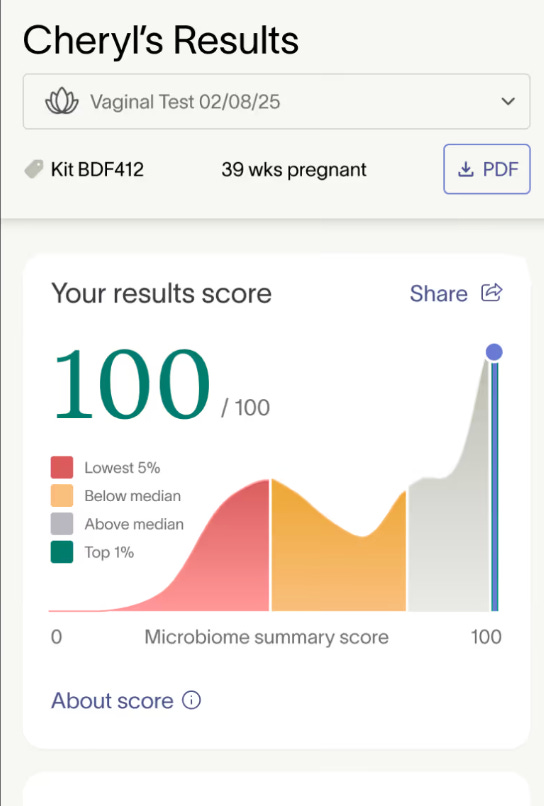
At some time before 8.12pm on April 29th—and exactly 18 minutes before his appointed bedtime—the multi-millionaire longevity guru Bryan Johnson gave his girlfriend oral sex. We know this because he told 21m people in a social-media post. Alongside this he published her vaginal-microbiome score: 100 out of 100.
We all know the feeling, right? You want to show off your fabulous new partner. But rather than ostentatious dining or expensive jewellery, Johnson is sharing what he evidently feels is the ultimate flex: the biomarkers of a healthy life. Look at my girlfriend—she has a perfect vagina. At last, an optimal environment for Johnson’s busy tongue. Girlfriend Kate Tolo reposted the tweet on her socials and asked people what they thought. Entrepreneur Angie Lee Show shot back with, “i miss when instagram was people’s salads”.
Ignoring, for a moment, the fact that half of humanity immediately found an entirely new bodily concern to worry about, the vaginal health score story was irresistible to journalists like myself. Vanity Fair swooped in quickly with a gripping tale about the rise of the “top one percent” vagina, which argued that vaginal medicine had become a status symbol in some places. Stephen Colbert and many others picked up on the post. I’m just very, very late to the story. Call it a cold take if you like.
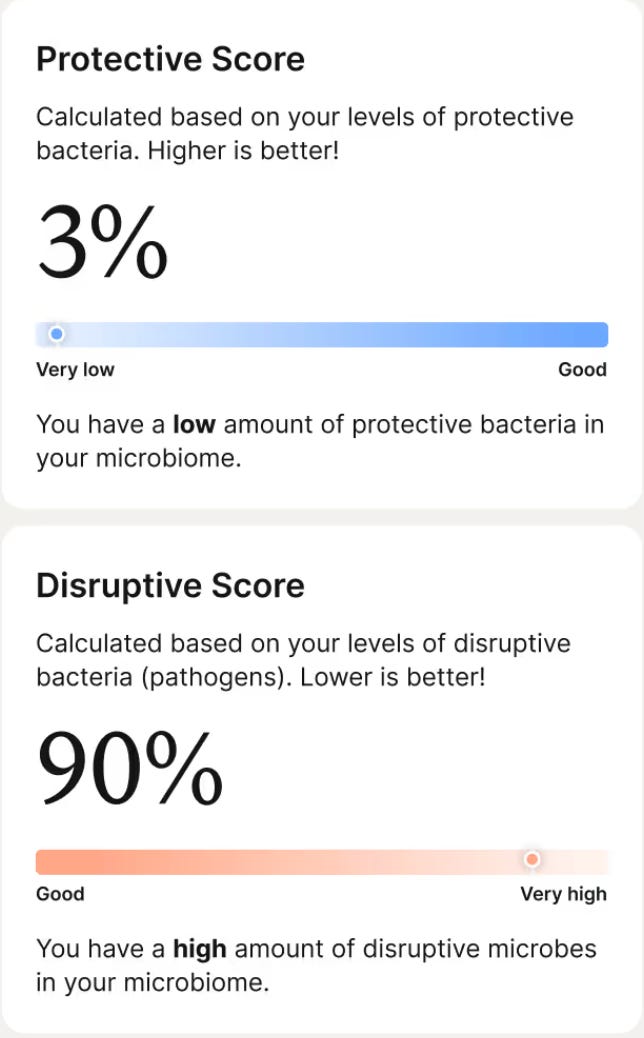
Tolo’s test was from one of a number of firms that are flush with funding with venture capital seeking to commercialise our lady parts, sorry, I mean help us with the vital and neglected area of vaginal health. Offerings include home testing kits for one’s tush, probiotics and coaching. There may be value in these firms but the idea anyone can identify a top 1% vagina, or score vaginas, is fiction. Moreover, call me old fashioned, but I personally don’t fancy a school report on my lady garden cooked up by some random startup full of people half my age, thanks.
…the male-dominated VC industry has not rushed to capitalise on grading of the penile microbiome, nor to sell men plans to achieve a top-tier todger.
The most obvious problem is where firms invent their own scoring systems or make claims that any microbial pattern means someone is not healthy. It certainly doesn’t tell you anything about longevity. I note, with some irony, that the male-dominated VC industry has not rushed to capitalise on grading of the penile microbiome, nor to sell men plans to achieve a top-tier todger. Women’s bodies, and their insecurities, have long been highly commercial territory for product development.
On top of that, the business model of testing the vaginal microbiome is unlikely to be that they send you a good tush score and then wave you happily on your way. They want to sell women stuff. That model works best if we can be encouraged to worry that we need ongoing help in order to have healthy lady parts.
The vagina, like many other parts of the human body, is host to an ecosystem of microbes—albeit a tiny one compared to many other parts of the body. How it varies is imperfectly understood. Turn to nature for a moment to understand why this matters. A grassland in northern Europe will be host to a different collection of plants and animals than one in southern Europe, or Asia. None is any better than any other.
You know a woman who needs to read this
There is no single microbial arrangement that defines a healthy tush. In the vagina microbial communities can change over time and life stage1 (along with hormonal status). In women of reproductive age, Lactobacillus species are common, which help maintain a stable acidic environment associated with protection against some infections. But healthy, symptom-free women have been found with microbiomes that do not fit that template.
Thus there is no vagina league table.
Microbiomes exist in a dynamic state—homeostasis—so changes over time are normal. A heavy period, antibiotics, sex and childbirth. Heck maybe even with a holiday abroad, too many margaritas and a hookup with a local. Who knows? Beyond that, we have not really looked systematically. But if we keep testing our tush—quarterly subscription anyone?—chances are we will be given the impression that something is wrong, even if it isn’t.
Like research more generally, our knowledge of vaginal ecology seems to come from the places that people have looked—rich countries and university students. And even this tells us variation is common. A study of just under 400 women in 2010, recruited at universities in Baltimore and Atlanta, found vaginal microbiomes tended to be dominated by different species of Lactobacillus. Many community types existed (L. crispatus, L. gasseri, L. iners, and L. jensenii might dominate). Also, the proportions of each species varied according to ethnic group, as did vaginal pH.
There is another issue with vagina testing services: they are not medical tests. But that some of the information they are hinting at to suggest there may be problems. I’ve also seen claims that certain microbial states can make conception difficult, when in fact these states could be a reflection of changes in the body rather something that is causing a problem.
I can see the potential for women, with support from doctors, to use tests for help with vaginal health concerns. But for all women? I’m doubtful. Consumer testing firms often have the wrong financial incentives: worry and concern drives sales, firms then have to offer some kind of report even if it isn’t particularly meaningful, and ultimately they want to drum up repeat business.
Gut microbiome testing, SNP testing, biological age tests, sleep scores—all are gateways to other products and services of dubious value. Heaven knows what the premium version the vag-microbiome firms have sold to investors. Presumably personalised recommendations on diet in order to maximise one’s vag score, or a more expensive package of essential support for those trying to conceive, or personalised menstrual products.
Biomarkers are the new elixirs of youth. The many unvalidated scores of consumer wellness are too often snake oil. A 100/100 vaginal score is absurd and will leave you several hundred dollars poorer. Presumably, some years from now, similar firms will be pivoting to genetically modified fruit-flavoured microbes that we all need to grow in our vaginas or digital vaginal twins. There will be no end to it as firms stake claims over our intimate regions in the name of progress in female health. For everyone still laughing on the sidelines, eat well, exercise, and live a good life. And remember that if you have something going on with your tush, go see a doctor.
Tolo also talked on social media about joining Johnson in his “cage” with his extreme longevity rituals. As she ventures to become the most measured female in the world, what medicine learns from her about female biology may be really valuable. What they are both doing has value in generating hypotheses (albeit in a sample size of 1). But the danger with the sharp beam they place on the tools that they play with is that we all end up seeing biology as a series of performance metrics, and life as a series of things we need to buy.
Don’t live your life in a cage. Mr Johnson recently struggled to say what an extra 150 years of life would give him beyond seeing what the future invents. I wish them both good luck on their voyage to tomorrow. Upcoming social media posts on their shared genital ecology will be fascinating. Even if most people miss the days when people shared their salads on Instagram.
Comments
Nothing yet. Say the first thing.
Sign in to join the conversation.