
One wintry afternoon in January this year, we stepped into the Tulip Museum in Amsterdam, the Netherlands. That’s when the story began.
Or did it?
Perhaps it began 2010, in Istanbul, Türkiye? Or perhaps even earlier, in the sixteenth century.
We should have been back home in Minnesota. After a vacation in Italy and Spain, we were merely transiting through Amsterdam. Unfortunately, the airport’s name proved strangely appropriate. In Dutch, Schiphol supposedly means “ship grave” or “ship hole.” That’s where we remained stuck for an entire week.
To be precise, we were stranded there because of what passed for severe winter weather. Half a million other passengers suffered the same fate.
The said weather condition was 1-2 inches of snow and a temperature of 30°F to 35°F (-1°C to 3°C for those who live outside of the US).

But back to the story.
On the very last day of our unexpected imprisonment at the airport – which lies some distance outside Amsterdam proper – the trains finally began running again. We seized the opportunity and ventured into the city.
It was one of those gray, drizzly European winter afternoons that I remember so well from my years in Germany. The wet streets were mostly empty; bicycles glided silently by. Bare trees stood patiently on the side, as if longing for the colorful, lively spring.
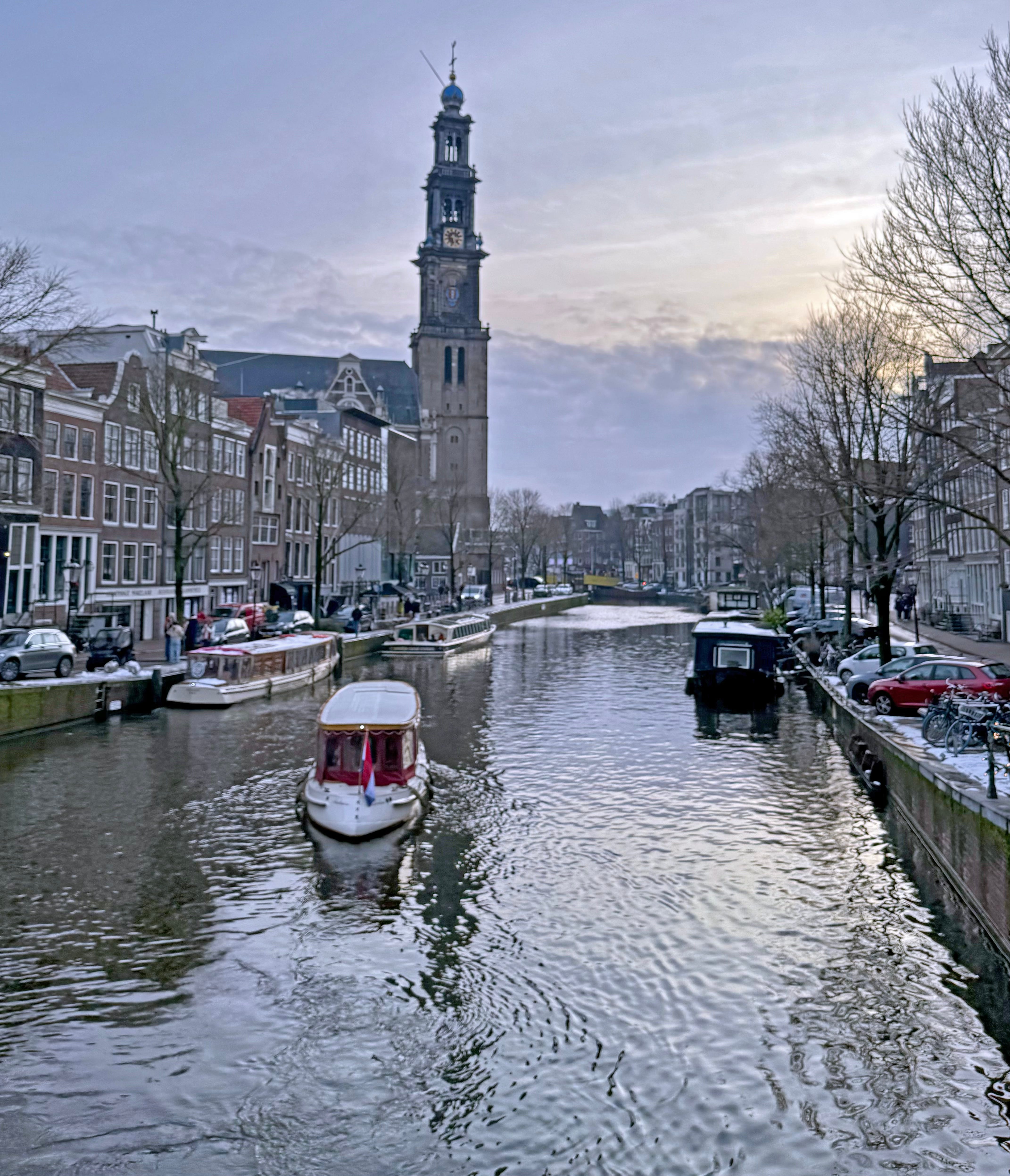
Amsterdam’s bridges have a nostalgic charm. We walked a few and watched the water below reflect the leaden sky above. A handful of small barges drifted quietly by. But you can walk only so many of Amsterdam’s roughly 1,200 bridges before longing for a warm, cozy refuge. We found ours, somewhat unexpectedly, in the Amsterdam Tulip Museum.
The museum occupies the basement of a shop selling tulip bulbs and souvenirs. The shop itself sits in an unremarkable building along one of Amsterdam’s many narrow, cobblestone streets.
Nothing about the entrance hints at the amazing story that awaits in the basement of the museum. It is the story of one of history’s most remarkable flowers. Tulips are not native to the Netherlands. And yet, over time, they became part of the nation’s visual identity.
While roaming the museum, I was reminded of a scenery of tulips long ago, in a different country. We were on a vacation in Türkiye back in 2010. One of my first impressions of Istanbul was the long rows of bright tulip beds along the highway all the way from the airport to the city.
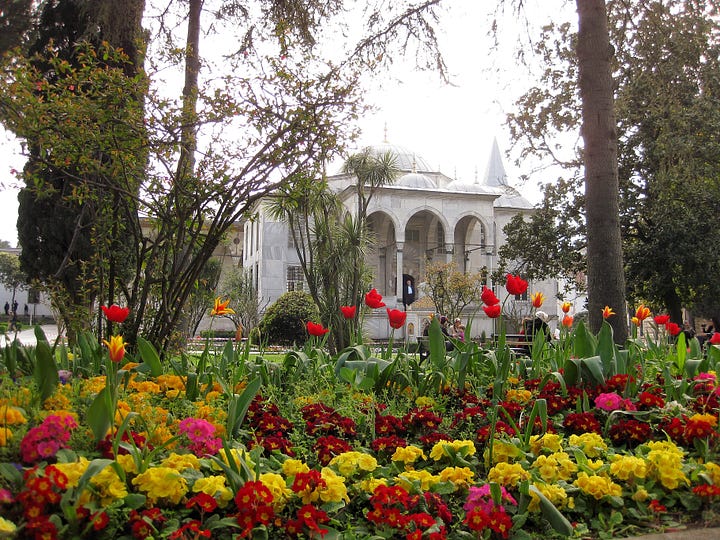
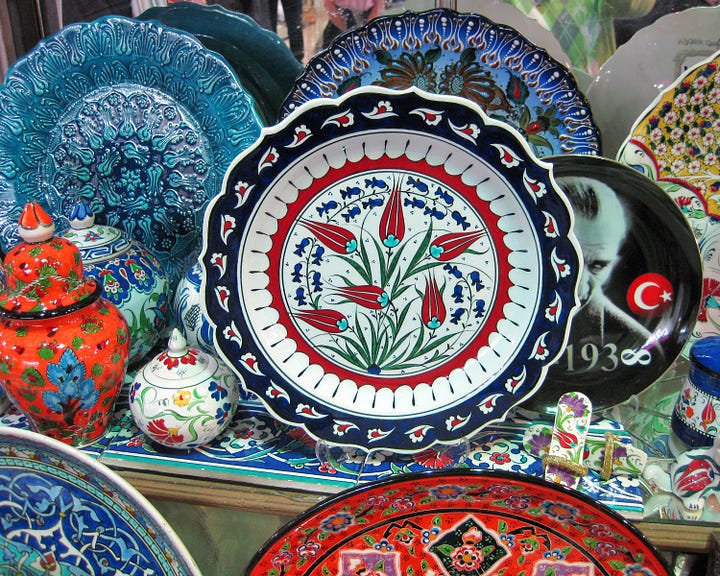
I remembered the magnificent Gülhane Park at Topkapi Palace. A sea of red and yellow tulips swaying in the gentle breeze on a warm, bright day. I also remembered seeing tulips as an ever-present decorative motif throughout the city. But I was so conditioned to associate tulips with the Netherlands that I never thought deeply about this.
The museum changed that all. I learned that tulips were inhabitants of the East, and how Türkiye played a role on its journey to the west.
Tulips come from the wild mountainous regions of Kazakhstan, Uzbekistan, and neighboring lands.
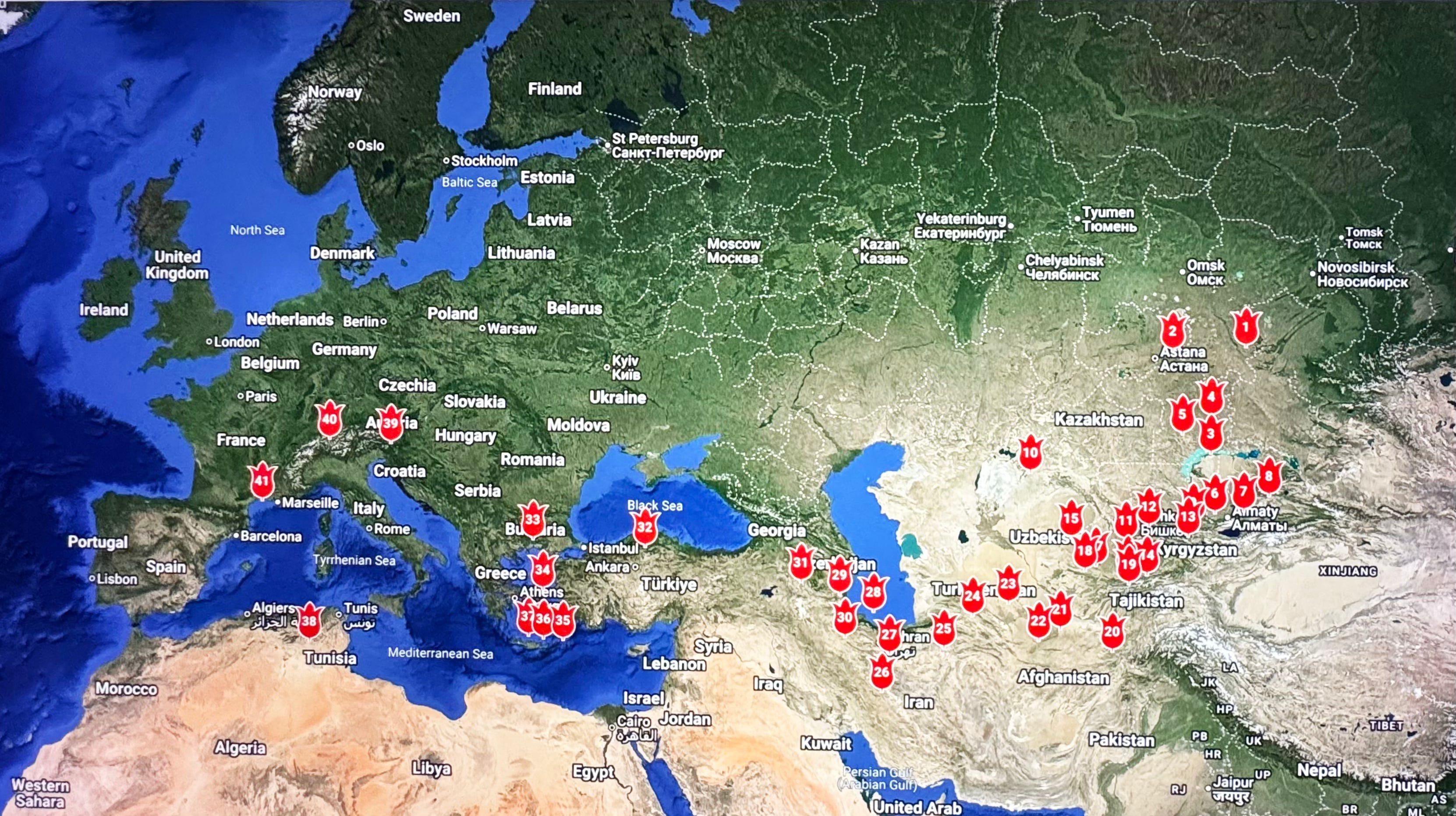
For centuries they were admired in Persia, where the red tulip became a symbol of passionate love. In the legend of Farhad and Shirin, when Farhad learns that Shirin has died, he throws himself from a mountain. Red tulips spring up where his blood falls. Elsewhere in Persian tradition, red tulips came to symbolize the blood of martyrs shed for a noble cause. Tulip’s brief but brilliant bloom is a reminder that life’s most precious moments are often the most fleeting.
The Ottomans inherited both the flower and much of the Persian artistic tradition surrounding it. They cultivated tulips extensively and bred new varieties. By the sixteenth century, the tulip had become one of the defining symbols of Ottoman elegance and refinement. That tradition lingers even today, as the ever-present decorative motifs testify.
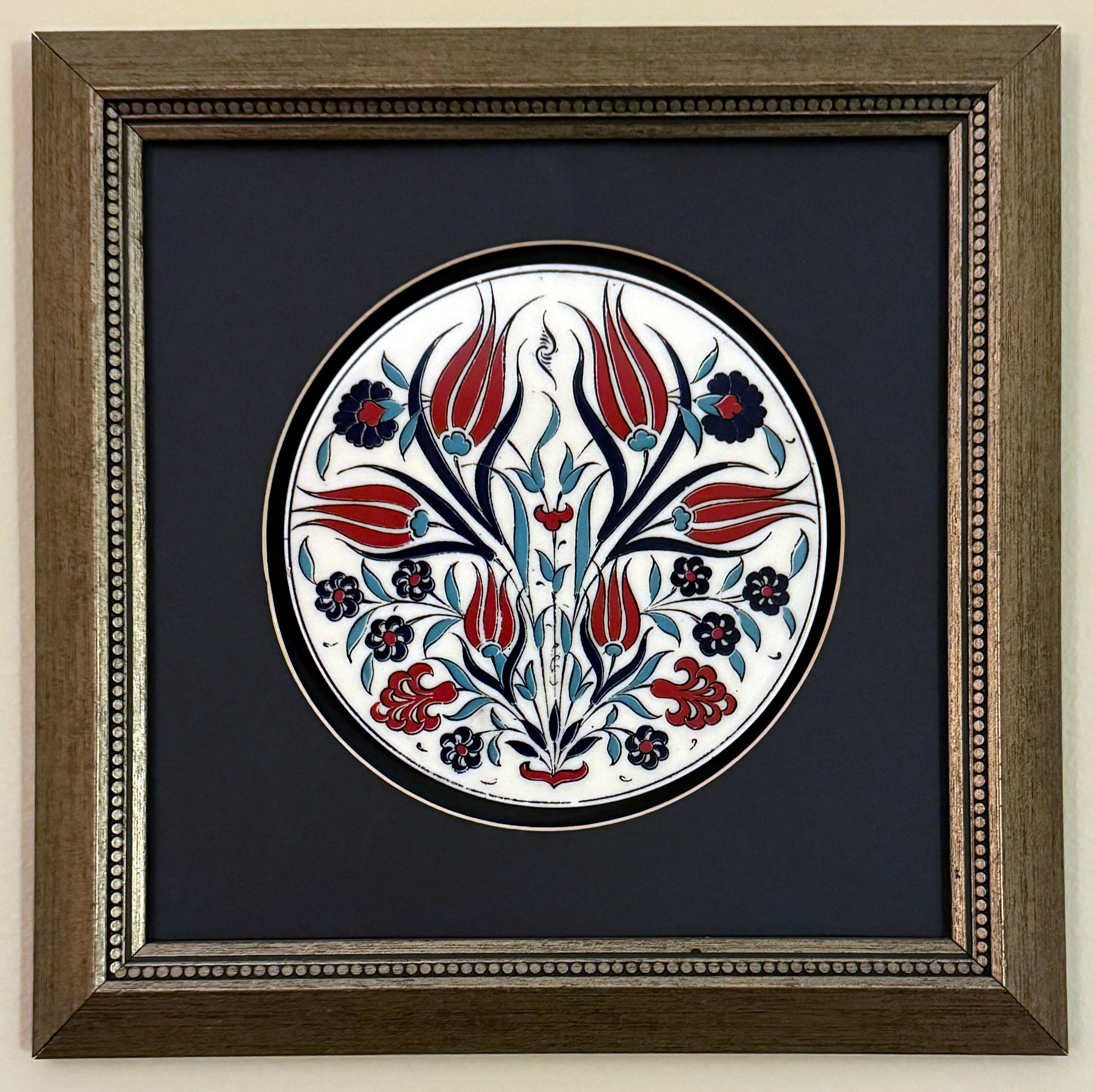
European diplomats and botanists first encountered tulips in Ottoman palatial gardens, like the one surrounding Topkapi Palace that I had visited. Tulips were unlike anything growing in Europe. The Ambassador of the Habsburg Empire to the Ottoman court in Istanbul was so impressed by the flower that in 1550 he sent bulbs of the flower to Vienna. They soon arrived in the Netherlands.
Tulips found a new fertile ground there. The country was rich in scientific and commercial horticulture tradition. Also, its wealthy merchants had a fascination for enjoying and collecting rare and exotic goods.
Over the years, Dutch breeders and horticulturists produced thousands of varieties of tulips differing in color, shape, height, flowering time, and petal form. They studied how tulips reproduce and perfected large-scale bulb cultivation. As the leading commercial nation of the era, the country made the flower from the remote Caucasus an international attraction. Today, the Netherlands exports billions of flower bulbs each year.
Looking back at its journey, one can say that Central Asia gave the world the tulip, Persia gave it symbolism, the Ottoman Empire cultivated and celebrated it, and the Netherlands reinvented it.
That reminded me of potato.
Why so, you might say. There is nothing common between the two. The one is a beautiful flower; the other a humble, earthy tuber. One delights the eye; the other merely quiets a growling stomach. And yet, their stories are remarkably similar.
The potato, today a staple food throughout Europe, is no more native to the continent than tulip is. It originated high in the Andes of present-day Peru and Bolivia. They were brought back to Europe in the late 16th century by Spanish conquistadores.
Over the centuries, generations of European farmers and breeders cultivated potato for the European climate and palate. They reinvented it too.
It is easier to associate the symbol of a nation with a beautiful flower than with a humble, lumpy potato. So, to be on the safe side, I’ll simply mention that German cuisine would be almost unthinkable without potatoes. Indeed, there is a friendly rivalry among Germany’s regions over the best way to prepare potatoes.
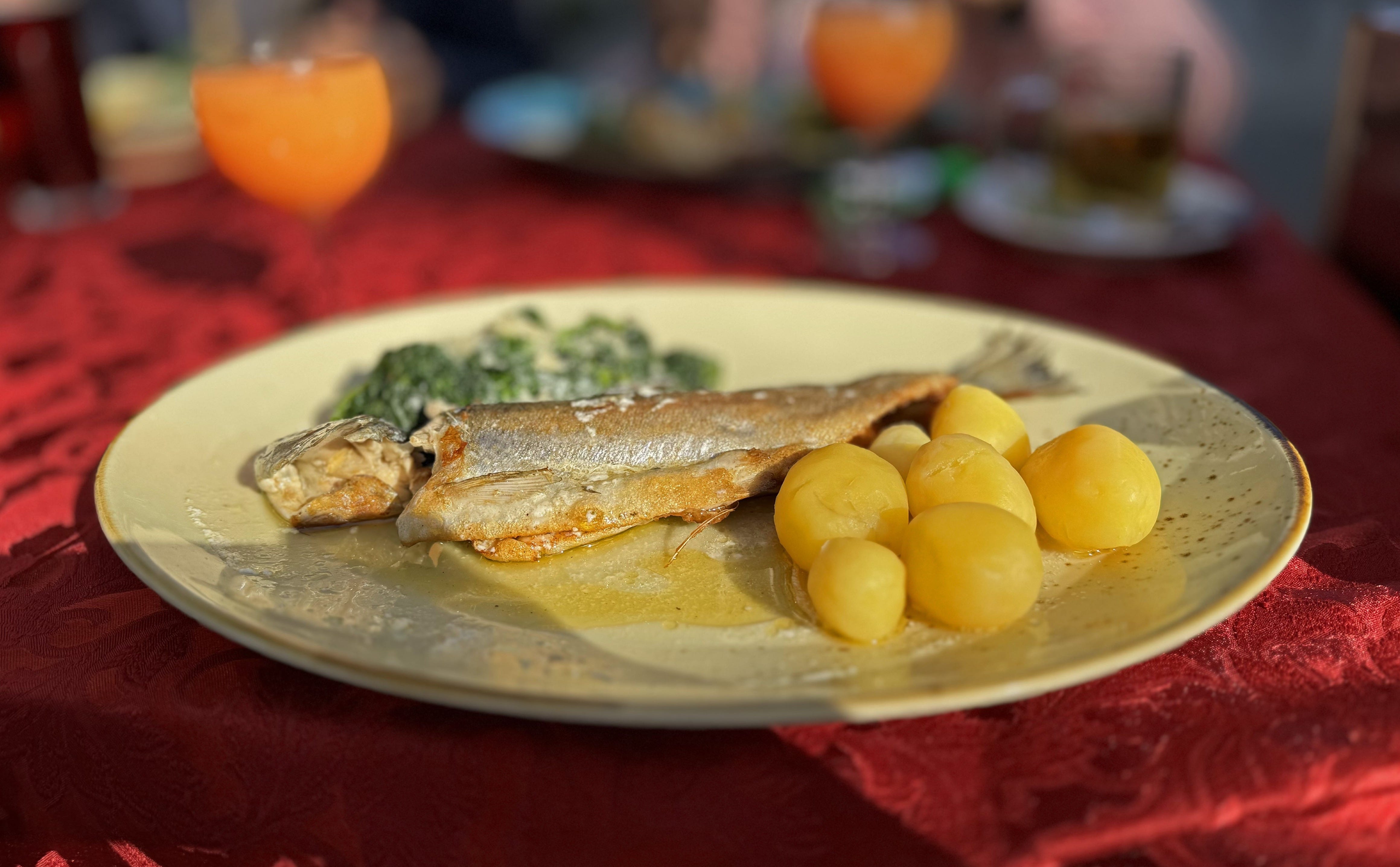
In the north they are boiled and served with fish, pan-fried as Bratkartoffeln, or mixed into a creamy potato salad. In Swabia they become Schupfnudeln. Along the Rhine they are transformed into crispy Kartoffelpuffer. In Bavaria they reappear as Kartoffelknödel, the indispensable companion to a Sunday roast.
I mention all this to illustrate how the potato - an outsider - conquered both the heart and the stomach of Europe. Few pause to wonder where it came from.
The potato was hardly alone. Tomatoes, maize, and countless other plants crossed oceans and continents. Over time, they became so familiar that we forgot they had ever come from somewhere else.
Tulip didn’t become any less Turkish because it flourished in the Netherlands, nor any less Dutch because it first bloomed elsewhere. The same can be said about the potato, tomato or maize.
Sometimes an outsider, given care and the time to flourish, becomes so thoroughly woven into a nation’s story that it is impossible to imagine one without the other. This is how our lives and culture are enriched.
I packed that thought in my luggage as we headed back home. During the long flight I wasn’t thinking about tulips or potatoes. I was thinking about my booklist – the books I wanted to read next. It was autobiography time. And at the top was Speak, Memory by Vladimir Nabokov.
I was really looking forward to reading Nabokov. He was born in Russia and grew up multilingual in Russian, English, and French. Although he primarily wrote in Russian, he switched to English after immigrating to the United States. At that time, he was 41 years old.
His Russian soul never left his prose, but his adopted language became the instrument of his greatest works. Lolita is an American classic; Speak, Memory is often called the finest autobiography in English.
Something about that reminded me of tulips and potatoes. But the budding thought was cut short.
“Ladies and gentlemen, welcome to Minneapolis–Saint Paul. The local time is 3:10 p.m. The skies are clear and sunny, and the temperature is a brisk 15 degrees Fahrenheit,” announced the onboard speaker system.
I straightened my seat and looked out the window. I saw a white landscape blanketed in pristine snow. The sky was blue, the sun brilliant. Just like 35 years ago, on a winter afternoon, when I had landed in Minnesota as an immigrant. This time the snow was not foreign. It was familiar. It was home.
New to this publication? Read here what it is all about: WELCOME to Outsights of a Conspecific
You might also enjoy how 3M Company turned out to be a gem in my box of chocolates: A Gem in a Box of Chocolates.
I write solely for the pleasure of writing. That pleasure is even greater when others enjoy reading.
If this piece resonated with you, feel free to subscribe (it’s free). I publish about once every month, and you’ll get an email when something new is out.
And if you know someone else who might enjoy this kind of writing, please consider sharing it with them too.
No posts
Comments
Nothing yet. Say the first thing.
Sign in to join the conversation.