
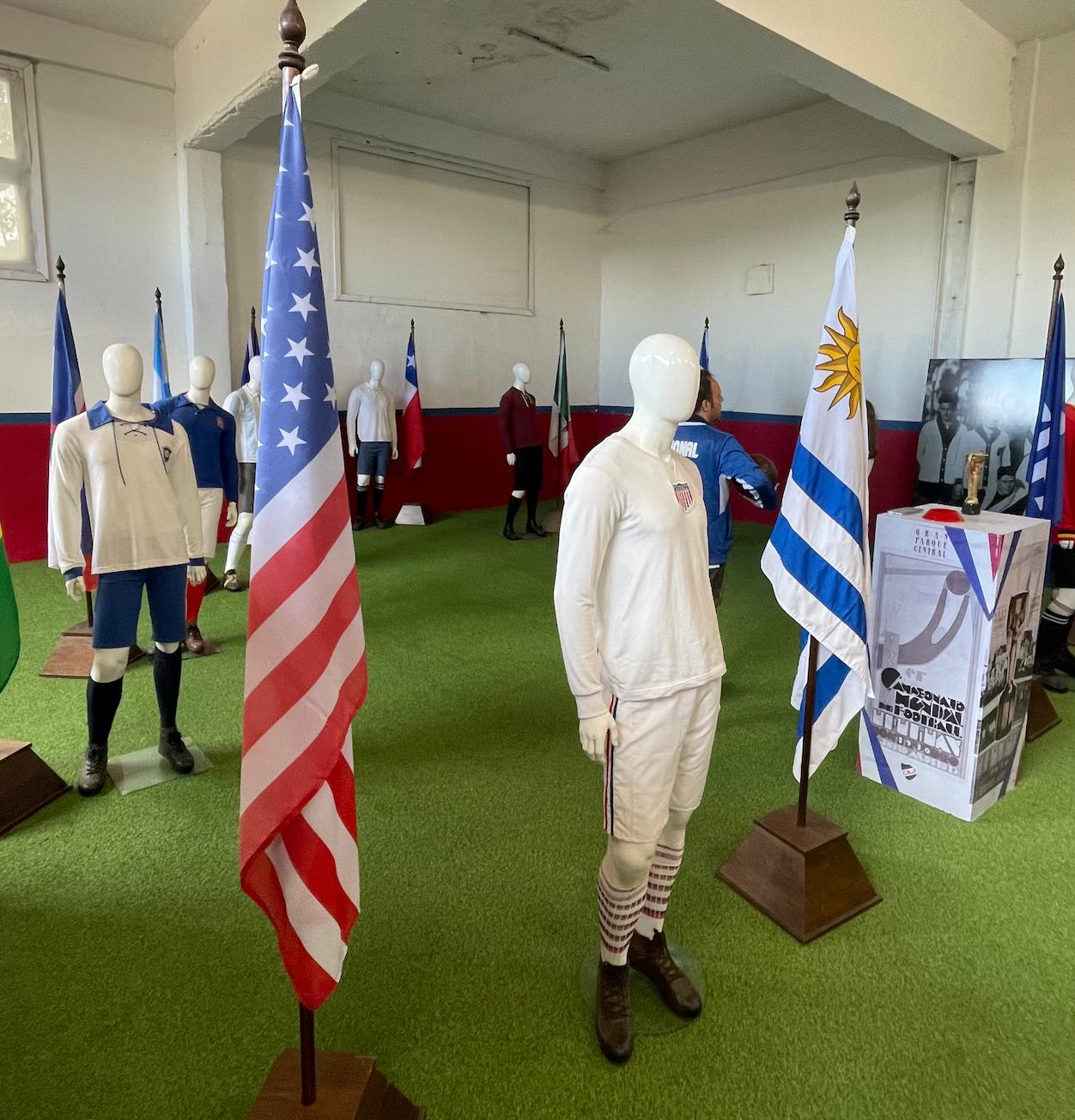
In the 1920s, the United States had a professional football league that was attracting European talent. As with many of Europe’s clubs, American teams were popping up in the workplace to form the crux of the American Soccer League (ASL). Yet, this bourgeoning project, which attracted huge crowds, disappeared after a rich decade and fizzled into a local format.
Firstly, let’s address the elephant in the room. I will be using the word ‘soccer’ in this piece, because it’s a) the word Americans use for Association football, and b) it’s a useful way of describing the game when it’s not the leading code of football in certain countries, as is the case in the US, Ireland, Australia, New Zealand, and South Africa, for example. In case you didn’t know already, ‘soccer’ is not an Americanism; it originates in the English private school system as a way to abbreviate ‘Association’, much like ‘rugger’ is a short form of rugby.
America was early to both soccer and professionalism, and yet the sport never quite competed nationwide with the homegrown sports of American football, baseball, basketball, or ice hockey. At least not until Major League Soccer (MLS) got going after the 1994 World Cup.
Let’s go back to the beginning to see how soccer started in America, found a foothold in some areas, and had a successful decade before the wind went out of its sails.
Long before the Football Association (FA) rulebook crossed the Atlantic, various forms of football were already being played across the United States. The FA’s rules were first published in the US in 1866, just three years after publication in England, and a game may have been played under them in Wisconsin that year. Four years earlier, during the Civil War, the Oneida Football Club had been founded in Boston. Playing ‘Boston Rules’ on Boston Common, it holds the distinction of being the first football club of any code in the US, a fact marked by a small monument erected there in 1925.
Identifying the first game played strictly under Association rules with any certainty is quite tough. A famous 1869 meeting between Rutgers and Princeton is often cited, but that match used a set of rules the two colleges had negotiated between themselves. A more significant moment came on 6 December 1873, when the prestigious English private school Eton, a pioneer of soccer, played Yale at Hamilton Park in New Haven, Connecticut. This may well have been the first football match of any code played between a British team and a side from another country outside Britain and Ireland. The four-page match programme, one of the earliest on record, fetched £15,000 at auction in 2016.
The northeastern seaboard was where association football took firmest hold, particularly in Fall River, Massachusetts, and the Rhode Island cities of Pawtucket and Providence. By the 1880s and 1890s, it was predominantly a game of immigrants, and Scottish migrants appear to have been especially influential in building clubs and running organisations, alongside the English and other nationalities.
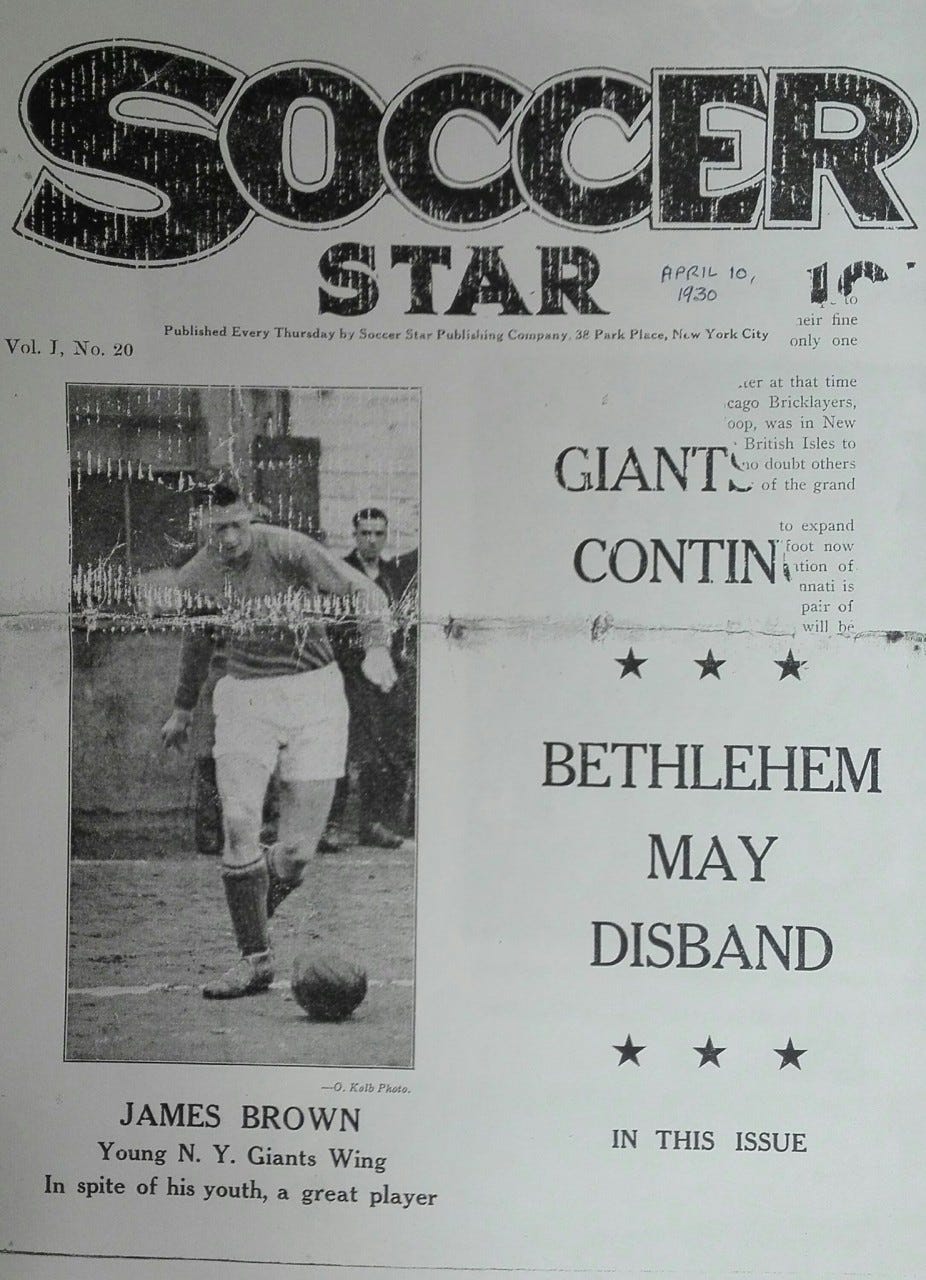
In 1884, the American Football Association (AFA) was founded in Newark, New Jersey, with $500 raised largely from local businesses, most notably the Clark Thread Company. The link between soccer and industry was as strong in America as it was in Britain. Thirteen clubs formed the inaugural membership, drawn from New Jersey, New York, Connecticut and Massachusetts, and all entered the first AFA Challenge Cup that year. The ‘Old Mug’ was dominated by ‘Down East’ clubs in its early years.
Then, in 1894, three decades ahead of countries in mainland Europe, a professional league was established in the US. The National League, which governed baseball, established the American League of Professional Football (ALPF) to use baseball stadiums during the winter months. The six clubs involved included the Brooklyn Bridegrooms, Baltimore Orioles, Boston Beaneaters, New York Giants, Philadelphia Phillies and Washington Senators. Association football was chosen in part because the organisers doubted that college football players would be willing to turn professional. The AFA, however, banned its member players from participating, and the league folded after a single season.
Soccer entered a period of decline at the end of the 1890s, as a deep recession, and the onset of the Spanish-American War led to clubs folding and the AFA Challenge Cup being suspended between 1899 and 1906.
The 1905 tour by the English side Pilgrims FC offered a revealing snapshot of soccer’s standing in North America at the time. The Pilgrims were a selection of invited English amateurs, fielding players from clubs including Sheffield United, Nottingham Forest and Spurs, and played 17 matches across September and November, winning 14. The two St. Louis fixtures drew crowds of 17,000 and 23,000, respectively. The tour was financed by US businessman CH Murray specifically to promote the Association game.
Famous English amateur side Corinthians followed up with their own tour in 1906, and while they ran up high scores against several sides, including a 19-0 win in Cincinnati and an 18-0 defeat of All New York, they suffered a notable 3-0 defeat in Fall River. The Pilgrims returned in 1909 and Corinthians again in 1911, but growing dissatisfaction with what many saw as the AFA’s narrow, New England-centric focus was causing structural problems.
In 1911, a rival governing body, the American Amateur Football Association (AAFA), was formed. The dispute went to FIFA, with AAFA representative Thomas W. Cahill making his case at the federation’s 1912 congress in Stockholm. FIFA sided with the AAFA, which had the broader membership. A year later, the AAFA rebranded as the United States Football Association, which would eventually become the United States Soccer Federation. In 1916, the USA fielded its first official international side and beat Sweden 3-2 in Stockholm.
The First World War proved an unexpected catalyst for the game’s growth. American servicemen, mixing with soccer-playing troops from Britain and France, encountered the sport either overseas or in military training camps at home. The post-war years saw momentum building towards a new attempt at a national league, and in 1921, USFA president Cahill brought together clubs from the National Association Soccer League and the Southern New England Soccer League at the Hotel Astor in Manhattan. The American Soccer League (ASL) was born.
Eight teams competed in the inaugural ASL season (1921/22). The league was concentrated in the northeast, with Philadelphia FC taking the first title before Fall River Marksmen emerged as the dominant force, winning seven championships in the opening decade. Their 1923/24 league and cup double was captured on grainy, silent film. It’s among the oldest surviving footage of soccer on American soil, showing 15,000 cap-wearing spectators and a Vesper Buick side with their sponsor’s logo proudly stitched onto their shirts.
The talent was genuinely world-class. An estimated 50 European internationals played in the ASL, with British players forming the core. Future legendary coach Béla Guttmann spent half a decade in New York. When Hakoah Wien toured in 1926, 46,000 spectators packed the stands. It’s a record that stood until Pelé arrived half a century later. The club names from the ASL era are magnificent: Bohemian Queens, Providence Gold Bugs, Indiana Flooring Co., Todd Shipyards, Bethlehem Steel.
On the international stage, a USA squad packed with Scots-born players made a considerable impression at the first FIFA World Cup in Uruguay in 1930. Bert Patenaude scored what was later confirmed as the tournament’s first hat-trick in a 3-0 win over Paraguay, though FIFA did not recognise it until 2006, 32 years after his death. The USA topped their group and reached the semi-finals, where they lost 6-1 to Argentina in a combative fixture.
Back home, the ASL’s demise came through a combination of internal fighting over cup competition gate receipts, the Great Depression, and a perception among many American sports fans that the USFA carried too much foreign influence. The league folded in 1933. The Fall River Marksmen’s old ground at Mark’s Stadium in Tiverton, Rhode Island, still stands today as an overgrown relic, a reminder of a sport that came closer to breaking through in America than most people realise.
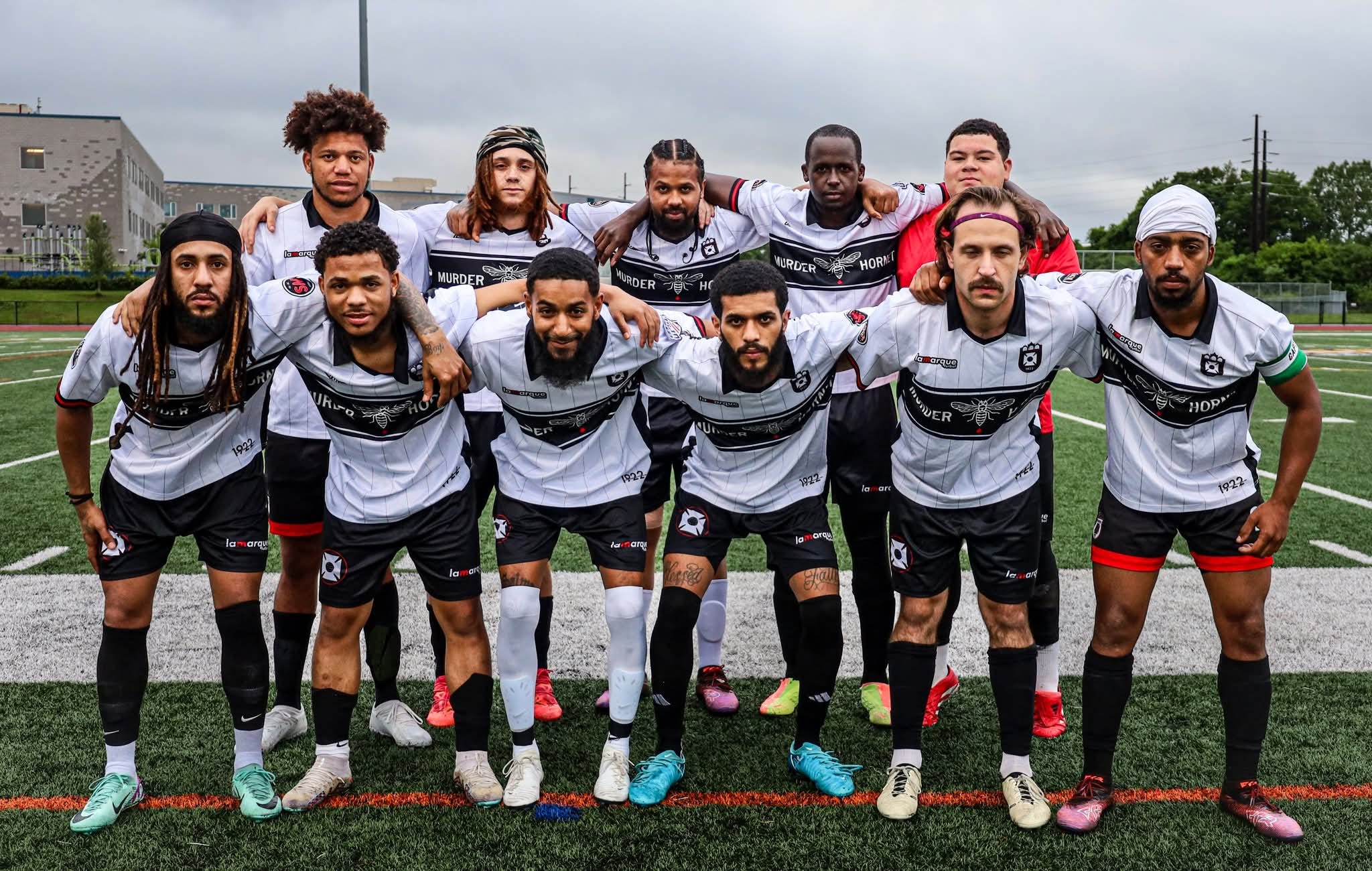
In recent years, enthusiasts have revived both Fall River FC and Fall River Marksmen. As there is such a high Portuguese diaspora in the area, or Americans who can claim Portuguese heritage, the teams compete over two legs for the Taça de Fall River (Fall River Cup).
“We saw that the Marksmen were not recognised by the city enough and decided to bring the club back to honour that past,” Fall River Marksmen’s president, André P. Ruette, tells me. “The city is full of passion for the sport, and it was only right to try and pay tribute to the great club. That’s why the club was brought back.”
While the ASL folded and, later in the 20th century, the North American Soccer League (NASL) also burned out after a couple of decades, could MLS succeed where previous efforts did not? Attendances reached a record (11.4 million total) in 2024, dipping only slightly in 2025, so it will be interesting to see what impact the 2026 World Cup has on American domestic soccer.
If you’re interested in learning more about the roots of football in the US and elsewhere, please get a copy of my book, Origin Stories: The Pioneers Who Took Football to the World.

No posts
Comments
Nothing yet. Say the first thing.
Sign in to join the conversation.