
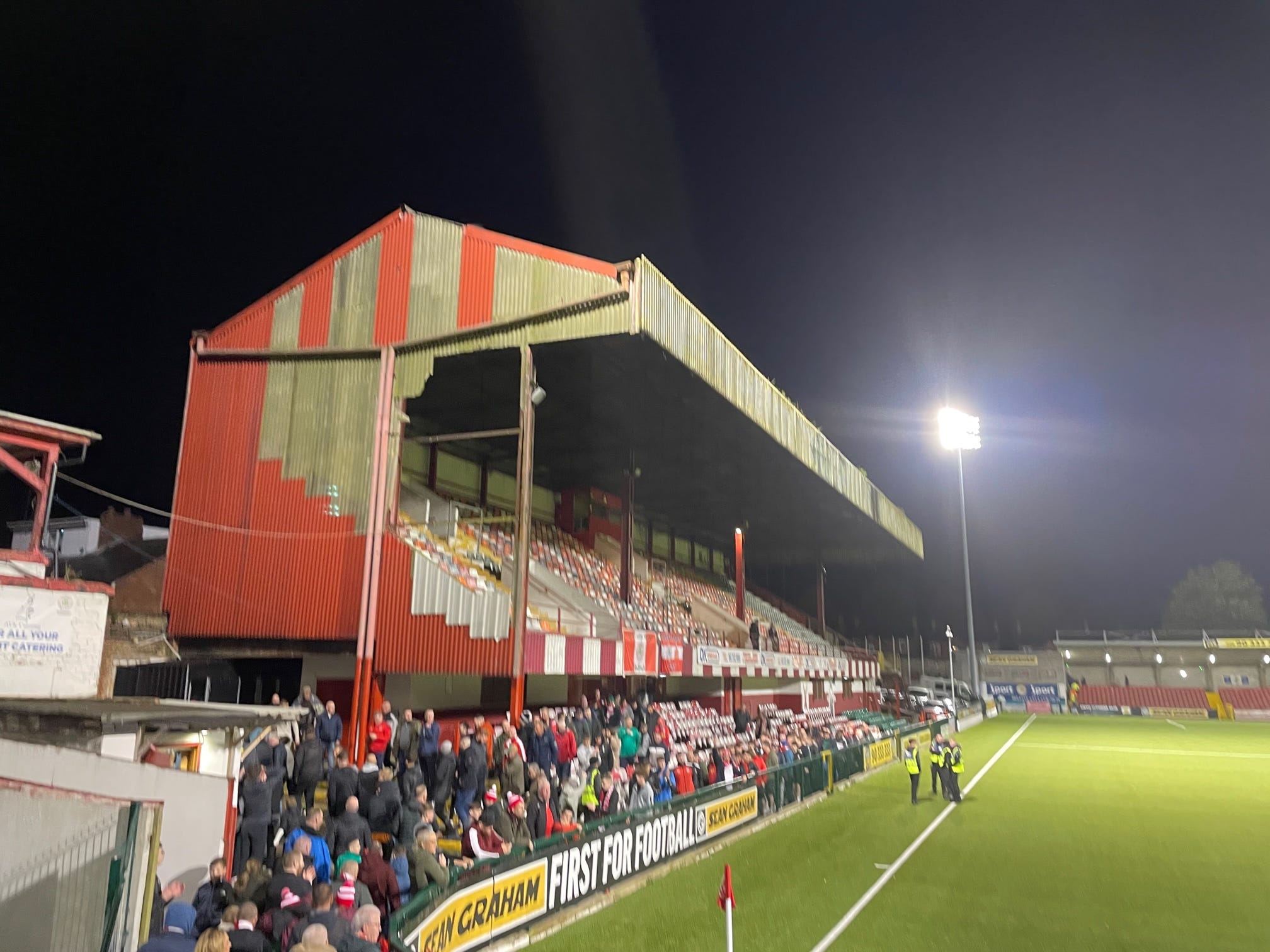
Cliftonville’s Solitude ground is one of the many ‘must-see’ old school gems in Ireland. When I visited, the Main Stand was out of use, and home fans were mostly packed into one stand behind the goal. In the distance, the hills were dark and brooding, and there was an undercurrent to the feeling around the game. By virtue of changing demographics over the decades, Cliftonville has the only Catholic-majority fanbase in the top flight of the Irish League (or NIFL - Northern Ireland Football League), and the club was hosting Coleraine, with its significant Protestant/unionist following, so the police presence was notable.
Back in the 1970s at the peak of the Troubles, the areas of the Antrim and Crumlin Roads not far from Solitude were dubbed ‘Murder Mile’, due to the number of incidents there. Thankfully, times have changed. But Cliftonville didn’t start out as a Catholic club; quite the opposite.
Once various codes of kicking games had been consolidated and codified by the Football Association (FA) in 1863, the game spread quickly across the United Kingdom, which at that point also included a united Ireland. Glasgow club Queen’s Park adopted the FA laws upon its foundation in 1867 and refined the passing game that would help define modern football.
And it’s in Scotland that the Irish story begins. Football culture took hold in Glasgow and Edinburgh, and it was in the Scottish capital that an Ulsterman named John McCredy McAlery reputedly first watched a match while on his honeymoon. In 1878 he sat on the committee that brought Queen’s Park and Caledonians to Belfast for an exhibition at the Ulster Cricket Ground. Queen’s Park won 3-1 before 400 spectators on 24 October. Matches had been played in Belfast, and even as far south as Cork, before this, but McAlery is usually credited with introducing the game to Ireland.
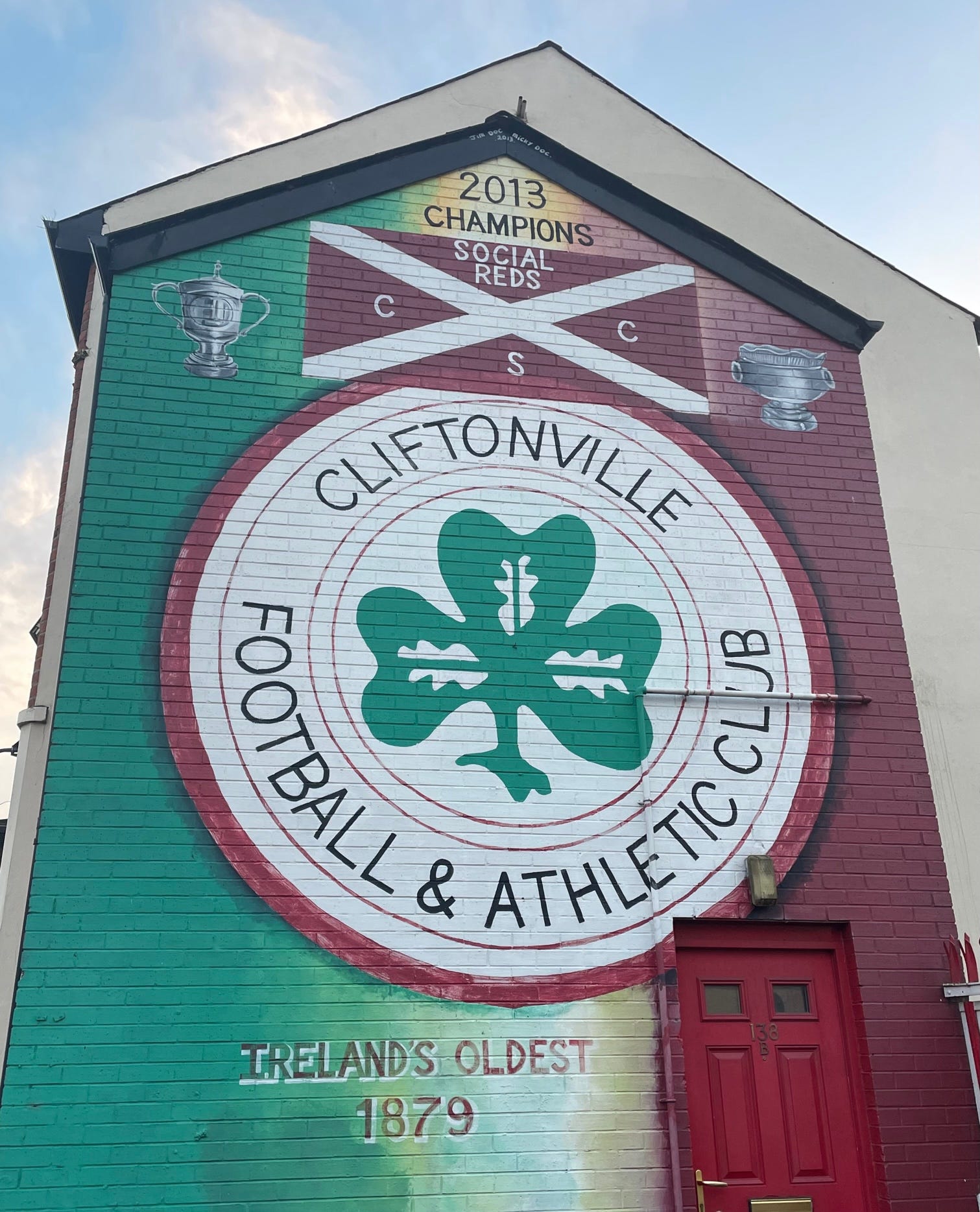
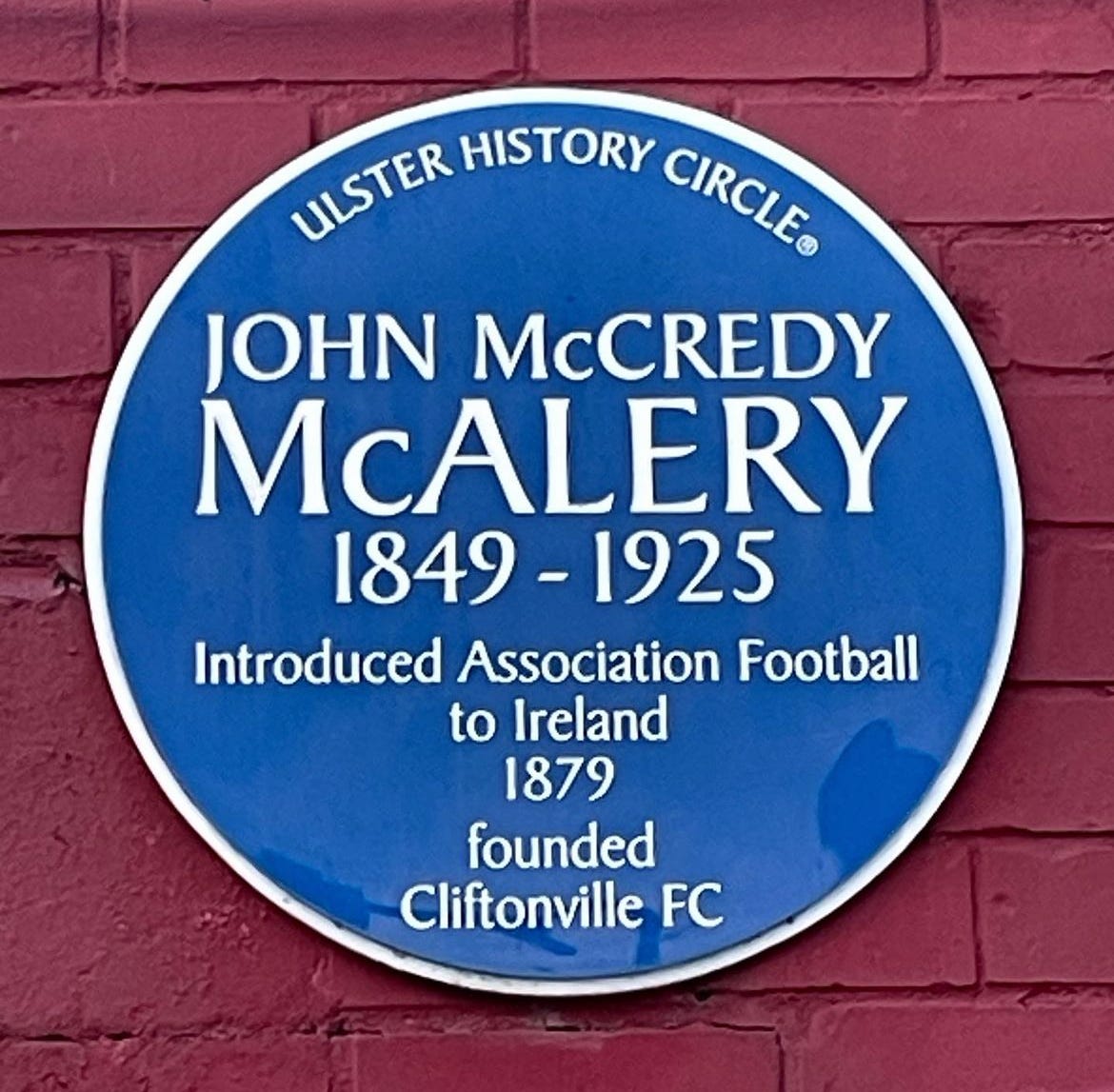
In 1879, he founded Cliftonville, Ireland’s first and oldest club, as an extension of the cricket club that he played for. There’s a blue plaque to McAlery at the turnstiles and a huge end-of-terrace mural nearby celebrating Cliftonville’s claim to be Ireland’s oldest club.
On 18 November 1880, McAlery brought eight clubs together to form the Irish Football Association (IFA), the fourth national governing body after England, Scotland and Wales. The IFA launched a Challenge Cup, and rural side Moyola Park beat Cliftonville 1-0 in the first final in April 1881, watched by a thousand spectators.
In February 1882, McAlery raised a national team to face England at Belfast’s Knock Ground. A crowd of 2,500 braved horrendous weather to see an Ireland side dressed in the blue of St Patrick lose 13-0. Aston Villa’s Howard Vaughton and Arthur Brown scored nine between them. It remains England’s record victory and Ireland’s heaviest defeat, though the other Home Nations had a near two-decade head start in football development.
The Irish League followed in 1890, with seven clubs from Belfast plus County Armagh’s Milford FC. Founded days before the Scottish League, it is the second oldest top-flight in the world. Linfield took the first title and began its long dominance. Milford lost all fourteen games yet left a deep legacy. Its 25-year-old goalkeeper, William McCrum, annoyed by the foul play around his goal, proposed a penalty kick. The idea reached the International Football Association Board as ‘the Irishman’s motion’ and became Law 14 in 1891.
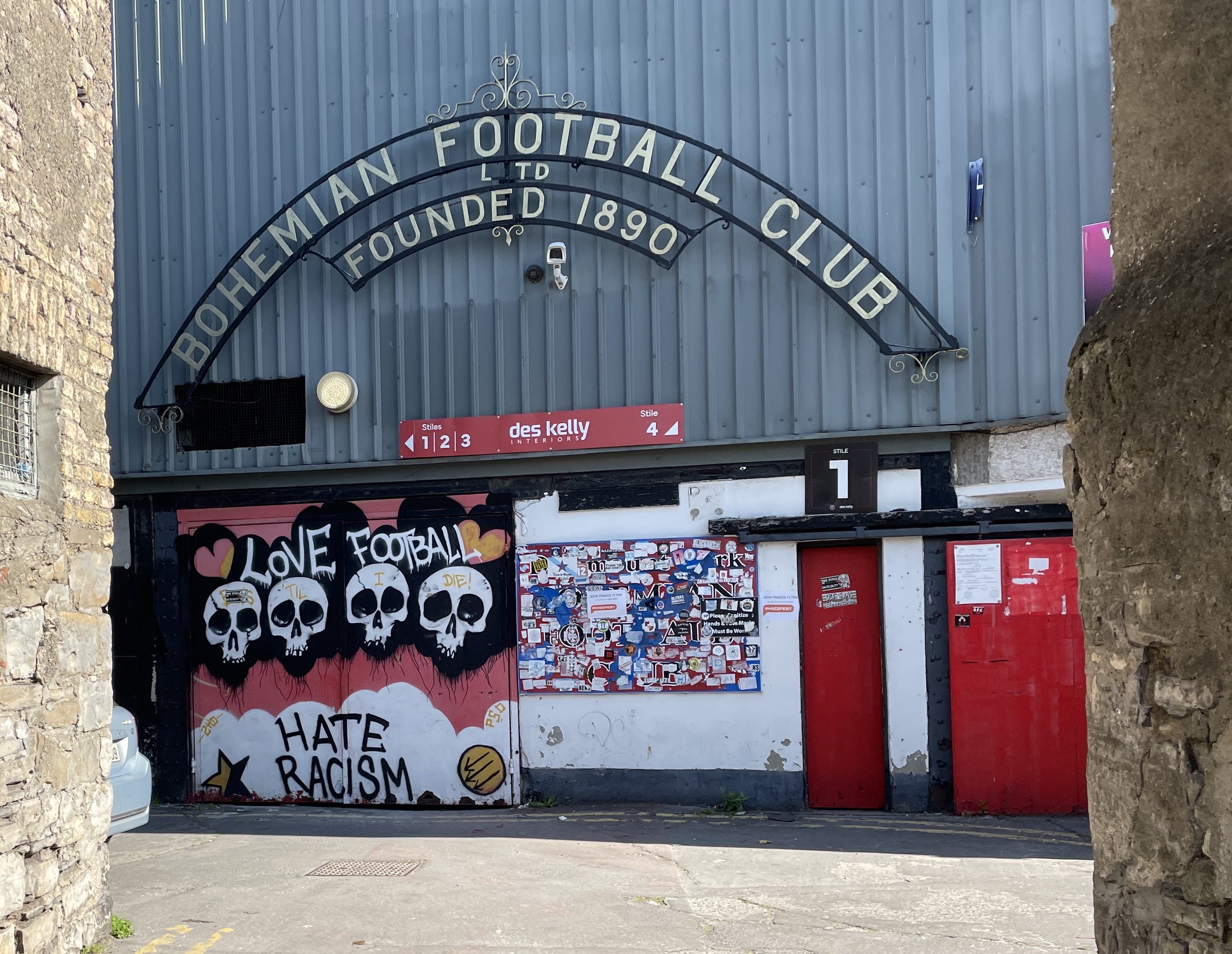
The early Irish game had been centred around industrial Belfast. Down in the island’s administrative capital, Dublin, the game slowly took hold in the 1880s, mostly among the upper- and middle-classes. Clubs like Britannia, Montpelier, and Bell’s Academy led the way, with current senior clubs Bohemians (1890), Shelbourne (1895) and Shamrock Rovers (1899) following.
But football’s spread came at a time of rising national identity politics. In 1884 Michael Cusack founded the Gaelic Athletic Association (GAA) to protect native Irish sports, including hurling and Gaelic football, from British imports. To some nationalists, soccer was a ‘garrison game’, played by the British military that had helped popularise it. Michael Collins reputedly said there should be ‘no soccer for Gaels’. Pejorative terms like Shoneen (‘Little John’) or ‘West Brit’ were sometimes used to describe players or fans of soccer.
After eight centuries of English/British occupation, nationalist tensions were coming to a head, and discussions around Home Rule were being debated in Westminster. The outbreak of hostilities on the continent in 1914 delayed the inevitable demographic collision between those in the Catholic/nationalist-majority south who wanted independence from London, while a Protestant/unionist majority existed in six counties in the north. Division came in 1921, which is why there are two national sides on the island of Ireland.
But after four decades, soccer was well embedded across the island, and it would go on to produce talent such as George Best, Liam Brady, and Roy Keane.
For more on the history, politics, and groundhopping across Ireland, please read my book, Shades of Green: A Journey into Irish Football. Also, you might be interested in my post on Ireland’s rebel footballers or the incredible Belfast Celtic story.
AI Notice: All my writing is my own, thus human-created. I use Otter to transcribe interviews. Grammarly to check for typos and spelling, and Claude for research, summarising, and occasional feedback.
No posts
Comments
Nothing yet. Say the first thing.
Sign in to join the conversation.