
For the past 23 consecutive months, I’ve shown up here with the same rhythm. Five new trails, real world logistics, and the insider scoop so you have the best experience out on the trail.
With 115 trails shared (more if you count mid-month visitor guides), this newsletter has been about helping you get outside smarter and with more confidence. And underneath it all, the mission has stayed consistent: make the outdoors feel more accessible, more informed, and more welcoming for everyone.
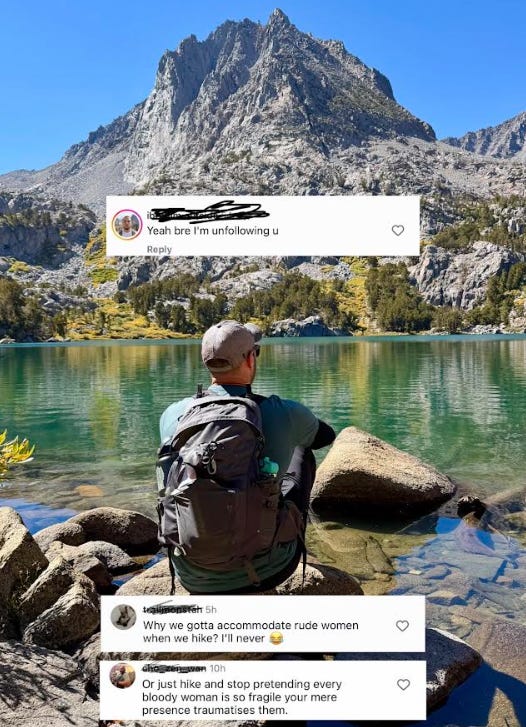
But something happened in February, once I posted a simple trail etiquette video. It sparked thousands of comments and stories shared. The reaction pattern that told me we hit a nerve that runs deeper than hiking tips. If you missed the original Facebook post, you can see it here, and the Instagram reel here.
What started as a practical conversation about trail behavior quickly became something else for me. It was a window into how differently men and women experience the outdoors.
With International Women’s Day around the corner, it feels like the right time to zoom out and talk about why this topic matters, and what we can actually do about it.
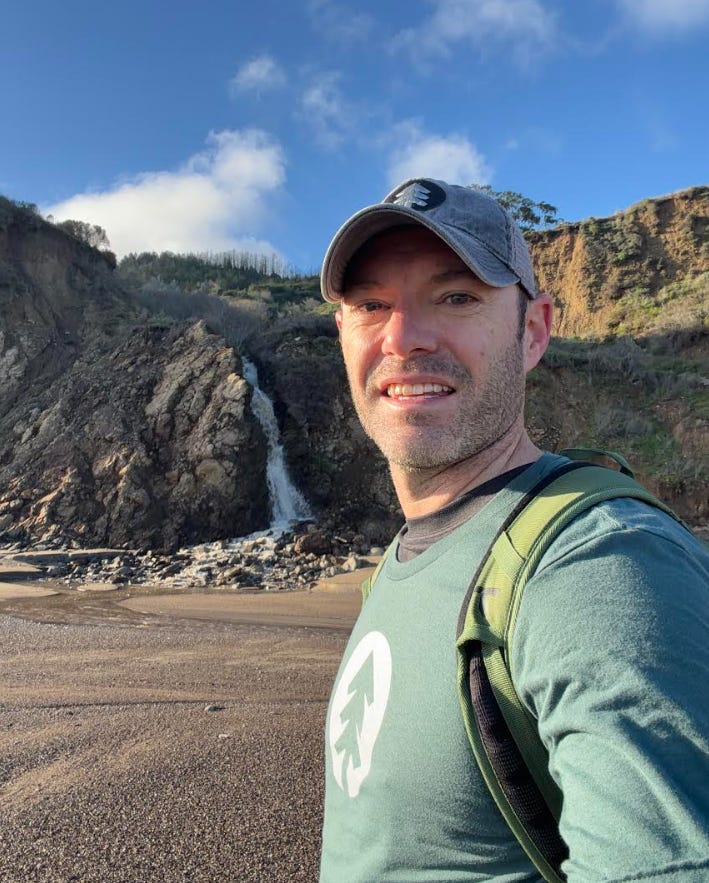
Yes, I’m aware of an obvious question: “Why is a middle aged white guy talking about women’s safety?”
Fair question. Here’s my answer:
Because the outdoors is best when the people who feel safest help make it safer for the people who don’t. I spend hundreds of hours a year on hiking trails with all different kinds of terrain, distances, and degrees of difficulty. I can hear the conversations at trailheads. I read the DMs that don’t make it into public comment sections. And when thousands of women consistently say some version of:
“I love hiking… but I’m always a little on edge when I’m alone.” That’s a signal, not noise.
To be clear, I’m not speaking for women. I’m listening to what’s already being said and making sure the broader hiking community actually hears it too.
Let’s ground this in facts. Multiple outdoor participation and safety studies point to a consistent pattern:
Women report significantly higher concern about personal safety when recreating outdoors alone.
Surveys from groups like the Outdoor Industry Association and various park agencies have found women are far more likely than men to modify behavior (time of day, route choice, whether they hike solo at all) due to safety concerns.
Research on outdoor recreation constraints repeatedly shows fear of harassment or assault is a disproportionately cited barrier for women compared to men.
The broader context matters too. According to national crime data and victimization surveys in the U.S.:
Women are significantly more likely than men to experience sexual violence in their lifetime.
A large majority of perpetrators in these cases are male.
The backcountry is statistically safer than many urban environments. But human behavior isn’t driven by raw statistics alone. Women are doing constant mental math on the trail, and it’s driven by an equation with three factors:
Perceived risk
Lived experience
Social reality
If you scroll through the reactions on my posts (at least the ones that I left up, I deleted many that were extremely racist or dangerous), you’ll see a pattern. There were many thoughtful and supportive responses (regardless of gender). And then yes, there were some spicy takes. The spicy comments usually fell into one of three buckets:
“I’ve never seen this happen.”
Which may be true, but perhaps only for you. Absence of personal experience isn’t proof of absence. Many women are managing situations quietly: changing pace, altering routes, pretending to be on the phone, avoiding eye contact. If you’re not looking for it, you may not see it.
“The trail is already safe.”
Relative to many environments? Often yes. Equally comfortable for everyone? Not always. Safety is a spectrum of comfort, predictability, and control.
“Why single out men?”
Behavior change works best when the group with the most influence participates. Most men on the trail are good people, and I like to consider myself one of those. Small adjustments by the majority can meaningfully improve the experience for the minority who feel less at ease.
If you’re a woman who enjoys solo hiking, here are some strategies I would suggest. This list is about stacking the odds in your favor, not about generating fear.
Before you go
Share your planned route and return time with someone you trust
Download offline maps, and check recent trail reports for unusual activity or closures (this is something I do for trail conditions anyway)
Start earlier in the day when trails are more populated
On the trail
Keep at least one ear free if using headphones
Trust your instincts and maintain awareness at trail junctions / parking areas
Carry basic safety tools you know how to use (whistle, headlamp, etc.)
At the trailhead
Park in visible, well lit areas
Take a quick mental note of who else is around
Avoid leaving obvious “I’m solo for hours” signals in plain sight
Repeating: this is about practical risk management in the real world we actually have to deal with.
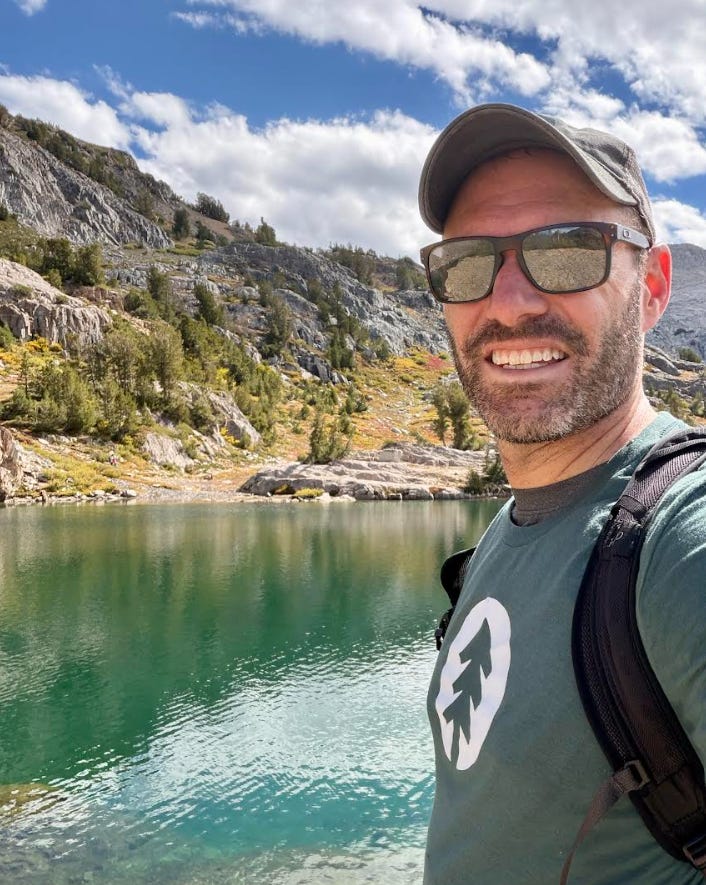
This is the part that triggered the strongest reactions. If you’re a guy on the trail, small shifts go a long way:
Give a little extra space when passing a solo hiker
Announce yourself clearly and calmly when approaching from behind
Avoid pacing directly behind someone for long stretches
Read the room: if someone seems uneasy, a little distance is free and costs nothing
This conversation isn’t fringe, it’s unfortunately simmering under the surface, often curtained due to fear that comment trolls take over, and it therefore rarely gets addressed in a practical, noninflammatory way.
And the internet loves turning nuanced conversations into team sports. That’s not what this is. My goal is simple: to get more people feeling confident outside.
If women feel more comfortable hiking solo, trail usage increases, community grows, stewardship improves, and outdoor participation expands. That’s a win for anyone who cares about public lands.
If you’re planning early spring miles, this is prime window in California. Two guides from the archive that are dialed for right now:
If March (or April) trips are on your radar, both are amazing places to go.
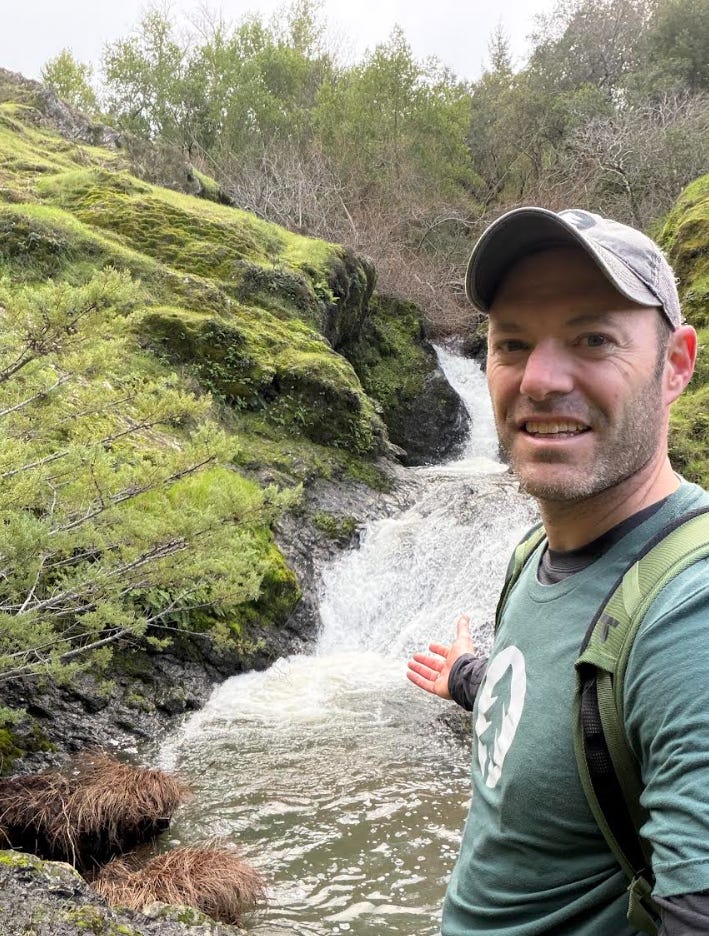
I think about how women experience trails differently now than I did a decade ago. Part of that is miles logged and part of it is conversations heard. But another part is even more simple: I have a daughter who is growing up fast and already loves being outside.
One day she’s going to want to hit trails on her own. When that day comes, I don’t expect the world to be perfect. But I’m hopeful the outdoor community can be a little more aware, a little more thoughtful, and a little more dialed in than is now. If this conversation nudges the needle in that direction, it was worth having.
As always, I hope to see you on the trails.
Comments
Nothing yet. Say the first thing.
Sign in to join the conversation.