
This week, we will feature several stories about our trees in a changing climate. We will begin with pawpaw, our native fruit tree, continue with a discussion of how tree biology may be changing with climate change, and continue from there. This may be more stories than you have time for, but don’t worry, the stories are like trees, they will remain for a very long time.
I just ate my first pawpaws of the season, off the trees in my back yard that I began from seed. Pawpaw are very popular right now, and yet still have not been tasted by most of us. Let’s explore the odd history of this delicious native fruit.
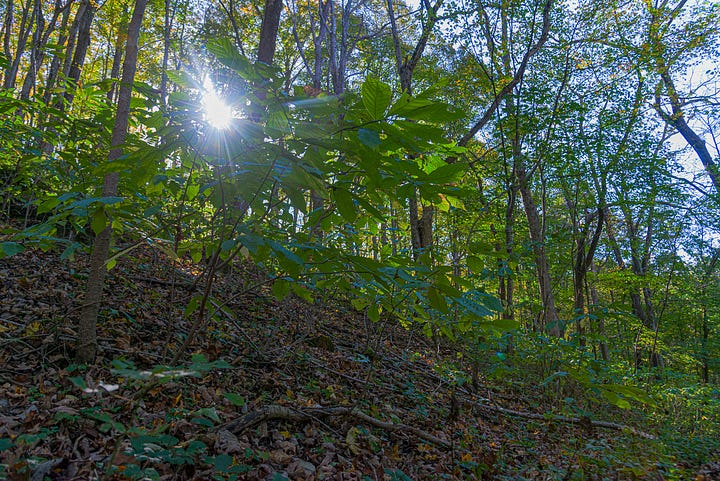
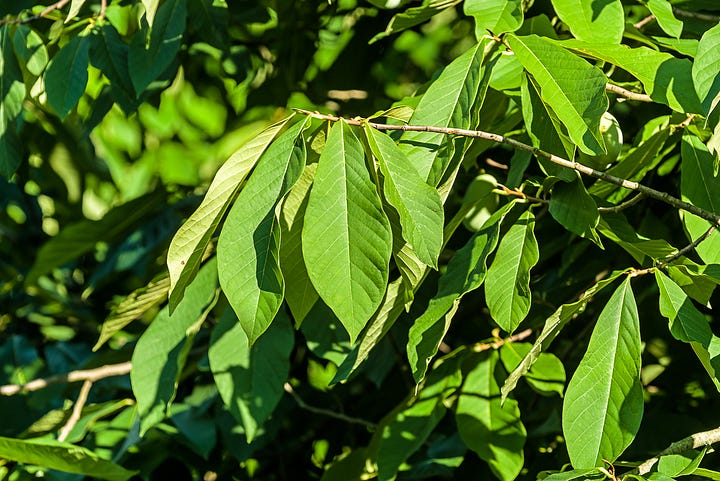
Pawpaw, Asimina triloba, is a tree in the tropical family Annonaceae, the custard-apple family. It is a very large family of tropical trees and shrubs with a few species that come into the temperate zone. Pawpaws grow throughout the southeastern US, but anyone who is used to tropical trees will instantly recognize that pawpaw, despite its range, is a tropical tree. It is a shade-tolerant small tree found in forest understories, with entire leaf margins (no teeth or lobes), drip tips to shed rainwater, leaves clustered at the ends of stems. Let’s have a look.
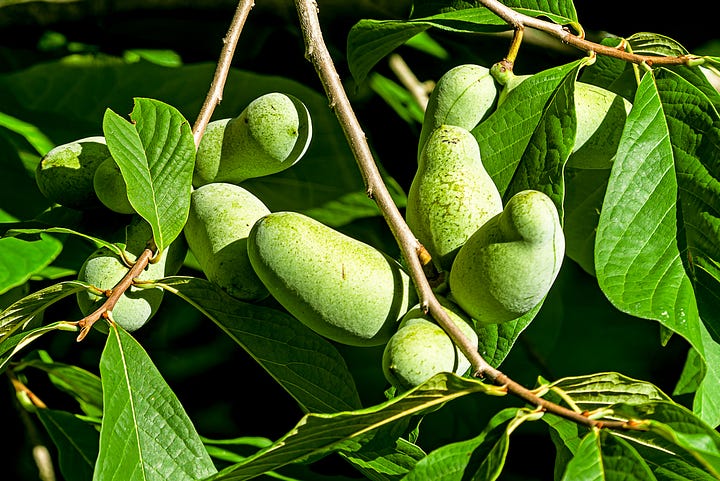
Photos: A stand of pawpaws in the forest understory with the sun shining through; The tropical-looking leaves of pawpaw; The amazing deep red flowers of pawpaw with beetles and flies pollinating them; The fruit of a forest pawpaw, which remain green when ripe.
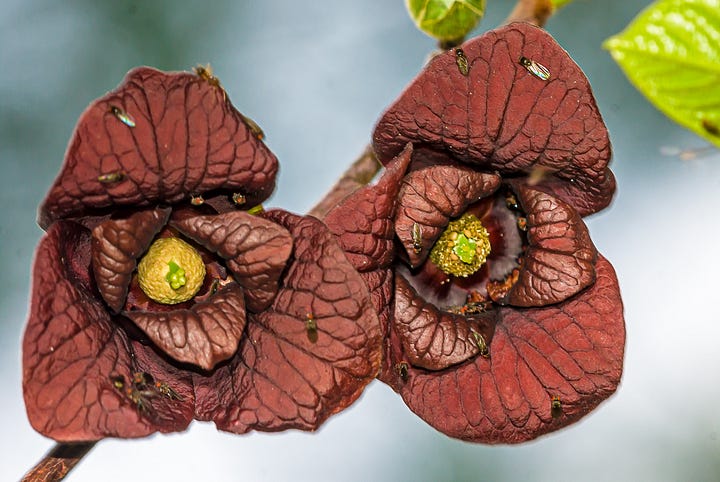
You will notice that this tree does not resemble any other temperate tree. The fruit is the largest edible fruit of an angiosperm tree native to North America.
Pawpaws were important food trees for Native Americans who collected them in the wild and farmed them. Slaves, both escaped and freed, farmed pawpaws as well. Early European settlers gathered them and a few grew them in farms. Yet, unlike other native fruits like blueberry or cranberry, pawpaws were not widely domesticated and cultivated. Some blame the quick ripening and short shelf-life of the fruit, but this has been overcome by selection and breeding in other fruits. I believe that there is a strong component of racism at play, the trees being cultivated by Native and Black farmers.
I was surprised, when I came to Kentucky in the 1980s that almost none of my forestry students, who were mostly from rural eastern Kentucky families, had ever tasted this fruit.
Rather suddenly, in the last 20 years, there has been a small boom of people cultivating pawpaws, learning to propagate them from seed or cuttings, and selecting the largest and tastiest fruit. Pawpaw is still not a mainstream crop. While a few farmers market vendors and small country stories may carry the fruit, they are still very hard to find.
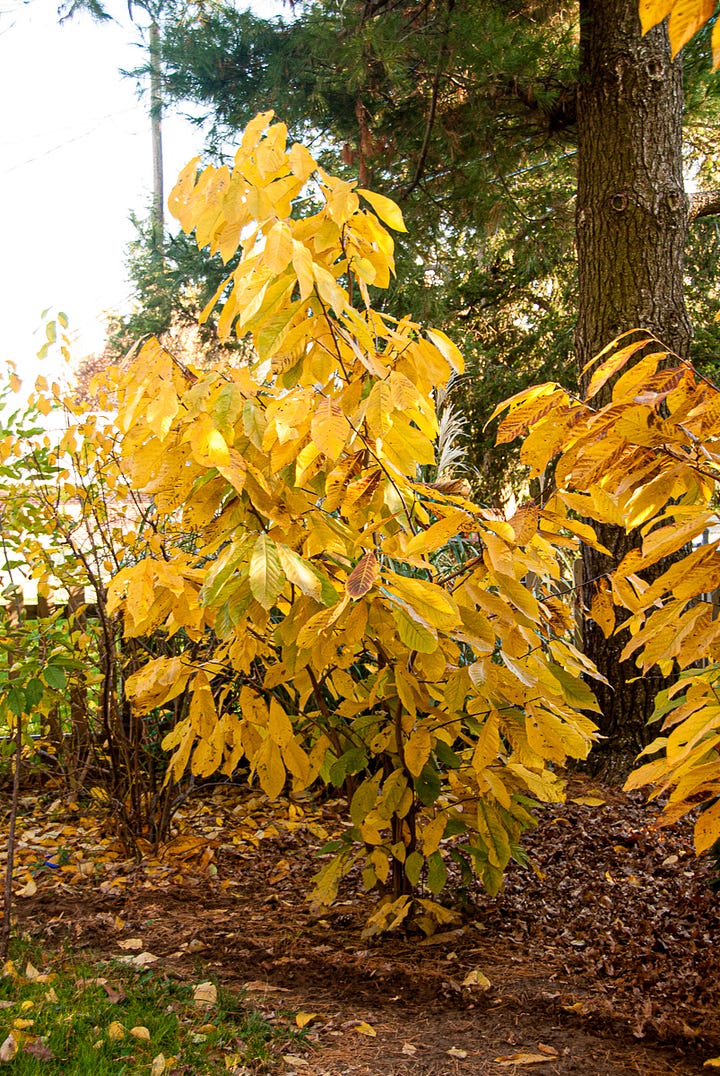
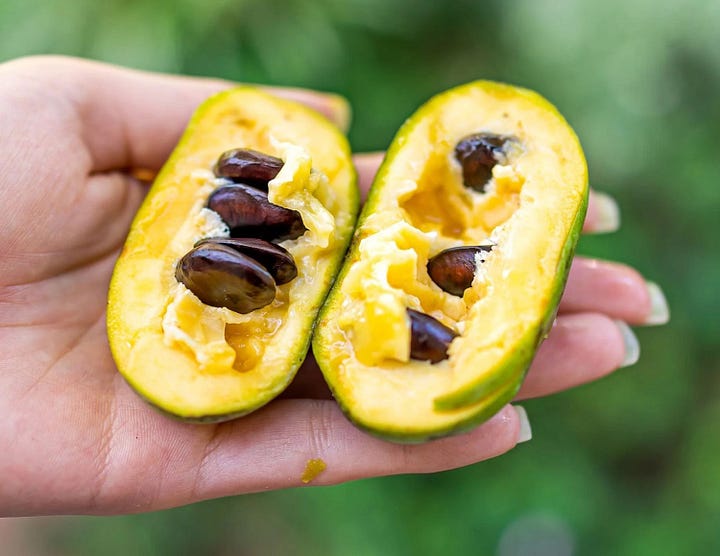
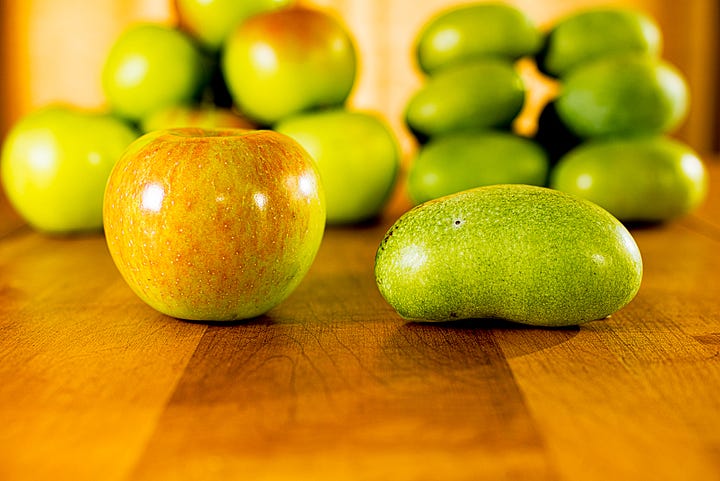
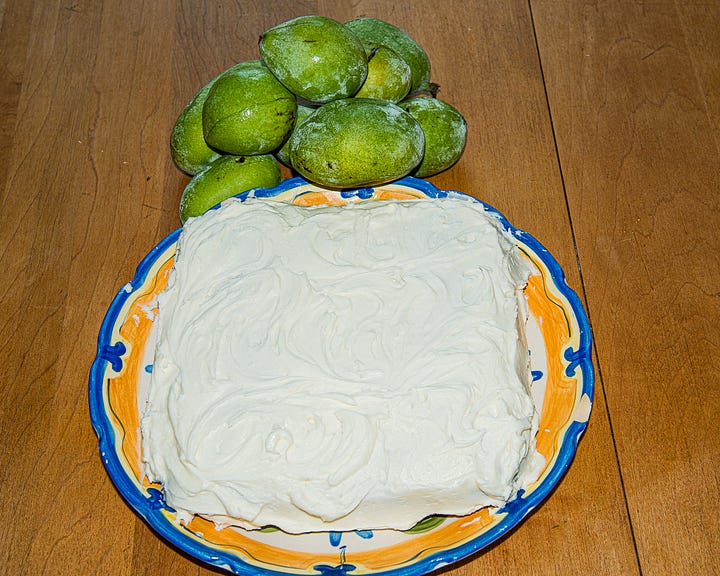
Let’s now consider pawpaws for eating. The yellow trees are fruit-bearing trees in my backyard. They bear nearly a bushel between the two in most years. They are heavily visited by bees, flies, and beetles for pollination. The open fruit shows the bright yellow, sweet flesh, typically with several large seeds. The cake is shown because my kids did not like the flavor of the raw fruit, but eagerly ate pawpaw cake. A bunch of ripe pawpaws (note that they remain green) is shown by comparison with apples.
I trust that the enthusiasm for pawpaws will continue to grow, and that breeding and selection will lead to a fruit that has a longer shelf life and fewer seeds.
A cautionary note.
Remember that this is a tropical tree. Tropical trees commonly have complex chemical defenses against animals that might eat them. Pawpaw is no different. Pawpaw and other members of the family Annonaceae contain a toxin called annonacin. There is a lot of annonacin in the bark, leaves, and fruit husk, but there is some in the ripe fruit.
In Caribbean, indigenous people consume tea made from custard-apple or soursop (Annona) leaves and also eat the fruit. Annonacin is a neurotoxin, and a form of Parkinson’s disease is common in villages where Annona consumption is common.
Pawpaw contains the neurotoxin annonacin. I know of no reports of illness due to fruit consumption, but caution should be exercised. As breeding programs become established, selection for low annonacin concentration in the fruit should be pursued.
Let us know your experience with pawpaw. The comments are open to all subscribers.
No posts
Comments
Nothing yet. Say the first thing.
Sign in to join the conversation.