
My first medium format was a Pentax 67. As my first foray into the format, I was able to procure a reasonable panoply of lenses within the Pentax 67 family. Unfortunately it decided to stop working (most likely dirty electrical contacts around the frame/under the leatherette) so it is off for a CLA.
But there were other ways to scratch the medium format itch - recently, my go-to has been a Mamiya 645 1000S. It’s the original body style but with 1/1000 shutter speed included. While I could have gone in on Mamiya 645 glass, I decided instead to stick with what I already had - the Pentax 67 family.
I purchased a basic Pentax 67 → Mamiya adapter, which let me use the famous Pentax 105mm f2.4 “dream lens.” Furthermore, I managed to find an SMC Pentax 300mm telephoto for basically $80 (I assume because the heft is unpopular on the already large 67).
In my early photography days, I sought out wider and wider lenses - but now for the type of places I go, I usually can’t figure out how to fill the frame on anything wider than about 40mm equivalent (slight exaggeration, but mostly true).
This carried over to the Mamiya 645 - recently my preferred photo-walk pairing is the 105mm and the thoroughly ridiculous 300mm. I carry the 300mm in a pouch on a sling, and the 105mm usually stays fixed on the body.
This gives me something like 60mm and a 180mm full-frame equivalents as my options. The normal lens is my insurance, and the telephoto is where the real fun begins.
First things first - it’s a cumbersome set up:
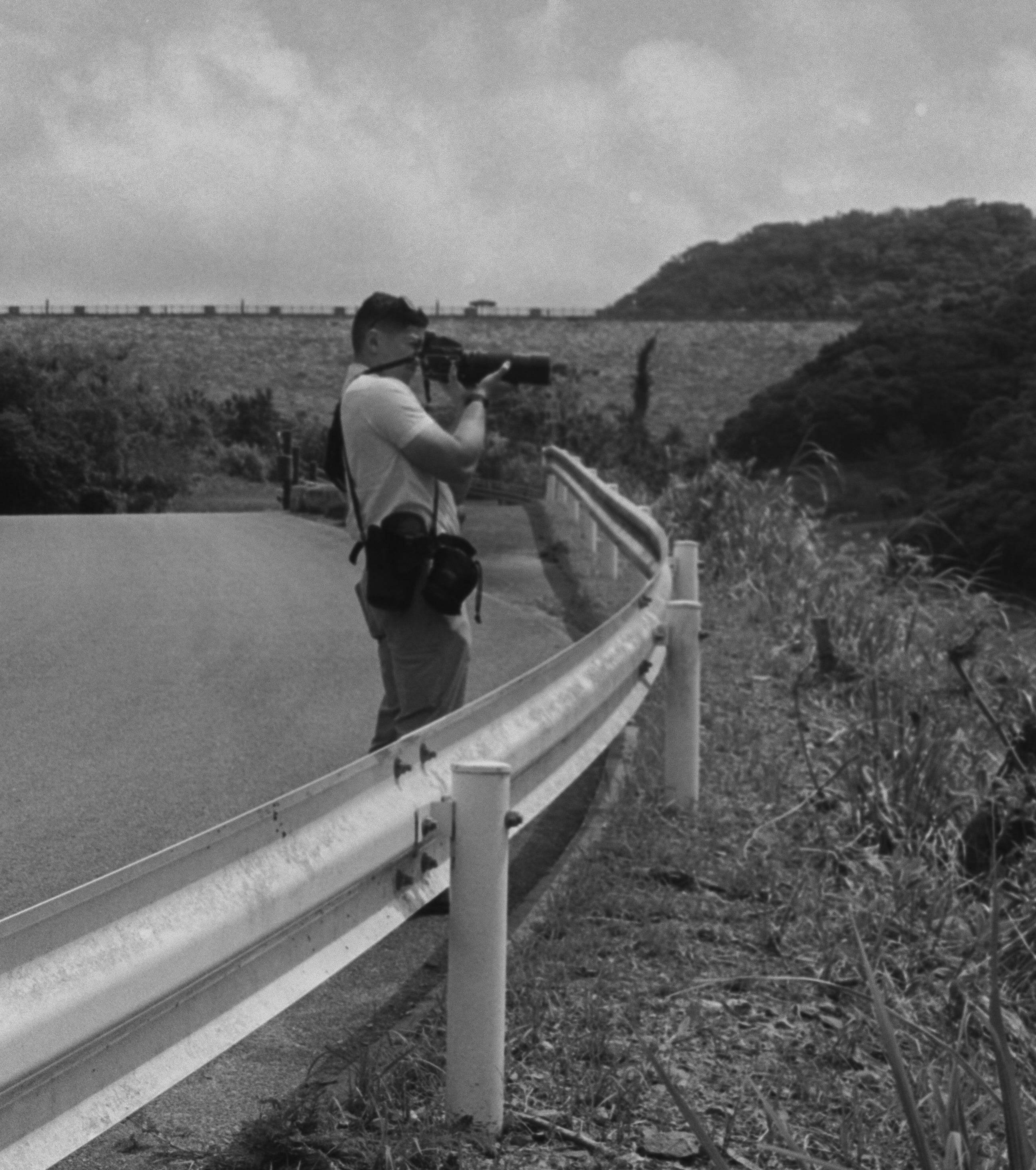
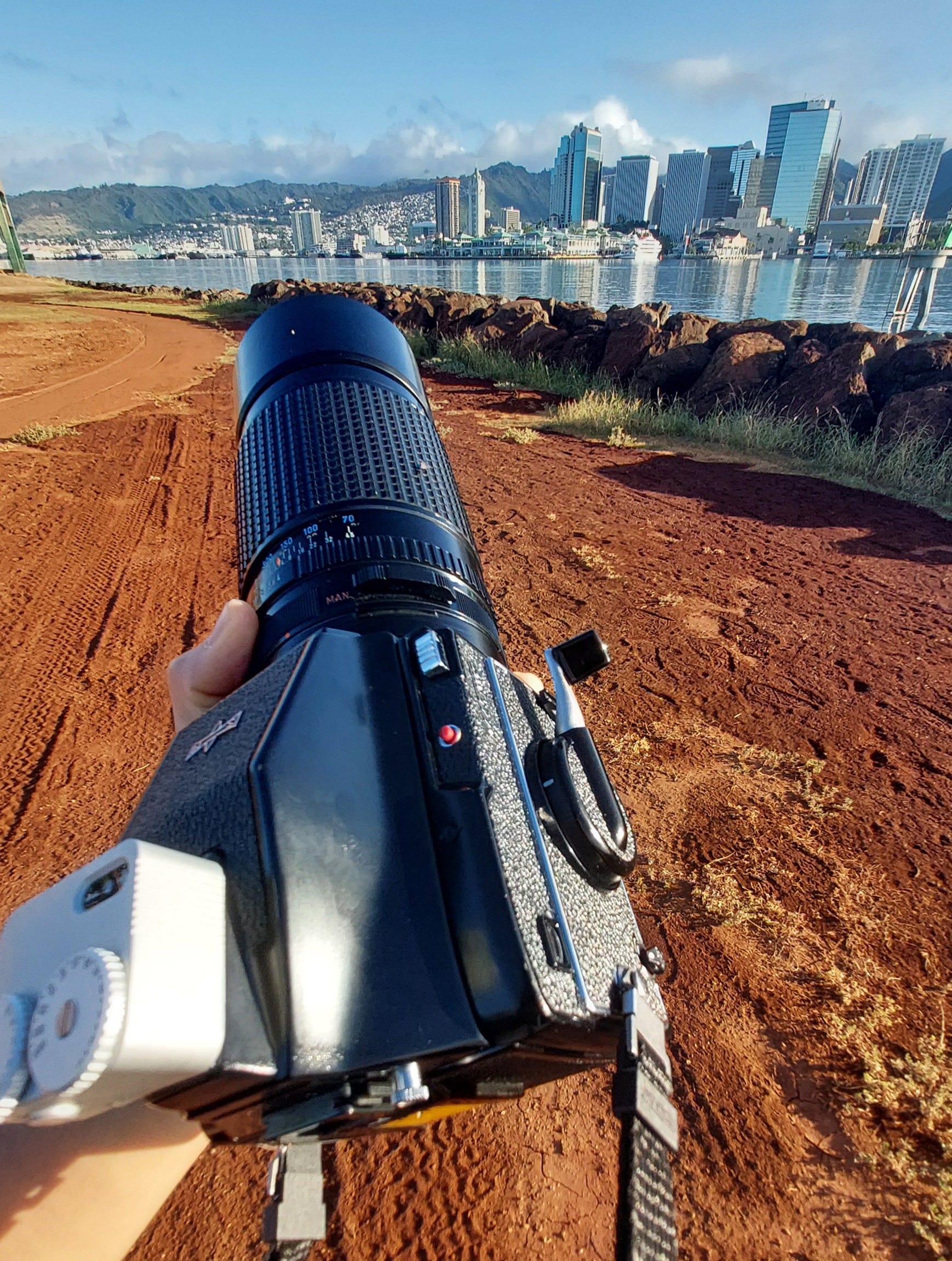
The 67 telephotos are… girthy. Not to be crass, but that’s the most fitting word. It’s like a full Stanley mug on the end of your camera. The Mamiya 645 fits the “Hasselblad Box” form-factor, which, in my opinion, weren’t really designed to be held onto by regular humans (especially not at eye-level like I prefer).
Until I started obsessively setting the shutter lock, I would accidentally expose all the time as I juggled the leatherette cube in my hand (there are two shutter buttons on it!).
I actually did buy the pistol grip (the kind that sits off to the side), but the Pentax 67 mount actually interferes with it, so unless I wanted to buy all new Mamiya glass, I have to settle for 1950s ergonomics.
There are other “gotchas” - the focus ring is about the middle half of the lens, and very easy to bump, as that’s where the center of balance of this contraption is. Additionally, the adapter does not allow for wide-open metering; the lenses have to be set to “MAN” (manual); even in daylight focusing with the split prism is not possible when stopped down.
So the process is - lens wide open, frame, pull focus. Meter, set aperture (without bumping the focus ring!) and shoot. Oftentimes I would get through this and try to shoot, only to realize that the shutter lock had been left on. I suppose I could meter before, count the clicks, and shoot without looking, but film is expensive.
Even still. This is all part of the fun.
So, off I went with a roll of Kodak Gold loaded.
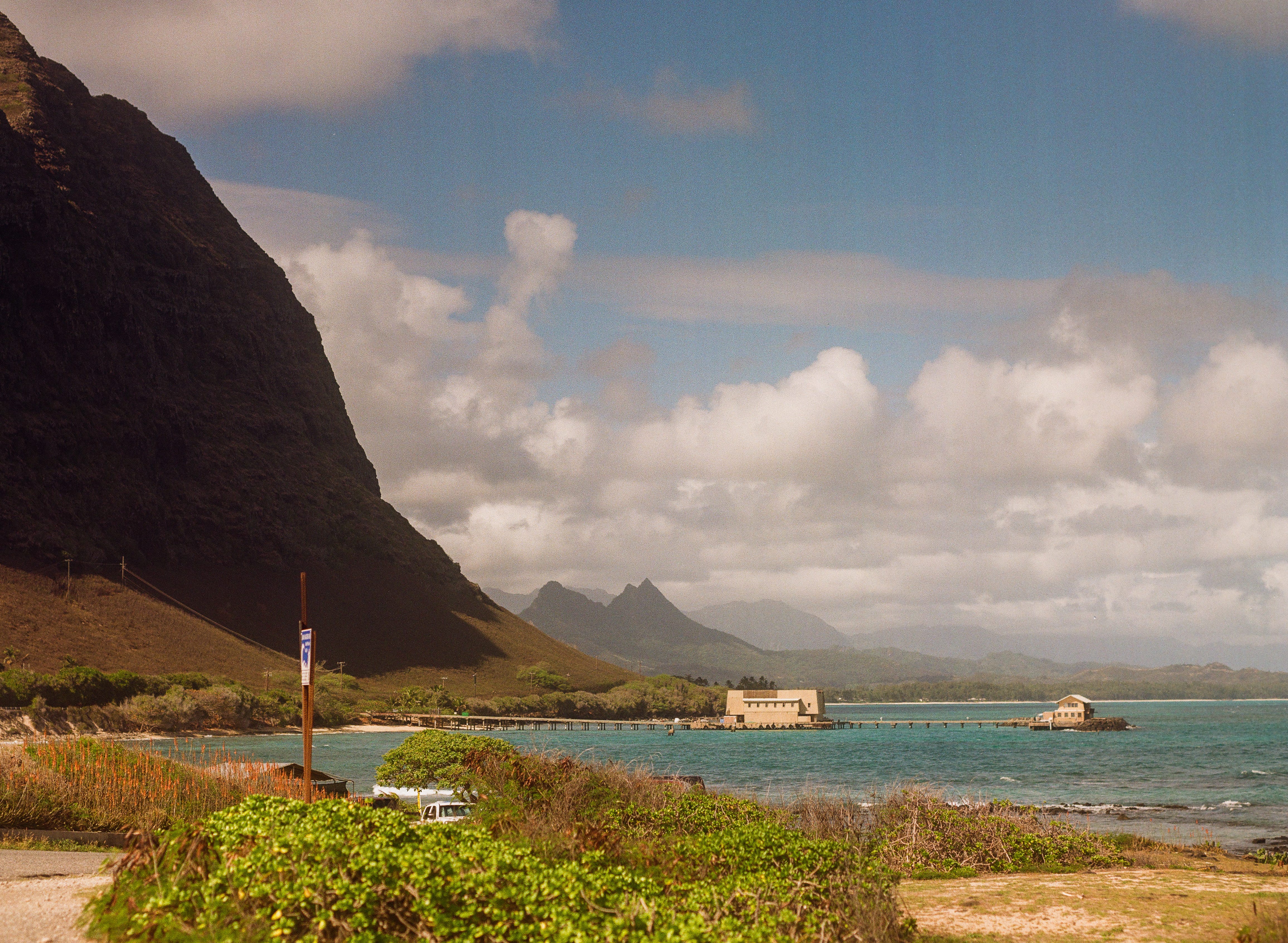
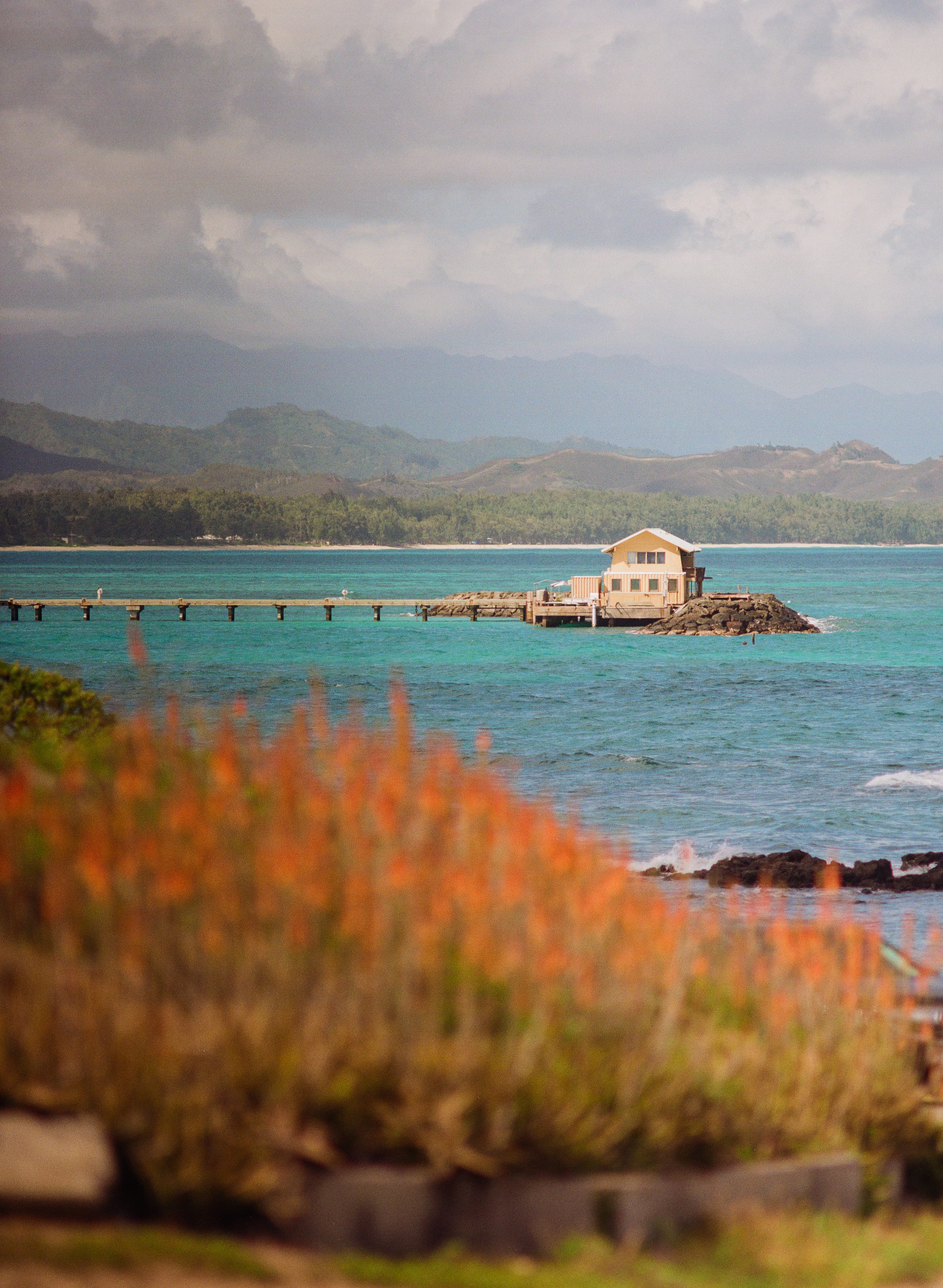
I have a couple compare/contrasts for you - the first is with the 105mm, the second a framing I found with the 300mm.
Text within this block will maintain its original spacing when published
Kodak Gold, Mamiya 645, Pentax 67 105mm f/2.4It’s hard not to take fun pictures in Hawaii, the natural beauty is incomprehensible at times.
Text within this block will maintain its original spacing when published
Kodak Gold, Mamiya 645, Pentax 67 300mm f/4
This would be hard to achieve without the “compression” of a long lens.
I was concerned about shaky hands - I normally never go below 1/60 (okay, 1/30) on regular 35mm film but for these I tried to stay at 1/250 or above. I think the results are acceptable. Kodak Gold at 200 ISO is about perfect for trying to shoot wide-open on sunny-ish days with aforementioned high shutter speeds (remembering that “wide open” on these old medium format lenses is f/2.4 and f/4).
Shooting cities with longer lenses is also a fun new perspective for me with a 300mm. Here’s a more standard (normal, if you will) shot of Honolulu with the 105mm:
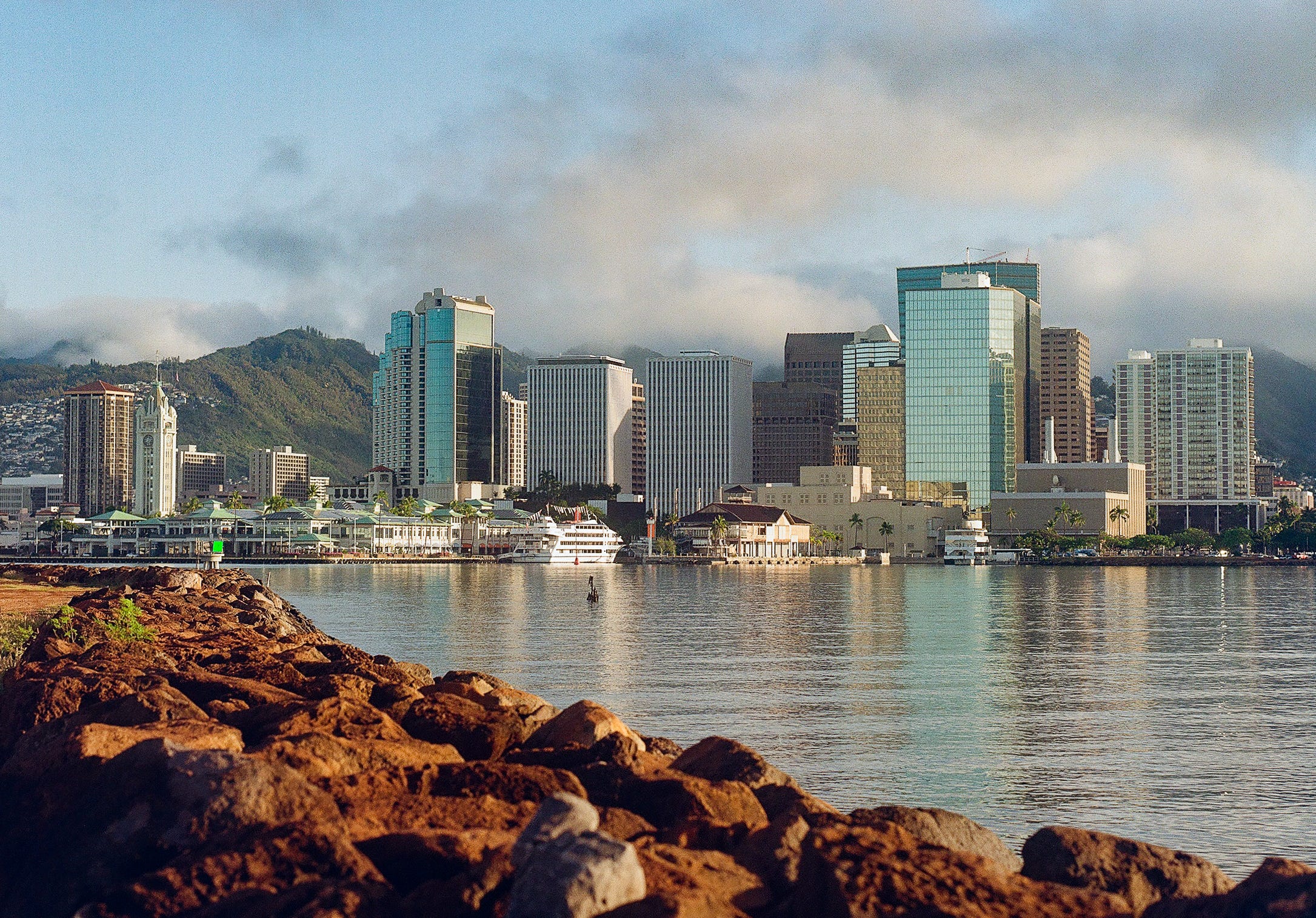
Text within this block will maintain its original spacing when published
Kodak Gold, Mamiya 645, Pentax 67 105mm f/2.4
This is a perfectly fine image, but it’s a bit less “selective” with the wide field of view. It’s also a very natural human perspective, and hence not necessarily different from how a person walking by would perceive this scene. There’s nothing wrong with normal lenses (they are my favorite), but sometimes you want something a little different.
Which is what a 300mm lets you do:
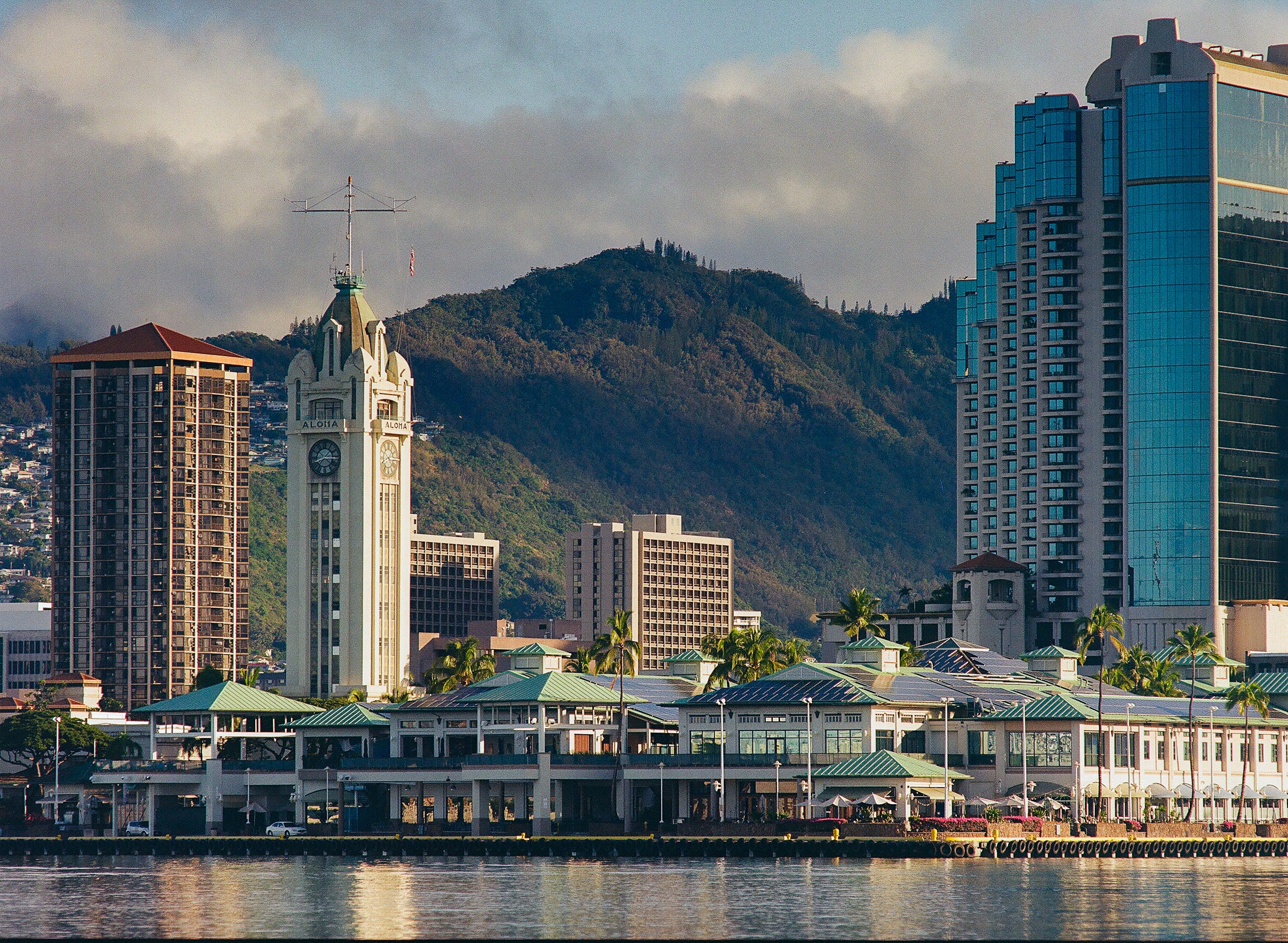
Text within this block will maintain its original spacing when published
Kodak Gold, Mamiya 645, Pentax 67 300mm f/4But what about bokeh?
I wasn’t shooting portraits - and my eye for closer details can be lacking - but here are a few that show some of the promise of the famous 105mm f/2.4:
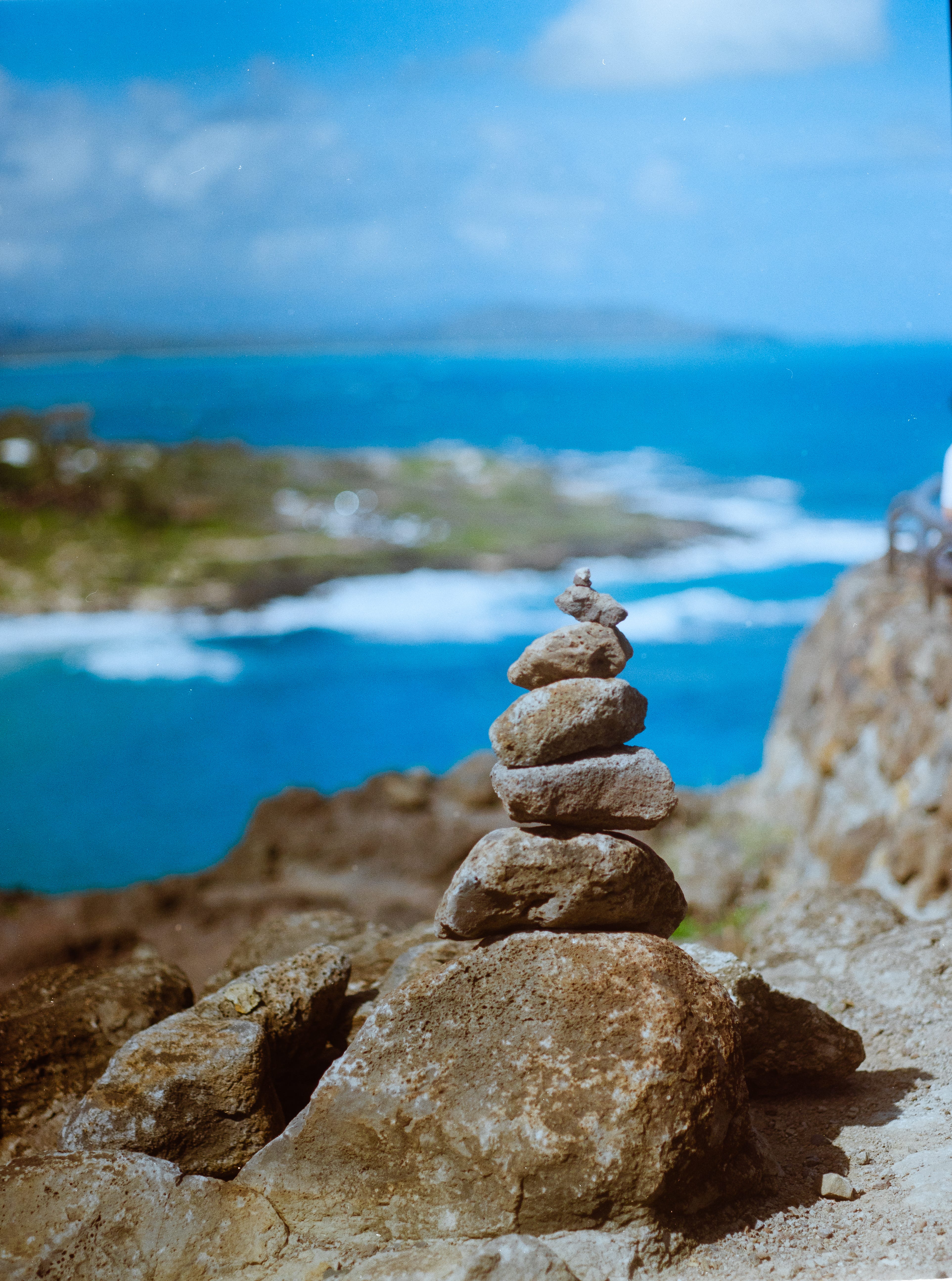
Text within this block will maintain its original spacing when published
Kodak Gold, Mamiya 645, Pentax 67 105mm f/2.4
Note - this is also Gold, but I didn’t like how the lab scan turned out (the rest of the above are more or less how the lab interpreted them). With this one I simply had to move the ocean more towards the striking blue that it was in real life on that day. I think the white balance is close based on the clouds and breakers.
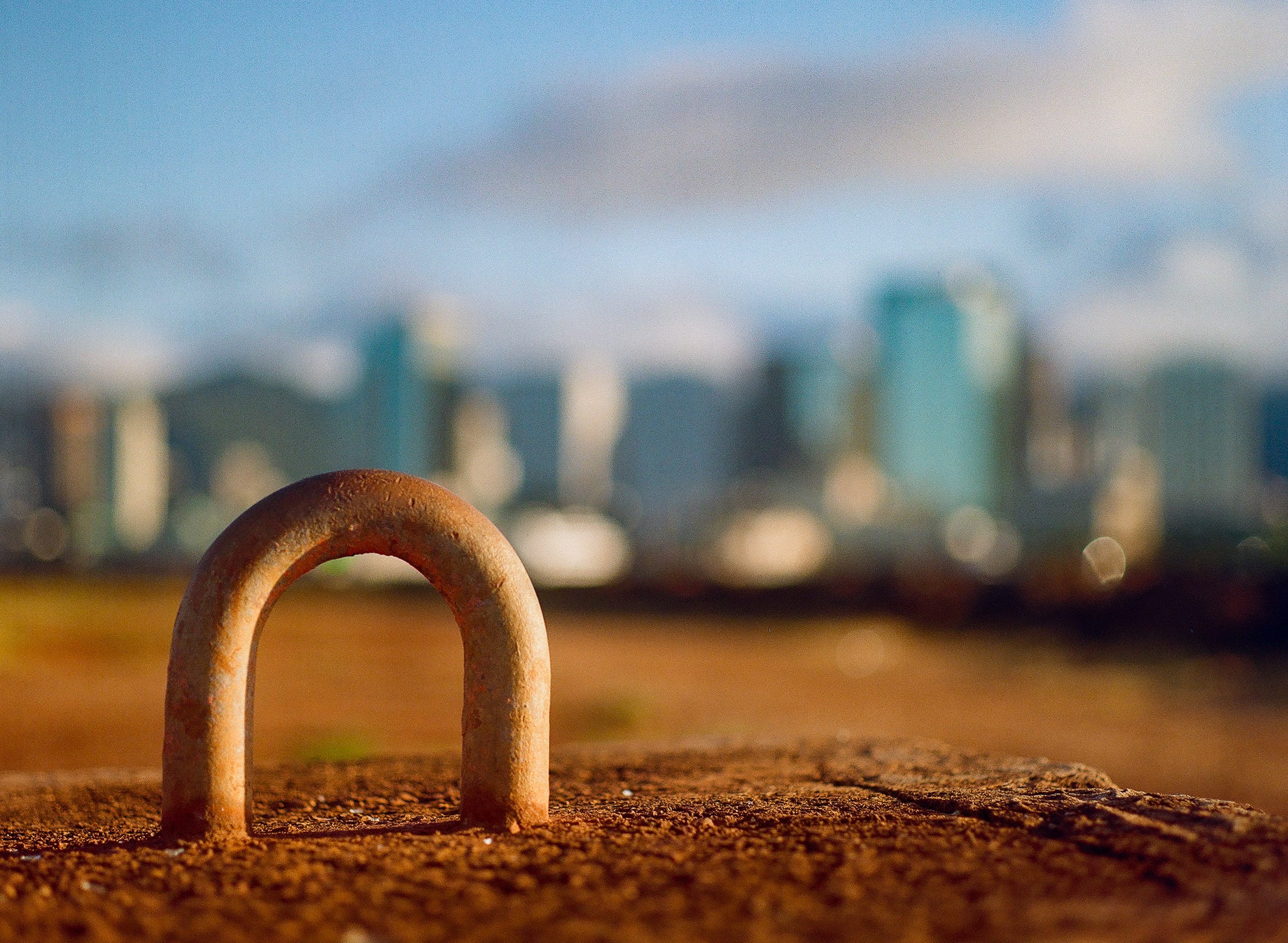
Text within this block will maintain its original spacing when published
Kodak Gold, Mamiya 645, Pentax 67 105mm f/2.4
After these walks - I’m tempted to go even longer. Pentax made hilariously oversized telephotos (up to 1000mm) but frankly the 300mm is probably towards the limit of handheld practicality. It may also be time to get the dust off my tripod and try something new… Especially looking back and critiquing my work - I think stopping down to f/22 and having everything in focus (to include foreground elements) might be the next piece. That would not be possible while avoiding shake without a tripod.
Hopefully inspiration to try some longer focal lengths!
No posts
Comments
Nothing yet. Say the first thing.
Sign in to join the conversation.