
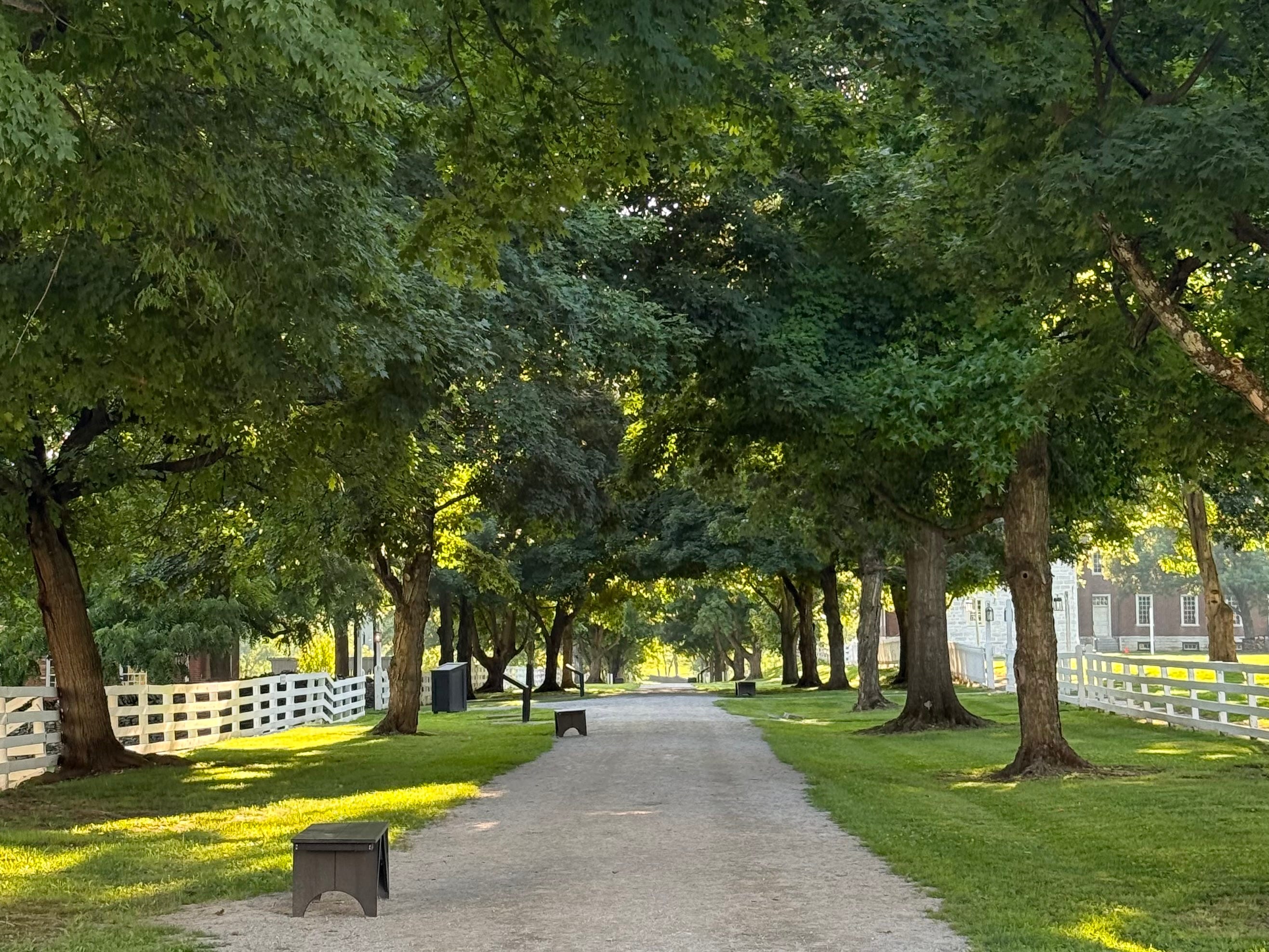
I had come back with my mother to Lexington, Kentucky to visit the place she grew up.
During my childhood in Florida and Georgia, my mother had always told her own childhood stories in fragments: riding horses across her family’s farm, where they raised cattle and tobacco, now a subdivision; my big-hearted grandfather promising every child he met that he’d buy them a pony; Bear Bryant, the famous football coach, living across the street from their Colonial bordering the Idle Hour Country Club; my grandmother, who never once washed her own hair or drove a car, walking every morning to the real estate office where she worked beside her husband.
It was all atmosphere without chronology, memory without explanation. But, over four days of driving through Lexington together, something shifted.
As you grow older and have your own children, you become aware of your own fragility and, suddenly, you realize with new focus that your parents had entire lives before you arrived—full of fears, ambitions, compromises, humiliations and grief you never imagined.
“The doctor did what??? What’s a rabbit test?”
She was sixteen years old, wearing a red plaid kilt, knee socks, and her boyfriend’s gold football charm around her neck, when she went to the obstetrician she knew from church.
“They killed a rabbit?”
“What did your father say?”
“Weren’t you frightened?”
Well, she was, and her life would suddenly, irrevocably, be altered.
These were questions I would never have thought to ask years earlier. She answered some. Others she brushed aside so casually that they became more haunting than the ones she explained.
In the car, down streets that were so familiar to her, details of her life that I had never heard, Southern gothic details, seemed both traumatic—or what we call trauma now—and merely part of the passing landscape.
The husbands of several family friends burned to death when a wholesale grocery business caught fire, their noses pressed against the storefront windows while their wives watched from the street.
A college friend was found strangled to death.
She would mention these things while waiting at a traffic light, then point toward a horse farm, or the place she watched vaudeville, or a favorite bakery.
Kentucky remains one of the most beautiful landscapes in America. There are rolling horse farms stitched together with dry-stone walls, plank fences disappearing over green hills, limestone houses shaded by enormous trees. There are moments when it rivals Ireland or the Cotswolds. Then, almost without warning, the landscape gives way to strip malls, anonymous subdivisions and highways built with such carelessness they feel violent.
That has always been my relationship with the South. I love it. I resent it. Mostly, I grieve for what it almost is. Of course, the South has always inspired devotion and condemnation, often in the same people. I grew up reading writers who loved it enough to expose it: Robert Penn Warren, Walker Percy, Carson McCullers and Pat Conroy. Their South was beautiful and brutal, deeply civilized and astonishingly cruel, sentimental and violent in equal measure.
While researching a novel that I’m still writing, I read two books that haven’t left me. One was Mary Boykin Chesnut’s Diary from Dixie, perhaps the greatest portrait ever written of Confederate society from within. The other was The Cotton Kingdom: A Traveller's Observations on Cotton and Slavery in the American Slave States, Frederick Law Olmsted’s account of traveling through the antebellum South. While Chesnut chronicled the elegance and anxieties of the planter class, Olmsted dismantled the mythology of Southern hospitality with devastating clarity. Again and again, he found extraordinary beauty existing beside extraordinary backwardness.
That contradiction has never left the South. Nor has it left many of its families. Every family hands down two histories: the one it tells, and the one it lives with.
When I was in college, Google had just begun making genealogical research possible in entirely new ways. My mother started searching for information about a gruesome murder her own mother had hidden from her: the murder of her uncle and aunt, and their neighbor, then teenagers, on Christmas Eve in 1881.
She discovered a remarkable primary source account written by the editor of a newspaper in Ashland, Kentucky, who had visited the murder scene the following morning. By the time the story reached its official conclusion, five years had passed. The town had offered a reward that attracted competing detectives. There had been a lynching, then two more hangings. At one point the governor of Kentucky had effectively declared a small war on the town, with the State Militia called in to protect the accused.
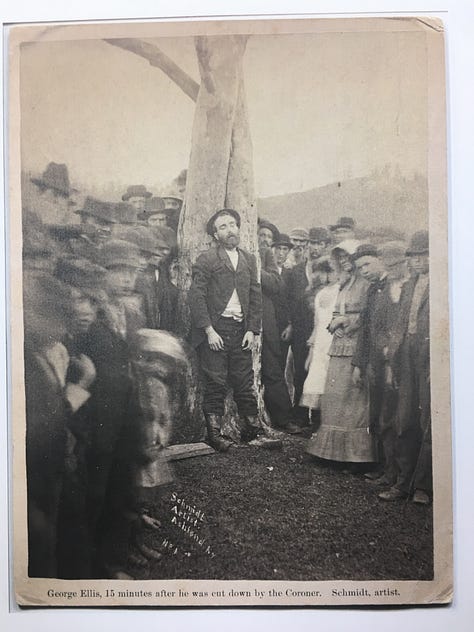
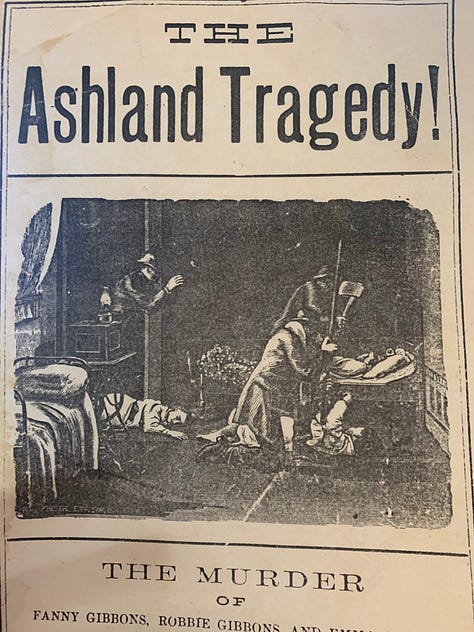
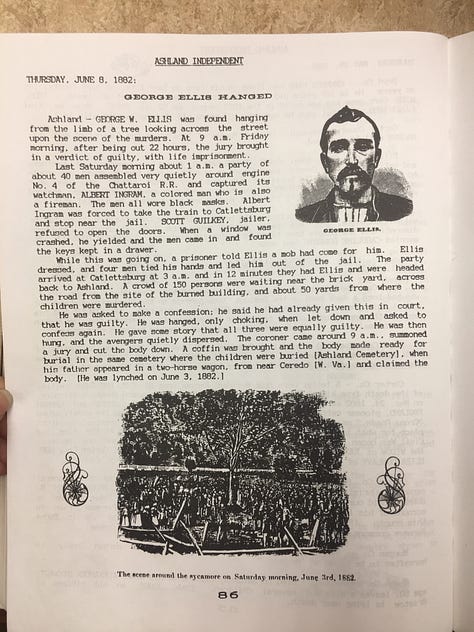
The story became known as the Ashland Tragedy.
After my daughter was born, I quietly picked the story up. Digital newspaper archives opened doors that had never existed before. I pieced the story together through forgotten newspapers from Kentucky, Ohio, New York, even overseas. The Ashland Tragedy had spread far beyond Appalachia because stories about the violent American South fascinated readers in Europe as much as they did in New York. Kentucky had acquired a reputation as a murder capital.
I visited Ashland, and spent hours in the library archives. My cousin Corbie, who still lived in the town, was my partner in sleuthing. We walked the neighborhood where it happened. The deeper I dug, the stranger it became.
I told my mother little of this, sensing perhaps she might not want to know. This week, driving through Kentucky together, I finally told her what I had found.
She was stunned, not simply by the gruesome facts, but by what they revealed about her own family. For the first time we discussed why her grandfather, mother and aunts had buried the story so completely. They had survived not only the grief and fear but the public exposure of everything that followed: accusations, scandal, and shame.
I had thought I was trying to get to the bottom of a true crime tale. Now I realized I was trying to get to the bottom of my mother, the girl in the red plaid kilt, the daughter of people who carried enormous silences so gracefully that the next generation scarcely knew they existed, the woman who had what I once deemed an irrational fear of home invasions, and later slept with a gun beside her bed.
For years I had assumed that gun belonged to the present, but it also very much belonged to the past.
Comments
Nothing yet. Say the first thing.
Sign in to join the conversation.