
The conventional story of how cities in the Middle East became modern is usually told through the idea of Westernization. In this narrative, a “backward” Ottoman town enters a path of transformation with the arrival of the “West,” represented mostly by European capital, European advisors, and European ideas about hygiene and order. The local inhabitants do not feature in this story at all, and if they do, they are there to be acted upon. Modernity is something that happens to them. They are powerless against it.
In Fin de Siècle Beirut: The Making of an Ottoman Provincial Capital,1 Jens Hanssen mounts a powerful challenge to this story. Focusing on Beirut, Hanssen examines how a walled town of perhaps ten thousand people transformed into a booming port city of a hundred thousand over a century. Going against the commonly-held beliefs, he demonstrates that modern Beirut was built in large part by Beirutis. Foremost among them were the merchants, journalists, notables, teachers, and municipal councilors of the city itself, who lobbied and schemed and invested and wrote their town into a capital. Even though the Ottoman imperial government and European capital played their parts, it was the Beirutis themselves who took the initiative in the creation of modern Beirut.
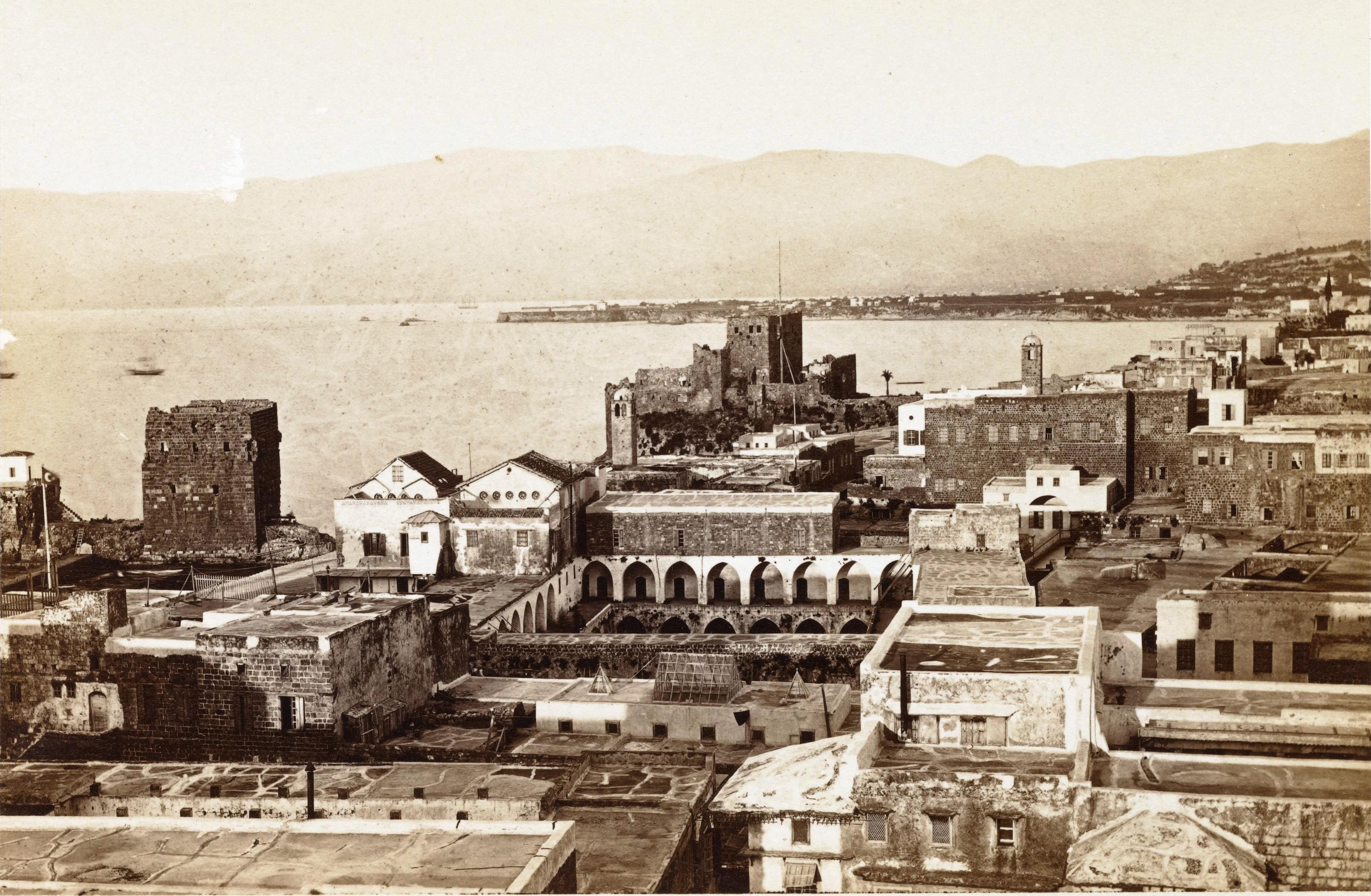
Hanssen’s main argument is that the emergence of modern Beirut was the result of social struggles over the production of space (p.4). What he means by that phrase is that a city was not a place that grew randomly but a thing that people fought over, imagined, and built to reflect their ambitions or their understandings of the world. Within this framework, who got to decide what a city was for, and what it should look like, became a political question. According to Hanssen, Beirut in the nineteenth century became the site of exactly that kind of tension between diverse actors.
The first struggle Hanssen reconstructs is the fight to become a provincial capital, which took place roughly between 1860 and 1888. Through much of the nineteenth century Beirut was administratively subordinate to other centers in the Ottoman province of Syria, whose capital was Damascus and whose territory covered much of what is now Syria, Lebanon, Jordan, and Israel/Palestine. To become a provincial capital meant status, revenue, and the ability to control a hinterland, all of which benefited Beirut’s merchants and notables. Hanssen demonstrates how the city fought its way up, first replacing the older port of Acre as the commercial gateway of the region (pp.26–35), and then, in 1888, winning designation as the capital of a new province of its own (pp.35–52). In the process, Beirut also competed with Damascus, vying to attain a more prominent role vis-à-vis the Syrian city, which opposed the designation of Beirut as a provincial capital (pp.59-61).
The important point that Hanssen is making is that this process was not simply a gift from the Ottoman government but was the work of local actors, the merchants and urban landowners and journalists who understood that their private fortunes and their city’s public standing went hand in hand. Hanssen calls Beirut’s success in becoming a provincial capital “nothing short of a bourgeois urban revolution,” arguing that this new urban bourgeoisie and the Ottoman state reinforced one another rather than fighting a zero-sum battle (p.53).
This point is crucial to recognize because it undermines the common ideas about how nationalist movements emerged in the Middle East. Any grievance expressed by late Ottoman Arab elites against Istanbul is almost always interpreted as the early stirrings of nationalism, as the signs of a struggle to throw off the “Ottoman yoke.” The picture that Hanssen presents tells a different story. As he demonstrates in the book, the demands voiced by Beirut’s inhabitants were made within the Ottoman imperial framework (p.54). The inhabitants of Beirut were trying to get a better deal inside the empire, not to get rid of it.
Relatedly, Hanssen’s book takes the province seriously as a unit of analysis, which is an important contribution to the literature on the late Ottoman Empire and the modern Middle East. Going against the usual dichotomy constructed between empire and nation states, Hanssen instead argues that the province of Beirut, although a late creation, became a genuine reference point for how the city’s intellectuals imagined their political world (p.56).
He describes the emergence of what he calls “a nation of provincials,” meaning a political imagination oriented toward the protection and improvement of an Ottoman empire made up of provinces, rather than toward secession from it (p.56). What this demonstrates is that, even as late as the end of the nineteenth century, the Ottoman imperial framework continued to provide a viable alternative to the political, intellectual, and economic elites of the Arab lands. As Mostafa Minawi also demonstrates in his most recent work, Losing Istanbul: Arab-Ottoman Imperialists and the End of Empire,2 these people continued to believe that their future interests lay with the Ottoman Empire and not with a Lebanon or Syria that did not yet exist as states.
Within that provincial framework, Hanssen first focuses on the office of the governor general sent out from Istanbul. Through this office he examines what he calls “the Ottoman civilizing mission.” The Ottoman officials commonly held the belief that the Arab provinces were backward places that needed to be ordered and improved and where, they argued, “much civilizing work was to be done” (pp.63–68). As a result, the city of Beirut became the platform through which the Ottoman civilizing efforts were launched (p.68). This striking parallel between the way the Ottoman bureaucrats perceived their own provinces and the way Europeans saw the Ottoman Empire is a revealing example of how self-Orientalist views operated within the minds of the imperial elite.
Hanssen also zooms in on the provincial and municipal council, where the locals played active roles. While the governor general was a representation of Istanbul’s reach into Beirut, the councils were where Beirut’s own notables sat, advocated for their own agendas, and shaped the city according to their own visions and interests (pp.70–73). Membership on these bodies was itself a form of power. It let the local elite advance their standing, steer investment, and press their preferences onto the physical fabric of the city. Hanssen argues, therefore, that the “center-periphery” relations cannot be analyzed only through the dichotomy of imperial and local. Instead, the imperial and local interests came together in shaping Beirut’s fate, with the local interest groups actually demanding the presence of the Ottoman state. This unearthing of the collaboration between imperial and local factors, and of how it drove the capitalist urbanization of the city, is one of Hanssen’s strongest contributions (p.73).
Becoming a provincial capital in 1888 proved to be lucrative for Beirut. Before 1888, large scale development schemes, including plans to enlarge the port, had foundered due to their expense, while foreign investors had been wary of investing in the town (p.86). Once Beirut became an administrative capital and a major port, however, it suddenly became worth investing in, and, crucially, its notables smartly positioned the city between the international financiers and the Ottoman administration to get what they wanted (p.86).
What followed was a wave of urbanization projects, including the construction of tramway lines and the introduction of gas lighting that altered the urban environment. Moreover, new roads built on the logic of the straight line came to be seen as the major symbol of rational planning that treated the old city as something to be corrected (pp.96–104, 215). Hanssen is careful to demonstrate that Beirut did not simply capitulate to the demands of international capital. The city’s authorities and elites used foreign money to advocate for their own ideas and visions (pp.86–87). Meanwhile, the inhabitants of Beirut also resisted some of the projects, a process that Hanssen reads through the lens of “subaltern resistance.”
Hanssen also underlines the language of medicine that was put to use in the efforts to modernize Beirut. This is one of the most illuminating threads in the book. Hanssen traces how the idea of public health became a way of governing the city. The origins of this narrative lie in the cholera epidemics that struck the Ottoman Mediterranean over the course of the nineteenth century and the imported European techniques for containing disease, such as the quarantine, that reordered the relationship between the individual, the city, and the state (pp.117–121). Over time, the vocabulary of hygiene and sanitation came to be equated with the vocabulary of modernity itself. To be modern was to be clean, ordered, and healthy, while the old city, dense, crowded and filthy, came to be described as a kind of disease to be cured.
Moreover, from the 1890s, this medical language took on a sharper turn as French and British medical practices gained ground in the city and framed the physical ailments of Beirutis as rooted in the supposed character of “Orientals” (pp.127–136). In the end, the goal of the municipality shifted towards creating a healthy and open city, which drastically changed the physical space of Beirut (p.128).
While the first half of the book is about administration and capital, the second half is about culture, and it is here that Hanssen’s argument about local agency becomes most persuasive. Modern Beirut, he demonstrates, was not only built. It was written into existence.
Schools played an important part in this process. It is often assumed that modern education arrived in Beirut with the establishment of foreign missionary schools, such as the American and French institutions. Hanssen complicates this story, arguing that while the missionary schools mattered, they were not the only sources of modern education, and in some respects, they were openly hostile to the emergence of a genuinely local political life (pp.164, 188). Just as important were efforts of the local inhabitants, and especially of Muslim intellectuals who founded and staffed institutions such as the sultaniye schools, which were later folded into the Ottoman state system (p.188). Education in Beirut was an arena of competition among missionary, imperial, and local projects, and the local project was a real contender, not an afterthought.
In addition to modern schools, newspapers in Beirut were instrumental in raising political awareness, creating a sense of local belonging, and helping bring into being a public that could argue about the shape of its own city (p.214). Through the press the scientific and sanitary vocabulary spread, the old city was coded as “backward,” and the new city came to embody everything modernity was supposed to represent (pp.216–226). “Beirut-as-text,” Hanssen writes, “not only reflected urban reality but also continuously transformed the urban fabric itself” (p.235). This was another example of how the urban transformation of the 1890s and 1900s was not simply an imperial imposition but also a product of local cultural imagination (p.226).
Hanssen also demonstrates that the architecture in fin de siècle Beirut represented the Ottoman government’s desire to present the state as a manifestation of order, rationality and modernity (pp.237-238). Even though the Ottoman Empire was going through various troubles during the nineteenth century, it tried to reflect an image of a “homogenous and unified political entity” in the provinces (p.237). Hanssen is careful once again to point out the role of the locals in these architectural projects and argues that the provincial capitals such as Beirut developed their own styles as they brought the imperial and local tastes together (p.238). In fact, Hanssen demonstrates how the initiative for architectural projects, such as the clock tower in Beirut, came from the locals themselves (pp.243-247). Moreover, while public ceremonies, especially during the reign of Abdulhamid II, provided the state with opportunities to make its presence felt in the provinces, they could also turn into scenes of anti-governmental protests (pp.239, 258).
The Beirut that Hanssen recovers in the book is a city whose modernity was not delivered to it by outsiders but argued into existence by its own residents, in council chambers and newspaper offices and merchant houses. Hanssen clearly demonstrates how places do not simply have modernity imposed onto them. People make their cities, choosing, arguing, and building, and the results carry the traces of those choices for a long time afterward. Hanssen’s achievement is to let us see the fingerprints on Beirut. The city that he presents is worth understanding on its own terms rather than as a case study in somebody else’s empire.
Despite its many strengths, Hanssen’s argument also flounders in some places. For instance, Hanssen repeatedly describes Ottoman rule in Beirut as imperial in a sense meant to echo European colonialism, as though the Ottoman state related to its Arab provinces roughly the way France related to Algeria or Britain to Egypt. In the same vein, he uses the language of subaltern resistance to describe the reaction of ordinary Beirutis to urban projects that disrupted their lives.
Even though it is true that the Ottoman bureaucrats used a self-Orientalizing language towards the Arab provinces, Hanssen’s own argument demonstrates how local actors had enormous scope for initiative, with merchants engineering a bourgeois urban revolution, notables using the councils and the international money markets to impose their own designs, and intellectuals writing the city into existence. These are not colonized subjects in the European sense, and the Ottoman state is not a foreign occupier imposing its own will. It is the framework within which they were competing for advantage, and which many of them actively wanted to preserve and strengthen. To call this arrangement colonial is to weaken precisely the thing the book is best at revealing, which is the density of local agency inside the Ottoman order.
The same tension is also evident in the language of subaltern resistance. It is a phrase that evokes a neat division between a dominating state and a resisting people, and Hanssen’s Beirut simply does not reflect that clean of a divide. At least some of the elites clearly demanded the Ottoman presence rather than resisting it. Local and imperial interests collaborated as often as they collided. It is true that there is real resistance in the story, and Hanssen documents it, but the borrowed vocabulary of colonizer and subaltern imports a political framework that his evidence does not support. The most Ottoman thing about late Ottoman Beirut is precisely that it does not fit the colonial template.
None of this takes away from the importance of the book. It is a valuable study that makes strong contributions to the literature on urban history in the late Ottoman Empire, while also presenting a serious challenge to the oft-repeated narrative of the emergence of nationalist movements in the Middle East. If you want to know how modern Beirut, a city with a long and complicated history, came into being, it is the place to start.
Thank you very much for reading. If you’d like to learn more about Ottoman and Middle Eastern history, please consider subscribing to Ottoman Encounters. It’s a zero-cost way to support my publication.
Everything here stays free to read. If you want to go further, paid subscribers get one substantial extra piece a month, curated reading lists and deep dives into people, objects, and places that shaped Ottoman and Middle Eastern history. It’s optional, and it’s what makes the free work possible.
I don’t have a financial affiliation with the publisher. All the pager numbers refer to the book.
No financial affiliation with the publisher.
Comments
Nothing yet. Say the first thing.
Sign in to join the conversation.