
The story of nationalism is commonly told as a narrative about language, flags, and shared memory. In Healing the Nation: Prisoners of War, Medicine and Nationalism in Turkey, 1914-1939,1 historian Yücel Yanıkdağ tells a less common and more uncomfortable story. His is about a distinct moment of transition, when a nation stopped being imagined as a culture and started being imagined as a body. Within this framework, the nation could be healthy or sick, strong or degenerate, and might need to be cured. This re-imagining of the nation also brought with it some difficult and uncomfortable questions, such as: Which parts of the population were healthy? Which were diseased? And maybe the most important of all, what should be done about the diseased ones?
In this valuable study, Yanıkdağ examines how intellectuals in the late Ottoman and early Turkish Republic came to ask those questions during and after the First World War. What is most innovative about his analysis is that he focuses on two places that seem to have nothing to do with each other, namely POW camps and psychiatric clinics.
Yanıkdağ builds his book around two groups that, at first glance, seem to have different stories. The first group is the Ottoman POWs, who were captured during the First World War and held in Russian camps and in British camps in Egypt. Yanıkdağ argues that from the day they were interned until the day they were repatriated in the 1920s, these men took active roles in the construction of a new Turkish national identity. They thought long and hard about concepts such as nation, national culture, tradition, while also performing those ideas in the small routines of their daily life in the camps (pp.3-4). “Prisoner of war camps,” Yanıkdağ writes, “where these Ottomans encountered the cultures and traditions of their captors and those of fellow European prisoners, provided prisoners with both the time for reflection on these concepts, and an unusual ‘exile’ environment where nationalizing became a possibility.” (p.4)
Later on in the story, Yanıkdağ brings in the second group he focuses on in his analysis. These are the Ottoman-Turkish neurologists and psychiatrists who examined the soldiers after they came back from the war. These neuro-psychiatrists, following the scientific literature in Europe at the time, diagnosed the Ottoman soldiers who mentally broke down at the war front as “hysterics” and “malingerers” and the Ottoman POWs with mental disorders as “schizophrenics.”
Rather than treating these men as the victims of industrialized war, however, the doctors perceived them as “hereditary degenerates or psychopaths, whose experiences of war or captivity only served to expose their hereditary condition” (p.4). This is the most important part of Yanıkdağ’s argument. Moreover, after the war and the Turkish War of Independence, these doctors stopped seeing such men as isolated cases. They began to see them as a sign of the degeneration of the whole nation and as a serious threat that might grow if left unchecked (pp.4-5).
Yanıkdağ argues that the First World War and its aftermath were a transitional period for Turkish nationalism, when the attributes that defined the nation shifted from cultural traits toward biological ones (p.5). The Ottoman-Turkish officers in the POW camps had policed their fellow prisoners and identified any lack of collective spirit, especially among uneducated enlisted men, as “pathological and non-national” (p.5). After 1918, doctors in the late Ottoman Empire and early Turkish Republic took up that same role of sorting out the national from the non-national, putting the language of medicine to use. They concluded that even though a large share of the population carried similar defects, the nation could still be cured. That claim led them toward eugenics as a way to regenerate the budding Turkish nation (p.5). Yanıkdağ is careful in pointing out, however, that this biologization of national identity did not emerge as full-blown racialization (p.5).
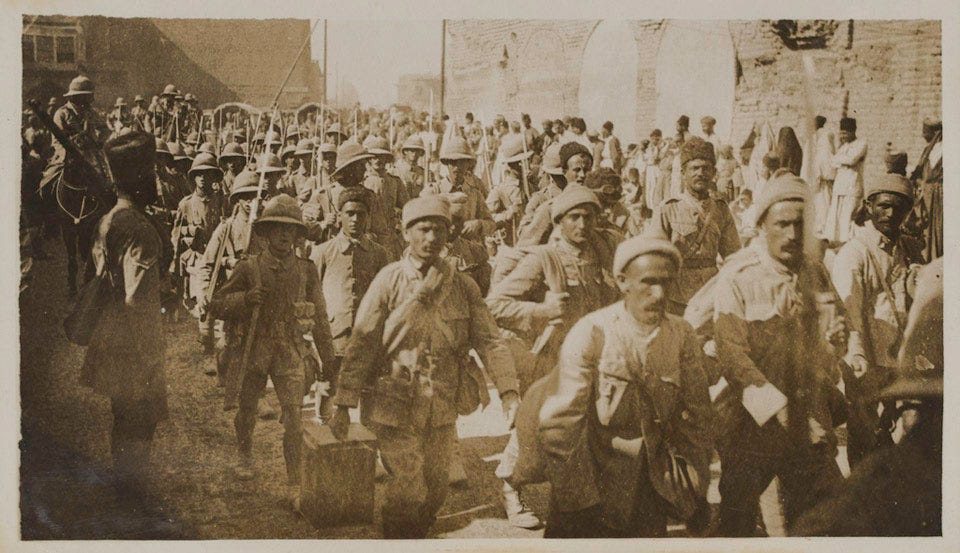
The main reason Yanıkdağ focuses on the POW camps was because the camps brought together Ottomans from very diverse social, economic, ethnic, and educational backgrounds. Moreover, the conditions of war, captivity, and the chance to observe foreign “others” led the ethnic Turks look critically at their own multi-ethnic and multi-religious Empire. The camps also gave them time to reflect on the problems that their Empire was facing and come up with solutions. Yanıkdağ notes that it was mostly the junior officers who were the most active participants in this process, while they accused their superiors of not caring enough about the future of the nation (pp.5-6).
There was a practical reason too. Bored, idle, and far from home, the junior officers put their ideas on paper and Yanıkdağ uses this material to build his arguments in the book. And what he argues is that the voices of these junior officers reflect Ottoman society more faithfully than the better-known writings of the elite (p.9).
In the first half of the book Yanıkdağ provides a comparative analysis of captivity experiences of the Ottoman POWs in Russian and British prison camps. The Ottoman prisoners in Russia suffered worse conditions than those in Egypt. While the Russian camps were overcrowded, dirty, and short of food (pp.23-27), the British camps in Egypt were cleaner and the POWs were better fed (pp.25-29). What was more important, however, was the fact that in Russia, the Ottomans were held together with German and Austro-Hungarian prisoners and had at least some contact with the local Russian population. In Egypt, on the other hand, they were kept apart from the other Europeans (p.26).
That difference was crucial for shaping how the Ottoman prisoners thought about themselves. In Russia, surrounded by other Europeans and able to observe them daily, the Ottomans built sharp and solid boundaries around the ideas of nation, culture, and tradition (pp.46-47). They worried about and were critical of prisoners who copied European habits, such as bathing naked and walking about in a hat, and they turned to policing one another, condemning anyone who drifted from the accepted norms of national identity (pp.47, 67-68, 71). In Egypt, since they were held apart from the European prisoners, the Ottomans had no such mirror, making the pressure to nationalize their habits much weaker (pp.47, 72).
Overall, Yanıkdağ demonstrates that the camps gave the prisoners a chance to compare themselves with non-Ottoman “others,” to think hard about what made them unique, and to decide what could be integrated into the national culture and what could not (pp.71-72). The comparison was most acute where the contact was daily and sustained.
One of the most important contributions of Yanıkdağ’s book is his use of prison camp newspapers that Ottoman POWs published, where Ottoman junior officers discussed and diagnosed their nation’s weaknesses (p.77). Among the problems that they highlighted were the ignorance of the ordinary population, a misreading of Islam that, in their view, discouraged people from building a modern world, and the presence of an educated elite that worked for itself rather than the common good. Alongside diagnosing the society’s ills, the Ottoman prisoners also “performed” the nation, laying down the criteria for who belonged to it (p.77).
The weakness the Ottoman POWs kept returning to was the ignorance of the peasants. In the articles that they published, Yanıkdağ writes, the officers “discursively excluded peasant soldiers, and by extension, the peasants in general, from their vision of the nation because these peasants lacked education, civilization and even human qualities” (p.80). As a result, educating the peasants became the central task, first inside the camps and then, in the officers’ imagination, across the country once they returned home (p.89). And Yanıkdağ makes a striking connection here. The educational program that the prisoner officers came up with, he argues, resembled the programs that the Turkish Republic would adopt in the 1940s, which gives these camp newspapers an importance beyond their immediate setting (p.96).
Yanıkdağ also underlines a deeper pattern. Unlike the empire’s ruling elite, the officers cared more about saving the nation than about saving the state (p.110). In this vein, the ignorant peasant and the selfish elite both became “the other,” against whom the nation defined itself. That other explained why the nation was not yet whole, while also giving the nation-builders a task to work toward and enabled the officers to define themselves as the gatekeepers of the nation, the men who decided what the nation really was and was not (p.111).
Finally, Yanıkdağ turns to the mind. He demonstrates how Ottoman-Turkish neuro-psychiatrists, following the European discourses and driven by their own patriotic zeal, came to argue that the war had revealed rather than caused the soldiers’ mental breakdowns (p.180). The men who collapsed, the doctors argued, had carried a hereditary condition that the war merely brought into the open (p.197). Increasingly these soldiers were labeled degenerates and psychopaths (p.201), and the doctors came to see them as a grave danger to the whole national body (pp.208-209).
From there, it was a short step for the individual to become a microcosm of the national. In the early 1920s, individual cases of degeneration were seen as symptoms of a degenerating nation. If the health of the nation was equated with the health of its army, then a large number of damaged men in that army meant that the nation was under threat. Left unchecked, the doctors warned, the degenerates would multiply and endanger the nation’s future. Therefore, from the later 1920s onwards, they advocated for social-engineering remedies, eugenics being chief among them (p.209).
Here, Yanıkdağ is precise about what kind of eugenics. Since Turkey was under-populated after years of war, negative eugenics such as sterilization found little favor, even if it was debated in medical circles at the end of the 1930s (pp.230, 237-239). The preferred path was positive eugenics, encouraging the marriage and reproduction of those judged healthy (pp.232-234). The degenerate and the psychopath, like the ignorant peasant before them, became “the other” against whom the nation was built and from whom it was to be purified. Yanıkdağ closes on a point that reaches well beyond his period, arguing that while scientific theories can manufacture social anxieties, social anxieties can in turn drive what science chooses to see (p.242).
Healing the Nation is a strong and original account of how Turkish nationalism moved from a cultural register to a biological one. Its strength lies in the fact that it brings together two archives that are rarely read together, the handwritten newspapers of bored prisoners and the published papers of ambitious doctors, to construct a story about a nation imagining itself as a body that could sicken and be healed.
The book’s main drawback relates to the people on the receiving end of all this. Yanıkdağ accurately shows how the state expanded its reach through medicine, the dispensaries and hospitals and campaigns that carried its authority into the countryside. What he does not really touch upon is how these policies were perceived by the population and how the population reacted to them. Donald Quataert, writing about the miners of the Zonguldak coalfield, showed how the miners resisted the disciplinary measures of the state, which were dressed as safety and welfare protocols. A comparable attention to how ordinary people reacted to the state policies would have made Yanıkdağ’s book fuller.
In the end, Healing the Nation takes a subject that could have stayed narrow, the fate of a few tens of thousands of prisoners, and uses it to shed light on one of the central questions of the modern Middle East: how a nation decides who belongs to it and what to do with those who do not. I highly recommend it to anyone who is interested in the history of World War I and post-War Turkey and the Middle East.
Thank you very much for reading. If you’d like to learn more about Ottoman and Middle Eastern history, please consider subscribing to Ottoman Encounters. It’s a zero-cost way to support my publication.
Everything here is free to read. If you’ve found these posts worthwhile and would like to support my work directly, you can also become a paid subscriber. It’s entirely optional, and it helps me keep writing.
And if you’d like to learn more about World War I from the Ottoman perspective, check out the books in the list below.
I have no financial affiliation with the publisher. All the page numbers refer to the book.
Comments
Nothing yet. Say the first thing.
Sign in to join the conversation.