
I had a holy hell moment this weekend when I discovered it was the Virginia back-to-school tax free weekend. It’s a nice gimme to everyone. But it wasn’t the surprise of the event that caught me. This means it’s August and school is starting soon. I’m still working on my June to-do list and now the summer, the supposedly slower time of year is almost over.
Noooo!!!
Instead of lamenting the loss of time (and trying not to panic on my deadlines) I’m taking a deep breath and giving away another unputdownable book.

Libby Klein is the popular author of the Poppy MCallister mysteries and one of the most prolific writers I know. She writes engaging laugh-out-loud characters with heart. She’s this way in life too.
Keep reading to the end or scroll and learn how to win a copy of Vice and Virtue.
Vice and Virtue is the first in Libby’s new series about disgraced and washed-up detective Layla Virtue. You can read my Goodreads Review here! And follow me on Goodreads while you’re there.
Vice and Virtue has a lot to recommend, but Libby hooked me with the book’s setting. Layla Virtue lives in a trailer park. And because any writer will tell you the world of words is linked in millions of ways, this was the second book I read and loved this summer set in a trailer park.
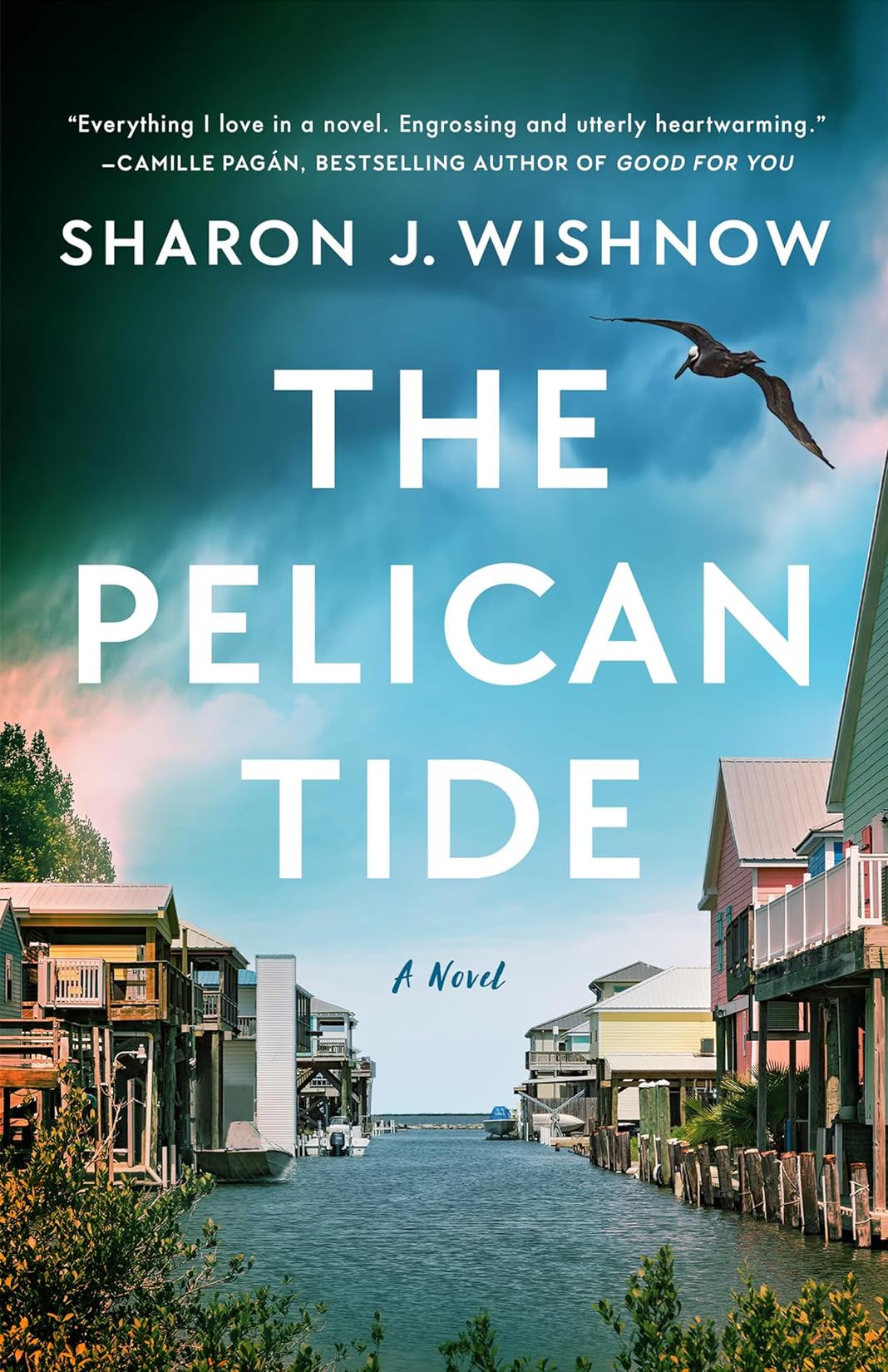
Where a story takes place is a foundational element of the story. My novel, The Pelican Tide, takes place in Grand Isle, Louisiana. The story details the Deepwater Horizon oil spill on this community and the Babineaux family. If I had set the story off the coast of New England, or an island in the Caribbean, it would be a different book. The community’s lifestyles may be similar, but the people, and how they live and love, would be different, as would the response to the oil coming to shore. And, there may not be any pelicans!
A story’s setting is a vital part of a story.
Where are the characters?
How does the location shape the story and the characters?
Is the setting like a character?
Consider the differences between a “school” story set in an elementary school and a university.

In the elementary school, you may find colorful bulletin boards and cubby holes for lunch bags. In a university, there could be a coffee kiosk and large lecture halls with massive whiteboards and theatre-style seating.
Imagine how small the first graders would look in a theatre.
Yet, put those little kids in a university and that makes for an interesting use of setting.
I’ve been paying attention to setting this summer as I’ve considered books and television I’ve enjoyed.
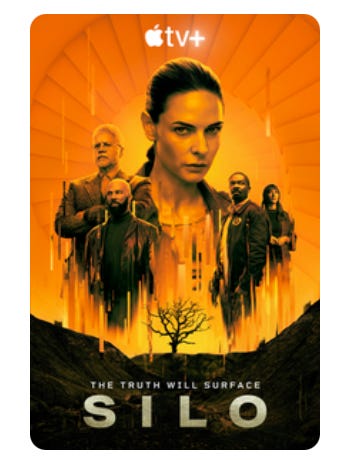
One show is the Apple TV series Silo based on the novels by Hugh Howey Full disclosure, I’ve not read the books, but those who have (who I trust) say the Apple series is better.
I was engrossed with this show about a post-apocalyptic society living 140 stories below the Earth’s surface in a self-contained Silo. This story has incredible world-building, a community, and a society so tied to the setting, that the setting - the Silo becomes a character.
This summer, I’ve also read two novels set in trailer parks. Trashlands by Alison Stine and Libby’s book Vice and Virtue.
The characters in Trashland are living in a post climate disaster future in a makeshift community that is essentially a trailer park on the edge of a dump. The characters live in all manners of vehicles from buses to cars. But it is a community tied by a sense of location and survival.
Welcome to Lake Pinecrest
In Vice and Virtue, Layla Virtue is living in the Lake Pinecrest trailer park/mobile home community, It’s the opposite of a trash heap.
Libby has created a community proud of its surroundings and demands order and rules to keep the place safe and beautiful. Layla isn’t always great about following rules.
I asked Libby about her choice for this unique setting.
Sharon: Layla’s home mobile home is nothing more than a gray metal shell — a mirror to how she feels about her life. The people around her live in more established and settled homes. The intersection of these two distinct elements in the same setting is story magic. How did you choose a mobile home community?
Libby: I lived in a trailer park years ago. One of my neighbors had a baby tiger. You get an entire microcosm of society in that kind of neighborhood. It may be surprising to some, but people with very little money are often very generous and quick to help those in need. You know that next month it might be you who needs help. I wanted to give Layla that kind of community when her life hit rock bottom.
The mobile home is in Northern Virginia. This is where Libby and I both live. I love reading about my community in stories. It’s one of the ways an author can connect to her readers, drop in a few Easter eggs of authenticity. I asked Libby about this as well.
Sharon: Why set a story here? And so clever to change Fairfax County to Potomac. It cuts down on research for sure. But when you know a place so well, you have to balance setting overload and authenticity. What about our community makes a good story setting for you?
Libby: For one thing, I live here. So I thought that would cut down on the research. But I did place Layla in the fictional neighborhood of Potomac, Virginia so nothing I say is wrong. Everything is made up. I love that we live in a very culturally diverse area of the country. And since I have friends from all walks of life and backgrounds, they all have an authentic place in my books. Not to mention the myriad of crimes in a metropolitan area. Not exactly a real estate selling point, but at least I won't have to kill off the town if the series continues.
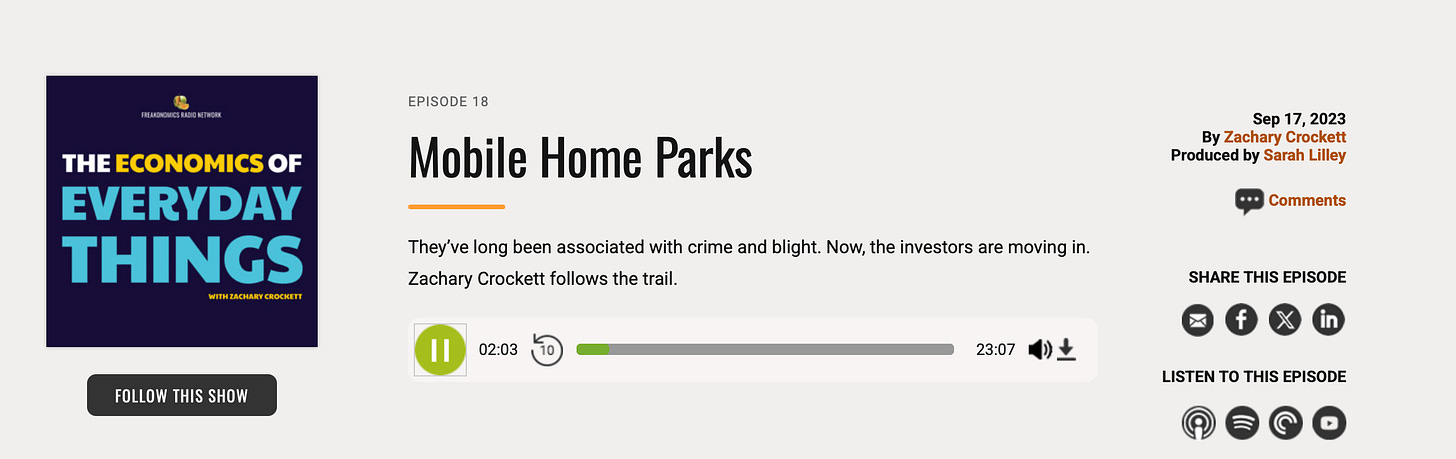
And then I became curious about trailers parks and did a mini-deep dive.
So… if you’ve read my newsletters, you know how I love to find sparks and follow those research rabbit holes. If you’re new here, stay with me, it all makes sense as the end.
There are approximately 43,000 trailer parks in the United States housing 22 million people. This is roughly 6% of the housing stock in the nation.
When you consider how expensive and scarce housing has become for many Americans, these communities offer an important alternative to living outside of their desired geography.
Mobile home parks are communities within larger communities. Most Americans have ideas about these places as full of drug dealers and dangerous criminals in undesirable areas, aka, trailer trash or people down on their luck living in FEMA trailers. But that isn’t the truth. After reading these two books, and learning about this important link in the national housing crisis - um… I needed to check my own bias at the door.
I don’t want to write too many spoilers, but I do want to mention how much I love Libby’s use of humor to tackle some heavy material.
Sharon: Layla is dealing with issues of dementia, PTSD, broken relationships, and financial struggles -- these are heavy issues, yet they are well balanced by her world views and your narration that is heartwarming and funny. What comes first, the humor or the heartache? Do you layer the humor after the story beats are set, or do they develop together?
Libby: My whole life has been humor and heartbreak running side by side. The humor comes because of the heartbreak. Layla's world view is my world view. The world is full of chaos, and you can't help but notice the irony and bizarre. The dude had a baby tiger in a trailer park! That leaves an impression on you. While I do write in layers, humor is usually the part that comes naturally in the first draft. I find myself adding layers of description and world building in revisions.
Sharon: What's next for Layla and her father?
Libby: Gimme Shelter comes out in April of 2026. I won't give anything away, but that title is doing double duty too. We'll be picking up from the ending of Vice and Virtue where Don made his bombshell confession.
Readers can sign up for the Mischief and Mayhem newsletter on the website, and you can listen to Layla's Spotify playlist where Libby has cataloged all the songs that are featured in Vice and Virtue.
Would you like a copy of Vice and Virtue? Just hit the comment below with your name and please, please include your email address so that I can reach to you if you won.
And if you need a great summer read, check out The Pelican Tide.
Comments
Nothing yet. Say the first thing.
Sign in to join the conversation.