
So, I think it’s no secret that I love Japanese culture. A lot. Like, a lot, a lot. I’m a huge fan of Mitsuwa, one of the only authentic Japanese markets in America — which is so conveniently located near my old home.
Mitsuwa is a real gem. They don’t just carry Japanese products and foods. They actually bring in representatives and chefs from Japan to show people how to make the foods, act as a major cultural hotspot for Japanese immigrants, and also throw authentic Japanese-style festivals there.
As part of my sobriety month, I called up my friend Shawn and decided to go to one of their biggest festivals to date. It was the first one I’ve ever seen advertised on Instagram and it offered real food, games, and tastings of Japanese cuisine.
In other words, it’s the closest thing to a Japanese festival you’re going to find in America. I decided to spend some time there and something started to become very noticeable.
Or rather, three things. Let’s get into it.
Help me fund my recovery and comeback. Like, share, subscribe today!
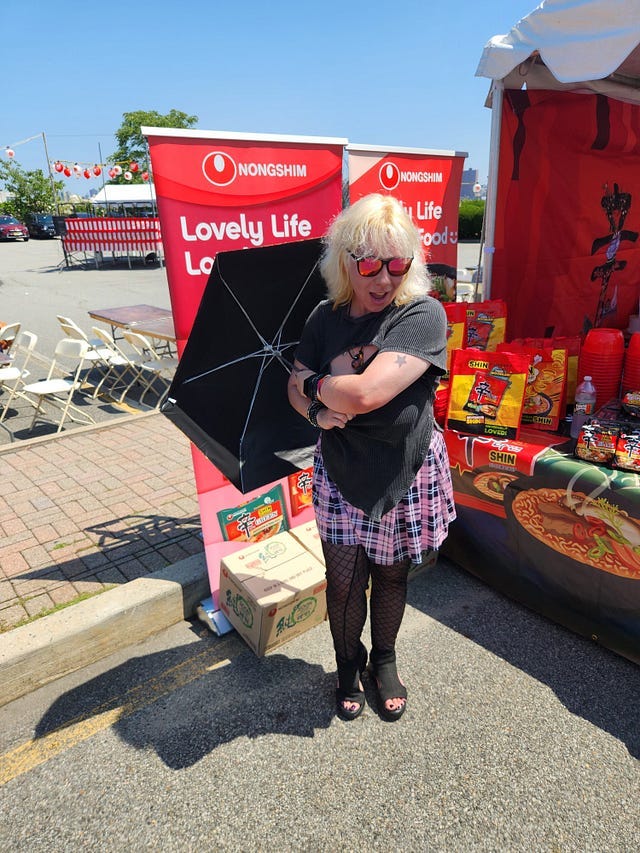
Fashion-wise, there was a lot to see. I saw so many people in absolutely breathtaking yukatas and umbrellas there. At one point, I even saw a man carrying his $1400 ball joint doll with him so he could photograph her at the festival.
As an American, I often get nervous of wearing other cultures’ clothing because I don’t want to be seen as appropriating their culture. Yes, I appreciate it, but I don’t claim it to be mine.
Festival throwers and goers all seemed to agree that wearing yukatas and other J-fashions was 100 percent good. I generally only wear other cultures’ clothing if I’m actively celebrating the culture (such as when I stuck to three months of Mandarin) or if I am specifically asked to.
People were very respectful of the fashion and oh my god, it was gorgeous.
I was actually happy to see that people were actually wearing Japanese fashions at the festival. Next time, I might break out my yukata too. (I’m just shy.)
So, Shawn and I actually decided to spend money to win a prize in gaming. The Mitsuwa festival had a game similar to cornhole — toss “bean bags” into a bucket to win a prize. If you didn’t win anything, you just got a plastic “carrot” bag filled with puffed rice.
At first glance, this sounds like the classic carnival game here but…it wasn’t quite the same. American bean bags are very heavy. They have a certain weight to them. Japanese “bean” bags don’t really feel like they have beans in them. It’s almost like a light layered silicone bead bag layered with cloth.
The “bean” bags always kept their square shape no matter how you threw them, which was odd when you’re used to American bean bags. This gave the bags a weird “throw” trajectory. It was almost like a mix between tossing a throwing star and tossing a bean bag.
Long story short, you kind of had to relearn how to throw them. We both won and the prizes were insane. We each got a small mini spa sample kits with hair oil treatments, shampoos, lip glosses, a silky-soft wash cloth, and a special sunflower conditioner. It also came with a free glass bath accessory bowl — wow!
That beats the pants off those plushies that feel like they were made out of the world’s worst material. Oh, and unlike so many American carnie games? Yeah, not rigged here. I highly recommend gaming if you go to a Japanese festival.
So, obviously, the food is the big attraction at most fairs, right? Japan took it to the next level — at least, in my opinion. But let’s talk about this a little bit deeper.
Guys…I got to try Wagyu beef for free because it was being offered as a sample.
Oh, we also tried crystal mochi, some really delicious free shots of Japanese energy drink, some tasty soups, and more. Since most of the samples were done indoors at the grocery store section, I ended up buying a bunch of stuff to keep us hydrated.
The mochi definitely stole the show and I understood why. It was the most famous mochi preparation style and flavor in the world. From what I gathered, it’s considered to be a luxury. No cap, that stuff melted in your mouth.
Sampling in Japan is a little different than here, too. They actually send company representatives, will sometimes offer you free swag along with the drink, and will make a point of explaining the company background. Also, the samples tend to be way more high-end than what you see in America.
Actually…
Uh, I don’t think I’ve ever seen free samples at an American fair outside of the fudge and pickle stands. Well, that’s strange, isn’t it? (Is that just a “me” experience?)
American fair foods are very greasy. They are often deep fried or hyper-sugary. They will clog your arteries (fried butter) or just give you an all-American diabetic coma a la funnel cake. They’re also typically served up in massive portions.
If you go to a “foodie” fair, then you won’t get the artery-clogging goodies that American country fairs are famous for. You will get lobster rolls, coal-oven pizzas, and other fancy food truck items. Honestly, those are delicious and I will tip my hat to awesome food truck gods who put a restaurant on wheels.
However, most food trucks still err on the side of heavy food rather than gourmet food. Speaking of which, let’s talk about the other major thing I noticed.
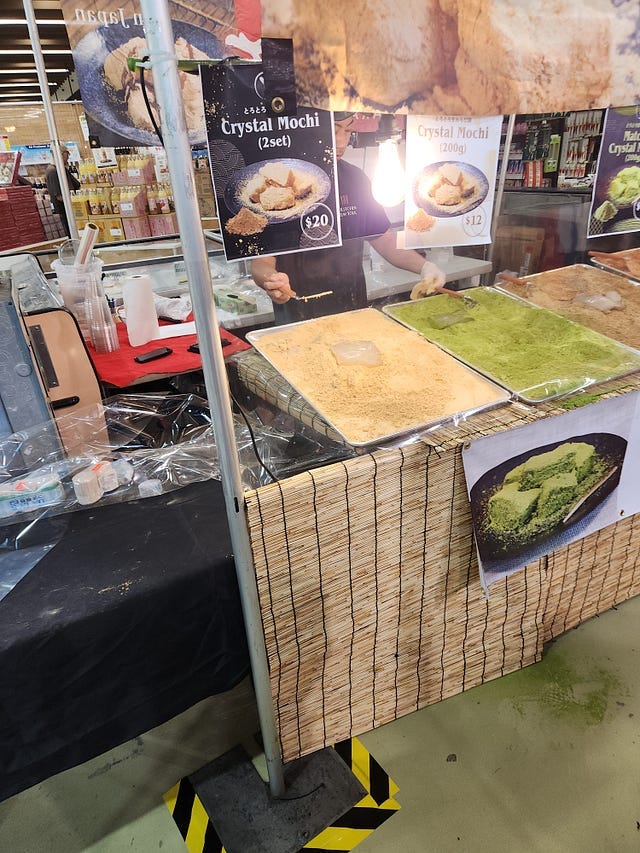
Guys, there were so many free samples at the Japanese food festival. I tried Wagyu beef for free — and yes, I am mentioning that twice. I also got to try new ramen flavors from a favorite brand, mochi drinks, and more. It was deliciously heavenly.
There were so many freebies. That’s something that is very rare these days, especially since entry to the festival was free of charge. I don’t think I’ve ever seen something like that in an American festival.
Actually, even the prices of regular foods was insanely low at the Japanese festival. We were able to nosh on Wagyu dumplings for $5. A decently-sized box of fried chicken cost $5 too. Takoyaki was $8.
The most expensive things I saw were the crystal mochi being made by hand by trained artisans. Those were $12 a pop or two for $20. They also had lemonade for $10 per large jug but I wasn’t really interested in that, since it was too sweet for my taste.
If you’ve ever gone to an American food festival, you already know the prices are often as bloated as the waist sizes post-attendance. I’ve seen mini pizzas go for as much as $20. Small bags of cotton candy for $8. Zeppoles for $10.
The bottom line is pretty simple: it’s a lot more about price-gouging than it is about actually sharing something cool with the masses.
Due to the way our country operates, American businesses tend to focus on the money aspect of almost everything. Even when it’s a festival meant to flaunt our national pride and culture, there’s always that undercurrent of price gouging.
You’ll always see exorbitant prices on at least one food truck. Heck, I remember going to one food festival that had $17 burgers. That’s more than many sit-down restaurants charge, and #sorrynotsorry, that’s too much for a fair food stand to charge.
If there was one thing I wish American festival throwers would change, it’s how they measure success. Money isn’t success. Great stories are. I want to hear them say, “We could charge more, but let’s focus on what people experience for the price and help others enjoy their time.”
Maybe I’m not seeing the forest for the trees. But damn, we really do need a culture change here — am I right?

Comments
Nothing yet. Say the first thing.
Sign in to join the conversation.