
Recently Ukraine sank a bunch of Russian oil tankers. The strategy I advised here
is clearly being implemented. Economic warfare in my book, and this is the newest phase of the war that I set out in greater detail now: counterfeiting, inflation, bank runs, bond defaults. Details, inter alia, below.
The war in Ukraine has demonstrated a fundamental reality of modern conflict: military power alone rarely determines the outcome of a prolonged strategic struggle. Armies fight battles, seize territory, and impose costs upon the enemy, but the capacity to sustain war ultimately depends upon the economic foundations that support military power. A state may possess large reserves of manpower and weaponry, yet if it cannot finance its operations, replace its losses, maintain industrial production, access critical technologies, or preserve domestic political cohesion, its ability to continue a long war steadily erodes. The battlefield is therefore only one arena of competition. The deeper struggle occurs within the economic systems that generate, sustain, and constrain military power.
The conflict in Ukraine has already demonstrated the extraordinary staying power of Ukrainian forces and society. Against expectations, Ukraine has continued to resist a larger adversary through a combination of military adaptation, national mobilization, intelligence support, and extensive assistance from its Western partners. Yet battlefield success alone cannot guarantee strategic victory. Russia is a large state with substantial natural resources, industrial capacity, and the ability to absorb severe losses. A strategy designed to compel Moscow to abandon its ambitions must therefore address the underlying foundations that enable continued aggression. The decisive question is not merely whether Russia can win individual battles, but whether it can sustain the economic burden of a prolonged confrontation against a technologically advanced and financially integrated coalition.
Economic warfare offers an alternative path to victory. Rather than attempting to defeat Russian forces through attrition alone, the objective is to weaken the Russian sustainment system. A comprehensive campaign of economic pressure seeks to reduce Russia’s financial flexibility, degrade its technological capabilities, diminish industrial efficiency, and intensify tensions among the political and economic elites upon whom the Kremlin depends. The purpose is to alter the strategic calculations of the Russian leadership by making continued aggression increasingly costly and ultimately economically impossible.
Economic warfare exploits the structural weaknesses of the Russian economic model. Although Russia possesses enormous natural wealth, its economy remains heavily dependent on hydrocarbon revenues, commodity exports, and state-directed industries. This dependence creates strategic vulnerabilities because the same concentration of economic power provides obvious targets and limits long-term adaptability. Russia, entirely reliant on energy exports, is vulnerable to disruptions in global markets, technological isolation, and declining access to foreign investment. Likewise, the Russian economy is distorted by corruption, patronage networks, and political favoritism. It may appear stable from the outside but suffers from deep internal inefficiencies that weaken its ability to respond to sustained external pressure.
The Kremlin has attempted to insulate Russia from economic coercion through capital controls, alternative payment systems, domestic industrial substitution, and closer economic relationships with non-Western partners. These measures, however, do not eliminate vulnerability; they merely transform it. Russia can replace some Western markets and technologies, but doing so often comes at a higher cost, with reduced efficiency and diminished access to advanced systems. Over time, isolation from global financial networks and technological ecosystems can impose cumulative damage that is difficult to reverse. Economic warfare is a sustained campaign designed to exploit cumulative Russian weaknesses.
The central premise is that Russia’s greatest vulnerability is oil dependence and its secondary weaknesses are in its failed governance system with consequent further economic weaknesses. Russian financial instability reduces investment. Reduced investment weakens industrial capacity. Industrial decline limits military production. Military setbacks increase political pressure. Elite dissatisfaction can grow as economic opportunities contract and the costs of confrontation rise. Strategic collapse rarely results from any one of these events in isolation; rather, it emerges when such interconnected systems start failing simultaneously.
Ukraine’s objective, therefore, is not simply to impoverish Russia or to create economic distress for its population. Ukraine’s objective is to undermine the Kremlin’s ability to sustain an expansive foreign policy that depends upon economic resources exceeding the limits of a declining and increasingly isolated economy. A successful economic strategy would compel Russian decision-makers to confront an unavoidable choice: either reduce their geopolitical ambitions or accept a level of economic deterioration that threatens the stability of the regime itself.
Economic warfare is ultimately a contest of endurance. The side that can sustain pressure, maintain alliances, preserve technological advantages, and absorb economic shocks will possess the strategic advantage. Ukraine’s greatest asymmetrical advantage is its connection to a broader international system whose combined financial, technological, and industrial capacity vastly exceeds Russia’s. By leveraging those advantages while exploiting Russia’s structural weaknesses, a coordinated campaign of economic pressure will transform the war from a contest of battlefield attrition into a struggle over the long-term viability of the Russian state. The question is not whether Russia can endure hardship in the short term; history has repeatedly demonstrated its capacity to do so. The question is whether Russia can sustain a prolonged confrontation when the foundations supporting its power are systematically weakened.
Russia’s invasion of Ukraine was predicated on the assumption that its economic resilience built on oil and gas revenues, a stockpile of foreign reserves, and a population inured to hardship would allow it to outlast the West. However, Russia’s economy is structurally weak, and its financial system is vulnerable to sabotage. The ruble’s stability is artificial, propped up by capital controls and a central bank that has burned through its reserves. Russia’s stock market is weak, closed to foreign investors and manipulated by the state. Its banks are sanctioned, isolated, and starved for liquidity. Russian oligarchs, though loyal to Putin for now, are opportunists who will abandon him the moment they can once their wealth is threatened.
Ukraine has the tools to exploit Russia’s weaknesses. The following sections outline a five-phase strategy to dismantle the Russian economy, force a Russian sovereign debt default, and precipitate a political crisis in Moscow which can ultimately end the war on terms favorable to Kyiv.
The Russian ruble is a critical pillar of the state’s economic system. Its stability allows the Kremlin to finance military operations, purchase imports, pay government employees, and maintain domestic confidence in state institutions. However, the ruble’s strength ultimately depends not only on monetary policy but on broader confidence in Russia’s economic future, access to foreign currency earnings, and the state’s ability to maintain financial stability under prolonged wartime pressure.
Ukraine’s currency destabilization strategy will seek to weaken the underlying foundations that support the ruble: foreign exchange inflows, investor confidence, banking liquidity, and public trust in financial institution as well as deface the Ruble through mass counterfeiting.
Russia’s dependence on export revenues, particularly from energy commodities is a serious vulnerability that Ukraine is now exploiting. The ruble’s stability is closely connected to the Russian government’s ability to earn foreign currency through exports. A sustained reduction in energy revenue, restrictions on access to foreign markets, and increased costs associated with circumventing sanctions is already reducing the supply of foreign currency entering Russia. As export earnings decline, pressure is building on the ruble exchange rate, increasing the cost of imported goods and accelerating inflation.
Russia’s second economic vulnerability is capital flight. Currency crises often begin with a loss of faith. If households, businesses, and elites begin to believe that the ruble will continue losing value, they will try to convert their domestic currency holdings into foreign currencies, commodities, or hard assets. This behavior can become self-reinforcing: declining confidence weakens the exchange rate, a weaker exchange rate increases inflation, and rising inflation further damages confidence. Result? Ever greater capital flight and a downward death spiral.
Information warfare should therefore focus not only on spreading false claims of counterfeit currency but more importantly on amplifying existing economic concerns. Messaging should highlight declining purchasing power, rising prices, elite concerns about sanctions exposure, restrictions on foreign currency access, and signs of fiscal strain. The objective is not only to create distorted economic conditions, but more importantly to accelerate public recognition of genuine vulnerabilities already present within the Russian economy.
The banking sector represents another potential pressure point. Russia’s financial system has demonstrated significant resilience since 2014, with the Central Bank strengthening reserves, recapitalizing major institutions, and developing sanctions-resistant payment infrastructure. However, prolonged wartime mobilization has created ever more serious structural risks. Russian banks now face increasing exposure to politically directed lending, defense-sector concentration, inflationary pressures, and declining asset quality. A loss of confidence in financial institutions will increase demand for cash withdrawals, foreign currency purchases, and transfers into alternative assets: capital flight, leading ultimately to economic collapse.
Cyber operations against Russia’s financial infrastructure will be most effective by focusing primarily on disruption though monetary manipulation can serve a secondary disruptive role. The objective would not be to create artificial currency balances, which modern accounting systems are designed to prevent, but to interfere with payment processing, disrupt financial communications, expose vulnerabilities, and undermine confidence in the reliability of financial services. Even temporary disruptions can have outsized psychological effects in a population already concerned about economic stability.
The Kremlin’s greatest financial vulnerability is the credibility of the system supporting the ruble. A successful pressure campaign will seek to create a cycle in which declining export revenues, rising fiscal demands, inflation, and declining confidence reinforce each other. The objective is be to force the Russian government to devote increasing resources toward currency stabilization, banking support, and domestic economic management rather than military expenditure. This in turn undermines and ultimately starves the Russian war effort leading to collapse, desertion, mutiny, and rebellion
Historical examples demonstrate that currency crises rarely result from a single attack. The collapse of currencies in countries such as Zimbabwe, Venezuela, and post-Soviet Russia resulted from the interaction of fiscal collapse, declining production, loss of confidence, and institutional weakness. The ruble would similarly become vulnerable not through a sudden technical attack, but through sustained pressure that erodes the economic foundations supporting it.
The key indicators of a successful destabilization campaign will include accelerating inflation, persistent currency depreciation despite central bank intervention, increased demand for foreign currency, declining household confidence, banking-sector stress, and rising government costs required to maintain economic stability. Once confidence in the ruble becomes sufficiently damaged, stabilization becomes increasingly expensive, forcing difficult tradeoffs between military spending, social spending, and monetary defense.
Russia’s financial institutions have been deliberately structured to withstand external shocks through capital controls, state ownership, central bank intervention, and political control over strategic industries. A direct attempt to destroy the Moscow Exchange or trigger a sudden market panic would likely produce disruption but not strategic collapse, because the Russian state retains the capacity to close markets, restrict capital movement, recapitalize institutions, and absorb losses.
The more objective is financial attrition: a sustained campaign to reduce Russia’s economic flexibility, weaken the foundations supporting military power, and gradually increase the cost of maintaining strategic ambitions. The purpose is not to cause a single dramatic financial event but to create a long-term deterioration in the economic conditions necessary for national power. A state engaged in prolonged competition requires more than currency reserves and government revenue. It requires investment, technological access, elite confidence, industrial productivity, and integration with external markets. The gradual erosion of these foundations can impose constraints that become increasingly difficult for political leaders to overcome.
Russia’s financial vulnerability is its dependence on external economic relationships. The Russian economy remains heavily reliant on energy exports, foreign currency earnings, imported technology, and access to global commercial networks. Although Moscow has adapted to sanctions through alternative trade routes, domestic substitution programs, and state intervention, these adaptations have generally reduced efficiency and increased costs. The central strategic objective is therefore to transform Russia’s economic environment from one of manageable pressure into one of permanent constraint.
The first mechanism of financial attrition is the erosion of investor confidence and the creation of a prolonged investment deficit. Financial systems depend not only on present economic conditions but on expectations about future stability. When investors conclude that a country faces increasing political risk, technological isolation, or reduced access to global markets, they become less willing to commit capital. This process does not necessarily produce immediate collapse. Instead, it creates economic stagnation through delayed investment, reduced innovation, and declining competitiveness.
The effects are particularly significant in Russia because many of its most valuable industries historically depended upon international capital, technology, and expertise. As foreign investment declines, Russian companies become increasingly dependent upon state-directed financing. The economy remains functional, but private-sector dynamism weakens. Over time, resources flow toward politically favored industries rather than economically productive ones.
The second mechanism involves increasing the cost of financing for the Russian government and strategic corporations. Russia’s relatively low public debt provides protection against conventional sovereign financial crises, and Moscow retains significant ability to borrow domestically. However, financial resilience does not mean unlimited capacity. When access to international capital markets declines, the government must increasingly rely on domestic banks, state funds, and central bank intervention.
The strategic objective is therefore not necessarily to force default. The objective is to reduce financial flexibility. Every resource devoted to stabilizing banks, supporting strategic enterprises, maintaining currency stability, or compensating for lost investment represents a resource unavailable for other national priorities. Economic pressure becomes a form of strategic compression, forcing leaders to make increasingly difficult choices between military expenditure, economic modernization, and domestic stability.
The third mechanism is pressure on energy revenues. Russia’s greatest economic vulnerability remains its dependence on commodity exports, particularly oil and natural gas. Energy revenues provide the foreign currency required to support imports, stabilize the ruble, finance government programs, and sustain military production.
The objective is not the unrealistic goal of eliminating Russian energy exports entirely. Russia possesses sufficient resources and alternative buyers to continue exporting commodities. The more realistic objective is to reduce profitability by increasing transaction costs, limiting technological access, restricting financial services, and forcing sales through less efficient channels.
A barrel of oil sold through restricted markets, requiring longer shipping routes, additional intermediaries, and discounted pricing, provides less strategic benefit than a barrel sold through unrestricted global markets. Over time, declining energy profitability reduces the financial surplus available to support state objectives.
The fourth mechanism involves elite wealth erosion and political uncertainty. Authoritarian systems often depend upon elite coalitions whose loyalty is reinforced by access to wealth and privilege. Many Russian elites accumulated significant assets through participation in global markets, ownership of internationally connected companies, and access to foreign financial institutions.
Restrictions on international assets and economic opportunities alter the relationship between these elites and the state. The objective is not merely to reduce personal wealth but to weaken confidence that the political system can continue delivering prosperity. When powerful insiders begin questioning whether existing policies protect or threaten their interests, internal political pressures can emerge.
The fifth mechanism involves sustained pressure on the banking sector. Russia’s banking system is far more resilient than it was during earlier crises because the Central Bank of Russia has strengthened regulation, capitalization, and state support mechanisms. A sudden banking collapse is therefore unlikely. However, prolonged economic pressure can transform the banking sector from a source of growth into another fiscal burden.
High interest rates, declining corporate profitability, and increased dependence on government assistance gradually reduce financial efficiency. Banks may remain solvent while becoming less capable of supporting productive investment. The result is a financial system increasingly oriented toward preserving stability rather than generating economic expansion.
Historical experience demonstrates that major powers rarely collapse because of one financial event. Economic decline is generally produced by cumulative pressures that gradually reduce strategic options. The Soviet Union’s weakening resulted from the interaction of military expenditures, technological limitations, economic inefficiency, and declining adaptability rather than a single decisive economic strike.
Likewise, Russia’s post-2014 economic experience demonstrates that sanctions and financial restrictions rarely create immediate collapse. Instead, they impose long-term costs by reducing investment, limiting technology access, and forcing expensive adaptations.
The expected outcome of financial attrition is therefore not a dramatic collapse of the ruble, the Moscow Exchange, or the banking sector. Russia possesses sufficient state authority and financial resources to prevent such an outcome in the short term. The more realistic outcome is gradual economic exhaustion: declining investment, reduced productivity, increasing fiscal pressure, and growing dependence on state intervention.
The ultimate objective of Phase 2 is to transform Russia’s financial system from a source of strategic strength into a constraint on national power. The purpose is not immediate economic destruction but the creation of a sustained environment in which every strategic decision becomes more expensive.
Successful financial warfare does not necessarily produce dramatic collapse. Instead, it can gradually narrow the range of available choices until political leaders must confront increasingly difficult tradeoffs between military ambition, economic modernization, and domestic stability. The objective is to make continued strategic competition progressively more costly until endurance itself becomes the central challenge.
Russia’s banking system is the Achilles’ heel of its economy. Sanctions have already cut off Russian banks from the global financial system. Russia’s domestic banking sector remains vulnerable to a bank run.
Russia’s banking sector represents an important center of economic gravity and a potential target for economic pressure, although it is considerably more resilient than it was a decade ago. Since 2014, the Central Bank of Russia has recapitalized major financial institutions, expanded deposit insurance, developed domestic payment infrastructure, and reduced dependence on Western financial systems. Nevertheless, no banking system is immune to a sustained crisis of confidence. Ukraine should seek to increase liquidity stress, force repeated central bank intervention, raise the fiscal costs of financial stabilization, and gradually erode public confidence in the Russian banking system.
Whispering Campaign:
The first tactic is a whisper campaign to spread rumors of bank insolvency. Using social media, Telegram, and even state-aligned Russian media, Ukraine would amplify fears that Russia’s banks are on the verge of collapse. The goal is to prompt depositors to withdraw their funds en masse, triggering a bank run. The 2014 collapse of the ruble, which saw Russians rush to withdraw their savings, demonstrates the vulnerability of the Russian banking system to such panic.
Ukraine should launch a sustained information campaign to amplify existing public anxieties in Russia regarding inflation, sanctions, and financial stability. Rumors concerning the solvency of selected regional banks, possible restrictions on withdrawals, or impending capital controls can be disseminated through Telegram channels, social media, and informal communication networks. Such messaging would seek to encourage precautionary withdrawals rather than immediate panic, gradually increasing liquidity pressures across the banking sector.
Russia experienced heightened public concern during the 2014 ruble crisis and again following the imposition of extensive sanctions in 2022, demonstrating that economic uncertainty can significantly alter depositor behavior, even when the banking system ultimately remains solvent.
Cyber-Attacks: A second line of attack should focus on disrupting Russian public confidence in electronic payment systems through cyber operations. Ultimately, the goal is to disable Russia’s entire financial infrastructure. To do that, cyber operations should seek short term temporary disruptions of Russian online banking services, automated teller machine networks, payment processors, and regional financial institutions: the death of a thousand cuts. Even short-lived interruptions can generate uncertainty among depositors and businesses, increasing precautionary withdrawals, hoarding, and cash reliance. These same measures can also force Russian financial authorities to devote greater resources to bolster bank confidence. Ukraine’s ultimate objective, permanent destruction of Russian banking infrastructure, is best achieved by repeated episodes of operational friction that reinforce existing economic anxieties.
Capital Flight: A third line of financial attack seeks to encourage continued capital outflows from Russia. Sanctions, investment restrictions, and economic uncertainty have already reduced foreign investment into Russia and encouraged Russian private wealth to seek safer havens. Coordinated sanctions enforcement, expanded financial transparency measures, and continued efforts to identify sanctions evasion increase long-term pressure on domestic liquidity, investment, and foreign exchange availability in Russia.
The final phase of the economic campaign against Russia would seek to transform accumulated financial pressure into a broader crisis of state solvency. The objective would not simply be to damage individual banks or increase short-term economic stress, but to erode the Kremlin’s ability to finance prolonged military operations while preserving domestic economic stability. A sovereign debt crisis, particularly when combined with banking sector weakness, declining export revenues, inflationary pressures, and restricted access to international capital markets, could significantly reduce Russia’s strategic flexibility.
The process would begin with the continued degradation of Russia’s access to external financing. Expanded sanctions, restrictions on international transactions, export controls, and limitations on foreign investment would increase the cost of borrowing while forcing Moscow to rely increasingly upon domestic debt markets and central bank support. As financing options narrow, the Russian government would face a difficult tradeoff between sustaining military expenditures and maintaining economic stability. Rising borrowing costs would increase the fiscal burden of the war, while continued monetary intervention could weaken confidence in the ruble, intensify inflationary pressures, and constrain private-sector investment.
Financial stress would also place increasing pressure on Russia’s banking system. Although Russia has developed substantial defenses since 2014, including capital controls, emergency liquidity mechanisms, deposit guarantees, regulatory intervention, and extensive state ownership of major financial institutions, these measures cannot eliminate the long-term costs of economic isolation. State support can prevent immediate collapse, but it cannot fully compensate for declining productivity, reduced access to advanced technology, shrinking foreign investment, labor shortages, and the diversion of national resources toward military production. The result would be a financial system that remains operational but increasingly dependent upon state intervention and less capable of supporting broader economic growth.
Within this environment, pressure on Russian sovereign debt markets could accelerate the erosion of financial confidence. A sustained increase in perceived default risk would raise borrowing costs, reduce investor participation, and limit Moscow’s ability to refinance obligations on favorable terms. Historical precedents demonstrate that sovereign defaults can impose severe and lasting economic consequences. The Argentine default of 2001 and the Greek debt crisis of 2012 illustrate how loss of market confidence can restrict access to capital, weaken domestic institutions, and force governments into painful economic adjustments. Although Russia’s circumstances differ significantly from these cases, the underlying mechanism remains similar: once creditors lose confidence in a government’s ability or willingness to meet its obligations, financial isolation can rapidly compound existing economic weaknesses.
The use of financial instruments such as credit default swaps can amplify market perceptions of risk by creating additional incentives for investors to hedge against Russian default. While such instruments do not themselves cause insolvency, they can contribute to market pressure by reflecting and magnifying concerns about fiscal sustainability. More important than any individual financial mechanism, however, is the cumulative effect of sustained restrictions on Russia’s ability to access international capital, manage reserves, and maintain investor confidence.
A sovereign default would represent the culmination of these pressures. The immediate consequence would be the loss of reliable access to international credit markets and a further reduction in Russia’s financial flexibility. The government would face greater difficulty refinancing obligations, attracting investment, and funding military expenditures without imposing additional burdens on the domestic economy. Combined with banking stress and declining economic performance, a debt crisis could generate broader political consequences by intensifying competition among elites over diminishing resources and increasing public dissatisfaction with the costs of continued confrontation.
The effectiveness of this strategy would depend heavily upon the durability of international coordination. Sanctions, asset restrictions, and financial limitations are most effective when implemented collectively and maintained over time. Russia has demonstrated an ability to adapt to partial economic isolation by redirecting trade, developing alternative financial mechanisms, and strengthening domestic controls. However, adaptation does not equal immunity. The central strategic objective is not to create an immediate financial collapse but to impose cumulative economic costs that steadily reduce Russia’s capacity to sustain a prolonged geopolitical struggle.
Sovereign default would not be an isolated event but the final expression of a broader process of economic attrition. The decisive factor would be the interaction among declining revenues, constrained financing, weakened institutions, and rising political pressures. Economic warfare succeeds not when it destroys an economy overnight, but when it gradually alters the balance between the costs a state can absorb and the ambitions it seeks to pursue.
Ukraine’s seeks to precipitate the collapse of Vladimir Putin’s regime, whether through a coup d’état, a popular uprising, or a negotiated surrender. The strategy is a deliberate effort to erode the foundational pillars that sustain Putin’s authority: the loyalty of the military, the cohesion of the elite, and the quiescence of the Russian populace through economic warfare. Each of these pillars is targeted through distinct yet interconnected tactics. They are all intended to create a cascading effect that will destabilize and ultimately topple the Russian regime from within.
The first tactic centers on the disruption of military payrolls, a vulnerability that has historically proven decisive in moments of political crisis. By introducing counterfeit rubles into the military payment systems or disabling payroll infrastructure through cyberattacks, Ukraine can delay or entirely halt the disbursement of salaries to Russian soldiers: during the 1991 Soviet coup attempt, military units famously refused to carry out orders when economic instability and unpaid wages undermined their loyalty to the central government. Research into military behavior under economic duress suggests that a three-month delay in salary payments significantly increases the likelihood of mutiny, desertion, and coup attempts. The psychological and operational impact of unpaid soldiers, particularly those stationed in active combat zones, cannot be overstated, as it directly challenges the regime’s ability to maintain control over its coercive apparatus.
A second, equally critical tactic involves the strategic cultivation of elite betrayal. Putin’s regime is not a monolith; it is a fragile coalition of generals, oligarchs, and security officials whose loyalty is contingent upon the continued flow of wealth, power, and protection. By offering asylum, financial incentives, or legal immunity, Ukraine can exploit the self-preservation instincts of these elites, many of whom have already demonstrated their willingness to distance themselves from the regime when faced with personal risk. The 2022 wave of oligarch defections following the imposition of Western sanctions offers a clear illustration of this dynamic. As economic and political pressures mount, the calculus for these elites shifts: the cost of remaining loyal to Putin may come to outweigh the benefits, leading to a critical erosion of his support base. The defection of even a handful of high-profile figures could send a powerful signal to others, creating a snowball effect that leaves the regime increasingly isolated.
The third tactic targets the Russian public directly, aiming to provoke a popular uprising by inducing economic hardship through blockades or sanctions. History has repeatedly demonstrated that public tolerance for hardship is not infinite, and that prolonged deprivation can ignite mass protests with the potential to topple even the most entrenched regimes. The 2014 Maidan Revolution in Ukraine serves as a potent reminder of how rapidly economic grievances can escalate into full-scale political upheaval. By restricting Russia’s access to essential goods such as food and medicine, Ukraine could create the conditions for widespread civil unrest. As living standards deteriorate, the regime would face a stark choice: either suppress the protests through brute force, risking further international condemnation and internal backlash, or accede to public demands, thereby undermining its own authority.
Success is not guaranteed. It depends on a complex interplay of factors, the most immediate of which is the loyalty threshold of Russia’s military. History shows that while short-term delays in salary payments may be weathered, a sustained disruption of three months or more markedly increases the risk of mutiny. Yet this tactic is not without its own risks. A desperate regime may respond with purges, increased repression, or even preemptive strikes against perceived internal threats, potentially accelerating a spiral of violence rather than a controlled collapse. The successor scenario presents another layer of uncertainty. Russia’s elite is deeply fractured, with competing factions vying for power, and the post-Putin landscape could take several forms. A pro-Ukrainian faction might emerge, particularly if key figures within the military or security services decide that their interests are better served by aligning with Kyiv. Alternatively, the power vacuum could devolve into chaos, with regional leaders, warlords, or separatist movements seizing the opportunity to assert their own authority. A third possibility is the rise of an even more hardline and nationalist figure, one who might double down on the war in Ukraine as a means of consolidating power. While the fractured nature of Russia’s elite makes the first scenario plausible, the inherent unpredictability of such transitions cannot be ignored.
Fostering rebellion and/or coup d’etat in Russia requires precise execution and a deep understanding of Russia’s internal dynamics. Economic warfare alone is unlikely to bring about regime collapse; it must be paired with a nuanced appreciation of the psychological, political, and social pressures at play within Russia and effective military action. The course of coups and rebellions is never clear or certain, let alone clean and predictable. Regime collapse, when it occurs, is rarely a linear process. It is instead a chaotic, nonlinear phenomenon, shaped by the actions of elites, the reactions of the military, and the mood of the public.
The Kremlin has shown that it will not back down in the face of military resistance alone. But it cannot survive an economic collapse. By flooding Russia with counterfeit rubles, collapsing its financial markets, triggering bank runs, forcing a sovereign default, and precipitating a political crisis, Ukraine can win the war faster and with less bloodshed
The modern battlefield has expanded far beyond the traditional domains of land, sea, and air, now encompassing the ledgers of central banks, the algorithms of stock exchanges, and the fragile psychological trust that underpins currencies. This evolution demands that strategists and policymakers consider how economic tools can be wielded as weapons of statecraft, particularly in conflicts where kinetic force may be either undesirable or unnecessary.
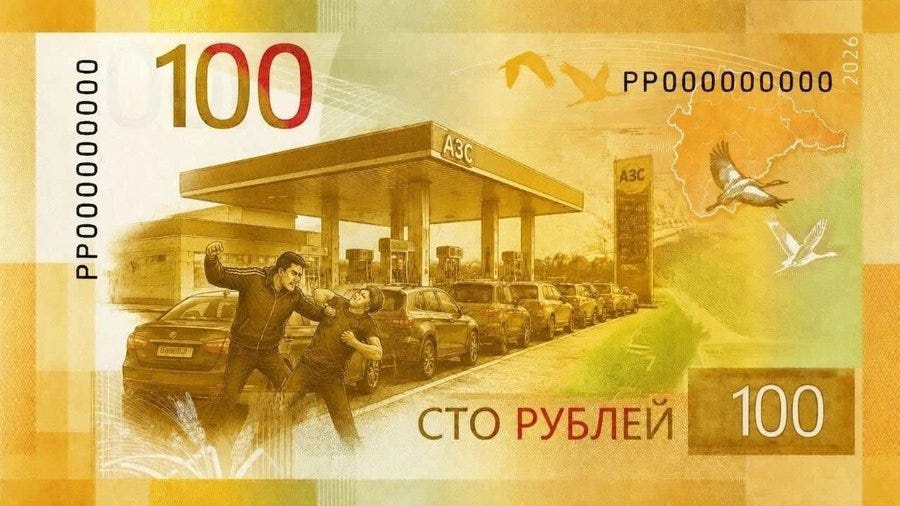
The scenario centers on two adversaries: Xenia, a petrostate with a single-commodity economy built on oil and a fiat currency known as the Rockbill, and Foebiya, a diversified and financially sophisticated state with advanced intelligence capabilities. Xenia is governed by the authoritarian regime of Adimir Hittin, whose rule is characterized by elite corruption, weak institutions, and a military heavily reliant on oil revenues to sustain its operations. Foebiya, in contrast, possesses the financial depth, technological prowess, and intelligence infrastructure necessary to execute a sustained campaign of economic sabotage. The conflict begins with Foebiya’s kinetic strikes on Xenia’s oil infrastructure, which have already placed significant strain on its economy. Foebiya’s objective is to force Xenia’s surrender or precipitate a regime change without engaging in prolonged military conflict, instead relying on covert economic warfare to achieve its aims.
Comments
Nothing yet. Say the first thing.
Sign in to join the conversation.