
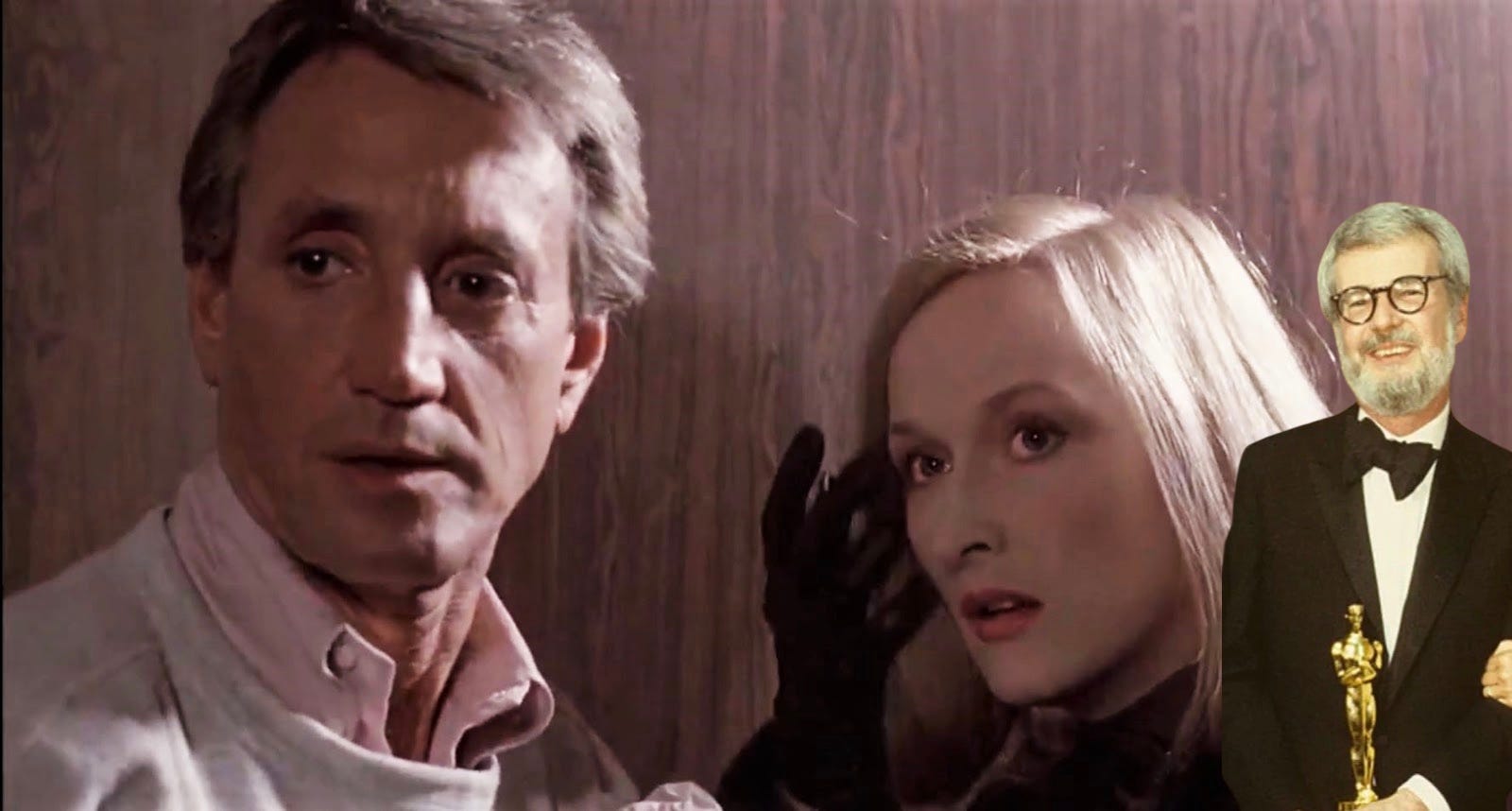
Every other Friday, I publish a deep-dive into the movies filmmakers made directly following their Academy Award wins for Best Director (their “Oscar Chasers,” if you will). I’ve begun with the most recent case (Chloé Zhao’s Nomadland follow-up Eternals) and will move back in time week-to-week.
In 2013, Meryl Streep went on Watch What Happens Live and was asked if she’d ever appeared in a bad movie. Without missing a beat, she replied, “Still of the Night.”
It’s a rare shots-fired moment from a typically diplomatic celebrity. Had I been there, I might’ve retorted, “Well, Ms. Streep, you were also in The Iron Lady.” But for whatever reason, that’s the movie that sprang to mind: the one she made with Robert Benton after they both won Oscars for Kramer vs. Kramer.1
Still of the Night is probably not a movie anyone has given much thought since its 1982 release, which may be her point. I guess we all at least remember the wig from The Iron Lady. But Andy Cohen’s response to the title is surely what 99 percent of people’s would be: “And what was that about?”
Streep replies, dryly, “Never mind.”
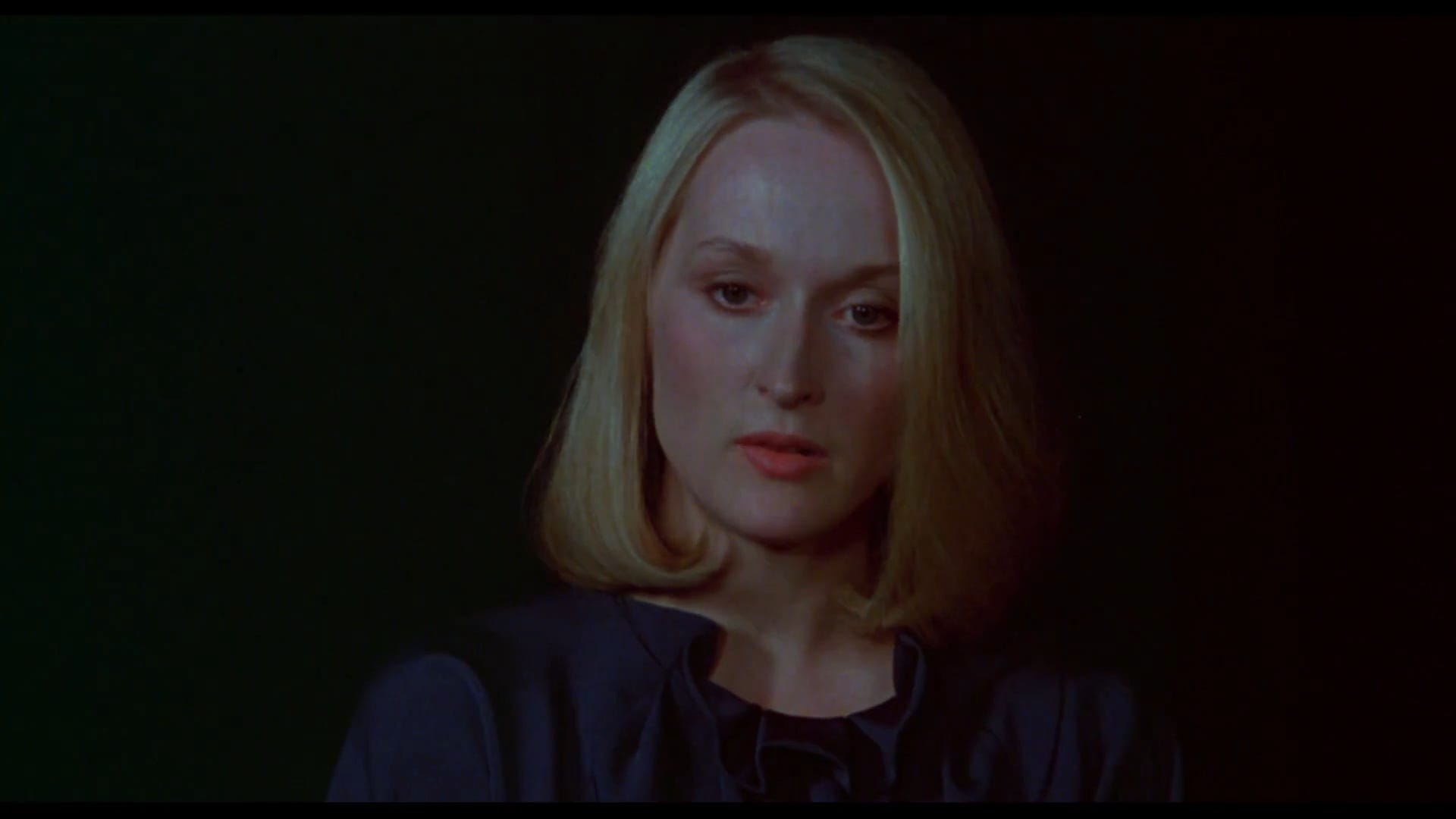
Never mind, indeed. It’s not a movie that’s inspired much in me since I watched it last week, other than the lingering question: can someone be considered a “Best Director” if they also made Meryl Streep’s worst movie?
But I digress. To answer Andy, it’s a noir, I guess - a Hitchcock homage that somehow feels more of a parody than Mel Brooks’ High Anxiety. There’s an auction in it, like in North By Northwest, and a bird like in - well - The Birds. That constitutes an homage, right?
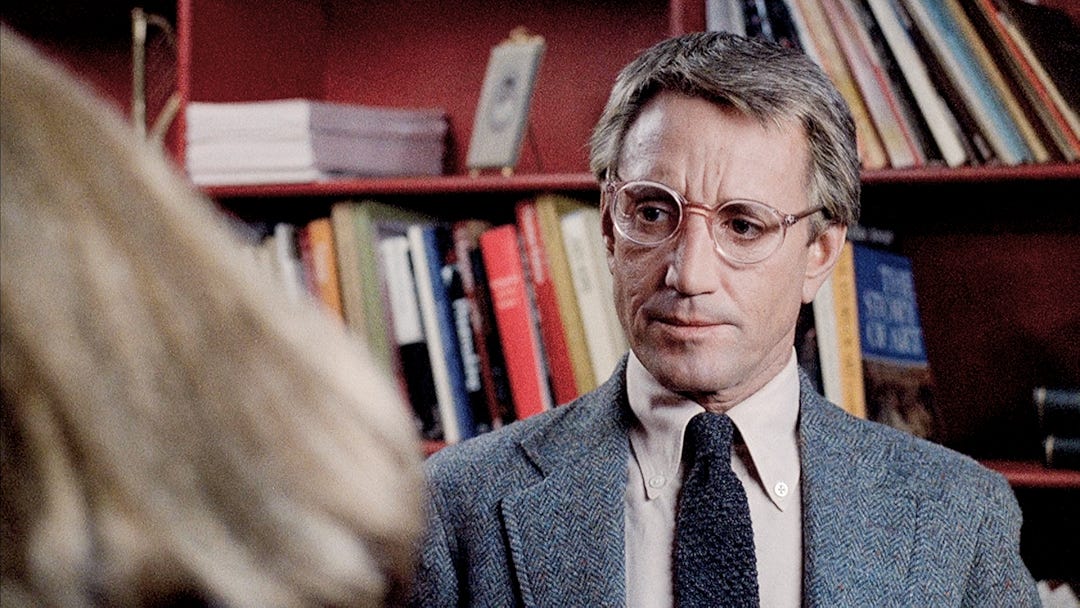
It’s got all the visual panache of a thriller shot by the guy who made Kramer vs. Kramer, by which I mean it’s a remarkably sauceless exercise in style, a pretty boring movie about a psychiatrist (Roy Scheider) trying to solve the murder of one of his patients by reading old case files.
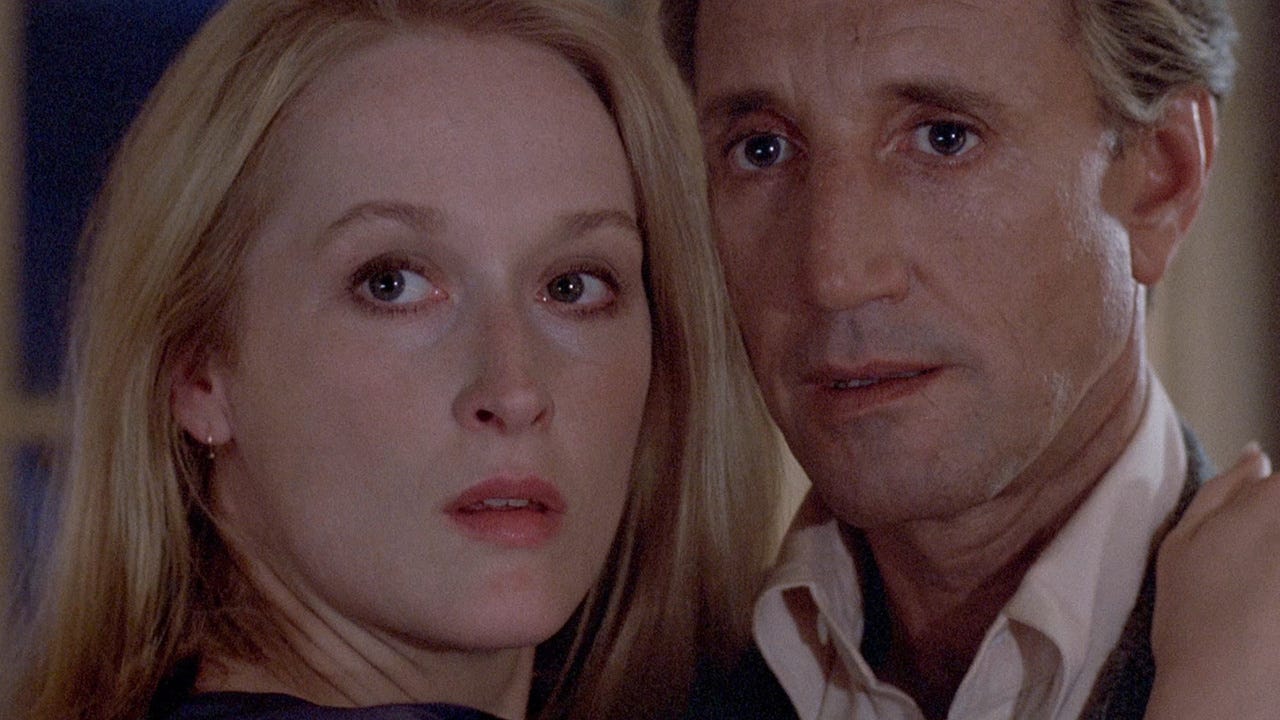
Streep plays the femme fatale, which quickly proves an even worse use of her talents than when Rob Marshall painted her hair blue and made her be the witch in Into the Woods2. The problem is that Meryl Streep remains the greatest actress of her generation precisely because of the way she can make a character’s inner life instantly legible. She’s transparent; just a head tilt or adjustment of her glasses is enough to let you know if she’s feeling trapped or aroused, suspicious or secretive.
But the whole point of a femme fatale is that she’s opaque; we don’t have any clue what’s going on with her, at least until the end. Meryl looks great in the movie, but putting her in the same hairdo as Eva Marie Saint does not a performance make. From the second she walks into Roy Scheider’s office, the jig is up. She’s too genuinely shaken by the murder of her lover to have killed him, and she has zero chemistry with her co-star. So the whole movie you’re wondering why he’s so obsessed with her and wanting to scream at him, “SHE DIDN’T DO IT! WRAP IT UP!”
Streep identified this problem in later years. “I didn’t know what I was doing in that,” she said in an interview with Entertainment Weekly. She took the job because it shot in New York and she wanted to be close to her baby - and because she loved Benton and wanted to work with him again.
Benton loved her back. “She’s a wonderful collaborator,” he said.
He would know; she single-handedly gave Kramer vs. Kramer the depth of perspective that arguably won it Best Picture over films like Apocalypse Now and All That Jazz3. She objected to the screenplay’s treatment of Joanna, arguing that the character was being reduced to an “ogre” for leaving her husband and son. This led to multiple clashes with both Benton and her co-star Dustin Hoffman, where she fought for the justification of Joanna’s actions: a sense of suffocation and a search for identity.
“The more I thought about it,” she said, “the more I felt the sensual reason for Joanna’s leaving, the emotional reasons, the ones that aren’t attached to logic. Joanna’s daddy took care of her. Her college took care of her. Then Ted took care of her. Suddenly she just felt incapable of caring for herself.”
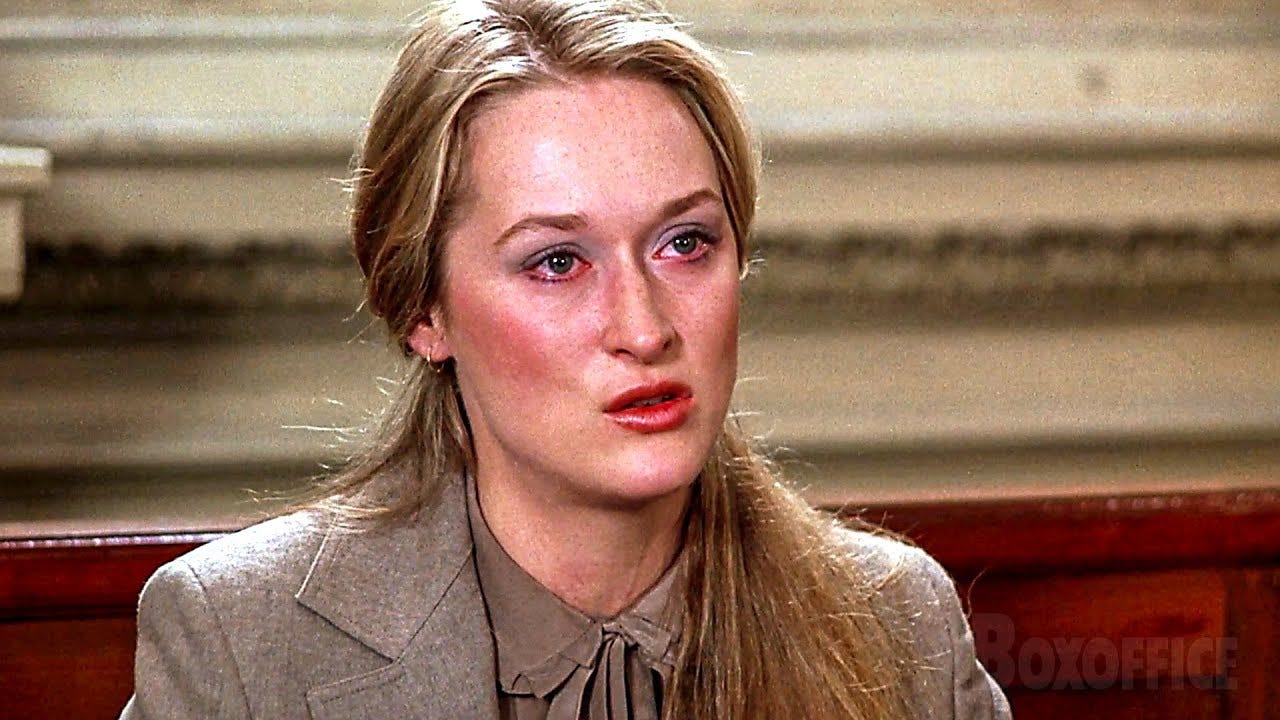
Benton resisted at first, but then acquiesced, letting Streep write her own courtroom monologue, where she lays these motivations bare. That the shift in perspective still feels somewhat perfunctorily grafted onto a movie whose allegiance remains with Ted4 is no knock on Streep’s writing, or on her legendarily vulnerable portrayal of Joanna’s remorse and newfound agency. The character is in Kramer vs. Kramer for 15 of its 105 minutes, and yet her performance on the stand is what most people remember.
It’s no wonder, then, that Benton wanted to work with her again, or that Streep wanted to further collaborate with a director who gave her such autonomy, particularly if it meant staying close to her newborn baby. These are perfectly understandable reasons to make a movie. They are not, unfortunately, reasons for a movie to exist.
When faced with wrapping up his Hitchcock ode, Benton resorted to the same trick that got him out of a jam on Kramer: he handed Streep a pencil and legal pad and asked her to write her character’s backstory. The result is a five-minute monologue about her father, an American ambassador in Italy, whom she was accused of pushing to his death. It’s perfectly well performed but ultimately pointless; why are we wrapping up this Hitchcock pastiche with some soulful speechifying from La Streep?
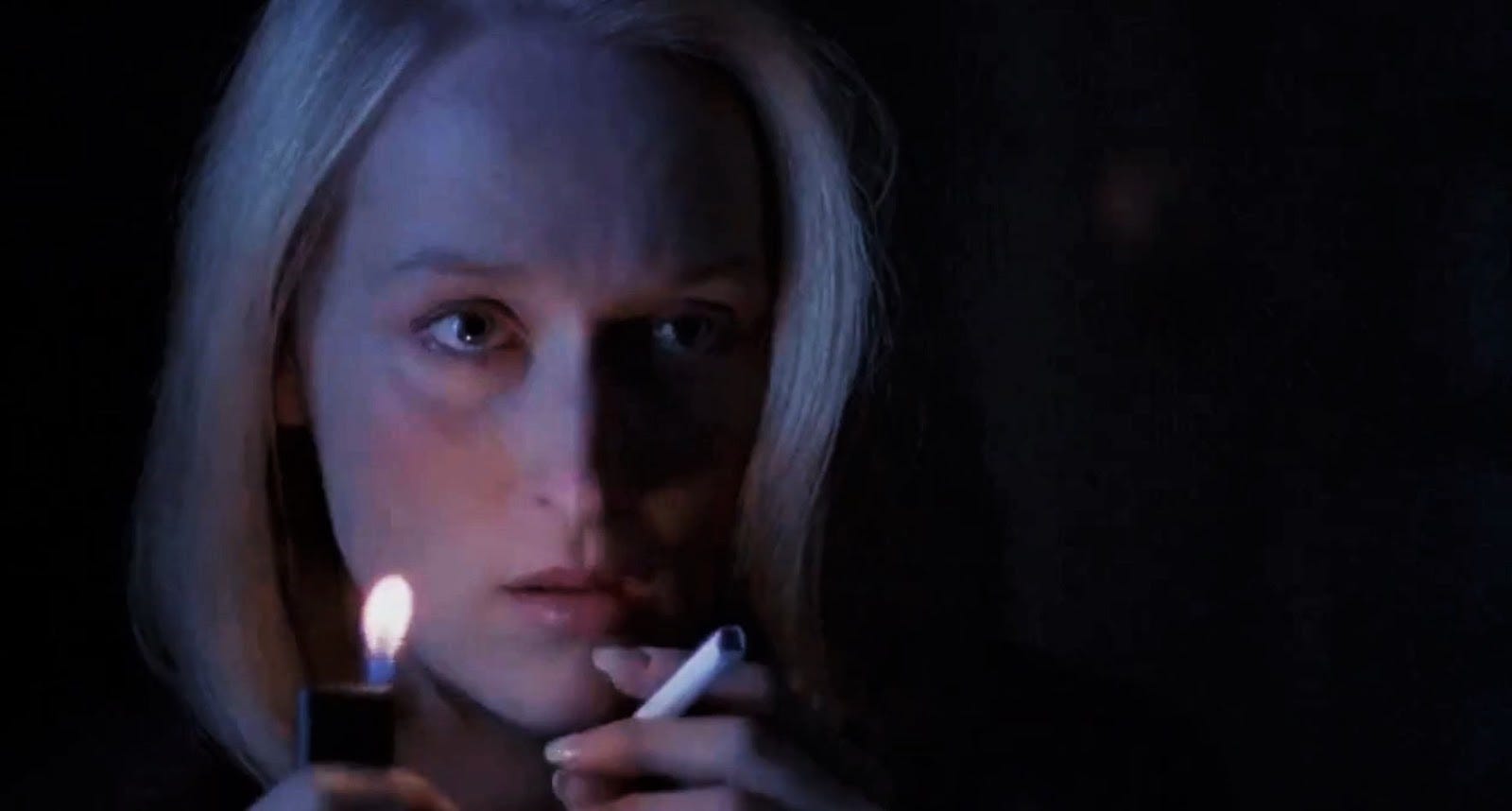
It all comes down to a lack of vision from Benton. Leaning on your collaborators is all well and good; in an actor-driven film like Kramer, it was wise to let Hoffman and Streep cook in their own separate ways. But doing a Hitchcock homage without any sense of style, a noir without any understanding of what makes the genre tick, and then asking your lead actress to write the ending of your movie… well, let’s just say that I can’t see Francis Ford Coppola or Bob Fosse doing that.
We all love Meryl Streep. But in Still of the Night, that isn’t enough.
Robert Benton won the 1980 Academy Award for Best Director, for his 1979 film Kramer vs. Kramer. These were the other nominees, along with their Oscar Chasers:
Francis Ford Coppola, Apocalypse Now (One From the Heart)
Bob Fosse, All That Jazz (Star 80)
Édouard Molinaro, La Cage aux Folles (Cause toujours... tu m’intéresses !)
Peter Yates, Breaking Away (Eyewitness)
Kramer vs. Kramer was nominated for nine Oscars and won five: Picture, Director, Actor (Dustin Hoffman), Supporting Actress (Meryl Streep), and Adapted Screenplay. It was also nominated for Supporting Actor (Justin Henry, still the youngest acting nominee in Academy history), Supporting Actress (Jane Alexander), Cinematography, and Film Editing.
One of her most random Oscar nominations. She’s won three times (Kramer vs. Kramer, Sophie’s Choice, and The Iron Lady). She remains the most nominated performer in Academy history, with 21 nominations. No one is even close to her; Jack Nicholson and Katharine Hepburn have 12 each.
Even if you’re not gonna give either of these movies Best Picture, it would take a pretty stellar snake oil salesman to pitch me why Kramer vs. Kramer is a better directed film than All That Jazz or Apocalypse Now.
This remains my biggest problem with the movie, which is otherwise well-acted and makes me cry. Granted, it must have been somewhat progressive to center a movie on a man taking on the at-the-time traditionally “maternal” role to his child. But the deck is just so stacked against Joanna; that Meryl is able to communicate so much of the character’s motivations in so short an amount of screen time is maybe the greatest testament to her skill as an actress.
Comments
Nothing yet. Say the first thing.
Sign in to join the conversation.