
Something important is happening in gold, and it is becoming increasingly difficult to explain it as just another rally in the price of a commodity.
Yes, gold has been breaking records. Yes, investors are watching interest rates, inflation, geopolitics and the dollar. But underneath all of that, a deeper shift is taking place in the way governments, central banks and private investors think about financial security. Gold is beginning to matter not simply because its price is rising, but because more people seem to want an asset that does not depend on the usual banking and financial system.
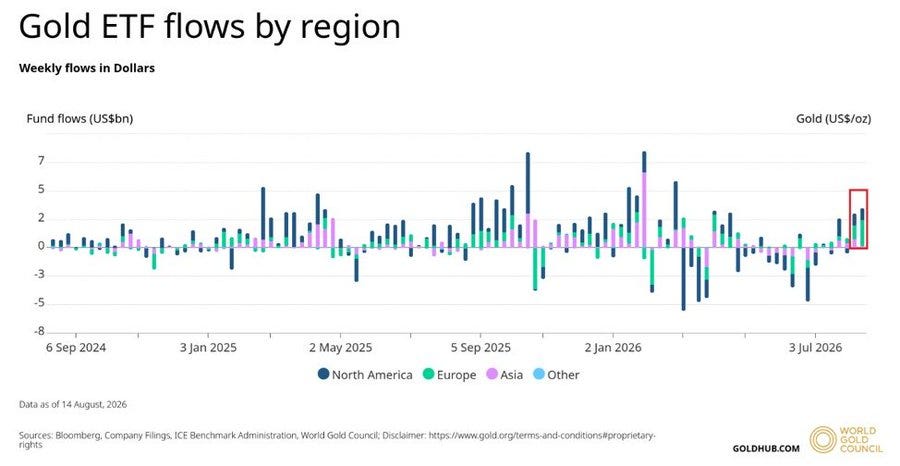
That is why the latest flows matter. Physical gold-backed ETFs have attracted roughly $10 billion over the past six weeks, including around $3.5 billion in the latest week alone, while global ETF holdings have climbed back above 4,100 tonnes. At the same time, central banks collectively hold around 36,000 tonnes of gold, and the extraordinary rise in its price has pushed gold to around 27% of official global reserves by value, compared with roughly 22% for US Treasuries.
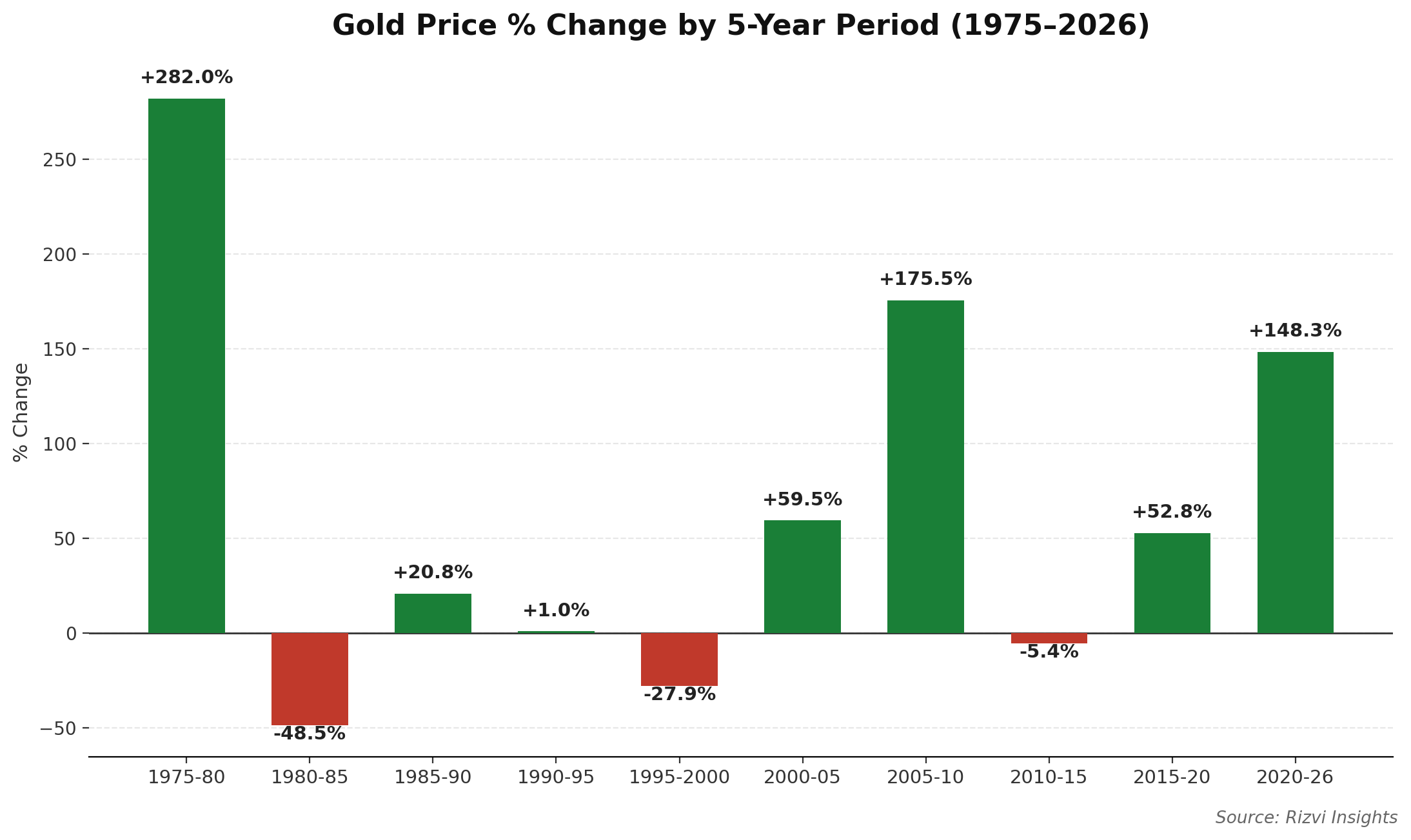
That number sounds dramatic, but it needs to be understood properly. Governments have not suddenly sold huge piles of US bonds and replaced them with gold bars. Much of the increase in gold’s share has happened simply because the gold they already owned became far more valuable.
Even so, they continue to buy.
A 2026 survey of reserve managers found that 89% expect global official gold holdings to rise over the next year, while a record 45% expect their own institutions to add more. That tells us something about how the perception of risk is changing.
A Treasury bond pays interest and can be bought or sold almost instantly in one of the largest markets in the world. Gold does not pay interest and costs money to store. But gold offers something very different: control.
If a central bank owns a US government bond, it owns a financial claim issued by the United States and held within a financial system over which the United States has considerable influence. A gold bar stored inside the central bank’s own vault does not depend on another government continuing to honour a claim, keeping access open or allowing the asset to move freely.
That matters far more in a world of sanctions, frozen reserves, wars and deteriorating political relationships. Holding gold gives a government an asset it can control directly, one that cannot be electronically blocked, cancelled or frozen in quite the same way as foreign financial assets.
And the consequences are not confined to central banks.
For consumers, particularly across India, China, Turkey and the Middle East, a structurally higher gold price changes the economics of household saving. Gold in these economies is not simply something bought through a trading account. It can be wedding jewellery, emergency savings, family wealth and something passed from one generation to another.
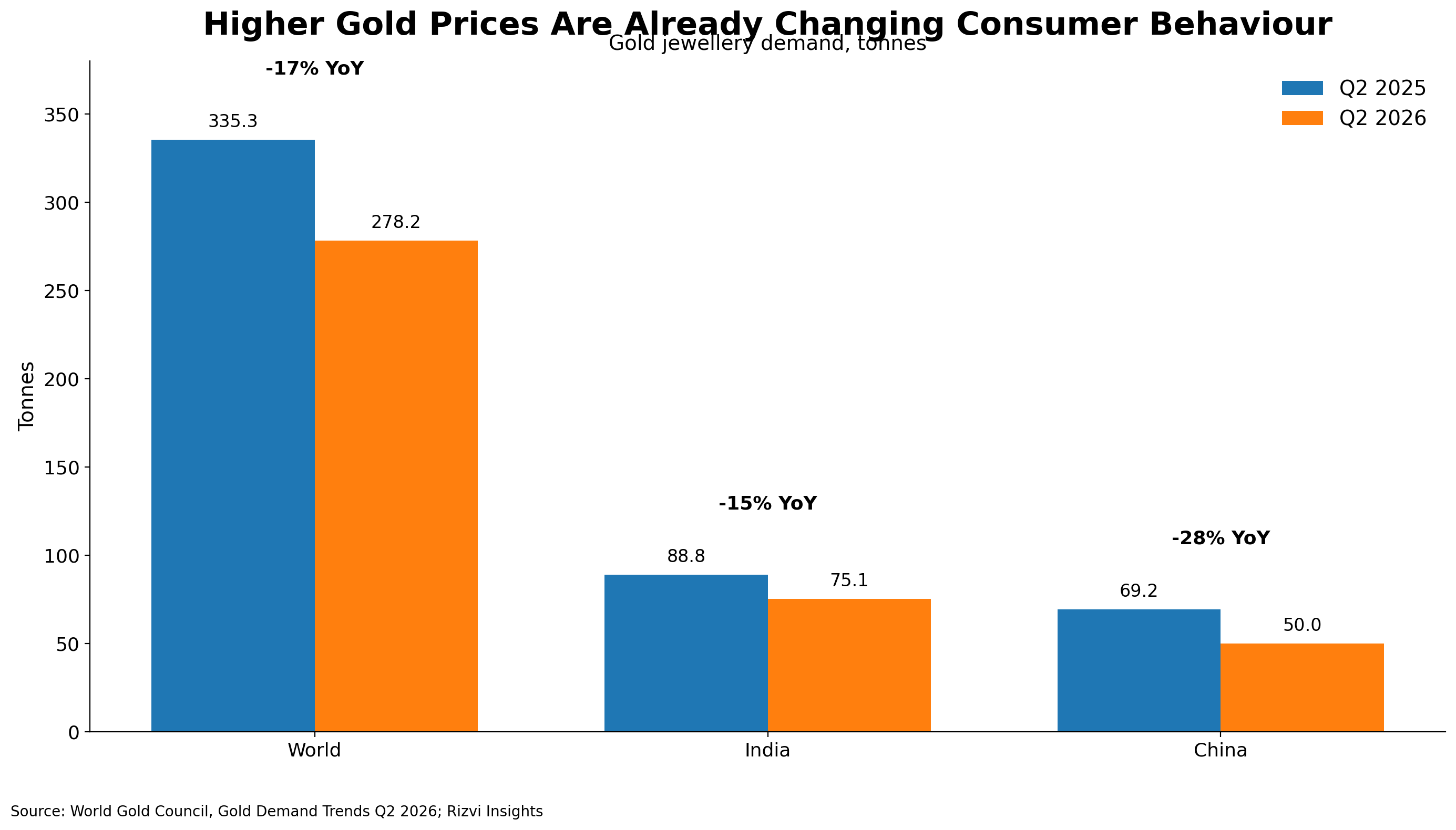
As prices rise, households adapt. They buy lighter jewellery, lower-carat pieces or recycle old holdings rather than purchasing the same amount of new gold. The same price increase can make one household wealthier while making life more expensive for another. Families that already own significant amounts of gold see the value of their savings rise sharply, while younger families trying to accumulate the same asset have to pay far more for it.
Governments face their own version of that trade-off. Countries with large gold reserves have received an enormous boost to the value of those reserves as prices have risen. But a higher gold price does not mean the country suddenly owns more gold or has earned more foreign currency. The balance sheet looks stronger because the same pile of gold is now worth more.
There is also something governments give up by holding more gold. Bonds pay interest. Gold does not.
So when a central bank chooses gold over another bond, it is effectively accepting less income in exchange for more independence. Part of that decision can be understood as an insurance premium. The more worried governments become about geopolitics, currencies or access to foreign financial systems, the more attractive that insurance becomes.
That brings us to the dollar, because this is where the conversation usually gets exaggerated. Gold becoming more important does not mean the dollar is about to disappear from the global reserve system.
The dollar still accounts for 57.13% of disclosed foreign-exchange reserves, and its share actually increased in the first quarter of 2026.
The more meaningful change is happening gradually. When a central bank earns another billion dollars of reserves, it has to decide where to put that money. For decades, a large part would naturally have gone into US government bonds or other major currencies. Now, some central banks appear increasingly willing to put a larger slice into gold.
That may look insignificant in one year. Repeated for ten years, it becomes something else.
And that matters to the financial system because government bonds do more than store money. Banks use them as collateral. Investors trade them constantly. They help financial markets move money around the world. Gold sitting inside a vault does much less of that. So if central banks gradually hold more of their reserves in gold and less in government debt, some of that money is effectively being moved away from assets that circulate constantly through the financial system and into an asset whose main appeal is that it can sit outside that system.
For some governments, that may be precisely the attraction.
The most interesting question about gold, then, is no longer whether it reaches $5,000, $7,000 or some spectacular long-term target. Those numbers will attract attention, but they are not the most important part of the story.
The real question is whether the reasons behind the buying survive the next major fall in gold prices. ETF investors can leave. Interest rates can rise. The dollar can strengthen. Wars can end. Gold can fall sharply even during a long period in which its importance is increasing. But if central banks keep buying through those declines, if governments continue wanting more of their reserves outside other countries’ financial systems, and if private investors increasingly begin thinking the same way, then gold is becoming part of a much larger story.
It would suggest that the world is slowly placing a higher price on financial independence itself.
No posts
Comments
Nothing yet. Say the first thing.
Sign in to join the conversation.