
Remember Cinderella?
How she wanted to go to the ball, but didn’t have the right dress, so her Fairy Godmother came over and at the touch of a magic wand made her a beautiful gown that disappeared only a few hours later?
That’s fast fashion to me.
Fast fashion, and when I talk about fast fashion I don’t just mean cheap fashion, I also mean mass-produced luxury goods, because luxury is not slow, nor necessarily better made, and certainly not less exploitative or polluting. It gives the impression of lustre, but it’s not shiny, it makes you think that you are well dressed, but it’s just an illusion.
In the end, it leaves you empty inside, because it can’t last, and because we don’t always understand where it’s coming from.
The fashion industry’s supply chain is about as clear as a magic wand: it makes it look like clothes can pop out of nowhere, at the expense of nobody and nothing, just to make us look right for a while, to alleviate our loneliness, to accompany us temporarily.
It’s a wish, but in reality, because life is not a fairy tale, it hides a multitude of harm to people and the environment - only we don’t see it, such is our desire for short term fulfilment and impossible dreams.
Behind the fast fashion magic wand are millions of hidden people toiling in exploitative conditions, their working environment contaminated by toxic processes that leave us depleted of natural resources, in a system that is as ineffective as it is damaging, to produce clothes and accessories that are not designed to last, or be loved, without a history and without a future.
This is why, to me, Cinderella’s Fairy Godmother’s ball gown is the wrong dress.
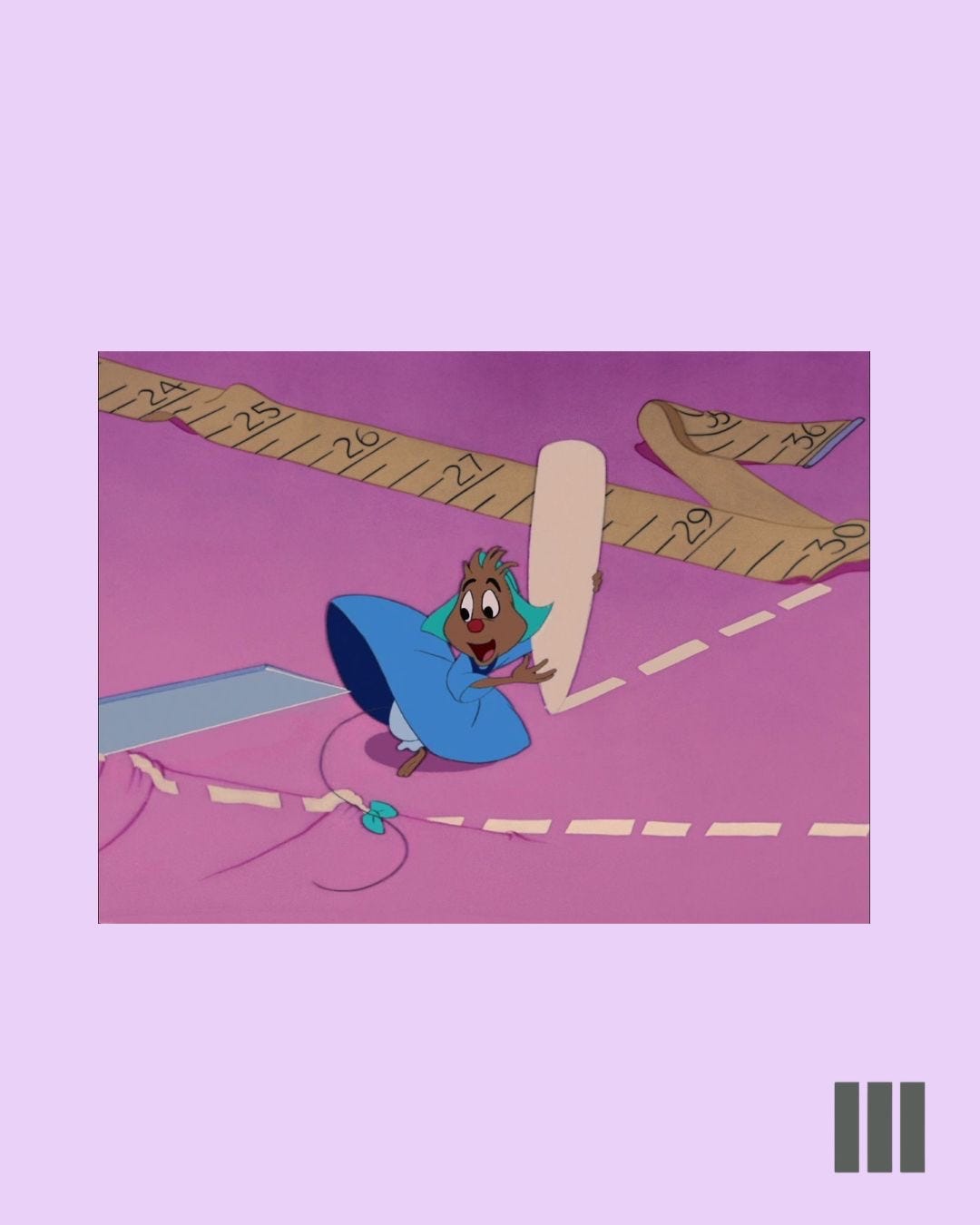
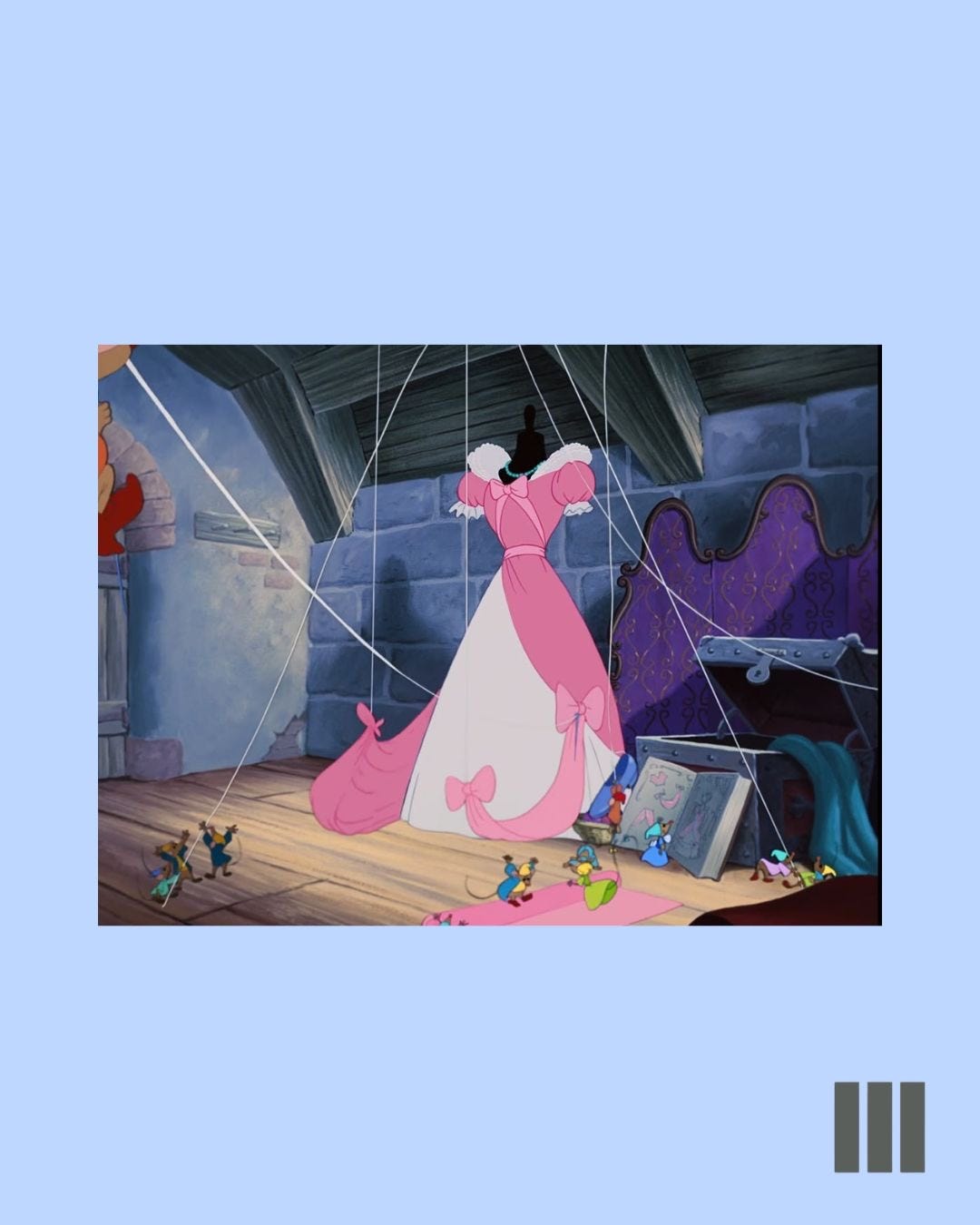
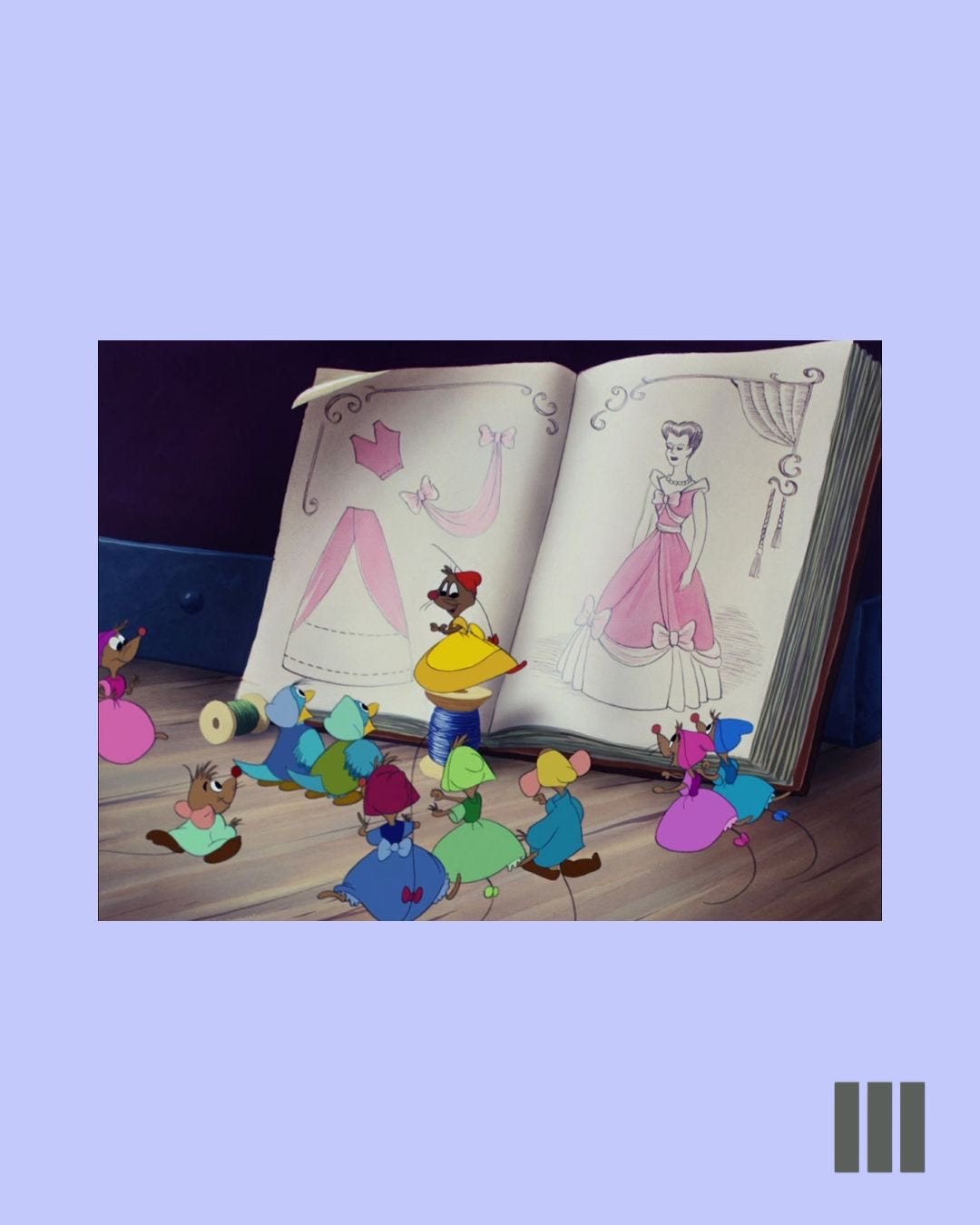
The one I want, the one worth celebrating, is the other dress, the one sewn by the mice and the birds; the one that is made from her mother’s gown, lovingly reassembled putting together old things, things that are left discarded. The one we know the origin of, the one we can see being made, step by step, assembled with love and with care.
Simpler, maybe, but made with dignity. The other dress has a story to tell, an emotional connection, ingredients that have a starting point, and a chain of processes that are visible and tangible.
Metaphorically, we know where the materials of the dress come from: it carries deep memories and it has its own emotional history, it is found in a forgotten wardrobe, transformed into something better with the aid of a broken pearl necklace and a few other bits and pieces.
We know who made it and in what conditions, the mice and the birds, singing and dancing happily as they cut and sew and collaborate on something of value.
It is upcycled from something already in existence even if out of fashion, but its old seams have survived the test of time, because craft, values and quality last forever.
We are producing over 100 billion garments of clothing per year, made by a workforce that is almost always inadequately paid, whether they are working for the high street or high end, hidden behind a system that is built on everything being opaque and full of lies, just like Cinderella’s step sisters who’d have you believe their feet are made to fit the tiny shoe.
The fashion industry is one of the most polluting industries in the world, and one of the most wasteful; many of these clothes are left unworn and unloved, because the less we know about how our fashion is made, the less we connect with it.
However, with new technologies married with old skills, disassembling clothes and reassembling them in an industrial way, we could drastically reduce the amounts of waste going directly into landfill and interrupt the curse of accelerated disposal.
Not enough is improving, and, despite the fact that brands are becoming more aware that transparency and accountability are rapidly becoming a necessity for good business, things are still very far from perfect.
We don’t have all the time in the world to repair this mess, but we are leaving it on the mending pile.
And yet, fashion could be exemplary. Real life could imitate a fairy tale if we all joined together to ask for an industry that empowers instead of exploiting, that nurtures without depleting, that values the dignity of the people who make our clothes and ultimately our dignity too, as the wearers of the clothes we buy.
So let’s forget about the magic wand, or train it to reveal the truth, rather than obfuscating it.
No posts
Comments
Nothing yet. Say the first thing.
Sign in to join the conversation.