
It is an image destined to stain the history books for generations to come: Donald Trump, reciting the oath of office again—this time on Martin Luther King Jr. Day. The scene twists the day's sacred ideals into a cruel parody, compressing an eternal American paradox: a collision between two moral universes.
On one side stands the Dream of the Civil Rights Movement, a transformative force carried by countless activists, artists, faith leaders, and workers who reimagined the nation. Dr. Martin Luther King Jr., its luminous figurehead, articulated a vision of justice, equality, and moral courage—a Dream that continues to call us to our highest aspirations. On the other side looms its shadow: the American nightmare, embodied by Trump's return to power. This moment stands as a stark reminder of the fragility of progress and the unfinished work of Dr. King's Dream.
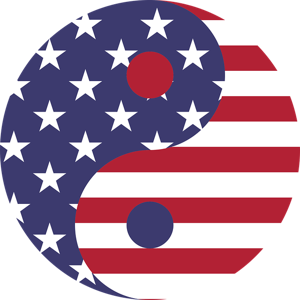
Until recently, we were close—agonizingly close—to a different history. Kamala Harris, poised to become the first Black woman president, might have placed her hand on the Bible on this MLK Day, embodying Dr. King's vision. Her inauguration would have sent a resounding message to girls everywhere, especially girls of color: that justice, equality, and collective vision can triumph over hatred and division.
Instead, as fate would have it, the man whose political career flowered in the soil of racist backlash will place his hand on the Bible on King's holiday. Flags across the country will be at half-mast, mourning Jimmy Carter's passing. Even the universe seems to offer commentary: a moment of national grief set against a newly sworn president devoted to predatory instincts.
Indeed, Trump's career is a testament to how a wealthy white man can systematically evade the consequences of racism. From refusing to rent to Black tenants in the 1970s, to calling for the execution of the innocent Central Park Five, to promoting birther conspiracies against Barack Obama and Kamala Harris, to ordering the caging of children of color, to praising a man who once called himself a "Black Nazi" and wished he could own Black people as "Martin Luther King times two."
Yet this tragedy, as raw as it feels, has a dynamic that is far from unprecedented. Time and again, America has been torn by the clash between unity and division, hope and despair. These tensions, personified in the towering figures of King and Trump, remind us that the struggle for the nation's soul is neither new nor finished. Their stories—and the movements they ignited—show us how dreams can spark the birth of nightmares and how nightmares can spark the birth of dreams.
To understand how these transformations happen—how movements either elevate or debase the human spirit—we must examine the tools of cultural change themselves.
These transformative movements don't arise by accident. As I discussed in my piece, We Are the Rebel Alliance: A Manifesto to Transform the Resistance, they're built using four essential tools of cultural change—what I call cultural acupuncture: Myth, Ritual, Symbol, and Community (MRSC). Like any powerful tools, they can heal or harm depending on how they're wielded:
Myth provides the grand story framing its ideals.
Ritual turns that grand story into shared, lived experiences.
Symbol expresses the story through potent visual or sensory cues.
Community embodies the story in solidarity.
Dr. King and Trump both mastered these tools, though they employed them toward radically different ends.
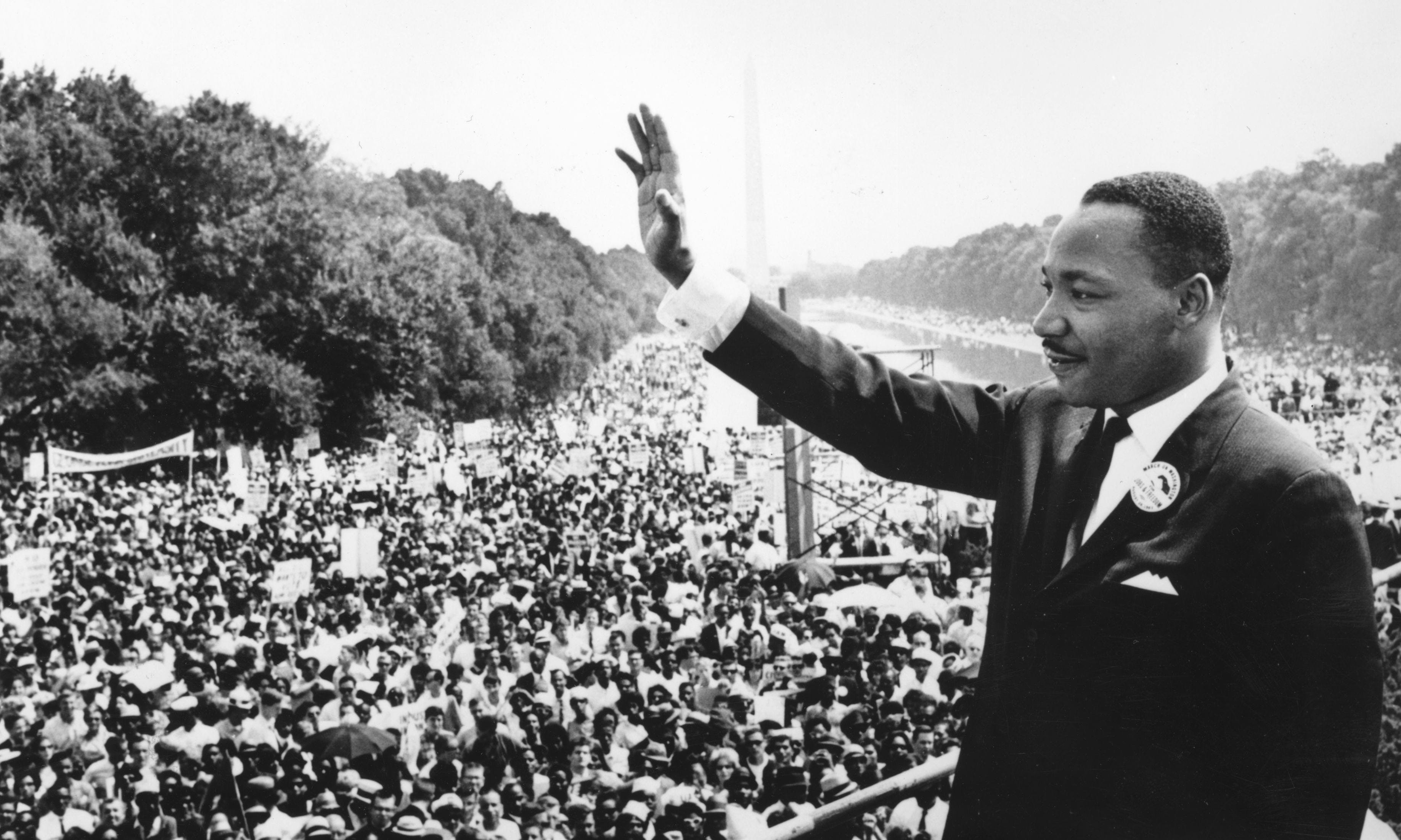
More than a speech, King's Dream was a masterclass in transformation, seamlessly weaving the four elements of cultural acupuncture:
Myth: King braided three powerful narratives: America's aspirational founding ideals ("When the architects of our republic wrote the magnificent words of the Constitution and the Declaration of Independence..."), the African American struggle for access to those ideals ("It is obvious today that America has defaulted on this promissory note..."), and the gospel of Christian liberation urging society toward a "Promised Land." With soaring rhetoric, King turned the nation's story into a Hero's Journey—unfinished yet aspiring and invited all of us to be part of it.
Ritual: Through his preacher's cadence, the refrain, I have a Dream became communal incantation. Private hopes turned into public ceremony, binding the crowd in a unified moral quest.
Symbol: Standing before the Lincoln Memorial, back turned to the Great Emancipator, King and his allies positioned themselves as heirs to Lincoln's unfinished work.
Community: King transformed the massive crowd before him into a living Beloved Community. Rooted in faith and action, his vision transcended race and class, showing how love could overcome hate. Surrounded by thousands near America's halls of power, King displayed real democratic might—not in marble buildings or officials, but in people united in shared struggle.
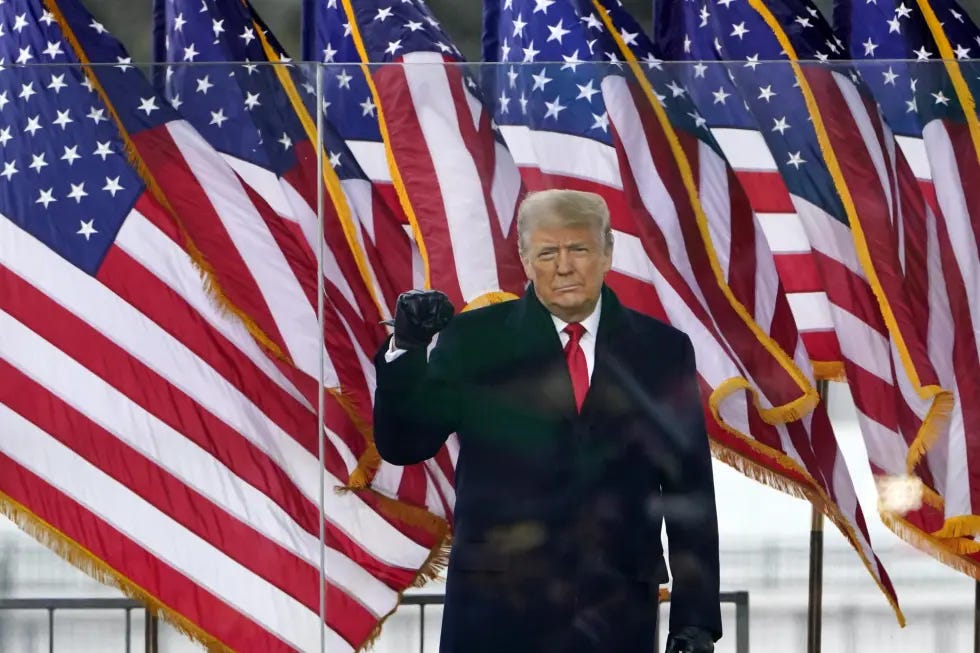
Tragically, these same tools of cultural transformation can be wielded as weapons—poisoning rather than healing the body politic. Trump's January 6th speech wasn't mere incitement; it was a calculated perversion of these sacred tools:
Myth: Trump weaves together three dark narratives drawn directly from Hitler's playbook—America as a once-great nation corrupted by "inferior" outsiders, himself as a lone savior betrayed by internal enemies, and his supporters as righteous warriors in an apocalyptic battle to reclaim racial and national purity. With the calculated precision of a demagogue who has long admired Hitler's methods, he transformed legitimate economic grievances into a crusade against familiar scapegoats—academia, media, government institutions, and the left. His "landslide victory" became a sacred truth stolen by these corrupt elites and their "inferior" allies, demanding violent cleansing to restore the nation's greatness.
Ritual: His carnival-barker cadence transformed political theater into dark ceremony. Chants of Fight for Trump and Stop the Steal operated like incantations, binding followers to action. The march to the Capitol—which he promised to join but watched from safety—became a ritual of purification, converting aggrieved citizens into warriors "fighting like hell" for their country.
Symbol: Positioned before the Capitol, Trump performed as democracy's defender while plotting its overthrow. MAGA hats and battle flags solidified an "army" awaiting orders. The violent assault on police officers exposed the hollowness of "Blue Lives Matter," revealing how quickly symbols are discarded if they impede his agenda. From "Camp Auschwitz" shirts to twisted shamanic costumes, each symbolic act normalized violence while providing perpetrators with a sense of historical significance.
Community: Trump's genius lay in transforming a crowd into a weapon. Rooted in grievance and fear, his narrative seduced followers with visions of heroic struggle—a violent counterfeit to King's Beloved Community. By summoning people near the halls of power he claimed were corrupt, Trump revealed the dark side of "people power": not reasoned debate or nonviolent protest, but a mob united by rage and licensed for brutality.
Below is a simplified table showing how the Civil Rights Movement and the MAGA Movement align with Myth, Ritual, Symbol, and Community:
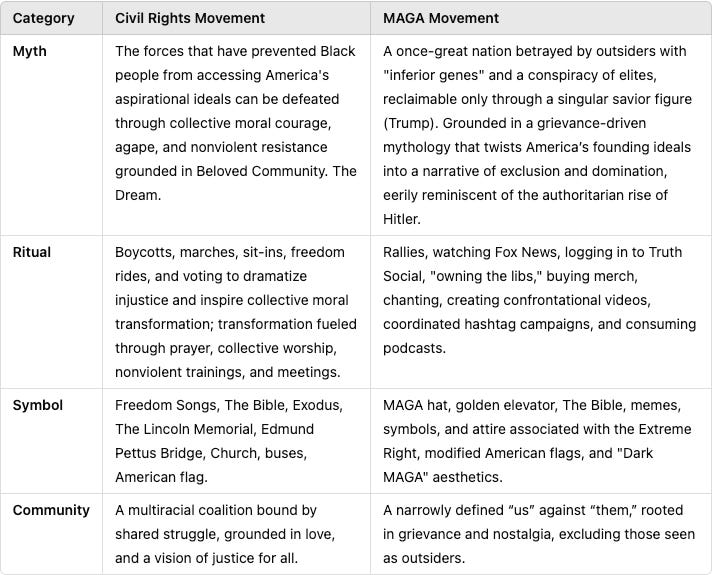
The contrast between these two uses of cultural transformation couldn't be starker.
Whereas King invites America on a Hero's Journey to realize a Dream from his soulful spirit, Trump invites us on a Villain's Journey to realize a Nightmare from his soulless mind.
Indeed, the National Anthem proclaims this to be "the Land of the Free and the Home of the Brave," but America's reality has always been more complicated: it is both the Land of the Free and the Home of the Slave—a contradiction that lives on in every battle for the soul of this nation.
King beckons us to come together and pray for the better angels of our being; Trump doesn't pray so much as prey, like a vampire on our bodies, minds, and souls. King's Journey offers redemption through collective elevation: each step toward justice makes room for more people, more love, more connection. His Dream expands endlessly outward, inviting even former oppressors to join in building the Beloved Community on the path to the Promised Land of the Free.
Trump's Journey, by contrast, demands destruction for personal vindication: each step toward power requires excluding more people, feeding more hatred, breaking more bonds. His Nightmare spirals endlessly inward, requiring ever more enemies to blame and ever more violence to sustain itself. He would lead us not upward toward liberation but downward into the Wasteland of the Enslaved—where bonds of love are replaced by bonds of hatred, where freedom becomes the freedom to dominate, where the soul itself is held captive by fear.
This isn't just a metaphor. King was not perfect—he had many flaws in his public and private lives. Yet his persona combined the most heroic elements of our history: the vision of America's framers and abolitionists, the courage of union organizers and Underground Railroad conductors, and the wisdom of thought leaders and spiritual figures. Through his leadership and the movement he inspired, these transformative forces found their fullest expression.
Trump, conversely, represents a convergence of America's darkest impulses. Like King George III, he threatens democracy with authoritarian impulses. Like Benedict Arnold, he betrays the nation's interests for personal gain. Like Joe McCarthy, he destroys lives through slander and bullying. He combines the corrupt tycoon's greed, the carnival barker's deception, and the demagogue's manipulation of hatred. From the Confederacy to the KKK to the KGB, from Wall Street predators to Nazi sympathizers, Trump salutes every evil force King's movement fought against.
The depth of this perversion became clear when Trump had the audacity to compare his January 6th insurrection to King's March on Washington, calling his violent assault on democracy a "Day of Love" that was more successful than "I Have a Dream." However, on a day when Trump gets to be president again at 78, while we celebrate King, whose life was cut short at 39, it does make one ask if Trump's movement is ultimately more successful.
And if that’s not bad enough, it gets worse. Not only does Trump stand against Dr. King's legacy—King’s legacy inadvertently created Trump as we know him. In the wake of King's assassination, Congress passed the Fair Housing Act, a crown jewel of civil rights legislation he had championed. Its first major test came against a wealthy real estate mogul with KKK ties and his ambitious son, Donald J. Trump. Defending against this lawsuit, young Trump crossed the river from Queens to Manhattan and found his dark mentor: Roy Cohn, architect of McCarthyism and perhaps the most corrupt attorney in American history, who taught Trump that truth was irrelevant and cruelty was power. Without King's movement forcing this confrontation, Trump might have remained just another petulant real estate heir, terrorizing a few New York neighborhoods. Instead, under Cohn's tutelage, he learned the dark arts of demagoguery that would let him terrorize an entire nation. The Dream of civil rights helped birth the Nightmare of Trumpism—a brutal reminder that even our noblest victories can have monstrous unintended consequences.
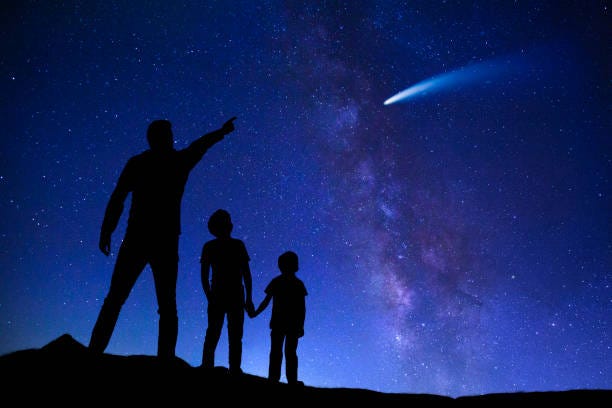
And so it stands that on Martin Luther King Jr. Day, these two forces meet once more—the Nightmare and the Dream, with Trump's inauguration a symbolic crucifixion of King's Dream. The heartbreak feels complete. Total. Final. It is Midnight in America.
But midnight is not the end—it is the turning point. In moments of deepest despair, the heart doesn't just break—it breaks open.
Yes, history reminds us that Nightmares are often reactions to Dreams. Yet if the crucifiers had the final say, the human race would never have come to pass. Dreams, too, have the power to respond to Nightmares. Indeed, the Civil Rights Movement emerged from the very Nightmares of oppression it sought to overcome, proving that even in darkness, we can forge pathways to light.
In his final years, King's vision deepened into an ever-expanding understanding of interconnectivity. He saw with profound clarity how systems of oppression—racism, poverty, and war—are interwoven, just as the forces of liberation through nonviolent resistance and spiritual practice are bound together. He was working toward something greater than the end of segregation: the liberation of humanity from all forms of bondage and the awakening to our shared destiny.
Yet King's evolution outpaced the infrastructure needed to support it. His grand story of universal interconnection expanded faster than the rituals, symbols, and communities he depended on could adapt. More than half a century later, we still haven't built the cultural technologies needed to realize his most expansive vision. This, then, is our task: to create new ways of experiencing and expressing our fundamental interconnectivity—through both ancient wisdom and emerging innovations. We must lead a Revolution of Interdependence, one as unprecedented in its creativity and power as the Nightmare of MAGA is in its destruction.
Yes, it is midnight in America. But as King reminded us, “Only when it is dark enough can you see the stars.” The question now is whether we are willing to see by their light—to connect these eternal guides into new constellations of meaning and purpose. If we rise to this challenge, if we recognize our shared destiny, then even in this midnight hour, we can chart a path to a dawn of liberty, justice, and love that truly belongs to all.
No posts
Comments
Nothing yet. Say the first thing.
Sign in to join the conversation.