
I begin the publication of “Henryk Arfa’s Letters” with his most autobiographical ones so that we can get a better sense of how and where he grew up, and how his childhood and World War Two years shaped his thinking. These letters, naturally, don’t begin to do justice to his tragic—and ultimately triumphant—journey, but the letters that have been salvaged tell of experiences he felt were important to share.
Ultimately, his story was encapsulated on the number tattooed on his forearm which he would often show me, in defiance of those who sought to murder him. It was his Nazi camp prisoner number: 111 69. My aunt remembers this number, because their numbers add up to 18, the numerical value for Chai, “life” in Hebrew.
One theme emerged through these autobiographical accounts: God protected him throughout the War. He felt that his “lucky” experiences escaping the hands of the Germans were part of God’s plan to let him survive for a great destiny.
The timeline of his life from the time he was sent to the Lodz Ghetto is difficult to reconstruct. I was given some clues from documents I received from the International Tracing Service, a very helpful organization that catalogs German records of Nazi prisoners. This is what I found among a collection of documents processing his liberation:
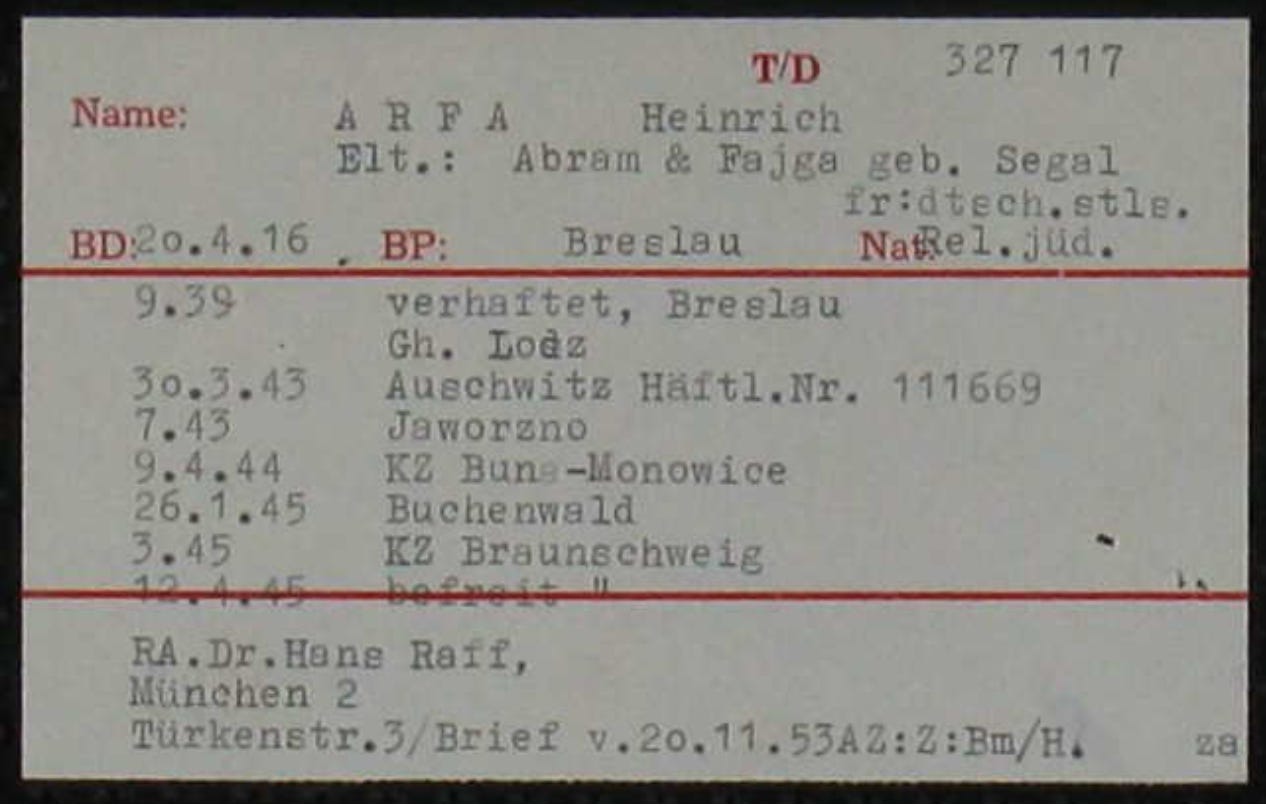
So this suggests he was arrested in Breslau in September 1939, at the start of Hitler’s invasion of Poland. He was then taken to the Lodz ghetto. Saba always said he was born in Lodz, so it is unclear why he often listed Breslau, a German city at the time, as his place of birth.
On March 3, 1943, he was taken to Auschwitz where he lived as a slave laborer for about four months. From there, he was taken to Jaworzno, an Auschwitz subcamp built in 1943 for forced labor. About two months later, he was sent to the Buns-Monowice concentration camp, also an Auschwitz subcamp in occupied Poland. On January 1, 1945, he was transferred to Buchenwald and then to the concentration camp in Braunschweig where Jewish slaves were forced to churn out ammunition. According to the website of the Neuengamme Memorial Center, the Braunschweig camp was cleared out in late March, so reconstructing the exact site and location of his liberation is difficult.
Not long after, the Jewish Joint Distribution Committee began to administer the displaced persons and help them find a new home.
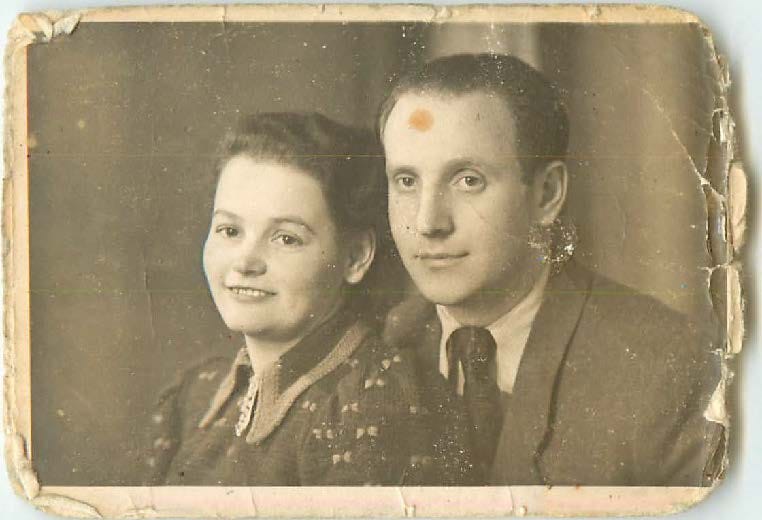
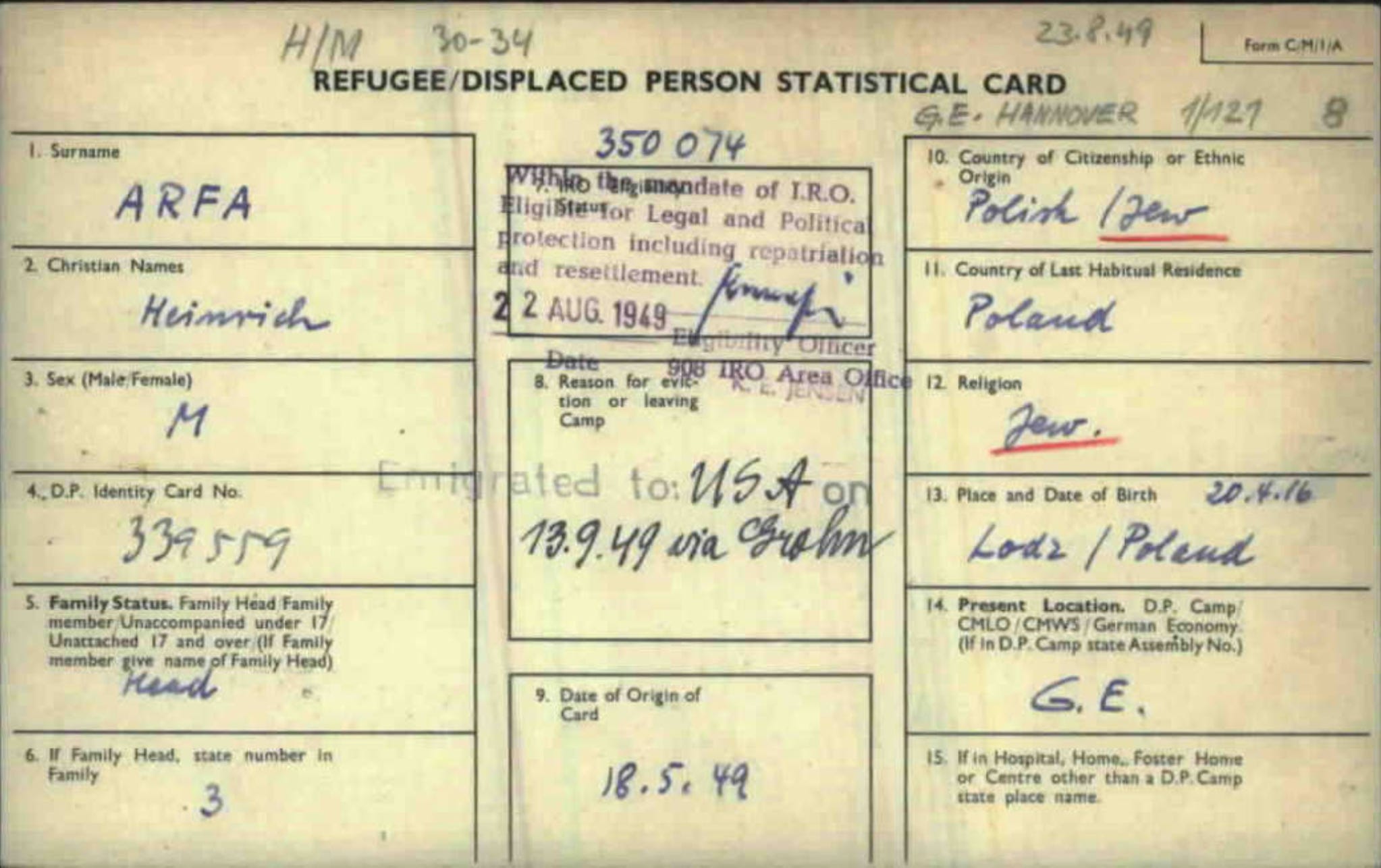
A few months after liberation, Henryk met my grandmother, Hanna (aka “Dida”). Unfortunately, my grandfather did not interview for the Shoah Foundation’s Holocaust testimonies archives, as did Dida in 1998. His testimony would have helped fill in many blanks. I’m sure it would have been a feisty, colorful, and insightful portrayal, sparing no nicety, especially for the war criminals who annihilated his entire family.
For now, I will rely on her testimony to fill out the post-War timeline.
Dida explained how, after liberation, they went to a “hospital” converted into a DP camp in Hannover that my father and I later visited together in 2013.
She described Saba being grouped with non-Jewish Polish soldiers. Eager to rebuild a family after losing his own, he sought out the Jewish women in the vicinity.
“He was the only Jew, but he went as a gentile. And he heard that we are there, and he came. And this is how I met him. It was in 1945.”
In Hannover, my grandparents were given the option by the Jewish Joint Distribution Committee to migrate to either Mandate Palestine or to the United States. Dida and her friends told me once that they preferred to go to the United States for an astounding reason: they didn’t want to be around so many Jews anymore. As we delve into Saba’s letters, we will begin to understand the betrayal Saba felt by some of his fellow Jews and the resentment—commingled with love—that he constantly grappled with.
Saba and Dida came by ship to the United States in 1949. My father, over two years old at the time, even remembers the journey. Dida’s seasickness subsided when they neared the New York dock and saw the Statue of Liberty.
“This is America!” people cried.
They made their way to Detroit with other survivors, but Dida developed health issues (presumably from a poor immune system after time in the camps), and she was hospitalized for a few days. Her brother, Morrie, also a survivor, encouraged her to join him in California where it’s “warm.” Eventually, they settled in Los Angeles.
“We got a little money from Germany already,” she said. “My husband was a good provider. Right away he made some business—black market. We got a little money.”
They left for California and got an apartment. “My husband started to work. I started to work—for 70 cents and hour. We saved. And then they gave us $25 a week from the Jewish Federation and we survived this way. We built a family, thanks God. I have a home. We have business,” she said back in 1998, two years after Saba passed away.
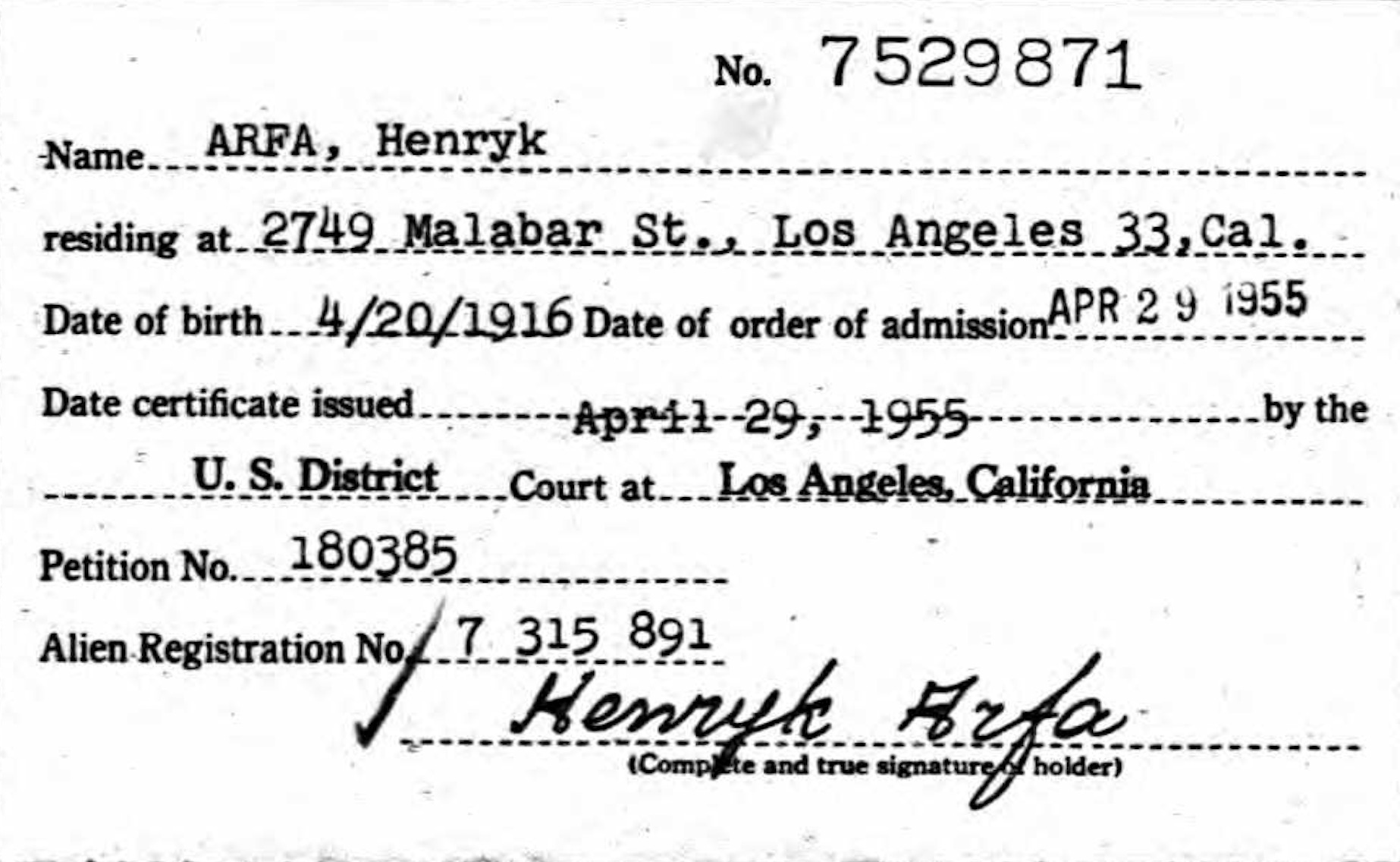
My grandparents became American citizens in 1955.
Together, they raised my father Allan and my Aunt Fay and lived the American dream.
“We lived together for 52 years. He was very good. He worked very hard, too. He liked to do business,” Dida said.
Saba was a risk-taker. He started a health food shop and café in Downtown Los Angeles, H&H Health—a pioneer in the industry. I worked at the shop as a delivery girl when I was about 10 or 11. I loved delivering food to the Fashion Building across the street and getting tips, especially in the form of outfits! An outgoing and bubbly man, with bright blue eyes often framed by a beret, he would chat up customers with his charm and give them often unsolicited yet cheerful advice on their health and lifestyle. The people loved him.
With their savings and the capital that they built, he gradually invested in rental properties in southern California. Complaints about the difficulties of managing a property in a very-regulated West Hollywood form a significant chunk of his letters.
In reflecting on his suffering and the rise of Nazism, Henryk became an American patriot and also a dedicated Zionist.
Dida, in her testimony, had this to say about America, a sentiment I’m sure my grandfather would share: “I think we are blessed to be in America, I’ll tell you that. No country in the world can appreciate what America is. And I wonder if people don’t appreciate America. You’re a free person. You can do whatever you wanna. We never got this freedom. Never. Even in Poland—as good as it was. We never got the freedom you had here. We’re just blessed to be here.”
Comments
Nothing yet. Say the first thing.
Sign in to join the conversation.