
From the Sports Desk
In their 65 years of existence, the Dallas Cowboys have been consistently inconsistent, not just on the field, but in their style choices. America’s Team’s color palette is famously schizophrenic, boasting two shades of blue and three shades of silver. One of these so-called silvers is in reality “Cowboys Star Blue,” a unique metallic silver-blue exclusively used on the pants paired with the Cowboys’ traditional home whites. “Cowboys Star Blue” is not to be confused with the blue used on the actual Cowboys star, which is closer to, but not exactly, navy blue.
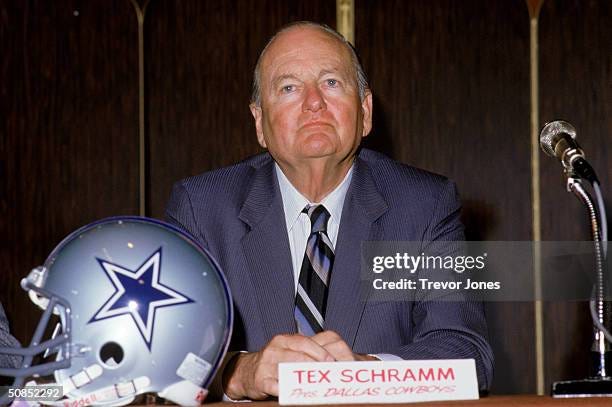
According to team lore, this special shade of silver was created by Cowboys original President and General Manager, Tex Schramm. Longtime equipment director for the Cowboys, Mike McCord, explained the origin of the color in a 2017 interview for Fox Sports:
“The ‘Cowboys Star Blue,’ which is the pants you see with the home white jerseys now, actually originated with Tex Schramm. Apparently, he had a car that he had seen – I’m not sure if he owned the car or if he just saw it – but he saw a car with that color interior and fell in love with it. So we had dye lots. That fabric is a dye-lotted color, so we have to order certain number of yards to produce it in that dye lot. So that pant color has become the color of the Cowboys for their home games.”
Versions of this story have circulated as urban legend and message board fodder for years but the closest thing to an original source seems to be McCord’s quote from 2017. McCord has been with the team since 1989 and is a credible, but not primary, source. No articles or interviews from the Schramm era mention the car interior origin story and no direct quotes from Schramm on the subject are known to exist. And in nearly eight hours of interviews and archival footage used in the Netflix series America's Team: The Gambler and His Cowboys, they didn’t talk about the pants at all. Not even once.
After an exhaustive search, this writer failed to unearth any concrete evidence for the story, not even a picture of Schramm in a car. Taking McCord’s story at face value, we are still left to wonder just what car it was. So, let’s do exactly that. Let’s wildly speculate about which car inspired Schramm to change Dallas Cowboys history forever.
The Color
The Cowboys started life in 1960 as a blue and white team. It wasn’t until 1964 that silver entered the picture. The basic look has remained the same since, but the details have varied wildly. In the beginning, silvers and blues lived in perfect harmony, but in the mid-seventies, the hues began their wayward drift. In 1974, the transition to “Cowboys Star Blue” pants was fully underway.
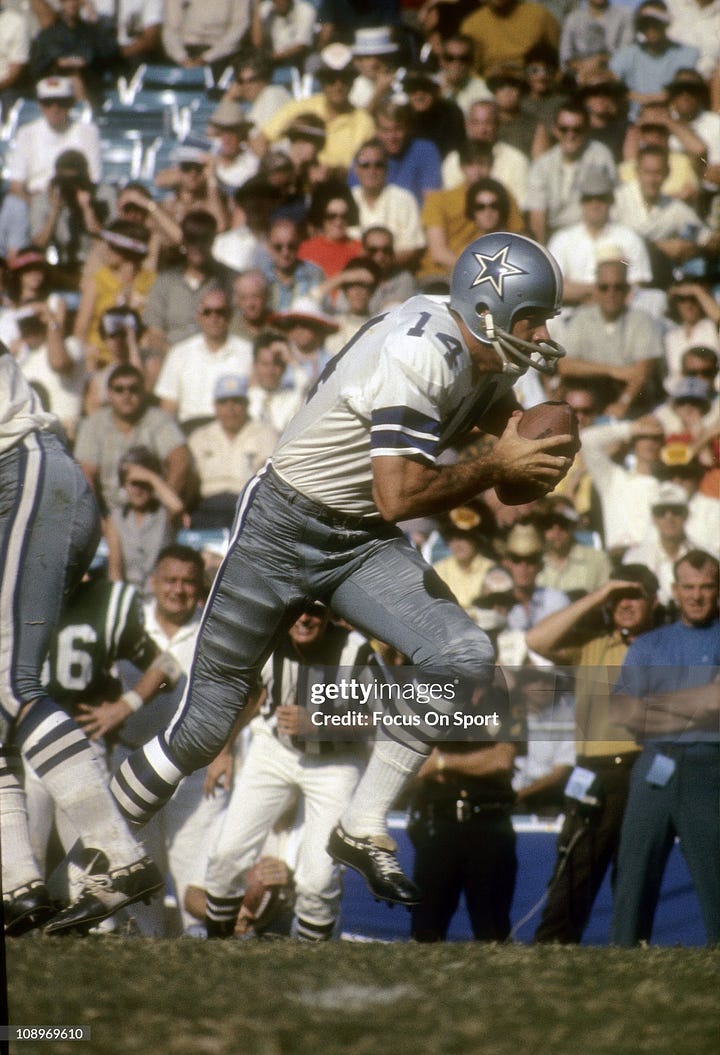
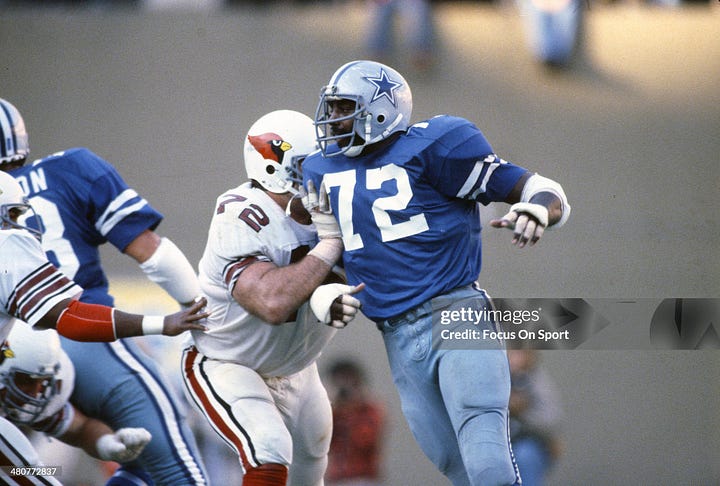
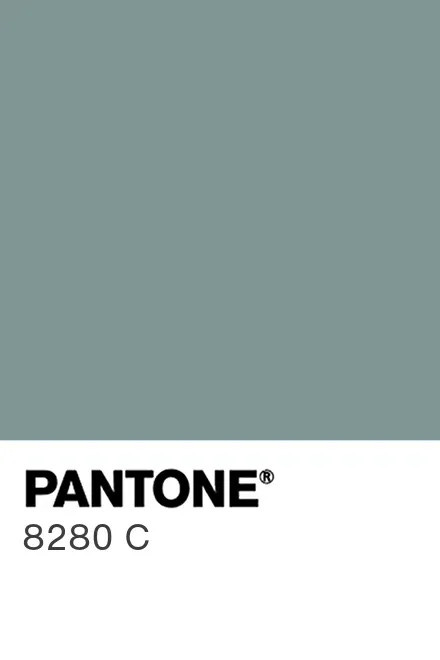
The new color started out as Pantone 8200 C but shifted over the years with changing dyes and fabrics. Green was later added to the silver so it could shine better on old televisions. The shade was even defined as silver-green (Pantone 8280 C) in the style guide.
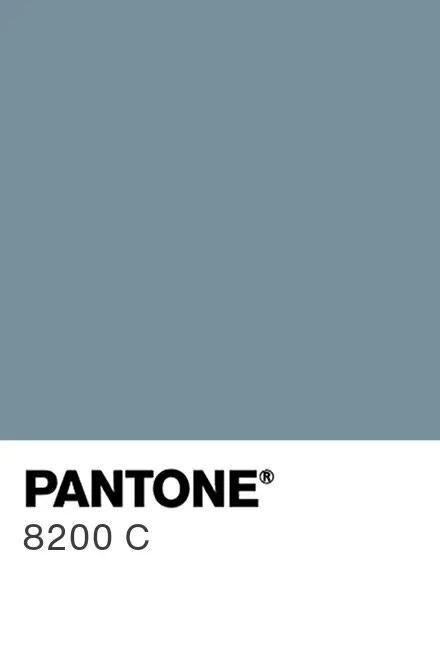
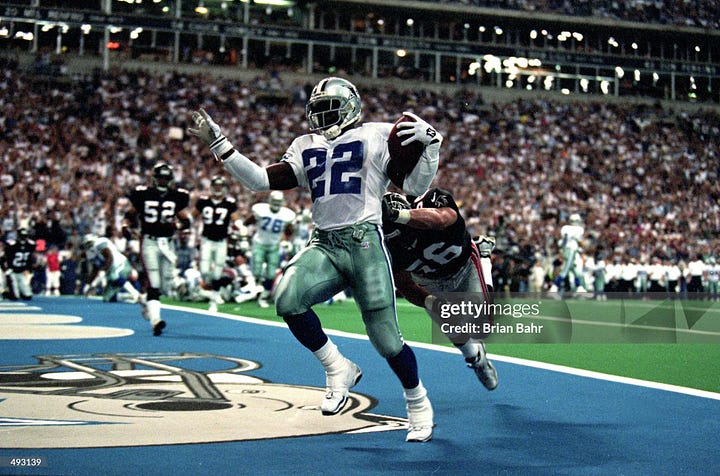
By the 1980s, Schramm had grown tired of his own invention and decided to make a change, at least partially. The blue away uniforms, long deemed bad luck, were overhauled. The blue jerseys went from royal to navy blue and the pants ditched “Cowboys Star Blue” for a shinier, truer silver. Players’ reactions were mixed.
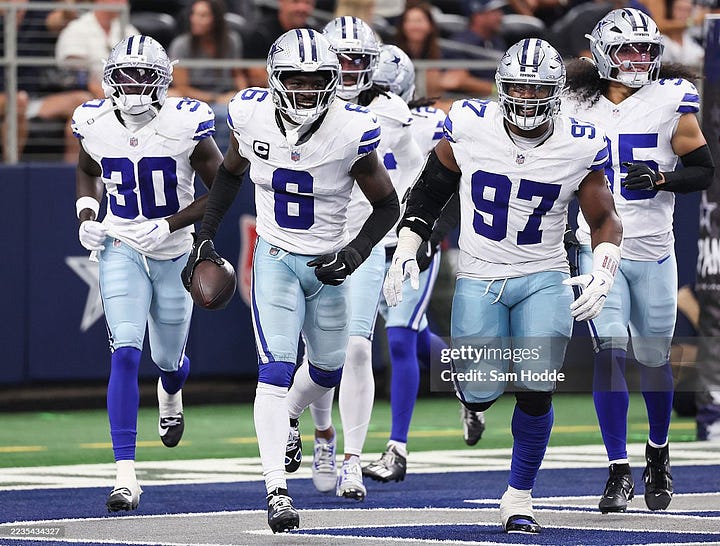
“Cowboys Star Blue” stuck around for the traditional white uniforms. But as televisions made the jump to high definition in the 2000s, fans finally saw the sea-foam pants as they really were. In 2020, the pants changed yet again, this time to the current bright blue, coming full circle back to the true “Cowboys Star Blue.”
The Car
The exact car that inspired Tex Schramm may be lost to history but we can make an educated guess at the model based on some likely parameters.
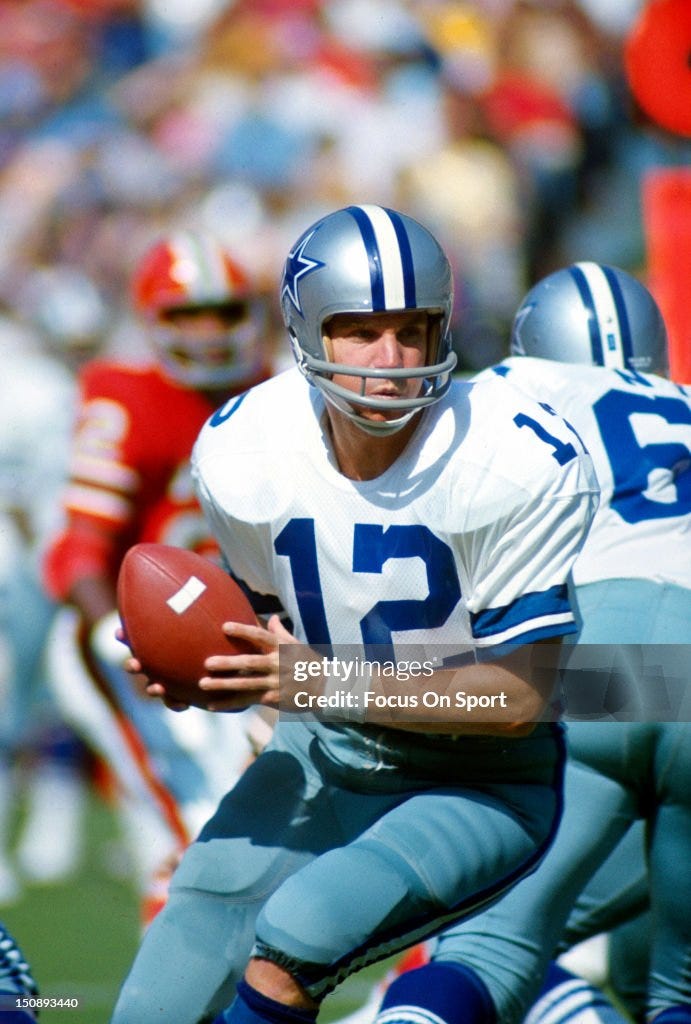
We’ll start by using the original appearance of “Cowboys Star Blue” from 1974 as our basis for comparison against car interiors. The color pops best in the sun, as seen in the photo below from the 1974 season.
Next, we’ll set some guardrails around our car search, leaving us with the most realistic candidates.
Timeframe: The car is likely a model from the late 1960s or early 1970s. Schramm would have to have seen the car in time for the pants to be production ready for the 1974 season, meaning 1973 models are the latest possibility. Since the color was not adopted when silver was originally added in 1964, we’ll assume the car dated from after 1964. It’s possible an older car seen for the first time was the inspiration, but we’ll assume it was a new and novel interior that caught Schramm’s eye.
Mass production: We’ll also assume the car in question was not a custom job. Trying to pin down a unique, customized interior from the era would be nearly impossible, so we’ll limit our search to factory interior options.
AMERICA: Schramm no doubt saw his share of Ferraris or Mercedes up in Dallas, but we’re talking about America’s Team at a time of unquestioned American automotive supremacy, so we’ll stick to the Big 3 (Ford/GM/Chrysler).
With the ground rules set, let’s look at what the Big 3 automakers had on offer at the time.
The Auto Color Library shows us these standard interior options from the Big 3 in the late 1960s:
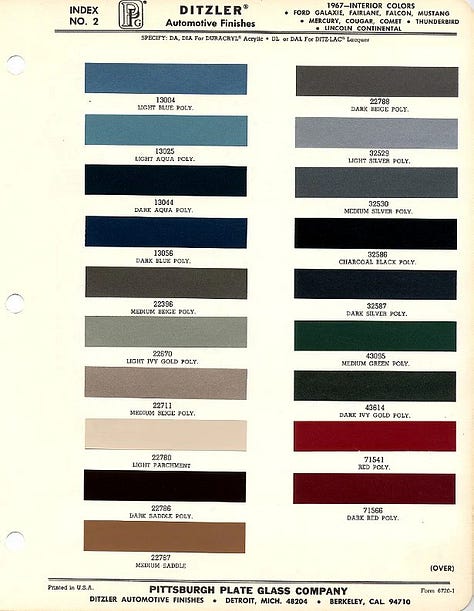
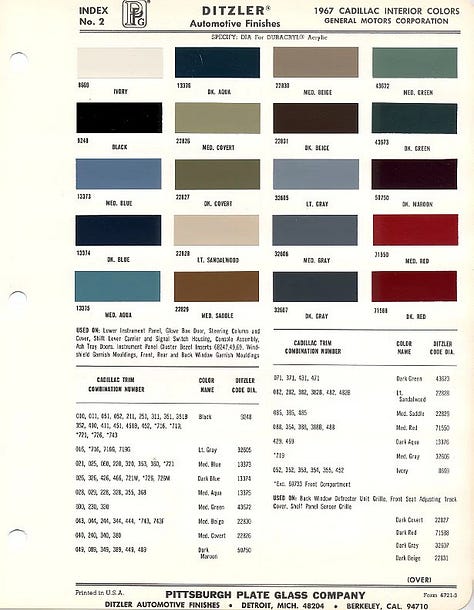
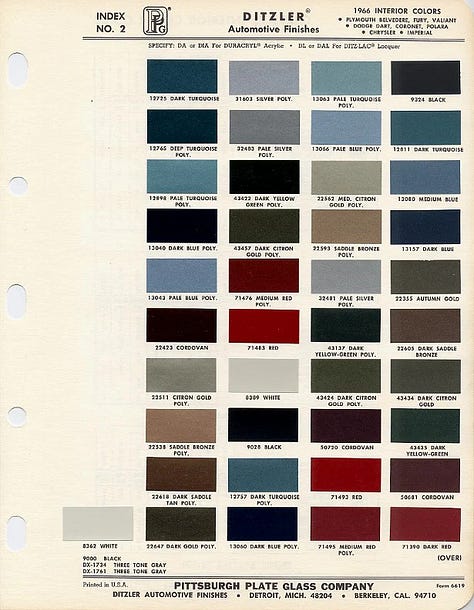
There are several worthy candidates. Chrysler’s “Pale Turquoise” and Cadillac’s “Med. Aqua” stand out. Any of the pale blues could be it. Swatches are helpful, but let’s see them as Schramm would have seen them in the wild.
Ford
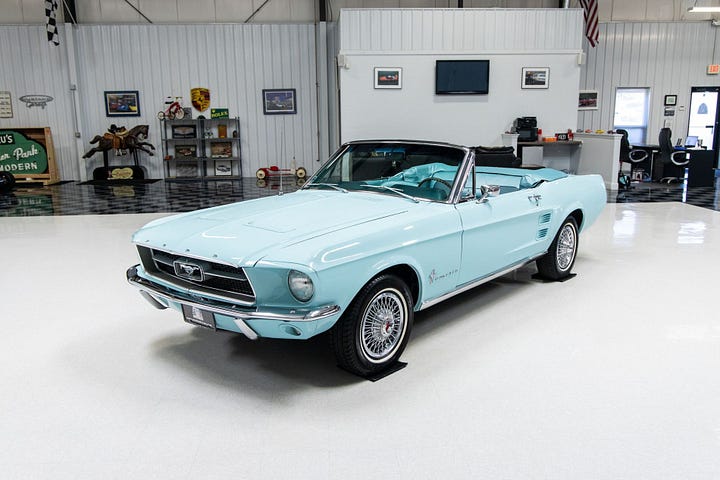
A common version of the story shared on message boards and comment sections says the car was a Mustang. Not an unreasonable guess, since Mustangs were wildly popular. Ford indeed offered them with light blue interiors as seen in the 1969 brochure:
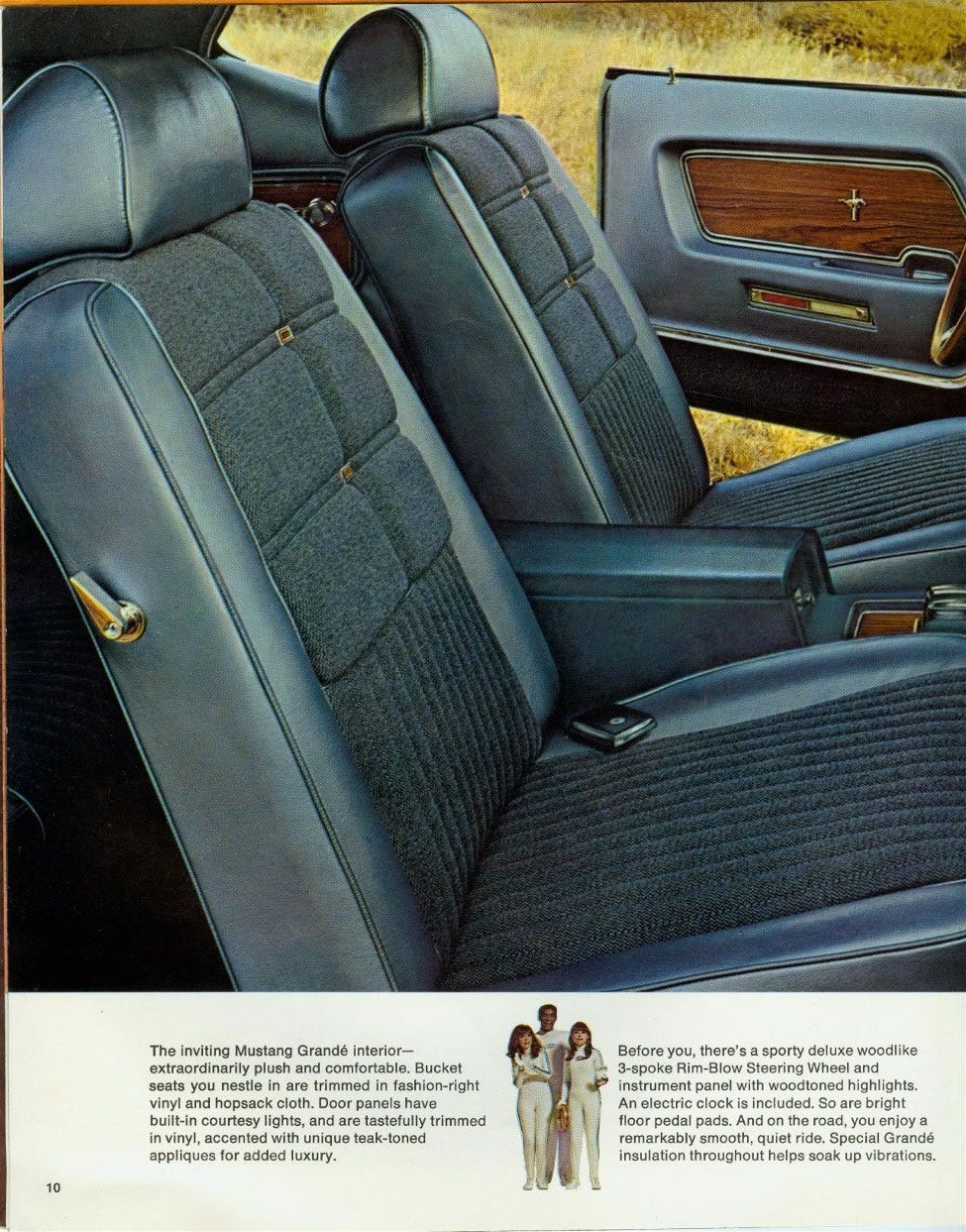
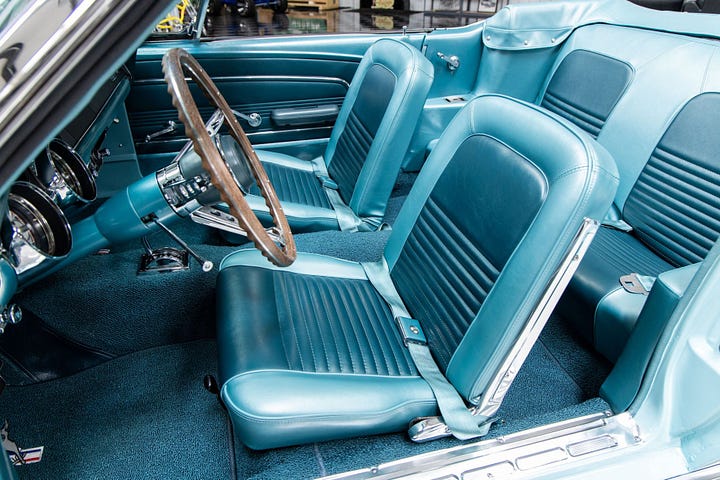
It’s a decent example, but brochures can be misleading. This pristine specimen in Frost Turquoise from 1967 might make Ford’s strongest case:
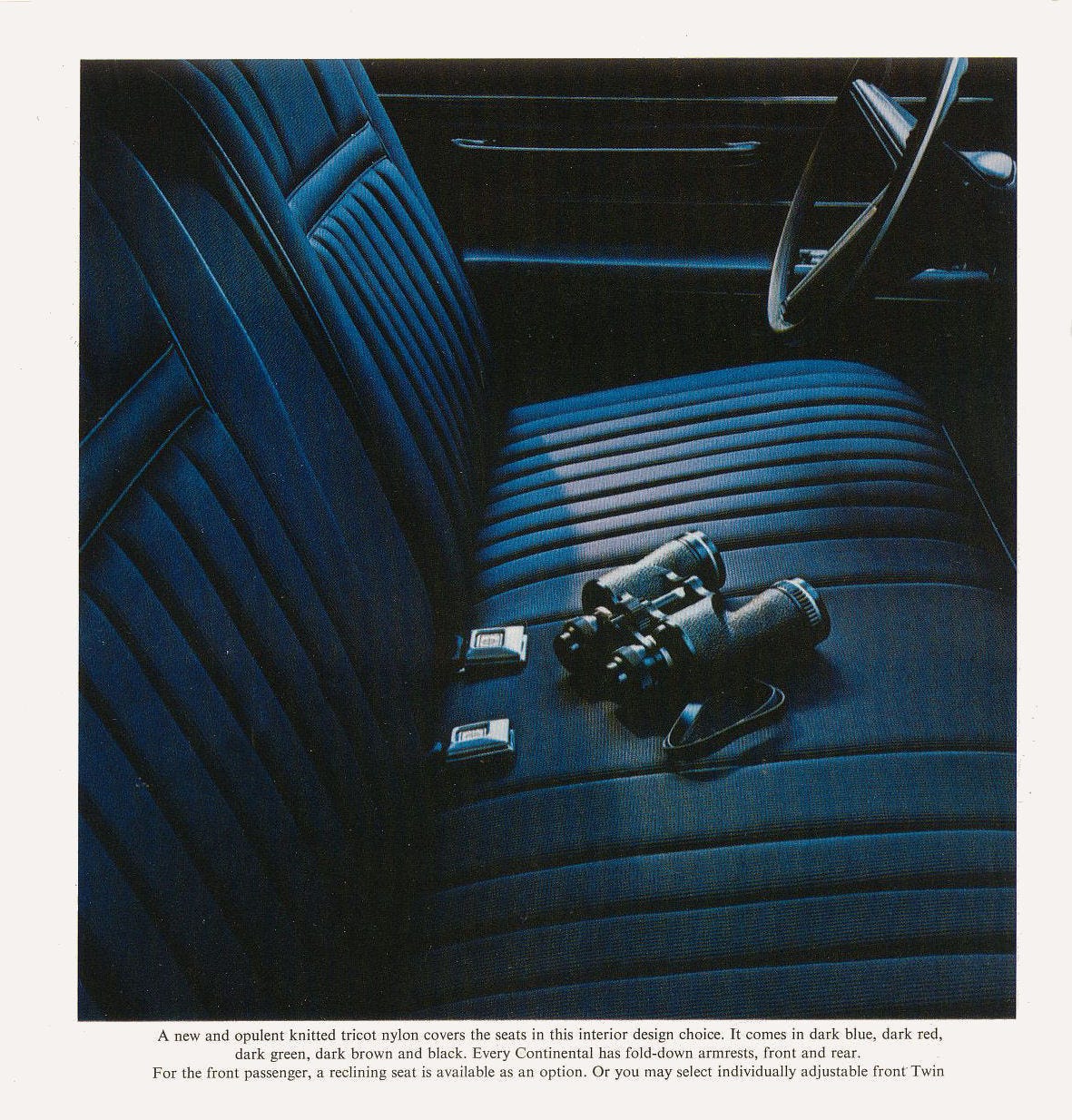
Ford also offered blue interiors for their upscale Lincoln and Mercury lines. As an executive of refinement, Schramm may have been driven in one of these luxury barges. Opulent, yes, but probably too dark:
Chrysler
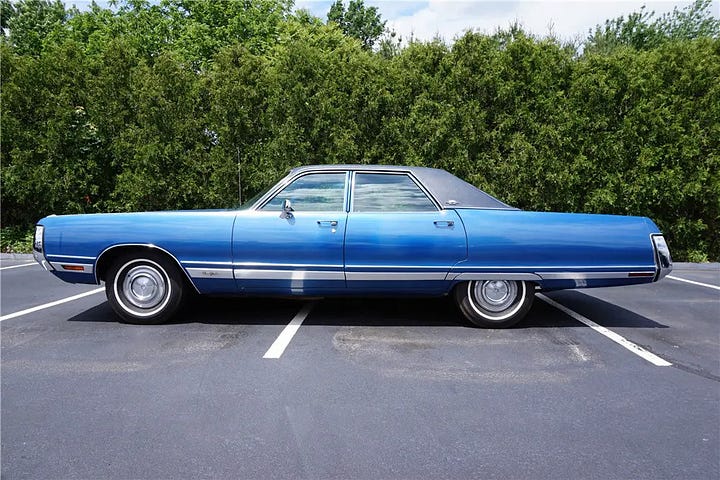
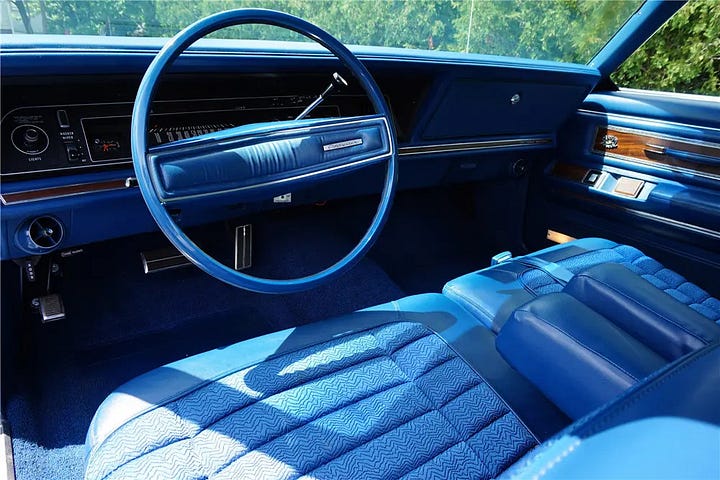
Chrysler makes its case on the strength of sheer odds. Its New Yorker was the top-selling car in the American market in 1971 making it very likely Schramm at least saw one in a parking lot at the time. Had he seen this fine example from 1972, he might have been inspired:
General Motors
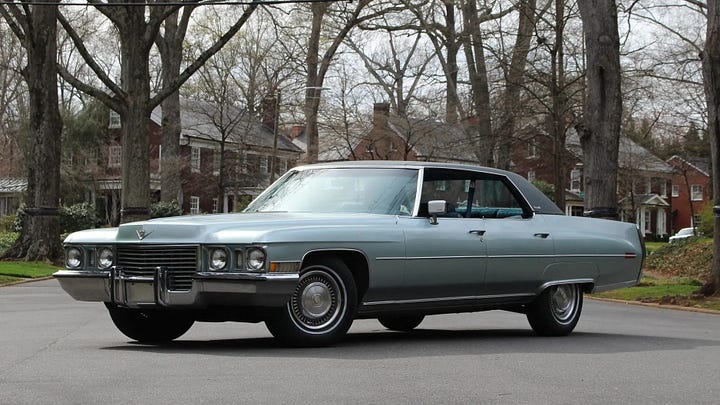
Another popular version of the legend says the car was from GM’s flagship line, Cadillac. A Caddy would be right at home on the streets of Dallas in the 1970s and plenty of them had blue interiors. This 1972 example from Bring a Trailer has a familiar shimmer in the sunlight:
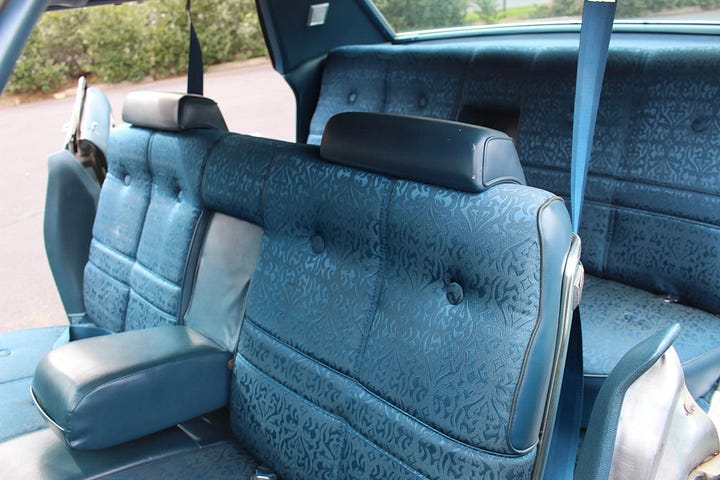
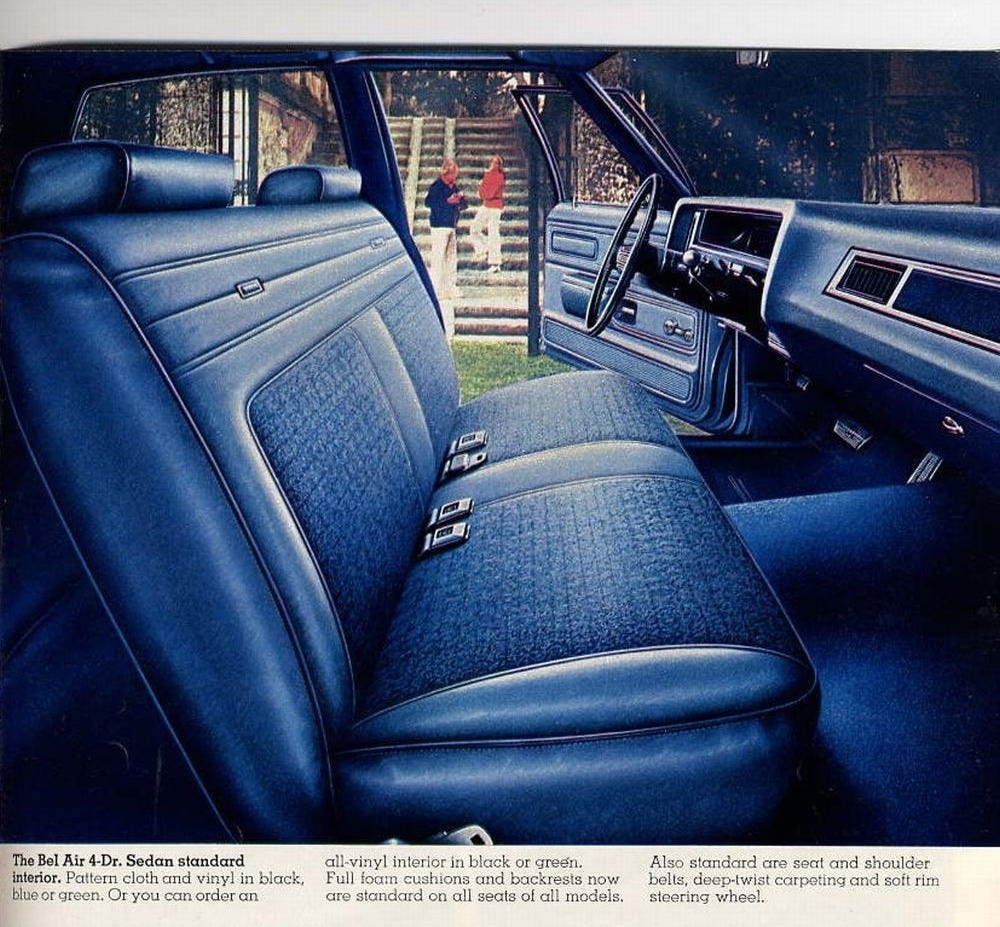
Cadillac or not, there’s a decent chance at least one of GM’s sprawling brands was the inspiration for “Cowboys Star Blue.” Like the New Yorker, Chevrolet’s Impala was once a top seller and therefore ubiquitous in the mid-seventies. Schramm might have strolled past an Impala and caught a glimpse of its glorious blue interior as its owner carelessly wandered off with the door open:
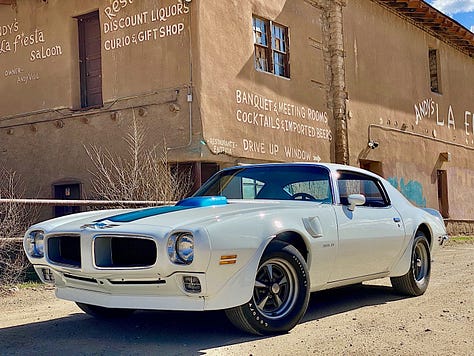
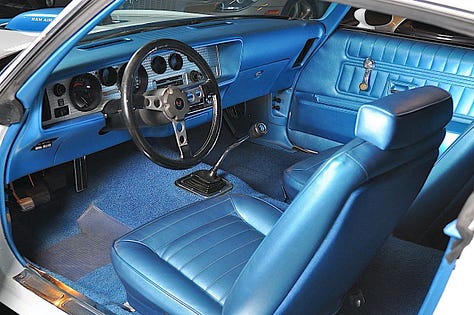
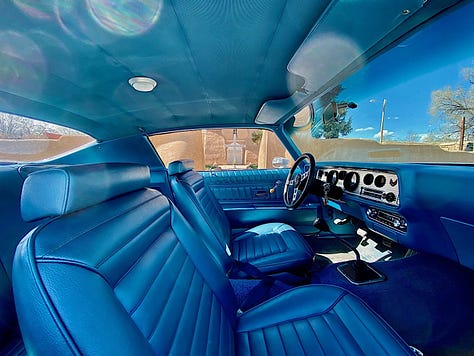
While there is no direct evidence that Schramm was a muscle car enthusiast, Pontiac might have the most jarring case. The blue on this 1970 Firebird Trans Am gets after your retinas.
Buick might not be the most exciting brand in GM’s lineup, but in searching through their brochures and catalogs a sign came along. Sometimes the universe speaks to you.
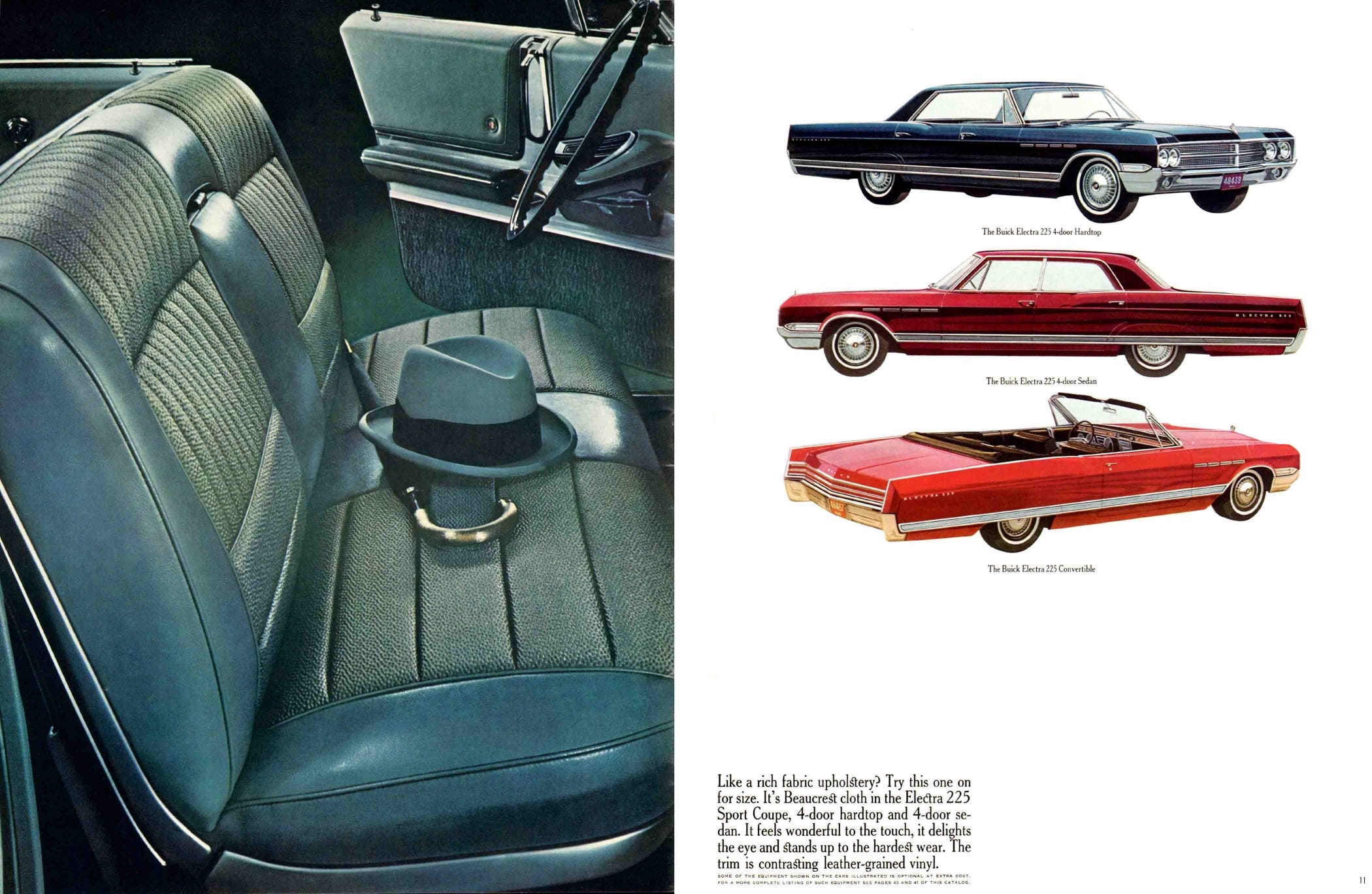
Intentional endorsement or not, fedora enthusiast Tom Landry was known to have driven a Buick at the time in question. For his farewell parade in 1989, he was driven in a special 1954 Buick Skylark with a familiar blue interior. This was years after “Cowboys Star Blue” was put into use, but perhaps the car was chosen due to Coach Landry’s affinity for Buicks. Did Schramm once ride in his Coach’s car and find the color of his dreams?
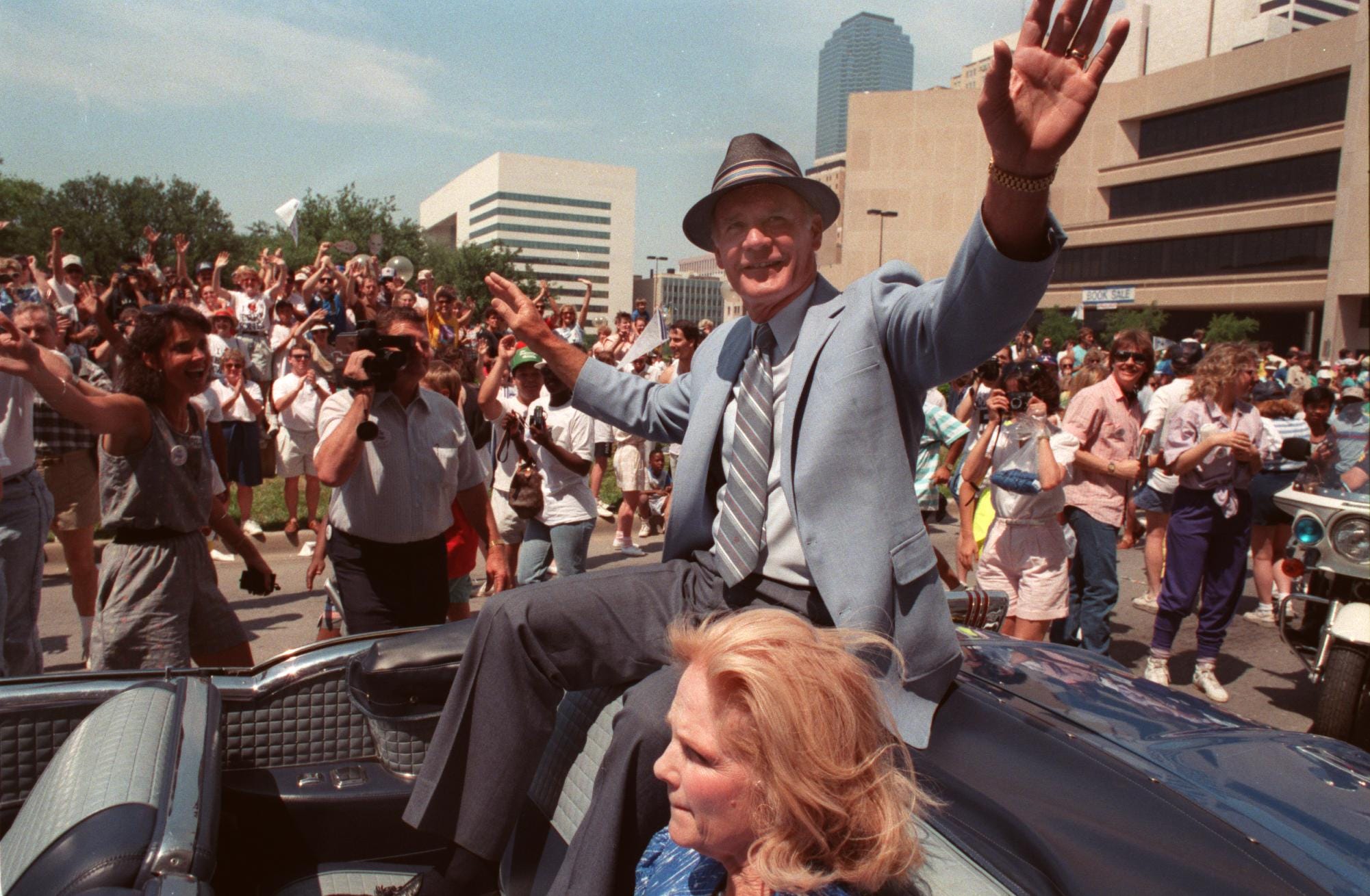
Tex Schramm met his reward in 2003, leaving few clues to the truth behind “Cowboys Star Blue.” Did the message boards get it right? The Mustang and the Caddy each make compelling cases, their blues pop in similar ways. The Buick is more subdued, stately even, but it can be placed at the scene. The only conclusion here is that we lost something as a society when fluorescent blue interiors stopped being a standard option for our cars.
No posts
Comments
Nothing yet. Say the first thing.
Sign in to join the conversation.