
Every film you’ve seen was built by people you’ve never heard of.
Not the director. Not the actor. The people who found the location, dressed the room, designed the light, chose the fabric on the character’s coat. The people who made the world inside the frame look like it was always there, waiting to be discovered, rather than constructed in three weeks on a budget that required fourteen conversations with a line producer.
These people are called department heads. And Oregon has some of the best in the business.
They live here. Sometimes they work here, sometimes they go where the work is, Los Angeles, New York, and they return to Oregon carrying everything they learned: from television stages in Burbank, from Cannes premieres, from Oscar and Emmy ceremonies, from the specific education of building a world for Alexander Payne or Jeremy Saulnier and they bring that home.
There are many, but let’s start with production designer Ryan Warren Smith.
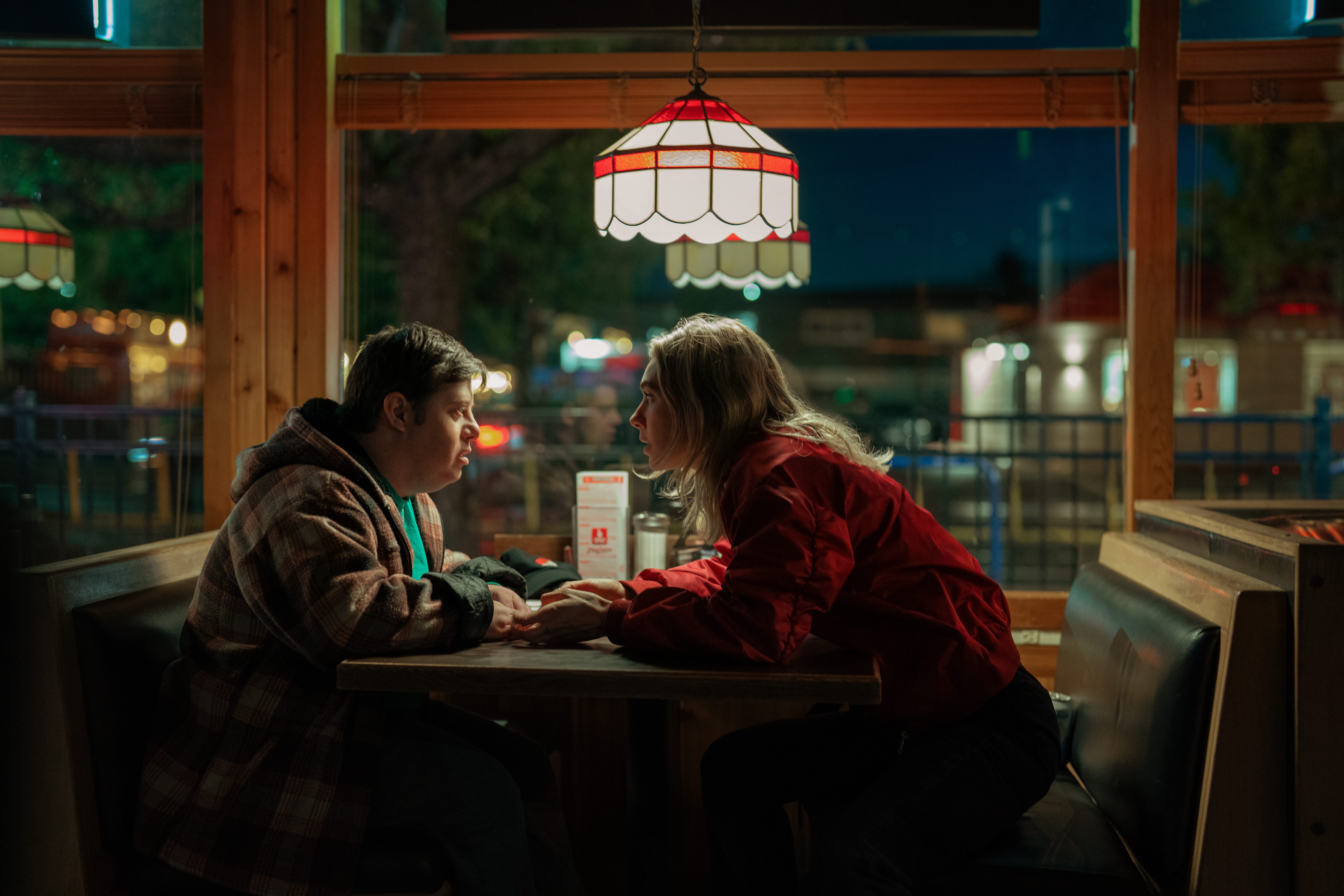
He grew up in Colorado, came to Oregon, and got his start as an on-set dresser working for Gus Van Sant and Sean Penn. Gus, on his own, did more than anyone to establish Portland as a serious production environment before the rebate programs existed. His first job as production designer was Kelly Reichardt’s Wendy and Lucy, which premiered at Cannes and received two Independent Spirit nominations including Best Feature. He has designed the visual world of Michelle Williams wandering Portland’s streets, of Anton Yelchin and Patrick Stewart locked in a rural Oregon venue in Green Room, of Charlie Plummer working the backstretch at Portland Meadows in Lean on Pete, of Mahershala Ali navigating the Ozarks in True Detective Season 3 for HBO, and of Paul Giamatti and Dominic Sessa in The Holdovers - five Academy Award nominations, one win, Alexander Payne directing.
Schuyler Telleen grew up in Boulder, studied at Western Washington University, trained at the New York Conservatory of Dramatic Arts, worked as a graphic designer on Mad Men, Veep, Parks and Recreation (where he created the Ron Swanson Pyramid of Greatness) and Glee, then found his way to Oregon.
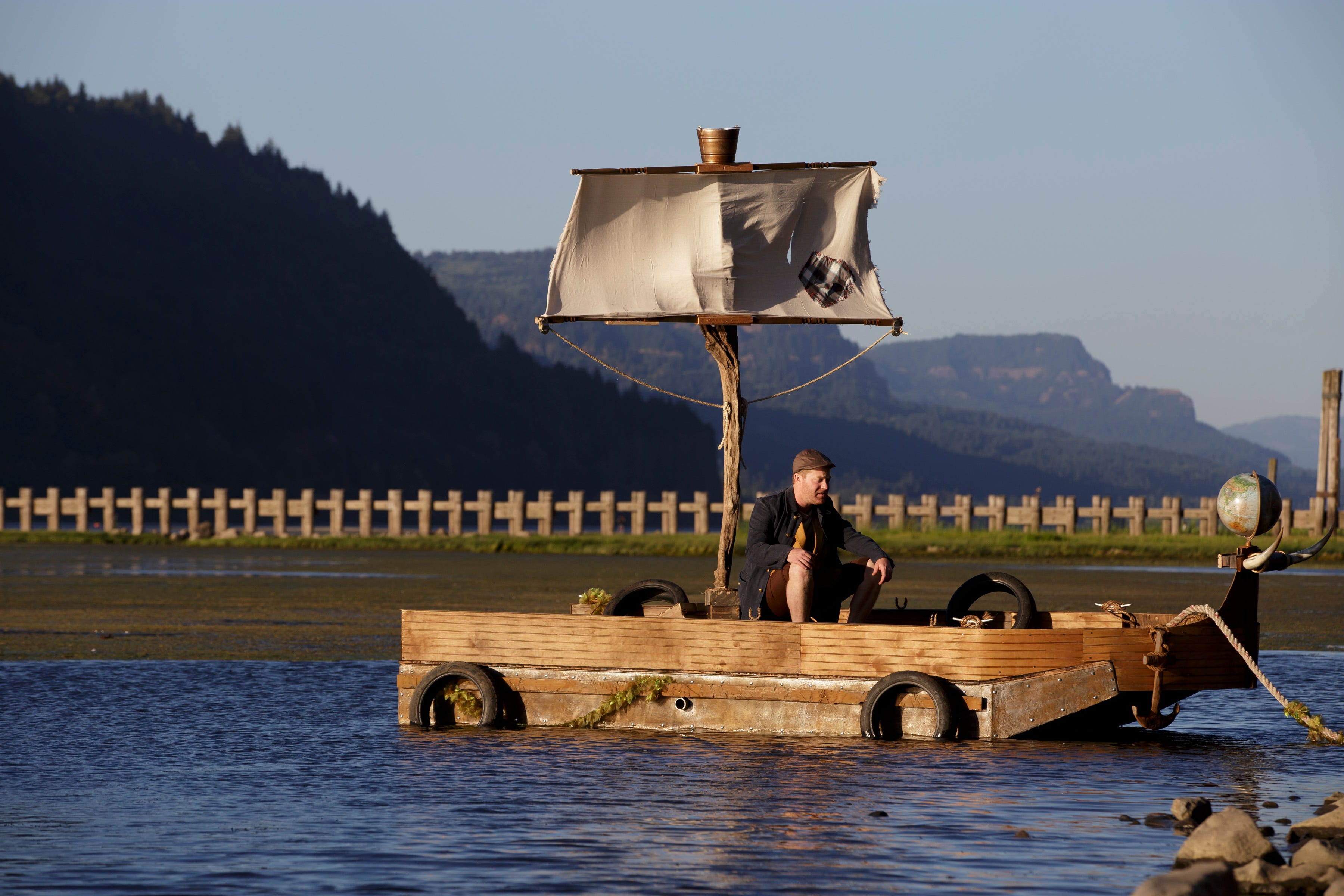
He designed Portlandia. First as art director, then as production designer. Five Emmy nominations. Two Emmy wins. Art Directors Guild Award of Excellence. His signature approach - what he calls “aesthetic litter,” the deliberate scattering of knickknacks and lived-in texture that makes audiences forget they’re watching a constructed environment - found its perfect canvas in Portland.
Then Shrill. Then Trinkets. Then American Vandal Season 2. All in Portland, all using the crew infrastructure that Portlandia built.
He has also worked internationally - New Zealand, Ireland, Spain, Canada - directed Super Bowl halftime specials for Pepsi, designed worldwide campaigns for Siemens, and has handed a live alligator to Jeff Goldblum, which is not a metaphor and requires no further elaboration.
Amanda Needham grew up in the Portland area in circumstances that would have derailed most careers before they started. She started building her industry credentials from scratch at a very young age, with the industriousness of someone who understood from early on that nothing was going to arrive automatically.
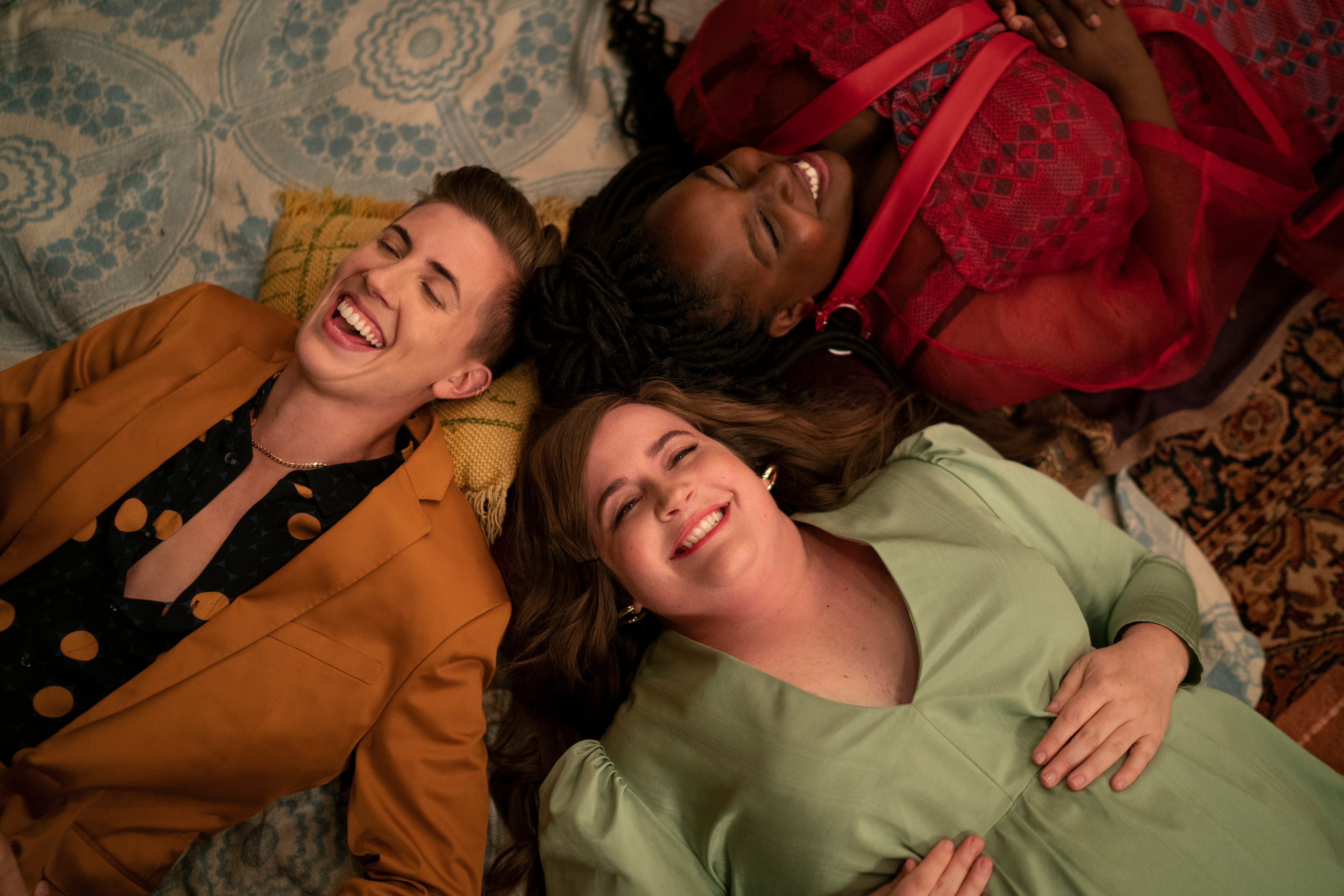
Her second film was Some Days Are Better Than Others, which starred Carrie Brownstein. They clicked. When Portlandia began, Brownstein called her for the pilot. The pilot’s episode “Farm” - the chicken with papers, the feminist bookstore, the visit to the farm that will raise your dinner - won Needham her first Emmy. She won a second. And then the show went eight seasons and she dressed every character in it: cult members, punk rockers, insane bike messengers, Japanese club kids, the rotating cast of Portland archetypes that the show assembled with the affection of people who actually live among them.
She also dressed the wardrobe of Wendy and Lucy, Paranoid Park, Green Room, Baskets, Documentary Now, and Shrill. PAM CUT recognized her with a Cinema Unbound Award, describing her career with the phrase: “day by day, stitch by stitch, she reshapes the mold of what’s possible in fashion.”
The pattern is already visible, and we’ve only covered three people.
Portlandia produced Telleen and Needham simultaneously, because the show ran long enough and at high enough quality to develop their craft to Emmy level. Shrill then inherited both of them - Lorne Michaels’ Broadway Video, which had produced Portlandia, hired the same team for the new show because the relationship and the trust already existed.
Production follows talent.
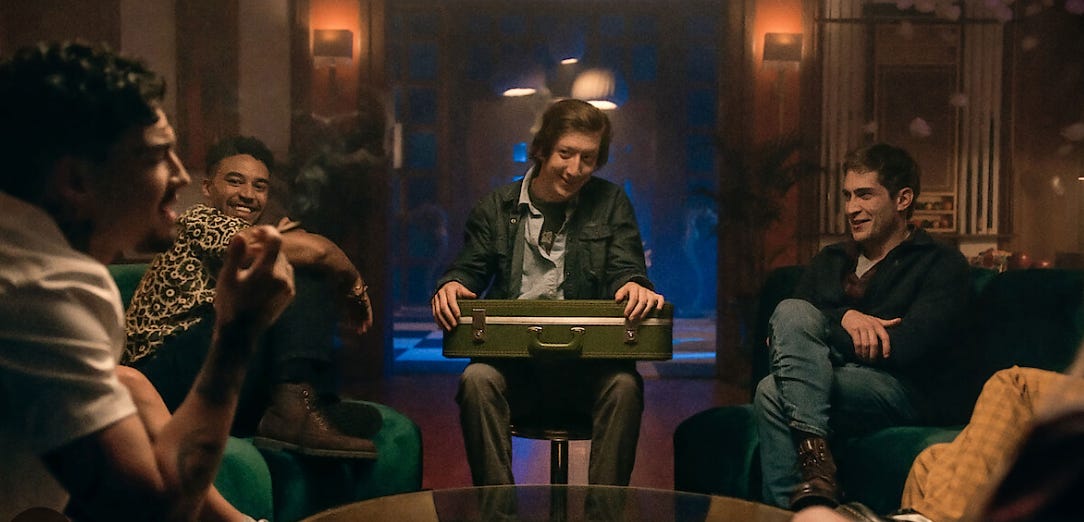
Kevin Fletcher came to film through still photography. He has a BA from Lewis and Clark and an MFA in Photography and Related Media from the School of Visual Arts in New York. He describes himself not as a “master of light” - the traditional DP’s self-conception - but as “a conduit of a director’s vision, a conduit of the script, a conduit of the production design and location.” His still photography work, the Avenue of Roses series documenting 82nd Avenue as Portland grew and changed around it, won first place in the LensCulture Street Photography Awards in 2020.
His cinematography work: It’s What’s Inside, Greg Jardin’s debut feature, shot in Portland in eighteen days, premiered in Sundance’s Midnight section in 2024, acquired by Netflix - the largest acquisition deal of that Sundance Film Festival. Outdoor School, Ime Etuk’s autobiographical drama about Black boyhood in 1990s Portland, world-premiered at the American Black Film Festival in Miami and sold out its Portland homecoming at Portland Panorama. A Simple Machine, shot in Portland, by Portland filmmaker Mark Alan Hoffman. Paradise Records, Logic’s self-distributed feature, shot in St. Helens, Oregon.
His commercial reel includes campaigns for Netflix, Nike, Adidas, Audi, Old Spice, and GMC.
Erin Orr is a costume designer who began her career co-producing David Gordon Green’s debut feature George Washington, which received four Independent Spirit Award nominations and the NY Film Critics Circle Award for Best First Film. She designed the costumes for Green’s follow-up All the Real Girls, which premiered at Sundance in 2003. These are two of the most carefully observed American independent films of the early 2000s, both made in North Carolina with the same attention to place and specificity that Oregon’s best work also demonstrates.
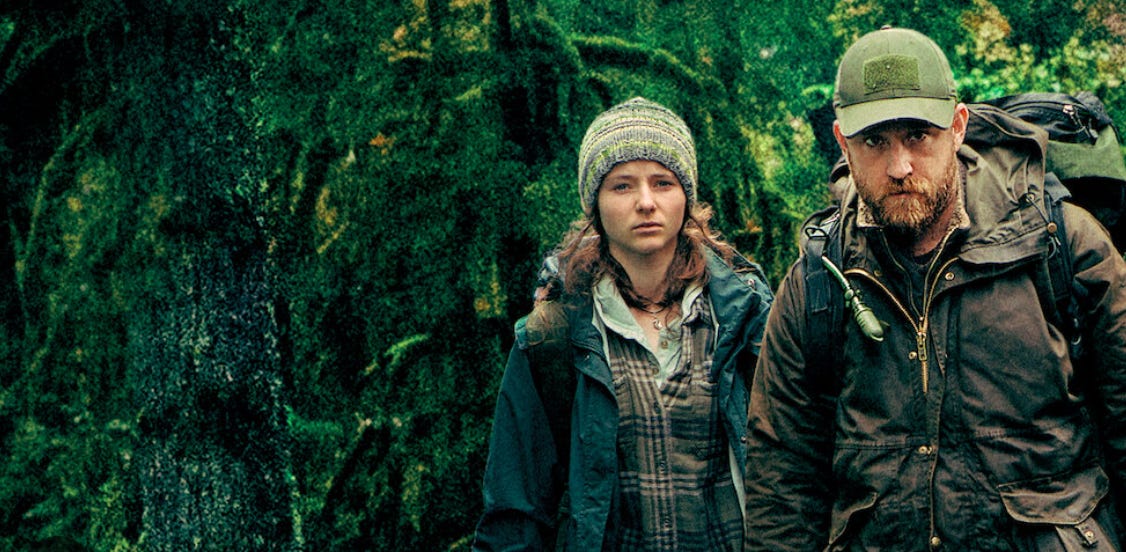
She designed the costumes for Leave No Trace. Debra Granik’s film, shot in the Oregon forest, 100% on Rotten Tomatoes, Sundance premiere, Cannes Director’s Fortnight. The specific textures of the characters’ clothing, chosen to communicate a life lived outside conventional systems, in the woods, in the rain, with the deliberate minimalism of people who carry only what they need, are Orr’s work.
Most recently, she designed Twinless, written and directed by James Sweeney and starring Dylan O’Brien, which won the Audience Award at the 2025 Sundance Film Festival and the SXSW award winning feature Wishful Thinking with Lewis Pullman and Maya Hawke.
Adam Reamer holds an architecture degree from Penn State and came to production design through a period of design-build architecture and interiors on the West Coast. He designed Everything Sucks! - Netflix, set in 1996 Boring, Oregon, shot at Gladstone High School in the Portland area - and The OA for Netflix, and Pretty Little Liars: The Perfectionists, which also shot at Gladstone High. He designed Michael Mohan’s The Voyeurs for Amazon Studios, and Insidious: The Red Door, and Immaculate starring Sydney Sweeney, and Summering for Bleeker Street.
The thread through those credits is the Oregon ecosystem at work in ways that extend far beyond the state’s borders. Mohan directed Everything Sucks! in Oregon, where he discovered the strength of the local film community. Reamer designed it. Mohan later made The Voyeurs for Amazon with Reamer as his production designer again. And Immaculate, the horror film produced by and starring Sydney Sweeney - who appeared in Everything Sucks! before she became Sydney Sweeney in the way she is now Sydney Sweeney - was also designed by Reamer.
The Oregon production, years later, is still generating career capital for the people who made it.
This is the Oregon Creative Matrix.
Not a formal network. Not an organization or a program. A web of relationships built over two decades of productions - Portlandia, Wendy and Lucy, Green Room, Shrill, Leave No Trace, Everything Sucks!, Lean on Pete, It’s What’s Inside, Outdoor School, The Holdovers, Rebel Ridge, Twinless - that pulls the same names back into contact with each other on project after project, in Oregon and outside it, with the trust and shorthand that only comes from years of making things together.
Ryan Warren Smith on the set of Wendy and Lucy with Michelle Williams, then on Green Room with Amanda Needham designing the costumes, both of them building the world of a film in rural Oregon. Kevin Fletcher shooting It’s What’s Inside in Portland, the DP and the director building something on an eighteen-day schedule that Netflix buys. Erin Orr in the Oregon forest with Debra Granik, choosing the coat that communicates an entire life. Schuyler Telleen and Amanda Needham moving together from Portlandia to Shrill, because the relationship is already there, the trust is already there, the knowledge of how this city looks and how to make a set feel like a corner of it is already there.
These are Oregon assets. They live here. They work here. They bring to Oregon productions the accumulated expertise of careers that have spanned Cannes and Sundance and the Oscars and HBO and Netflix and Amazon, and they bring to the productions they make elsewhere the Oregon sensibility - the specific way of seeing place, of building a world that feels inhabited rather than constructed - that they developed here.
Schuyler Telleen, asked about Portland after years of working here, said: “For me, Portland is and always will be a very layered environment. We are messy and we are visceral and we are wonderfully true and honest to ourselves. People are the treasure of the city, and having them available as intimate partners for creative endeavors, you really see that on the screen in every frame.”
You see it on the screen.
And that’s the one thing we can always say is true in this particular Matrix.
No posts
Comments
Nothing yet. Say the first thing.
Sign in to join the conversation.