
Here’s the thing about Portland.
It doesn’t look like anywhere else. And by that we don’t just mean the bridges, or the light, or the very large trees or that particular quality of green that saturates everything west of the Cascades for nine months of the year. We mean the people. The way the city attracts a certain kind of person. The person who doesn’t quite fit the template, someone who is too earnest or too weird or too large or too queer or too into shoplifting or too convinced that bicycle etiquette is the sole key to personal happiness. Portland treats them not as exceptions but as the norm.
Over time, Hollywood noticed and a pattern emerged.
When television writers and showrunners wanted to make a show about misfits finding each other, about the specifically human experience of being too much or not enough for whatever room you were supposed to be in, they keep reaching for Portland. For Oregon. For a very specific real town outside Portland called Boring, which is the most Oregon place name in Oregon and therefore, perhaps, inevitable.
Here are some examples.
Portlandia started it. Love it or hate it, it put the extremes on a national stage. And, in doing so, it made city’s name a media zeitgeist.
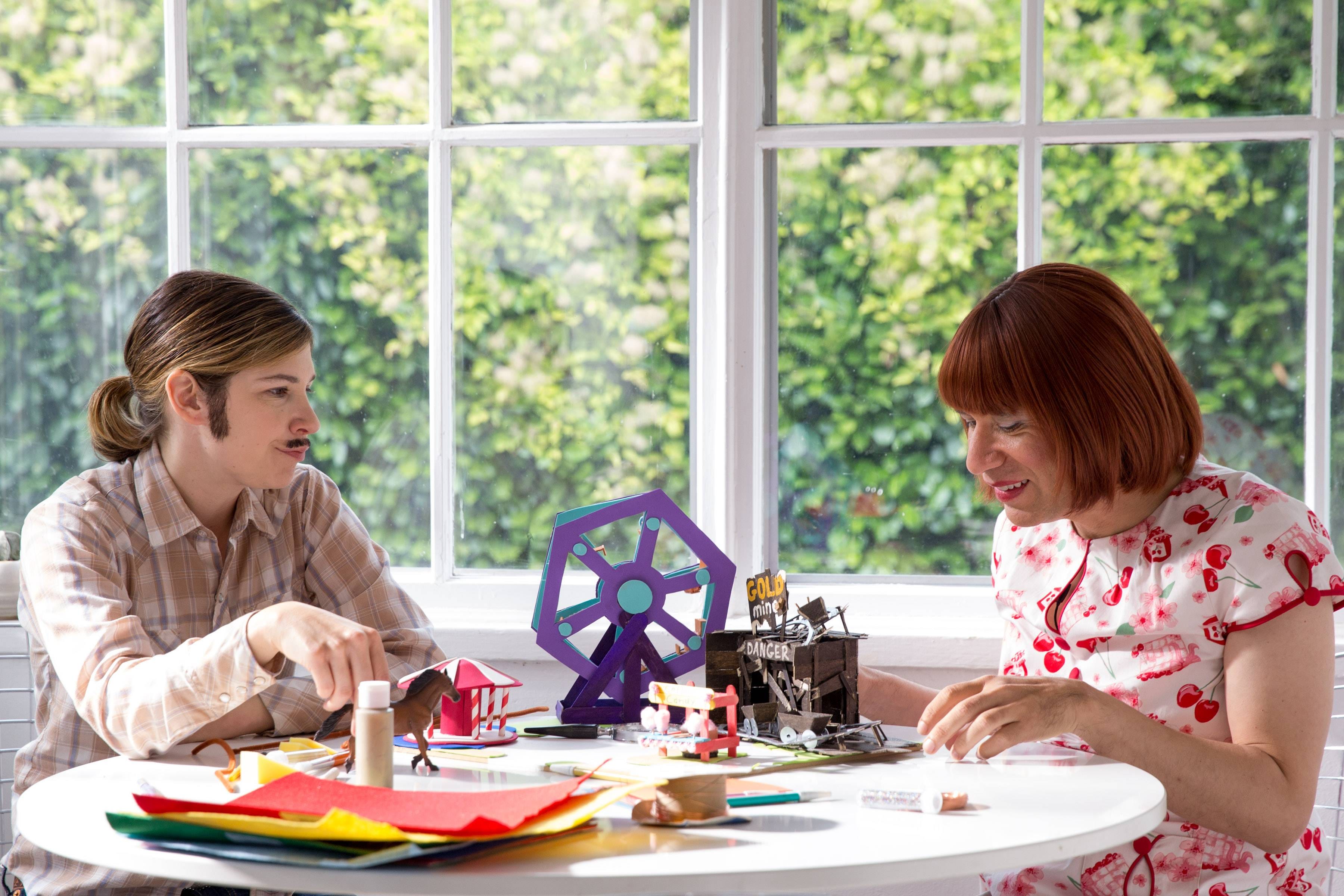
When Fred Armisen and Carrie Brownstein launched the sketch comedy series on IFC in January 2011, they were not exactly making a pitch for Portland as a production destination. They were making fun of their own people, white liberal progressive artisanal locavore demographic that had made the city what it was, with the specific accuracy that only comes from inside knowledge. The show filmed extensively on location: Powell’s Books, Burnside Skatepark, the “Keep Portland Weird” sign across from Voodoo Doughnuts, Lan Su Chinese Gardens, the Vera Katz Eastbank Esplanade, the Portlandia statue on the Portland Building and, in a featured role, Portland City Hall with a former Mayor playing Kyle MacLachlan’s assistant.
Eight seasons, 2011 to 2018.
What Portlandia did, beyond the economics and the cultural satire, was prove something to the television industry: Portland was not just a place where you could shoot a show, Portland was a place that was a show. The city had a sensibility so specific, so legible, so ready to be pointed at and recognized, that it could carry an entire comedy on its own. The chicken with the proper papers. The feminist bookstore. The bird being put-on-it.
After that, several producers wanted what Portlandia had created: A place where their misfits felt normal. The Dream of the 90s.
Lorne Michaels’ Broadway Video produced Portlandia. This matters for what came next.
In 2019, Lorne Michaels’ Broadway Video executive produced Shrill for Hulu.
Not a coincidence. The relationship between Portland and Broadway Video, built through Portlandia, produced a trust that became repeat business. Aidy Bryant, Saturday Night Live cast member, co-creator and star of the show, pushed for Portland. “Probably my favorite part of making the show is going to Portland every year and using that to build the story around,” she said when the show ended. Lindy West, whose 2016 memoir Shrill: Notes from a Loud Woman was the source material and who grew up in Seattle before moving to Los Angeles, told OPB: “Portland’s not exactly Seattle, but it still feels like home to me in a way that the rest of the country doesn’t.”
(And who in Portland would not celebrate Portland not exactly being Seattle? Far from it, it’s what we strive for!)
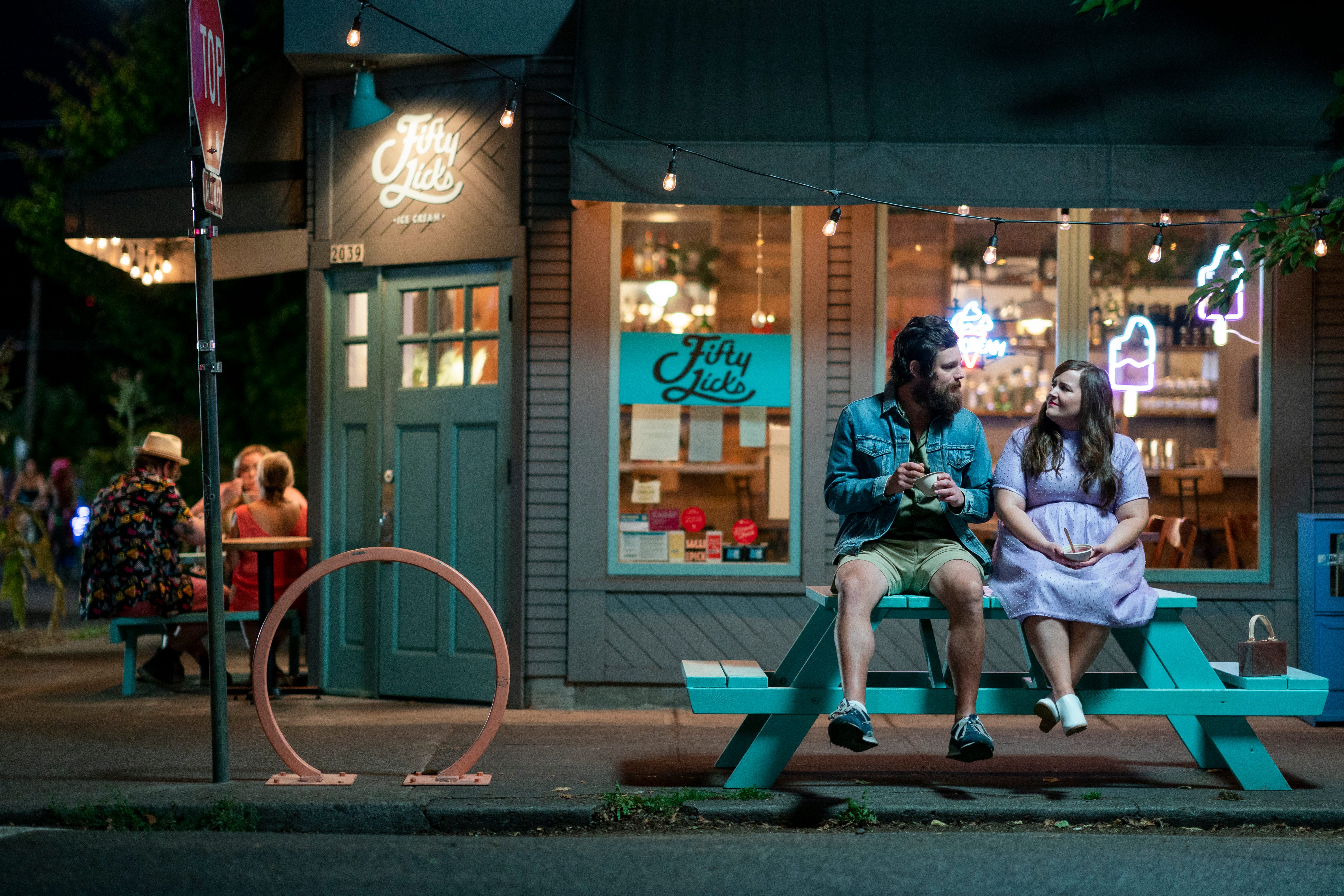
The show filmed entirely in Portland, across three seasons, from 2018 to 2021. The Willamette River. The Fifty Licks ice cream shop. Portland’s White House bed and breakfast. The nightclub Holocene, converted into a hair salon for the show’s fictional version of it. The show’s Emmy-winning production designers and costume designers were local (Schuyler Telleen and Amanda Needham, both of whom had also worked on Portlandia) both part of the crew ecosystem that two decades of consistent production work had built here.
Shrill is a show about a young woman, a journalist at a Portland alt-weekly, who is perceived as overweight, constantly policed about her body, and who decides, over three seasons of being underestimated and patronized, to become exactly herself. It is a Portland show in the deepest sense: it is about refusing to be smaller than you are. It is about a city that, as the creators kept saying in interview after interview, makes space for people who don’t fit.
The pool episode, a season one set piece filmed at an actual fat pool party in Portland, in a real community space, with real Portland people, became one of the most talked-about sequences in recent television comedy. Because it was real. Because Portland has actual fat pool parties. Because the city that was making the show was also living inside it.
Everything Sucks! arrived on Netflix in February 2018, set in 1996 in Boring, Oregon.
Boring is real. It is an unincorporated community about twenty miles southeast of Portland, named after the pioneer William Harrison Boring, population small, sensibility enormous. The creators, Ben York Jones and Michael Mohan, had originally planned to film in Vancouver and just call it Boring. Then they scouted Oregon, found the local film community, found Boring itself, and changed their minds. “It’s just a beautiful place to set a show,” Mohan said. “The whole goal of the show is to make it as honest as possible, so you might as well just go with that authenticity.”
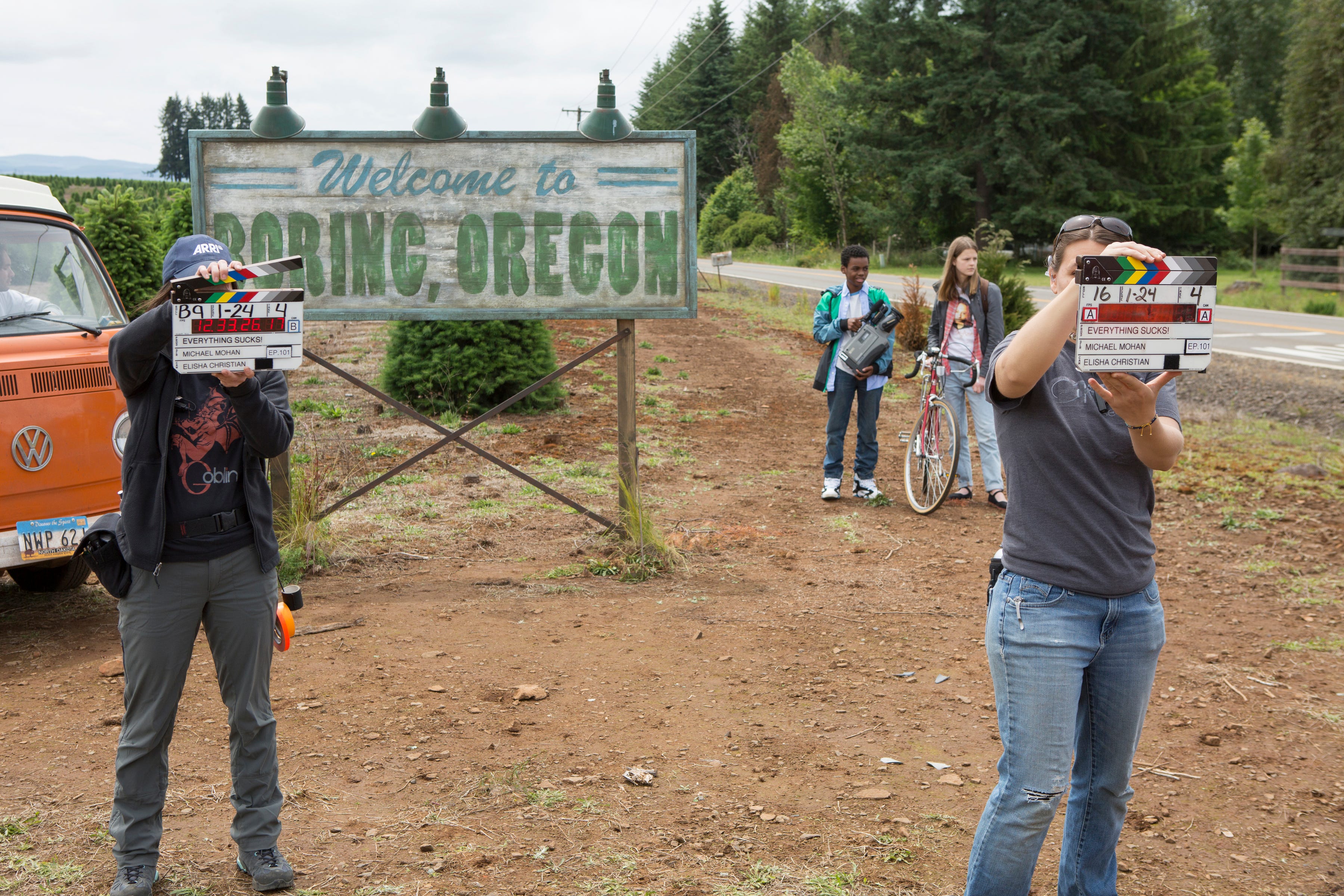
The show actually filmed in Oregon City and the surrounding area - Gladstone High School serving as Boring High, a school that also hosted American Vandal Season 2 and Trinkets in the same years, becoming a minor landmark of Pacific Northwest teen television - but the spirit of Boring, Oregon permeates every frame. It is a show about the AV club and the drama club and the specific social archaeology of being fourteen in 1996, when you could be weird without the internet yet having an opinion about it. Jahi Winston as the nerdy lead. Peyton Kennedy as the principal’s daughter figuring out her sexuality. A young Sydney Sweeney in an early role, before she became Sydney Sweeney in the way she is now, you know, Sydney Sweeney.
Netflix cancelled it after one season (which remains one of the streamer’s more baffling decisions and which inspired a genuine fan campaign to save it). The show was, its devotees argued correctly, doing something precise and strange and very specific - a teen comedy that earned its sincerity - and it deserved more than ten episodes. It did not get them. The misfit show about misfits got cancelled, which is perhaps appropriately on-brand.
What it left behind: a demonstration that a show set in the actual specific texture of small-town Oregon, in the actual weird specific town of Boring, with the actual weird specific aesthetic of the (dream of the) mid-nineties Pacific Northwest, could land. Could find its audience. Could be the thing its creators intended it to be, even if the platform didn’t quite know what to do with it.
Trinkets ran for two seasons on Netflix, 2019 to 2020, and it is the most straightforwardly Portland of these shows in its geography.
Also shot at Gladstone High School, as well as Oaks Amusement Park, in Milwaukie and Clackamas and downtown Portland and Sellwood, Trinkets used the real neighborhoods, the real streets, the real amusement park that has been operating continuously on the banks of the Willamette since 1905. This is the kind of detail that makes production designers cry with gratitude.
Based on the young adult novel by Kirsten “Kiwi” Smith, who also created the series with Amy Andelson and Emily Meyer, the story was about three teenage girls: a grieving outsider from New Mexico, a academically driven kid from a struggling family, a kleptomaniac from a wealthy one who find each other at a Shoplifters Anonymous meeting and form the kind of friendship that can only happen between people who have no business being friends.
The show ran two seasons, was renewed and then concluded. Both seasons shot in Portland. Both seasons used the Oregon incentive. Both seasons added to the infrastructure of a crew ecosystem that, by this point, had been building for two decades and knew how to make great television in the Pacific Northwest and anywhere else for that matter.
Four shows. One city. Or, more precisely, one state; Boring is not Portland, Gladstone is not Portland, Clackamas is not Portland, but they are all Oregon.
What connects them is not genre exactly. Portlandia is sketch comedy. Shrill is a fictionalized non-fiction half-hour. Everything Sucks! is period teen drama. Trinkets is YA friendship narrative. They have different tones, different networks, different target audiences, different reasons to exist.
What connects them is a place that has decided to just depict itself.
With provable success.
And a crew base that makes that possible.
No posts
Comments
Nothing yet. Say the first thing.
Sign in to join the conversation.