
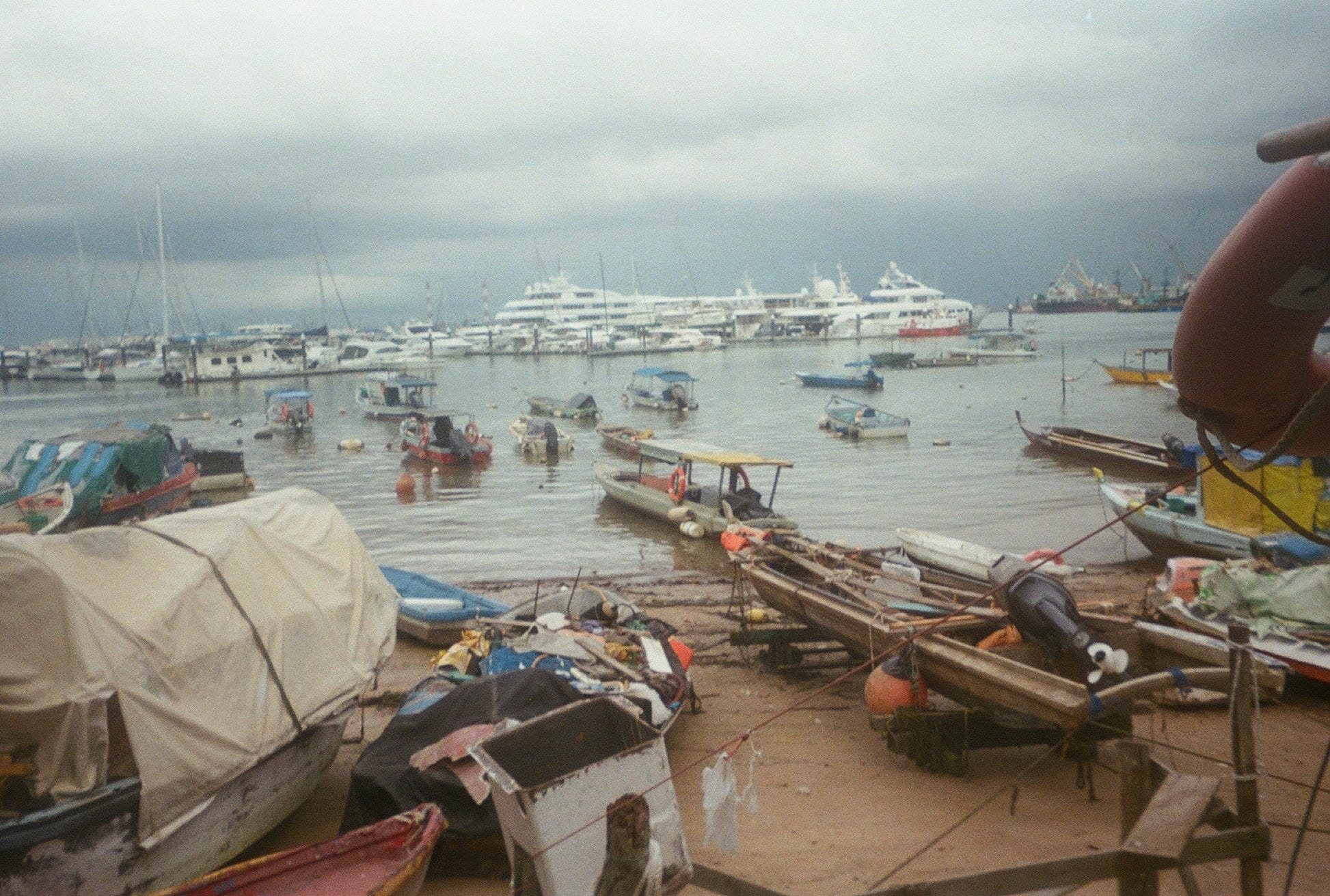
Every few years, Singapore gets a new set of renderings. Glass towers where kampungs stood. Boardwalks where jetties used to be. Old names folded into new branding, places called “rejuvenated,” “unlocked,” “reimagined,” as if they’d been waiting, empty, for someone to notice them.
Redevelopment has become Singapore’s background rhythm: steady and confident, even when the people who know these shores best are missing from the score. Most of the time, the logic is presented as common sense: land is scarce; the city must adapt.
But follow these plans along the coasts, forests, and islands, and a different picture appears. Communities who have lived with these places for generations are often left watching their worlds get redrawn, in a language with little room for them.
For a long time, these shores and islands weren’t leisure backdrops or future “assets.” They were places of work, dwelling, and kinship, known in detail by people who read the weather, the seasons, and the shifting ground as a matter of survival. Among them were Orang Pulau communities, whose lives were bound closely to the sea and the islands around Singapore’s coasts.
Today, almost all Orang Pulau descendants live on the mainland. Relocation and reclamation moved families inland and reshaped the shoreline behind them. Some former island homes are now industrial zones; others were folded into tourism stories; still others, like Pulau Seletar, sit quietly on planning maps, waiting their turn.
So the question isn’t really whether Singapore should redevelop. It’s how. Whose knowledge gets drawn on, and what kinds of relationships to land and water we’re willing to recognise as real.
The Greater Sentosa Master Plan is one way of seeing, not the only example of redevelopment, but a clear case study of how these projects tend to get framed. On paper, GSMP promises “next-generation experiences,” “reimagined” coastlines, and a more “nature-centric” destination (Sentosa Development Corporation, 2026).
Brani, in this framing, becomes one of the largest sites for “game-changing attractions.” Pulau Seletar sits inside the Simpang planning area, tied to the futures of Sembawang or Yishun. Islands rarely get presented as repositories of history and culture in their own right, or as nodes in older regional networks across the Nusantara. They show up as assets to be optimised, sorted into categories never built with them in mind.
Coastal and Indigenous communities appear, if at all, as a brief nod to “earliest inhabitants.” Their knowledge of how these places flood, erode, and recover isn’t treated as central environmental data but as heritage material, documented after decisions have already been made.
From the top down, it’s easy to focus on phasing, budgets, and visitor numbers. From the ground, a different set of questions comes into view.
What does it mean to redesign a shoreline, or clear a forest, without seriously involving the people who once lived on that land? What happens when impact is measured mainly in engineering and ecological terms, while overlooking those who’ve watched a bay silt up, or a patch of woodland become home within a single lifetime?
You can see this tension at Maju Forest and Gillman Barracks. At Maju, near Sunset Way, about 15 hectares of regenerating secondary forest have been earmarked for housing. HDB plans to keep part of the forest and a freshwater stream; nature groups have welcomed those safeguards, while noting what’s lost when decades of growth get treated mainly as a constraint to be trimmed elsewhere.
At Gillman, at least 10 hectares are expected to be cleared, with mitigation including ecological corridors and a retained stream linked into the Southern Ridges. Groups like the Nature Society call these steps in the right direction, while warning that a narrow corridor cannot replace the complexity of a larger forest.
For Orang Pulau families, Gillman and Telok Blangah carry another layer of meaning. In the 1960s, many were relocated from the southern islands into HDB flats there, and the neighbourhood became a place where island communities tried to re-root themselves: carrying sea knowledge into high-rise life, memories of coasts and kampungs into stairwells and corridors. When these forests are reshaped, the impact isn’t only ecological. It touches a social landscape too: the estates where former islanders rebuilt the community, the routes between blocks and hill paths, the gathering spots that helped people adjust to life away from the sea.
Singapore already has a tool that could bridge this gap: the Heritage Impact Assessment framework. On paper, it asks public projects likely to significantly affect heritage sites to undergo deeper consultation with URA and NHB, commissioning independent studies, engaging stakeholders, and publishing findings for feedback.
Used well, that could be powerful: a heritage study asking who lived here, what social life unfolded, whose memories will be affected, not one that simply lists facades and dates. Too often, though, heritage gets treated as a shell: a staircase, a plaque, a conserved structure folded into a new development, while the life that once filled it becomes a paragraph in an appendix.
A truly social assessment would reverse that order, starting from the people and relationships that made a place matter, then asking how much can be carried into whatever comes next. Whether jetties on islands, forests at Gillman, or blocks in Telok Blangah, the value was not only in the physical features but in the lives that grew around them.
Pulau Brani and Pulau Seletar aren’t isolated cases. They sit inside a larger pattern of how Singapore’s islands get imagined and slotted into future plans, showing up first as a planning unit assessed for its potential uses and its role in a wider strategy.
Look at these places only through that lens, and something falls away. For Orang Pulau families and other coastal communities, islands were never simply “land parcels.” They’re where boats were launched, kin were visited, seasons were read; repositories of history, parts of a broader Nusantara world. The same is true of many small islands and green spaces sitting at the edges of planning documents, listed in zoning tables but rarely named in the public story.
None of this is to say development is, in itself, some kind of villain. Many of these families understand better than anyone that change is constant. The problem lies in the method and pace, and in the assumption that technical and economic logic alone are enough to chart the future of these places.
If we are serious about sustainability, development needs to change how it relates to the people who know these places best. That starts with seeing coastal, forest-edge, and Indigenous communities not just as cultural stakeholders, but as environmental partners, whose insight belongs in restoration and risk assessments from the outset, not stitched on afterwards as a gesture of inclusion.
Community memory is a form of data, too. When someone says this cove used to be deeper, that’s information about change, belonging alongside the maps and models, not behind them. Participatory mapping, oral histories, and community-led monitoring aren’t soft extras. They’re part of what serious, climate-resilient planning should look like.
Changing this narrative isn’t an abstract exercise. It begins with how we listen and continues with what we actually do.
Some of that action is already visible around Gillman, Telok Blangah, and Maju Forest. Residents have been submitting feedback on HDB’s studies through its appeal form and signing petitions calling for these forests to be conserved and for agencies to prioritise existing brownfield sites first. A community Telegram group has formed to coordinate this work:
Telegram group: https://t.me/telokblangahmajuforest
Public appeal form: https://form.gov.sg/69f078611d94834b4d48a308
Petition, Gillman and Telok Blangah Forest: https://c.org/2KHnKwmKNm
Petition, Maju Forest: https://c.org/5d2r7Q9DxN
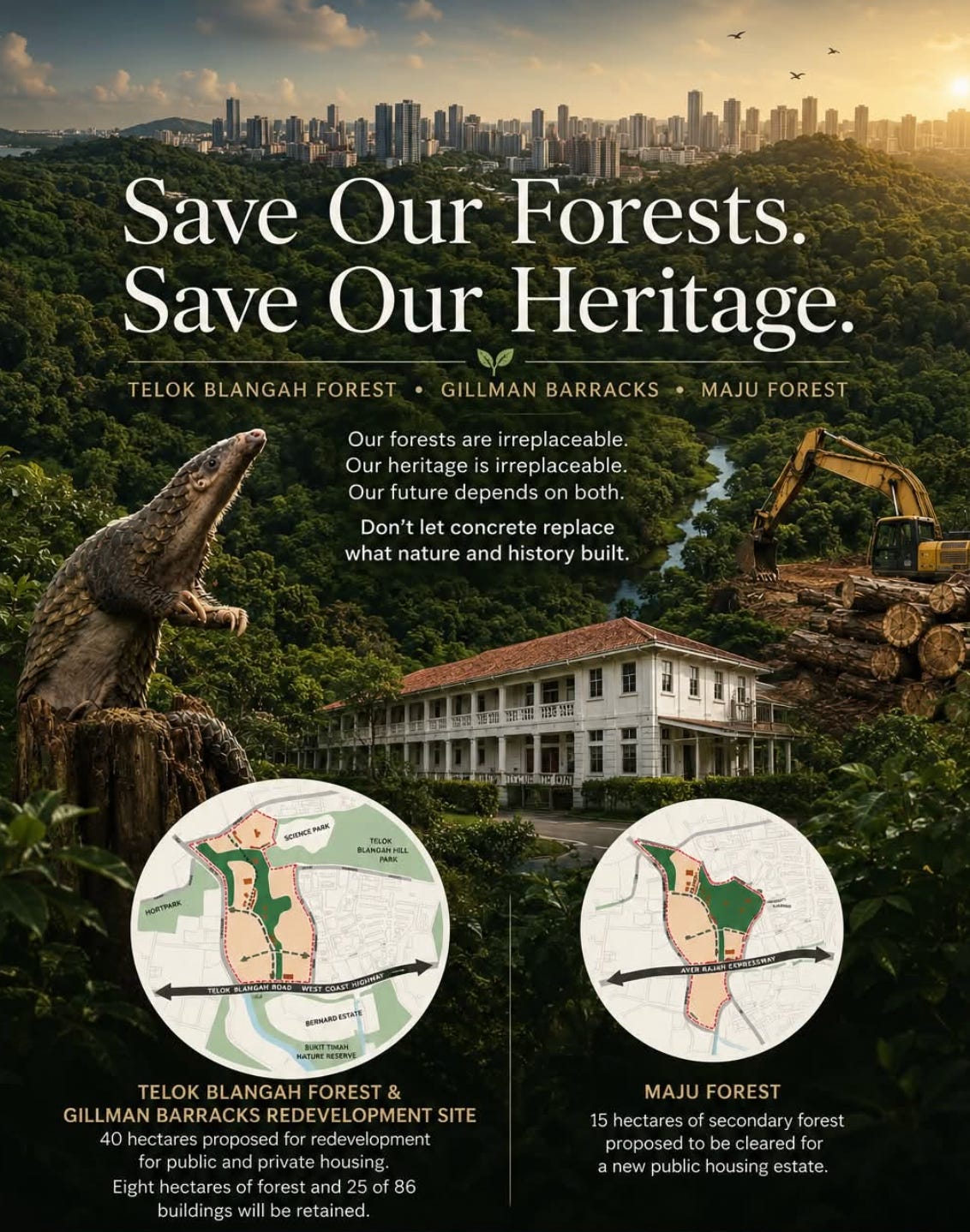
The appeal form closes on 6 August. If this matters to you, it’s worth submitting before then.
Beyond this, residents can raise these questions at Meet-the-People Sessions and public consultations. MPs can push for earlier, stronger engagement with affected communities, not just feedback on a nearly finished draft. Agencies can set aside real budget for community-led work and publish how local knowledge shapes their designs.
Coastal, forest-edge, and Indigenous communities were never meant to be a slogan on a placard or a footnote in an impact assessment. They belong at the centre of any serious conversation about redevelopment, whether that’s Pulau Brani, Gillman, Telok Blangah, Maju Forest, or the many other places sitting quietly at the edges of our maps.
Masterplans will keep getting drawn. What remains open is whose knowledge they carry and whose futures they leave room for. That’s not only a question for planners. It’s a responsibility that belongs to all of us who care how these islands and these forests live on.
Bibliography:
Sentosa Development Corporation’s bold vision for Greater Sentosa: Plans for new icons, reimagined beaches and game-changing attractions envisioned to redefine how Singaporeans play, relax, and bond. (n.d.). Sentosa Development Corporation. https://www.sentosa.gov.sg/resources/sentosa-development-corporation-s-bold-vision-for-greater-sentosa--plans-for-new-icons--reimagined-beaches-and-game-changing-attractions-envisioned-to-redefine-how-singaporeans-play--relax--and-bond/
Raguraman, A. (2026, July 3). Greater Sentosa Master Plan unveiled; new attractions to be ready from early 2030s. The Straits Times. https://www.straitstimes.com/singapore/master-plan-for-greater-sentosa-unveiled-new-attractions-to-be-ready-from-early-2030s
Liam, E. (2026, July 10). Nature groups call for stronger environmental safeguards over Sunset Way, Gillman Barracks housing plans. CNA. https://www.channelnewsasia.com/singapore/gillman-barracks-sunset-way-housing-environment-safeguards-nature-groups-6246426
Sentosa Development Corporation. [MEDIA RELEASE] Sentosa Development Corporation’s Bold Vision for Greater Sentosa: Plans For. 3 July 2026.
June brought many chances for us to gather in different ways, from quiet afternoons in the garden and conversations with youth organisers to walks along the coast and moments of recognition shared over a meal. Across these gatherings, we returned to how stories, relationships, and learning take shape through community, whether in the classroom, by the sea, or around the table. Together, these moments reminded us that the work of holding memory and place is carried not only through programmes and events, but through the people who show up with curiosity, care, and a willingness to listen.
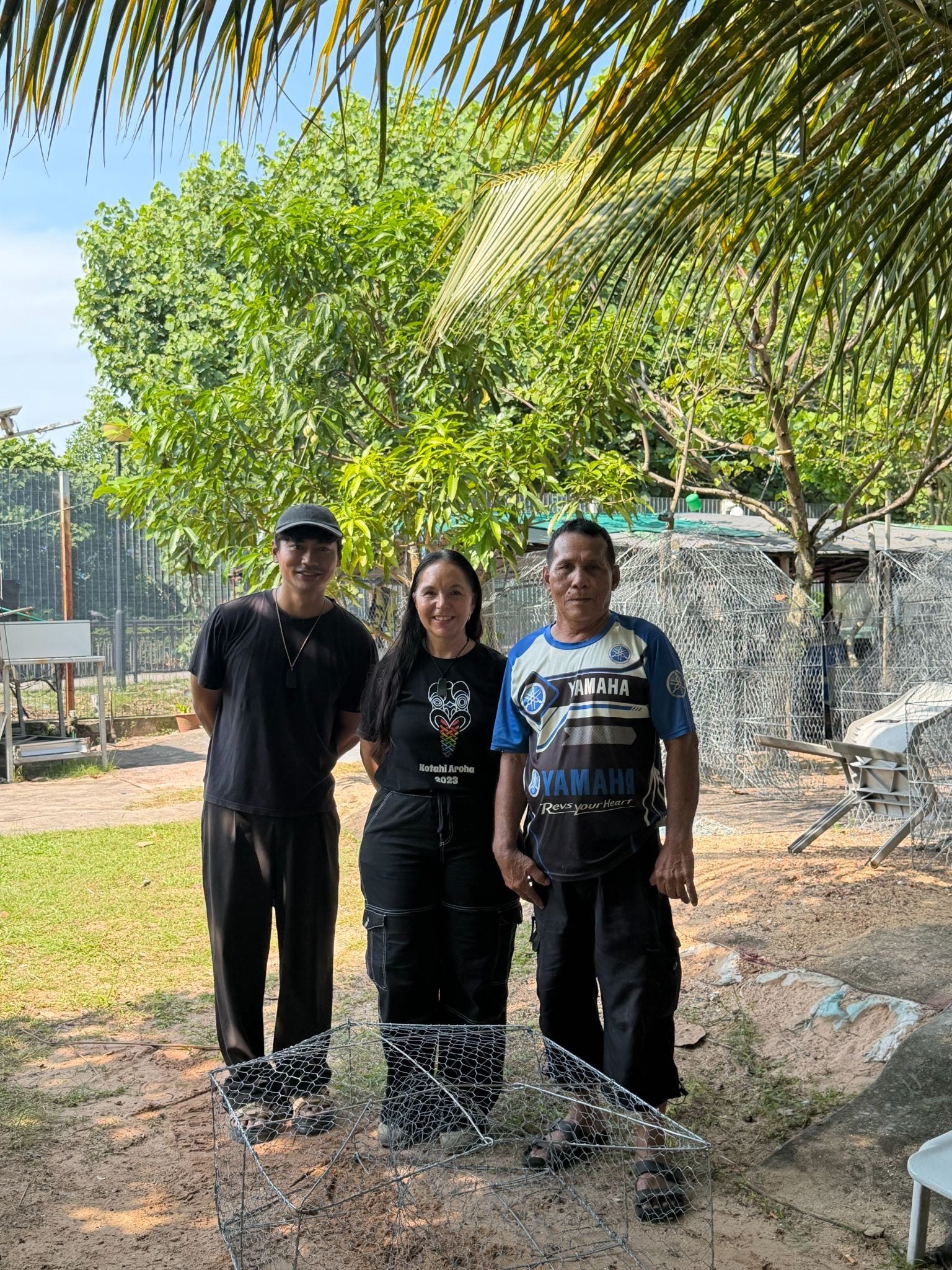
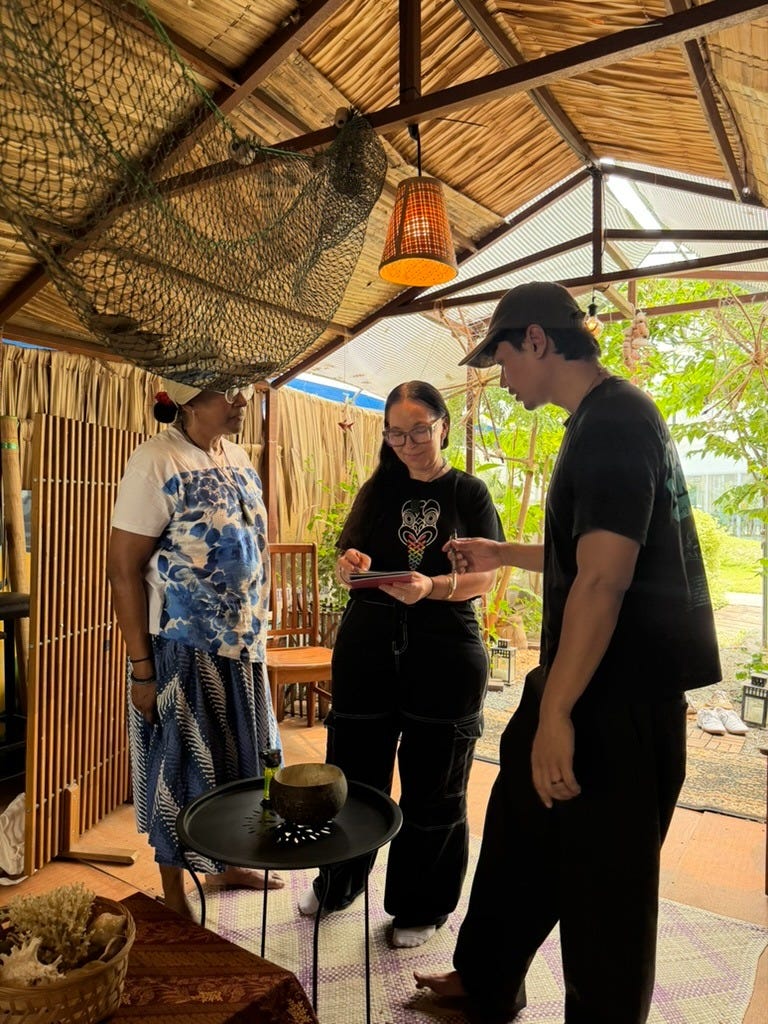
We would like to thank Laina Greene from Angels of Impact and Timmy Smith, a Māori artist, for taking the time to visit us at our heritage garden in West Coast Park. It was a pleasure to welcome them into space and to share a quiet afternoon together by the sea. We appreciated the chance to reflect on how sea and land connect us all, and how these landscapes continue to hold our stories, relationships, and responsibilities to one another.
Our conversation about the importance of community that extends beyond the borders of our waters stayed with us, and we are thankful for the insights, care, and encouragement they brought into the garden that day.
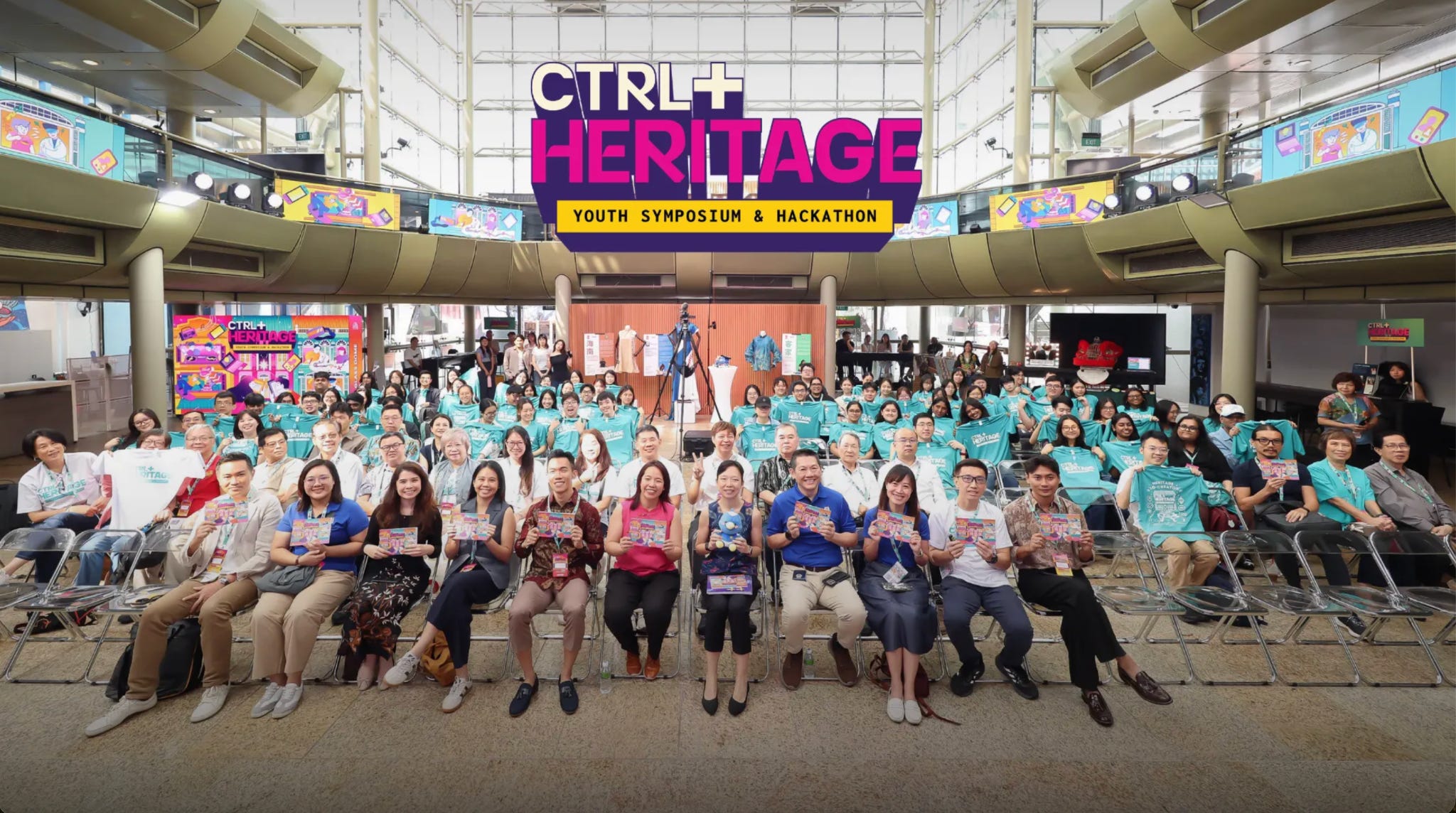
Orang Laut SG and The Black Sampan had the opportunity to be part of CTRL+HERITAGE, a Youth Heritage Symposium & Hackathon organised by Bridging Generations. The gathering brought together heritage advocates, creative practitioners, and cultural thinkers who are exploring new ways of telling and holding stories.
Across the programme, artists, researchers, and community practitioners shared how heritage can be understood, reimagined, and carried forward. It became a meaningful space to reflect on what it means to stay close to our roots.
We were especially encouraged by the many young people who joined us, who were curious, thoughtful, and keen to learn more about the work that we do.
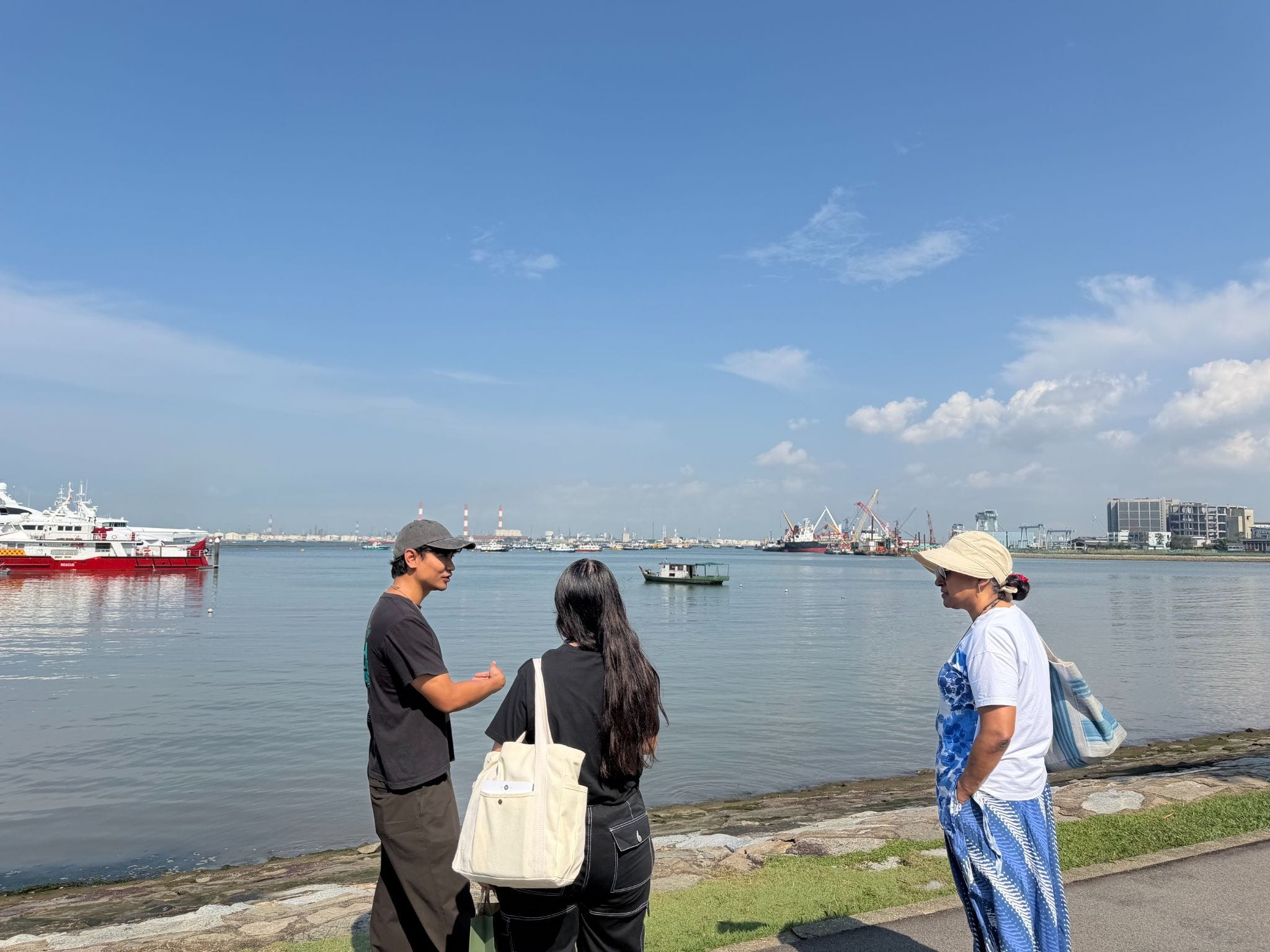
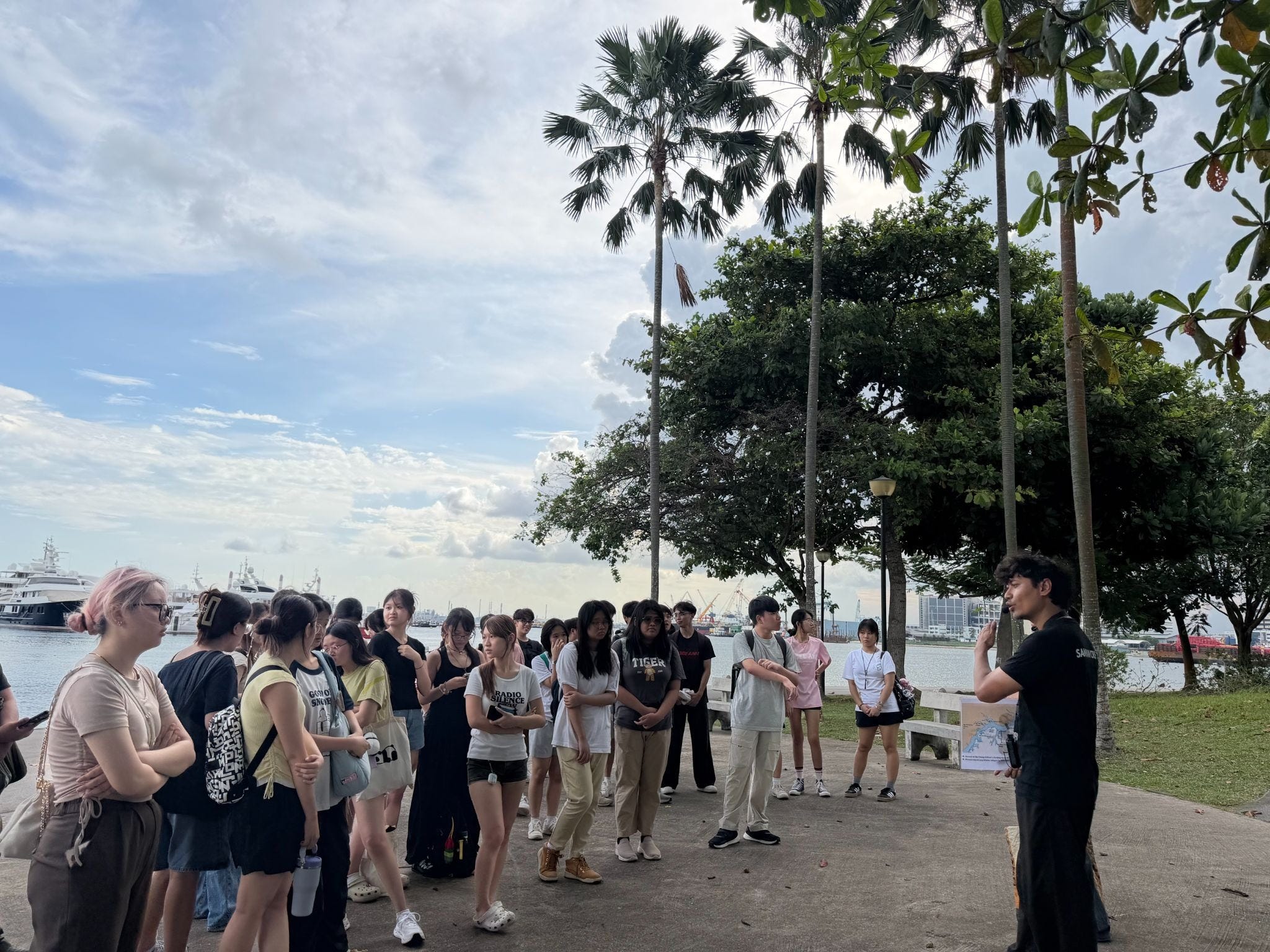
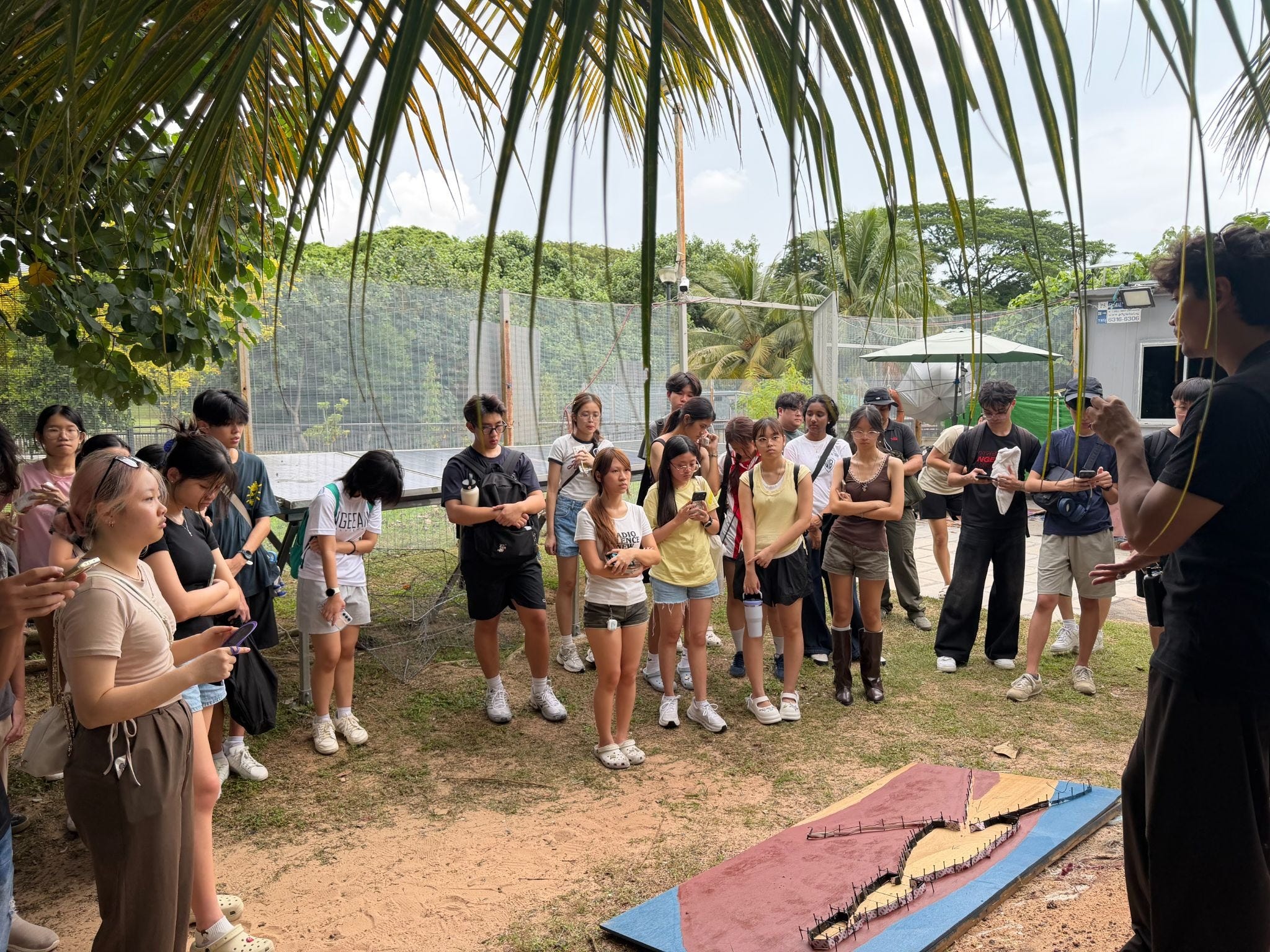
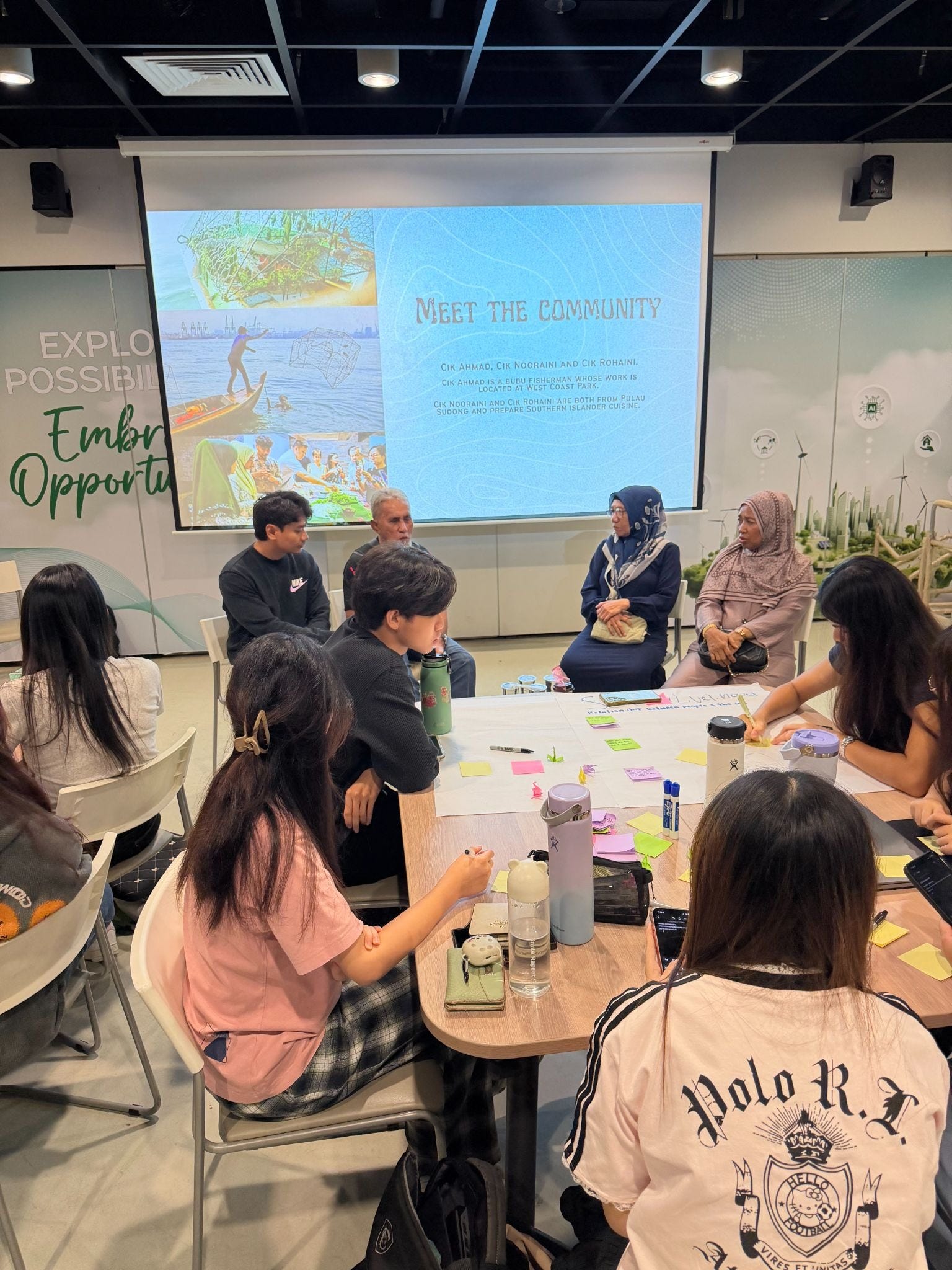
We were happy to host students from Ngee Ann Polytechnic’s School of Design and Environment for a coastal walk where we reflected together on space and belonging. Over the two day event, we spent time with community members, listening to their memories of island life and thinking about how these stories might be carried into future spaces.
Through this programme, students were invited to understand Orang Laut experiences within Singapore’s urban development and coastal transformation, and to hear directly from community members about life on the islands, relocation, the changing coastline, and the continuation of traditional crafts and knowledge. The sessions also opened up conversations about ground-up Indigenous advocacy in Singapore by tracing Orang Laut SG’s journey, strategies, and challenges.
Alongside these discussions, we explored the importance of ethical engagement with the community and how students might begin to shape meaningful frameworks for their own practice. Many left reflecting on how lived knowledge, memory, and cultural practice can be carried forward through participatory design research, and we are grateful to everyone who joined us for these walks and conversations.
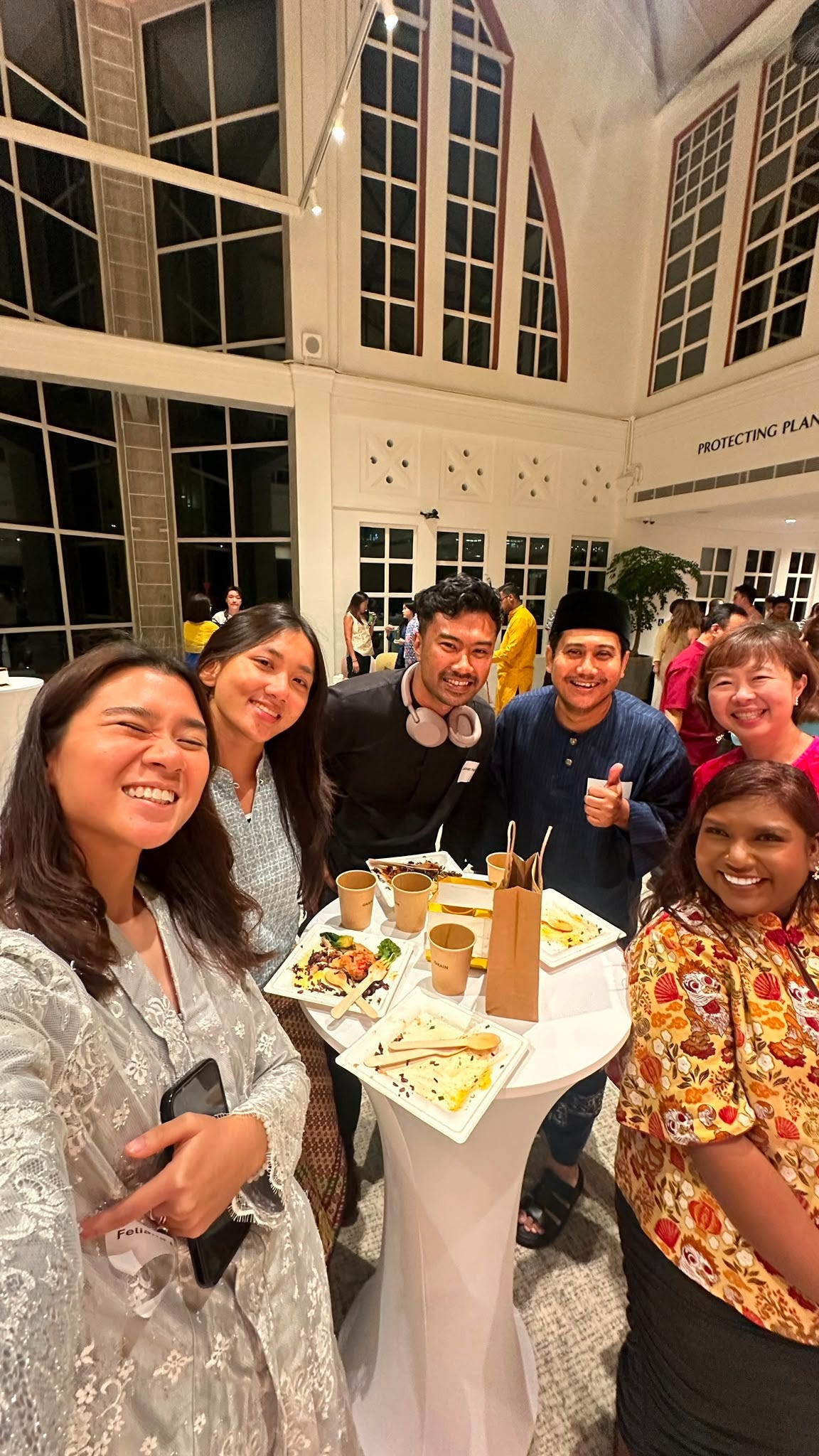
We would like to thank Singapore HeritageFest for inviting us to their appreciation dinner and for presenting us with a certificate in recognition of our programmes “Bubu and the Big Catch” and “Pulau to Table.” It was meaningful to gather with others who have been part of the festival’s journey.
Their ongoing support has made it possible for us to run these programmes over the past three years, and we are deeply grateful for the trust and care they have shown us.
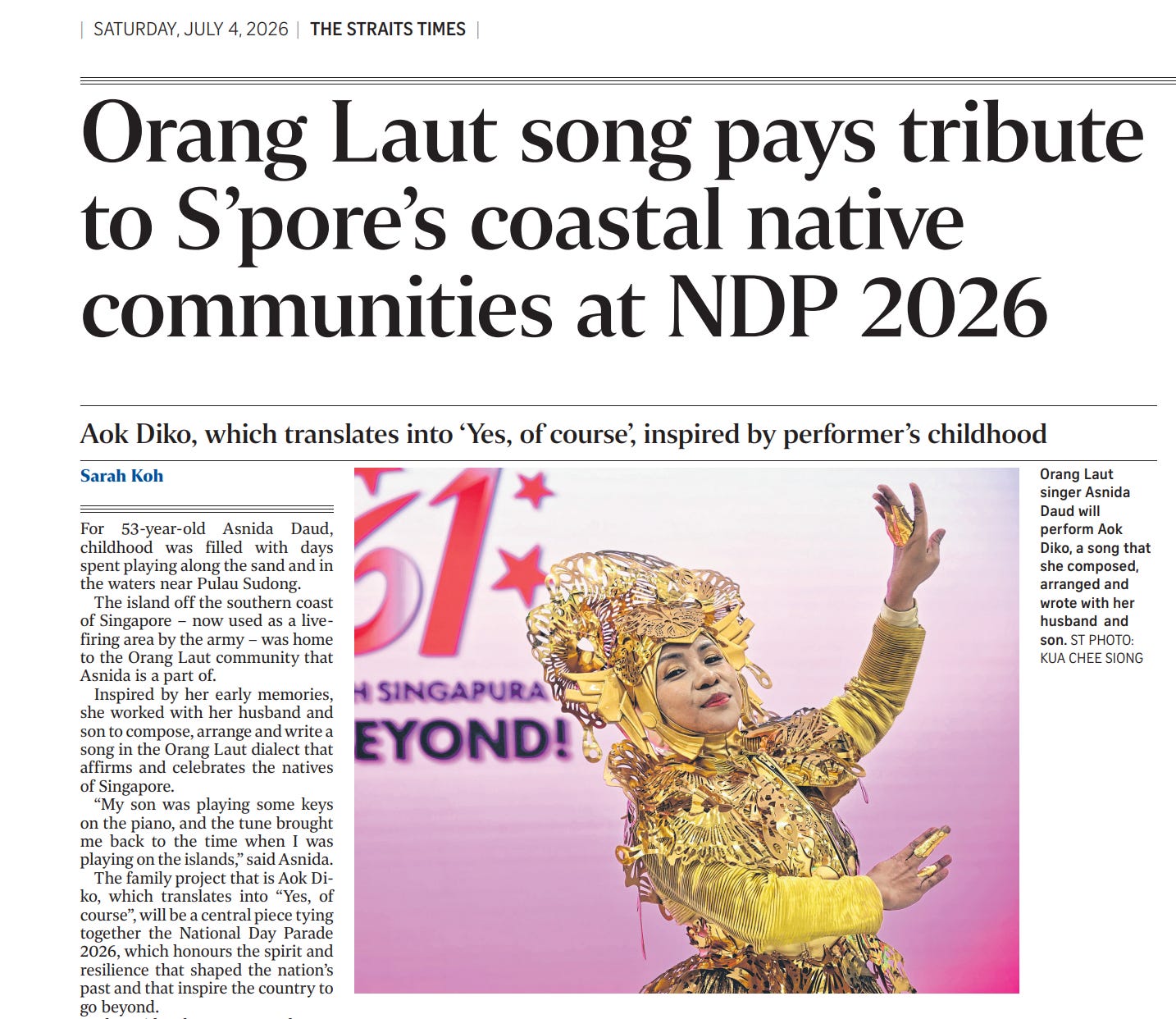
We are deeply moved by Cikgu Asinda Daud’s National Day Parade performance, which highlighted the importance of the Orang Pulau community's culture and language. Hearing the words “Aok Diko” on the national stage was incredibly meaningful, a powerful reminder of the resilience and enduring presence of these communities. Check out the full Straits Times article!
As June comes to a close, we are mindful of all the conversations, stories, and quiet moments that have shaped this month. Each encounter, whether by the water or in shared learning spaces, has deepened our sense of how the sea, islands, and rivers continue to live in people’s memories and daily lives. We look forward to carrying these threads into the months ahead, and if you would like to be part of what comes next, you can find updates on our Instagram page.
We’re back with another round of Coastal Walks! Walk with us to hear what we have been up to and meet our Orang Laut community members 🐠
Click the button below to join us and see you soon! 🐠
See you soon,
Firdaus
No posts
Comments
Nothing yet. Say the first thing.
Sign in to join the conversation.