
Welcome to Orange Owl’s newsletter, where we discuss driving growth, branding, positioning, and everything in between for B2B marketing. Grab a coffee or matcha and let’s get started ☕
By the end of this edition, you’ll better understand trends in B2B marketing, the most effective strategies, and how you can tap into them to build your business audience.
It’s no secret that the marketing landscape is changing quicker than ever. Most marketers agree that marketing has transformed more in the past three years, than over the past 50. We no longer live in a go-to-market world where having information alone is enough – those who want to succeed must instantly act on intelligence. We’ve shifted from the Age of Information to the Age of Intelligence.
That has significant implications for the marketing world. The way that people research and engage with brands impacts which marketing channels and strategies are effective. It’s increasingly challenging to break through the noise to generate traffic and leads. Taking a one-sizefits-most approach to anticipating customer needs no longer works. Marketers need to work through these challenges amidst a backdrop of tight budgets.
2024 calls for marketers to think through awareness, engagement, personalization, efficiency, and growth in new ways. So the question becomes, how to do it? - Let’s get into the data.
Social media is the place for search, sales, and service
Marketers are increasingly focusing on buyers who grew up in the digital age. Currently, 74% of marketers are aiming to reach Millennials, while 67% are targeting Gen X—compared to just 27% who are interested in Baby Boomers. As these digital natives ascend into decision-making roles, we’re observing significant shifts in how they engage with businesses online.
Top 3 Trends:
Social Search: Social media has become the leading product discovery channel for Gen Z and Millennials, with 31% of consumers turning to these platforms to find answers to their questions.
Social Selling: Social media is rapidly emerging as a powerful sales channel, with 17% of users making purchases directly on these platforms. Among social sellers, 87% reported success, and 59% experienced increased sales in 2023 compared to the previous year, underscoring the growing influence of social commerce.
Social Service: The use of social media for customer service is on the rise, with 19% of users sending direct messages for support in 2023—a 45% increase from the previous year. Notably, 1 in 5 younger consumers now prefer customer service through DMs.
If you look at recent Google updates, you’ll notice that Google has been refining what “helpful content” means and prioritizing the “E” for “experience” in their E-E-A-T strategy. As the landscape of search is evolving, driving traffic to on-site content has become increasingly challenging. We foresee a growing demand for verifiably human content that delves into deeper and more complex topics giving a hyper-personalized experience.
Takeaways and action items:
Decision-makers are increasingly turning to social media for search, sales, and service - Invest in platforms like LinkedIn, Facebook Marketplaces/Groups, and YouTube to streamline the purchasing process and enhance your brand’s presence.
Forming authentic partnerships with micro-influencers is driving brand growth. Consider launching micro-influencer marketing campaigns and building long-term relationships with these influencers to amplify your brand’s reach. Logan Paul's drink is a prime example of how using influencers for brand positioning can generate significant revenue, bringing in $1.2 billion in its first year.
The landscape of data collection is undergoing significant changes as marketers adapt to evolving privacy standards. In response to Google’s initiative to phase out third-party cookies and address privacy concerns, businesses are increasingly relying on first-party data—information that users voluntarily provide—along with other privacy-friendly, contextual data.
This shift not only enhances user security but also addresses the quality of data, as only 65% of marketers report having high-quality insights into their target audience today.
So where to find this data?
The answer lies in your inbox. Email is a prime channel for collecting first-party data, as most information gathered through email or form submissions comes directly from users. By allowing customers to shape your marketing approach, you can build consent, gain valuable insights, and reduce reliance on third-party data. Now is the time to leverage email as a central source of insights for all your marketing efforts.
How to Integrate First-Party Data into Your Email Strategy?
Assess Your Data Inventory: Review the data you currently have and identify any additional information you need.
Prioritize Key Data Points: Determine which data points are most valuable for your marketing objectives.
Adopt a Gentle Approach to Data Collection: Ensure your data collection process feels conversational and respectful, avoiding a sense of interrogation.
Establish Data Priorities: Organize your data collection priorities based on the quality and relevance of your existing database.
Takeaways and action items:
Third-party cookies are outdated—switch to first-party and zero-party data for a more effective approach. Gather data through email interactions and leverage first-party or zero-party information to enhance personalization.
Build a strong data foundation with well-organized systems. Invest in marketing operations solutions that offer a single source of truth for your data.
Utilize generative AI to gain deeper insights into your audience’s needs. Harness AI tools to create personalized content at scale, driving greater business results.
Counterintuitive: Thinking is very cheap, and doing is very expensive, so most marketers should think more, not less. The top most successful use case for AI is research — 33% ranked it as #1, above the context creation (31%) and data analysis and reporting (30%).
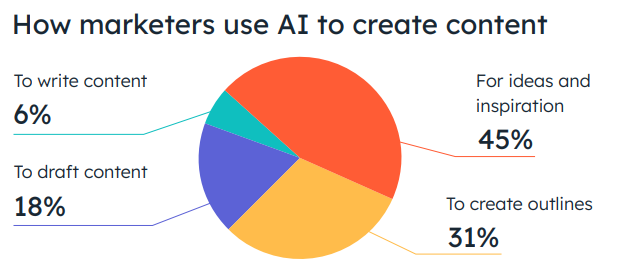
Credits:HubSpot
But, this comes with its own challenges. With the rise of generative AI-powered search platforms, the amount of data generated, and its storage has been a bigger problem than ever.
Around one in four marketers says it’s difficult to share data with other teams and get the data they need from other teams at their company. And only 59% of marketers say the tools they use are interconnected. Marketers are facing challenges with how and where their data is stored, limited access to linked sales and marketing data, and a lack of a single source of truth to guide strategy.
Currently, we don’t have a one-stop solution to this rapidly evolving problem but new-age startups at Y-Combinator like Yarn and Speedybrand are trying to solve it. Suggestions are welcome :)
Clearly, NVIDIA isn’t just leading the AI revolution; they’re also excelling in marketing. Jensen Huang, their CEO, stands out as a thought leader and marketer, much like how Taylor Swift defines her genre. Huang's compelling presence and visionary leadership enhance NVIDIA's brand, positioning them at the forefront of both technology and marketing innovation
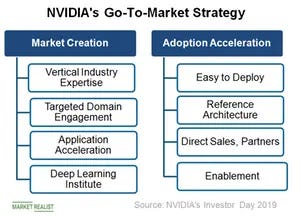
First-Party Data Collection:
NVIDIA collects first-party data through their website, email campaigns, and events. They gather insights from product demos, white papers, and customer feedback. This data helps them understand user needs, tailor their marketing efforts, and improve customer engagement by providing relevant information and offers.
Micro-Influencer Partnerships:
NVIDIA collaborates with tech influencers and industry experts to promote their products. For instance, they partner with gamers, AI researchers, and tech reviewers who have significant followings. These influencers create content such as product reviews, benchmarks, and tutorials, which helps to build credibility and engage a tech-savvy audience.
Generative AI and Efficiency:
NVIDIA utilizes its own AI technologies, such as the NVIDIA DGX systems and CUDA platform, to drive innovation in AI and machine learning. These tools assist in data analysis, optimizing AI models, and automating processes, which enhances marketing efficiency and enables the development of cutting-edge products.
NVIDIA’s use of social media, influencer partnerships, first-party data collection, and AI-driven tools illustrates how a leading B2B technology company successfully adapts to the modern marketing landscape.
The rapid advancement of technology, the rise of digital natives in the workforce, and current economic conditions are reshaping how businesses operate. These changes are pushing marketing teams to focus on efficiency and create seamless digital customer experiences. Leading companies are investing in cutting-edge tools and processes while maintaining creativity and connection.
If you haven’t explored these trends yet, now is the time. Embrace them and step confidently into the future of innovation.
We are also helping our clients drive growth and optimize content, feel free to chat with us here.
If you want to contribute, give feedback, or have an informal chat connect here.
If you tweet/post about Orange Owl, please tag us — we would love to feature you on our website homepage.
We'd love to hear from you! If you wish to share more insights on new trends and navigating GTM strategies we would be happy to share the resources with you. Your insights will shape our future discussions.
Keep pushing forward!
No posts
Comments
Nothing yet. Say the first thing.
Sign in to join the conversation.