
Every week, I compile a list of articles in order to give subscribers like you something interesting and thought-provoking to read over the weekend.
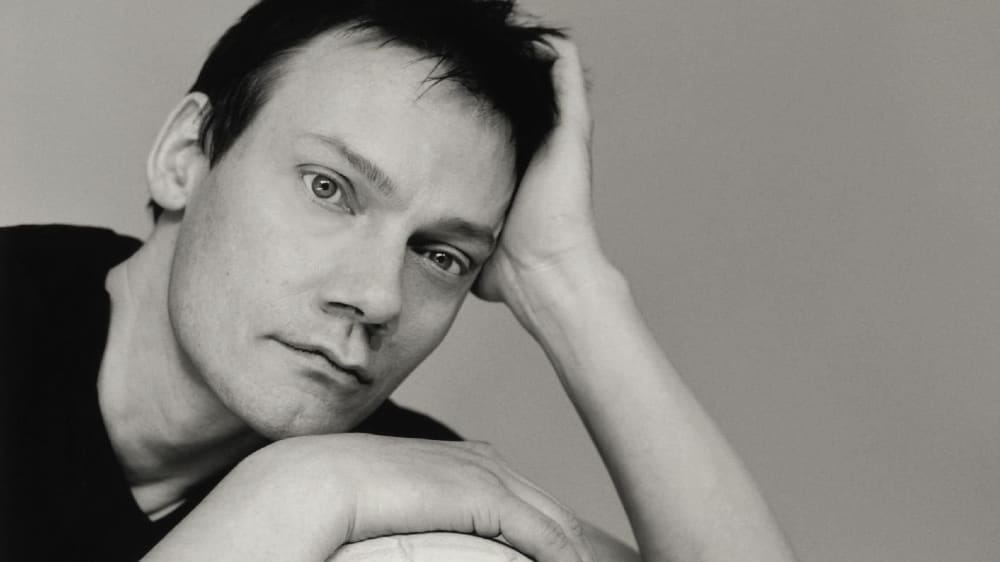
Noted electronic music producer William Orbit died last month at the age of 69.
Orbit was most famous for his collaboration with Madonna on her 1998 album Ray of Light: his strikingly original backings, rooted in trip-hop, jungle and techno, marked a new chapter for one of pop’s greatest stars, resulting in hits such as “Frozen,” “The Power of Goodbye” and the giddy title track. It had multi-platinum sales across the world, won Madonna three of the five Grammy awards she was nominated for in 1999, and has become seen by many as Madonna’s single greatest studio album.
Along with Madonna, Orbit — born William Wainwright — worked with All Saints, Blur, Beth Orton, Sarah McLachlan, and U2 (to name just a few). He also released several solo albums, including my personal favorite, 2000’s Pieces in a Modern Style, which found him reinterpreting classical pieces by the likes of Samuel Barber, Erik Satie, and Ludwig van Beethoven.
Listen to his gorgeous take on Barber’s “Adagio for Strings.”
Related: Alexis Petridis lists William Orbit’s 12 greatest recordings, which include remixes of Prince and U2.
Mike D (of Beastie Boys fame) has a new solo album coming out later this month, and he recently penned an essay explaining his journey back into making music.
My hope is to make things that are authentic to me and not full of shit. It’s been so much fun making this music with people I love and I have grown to really appreciate in our collaboration. And I just hope it’s fun for other others and not overly serious, because let’s be real, I’m releasing this music into a very strange and dark and power-fixated world that really devalues art and feelings and compassion and empathy and equality.
Alan Ritchson, star of Amazon Prime’s Reacher series, is a throwback to an earlier kind of action star, writes Terry Terrones.
Alan Ritchson feels like he wandered in from another era. Whether he’s playing Jack Reacher in Reacher, Anders Lassen in The Ministry of Ungentlemanly Warfare, U.S. Army Ranger 81 battling an alien invasion in Netflix’s War Machine, or the rough-and-tumble hero of the upcoming Motor City, Ritchson keeps gravitating toward the same type of role: an unstoppable physical force whose greatest weapon is simply walking into a room. 35 years ago, he would’ve fit comfortably alongside Arnold Schwarzenegger, Sylvester Stallone, Dolph Lundgren, and Jean-Claude Van Damme. Today, he feels almost like the last of a dying breed. That’s precisely why he's become such an unlikely star.
Reacher’s fourth season begins streaming next week, on August 12.
And speaking of throwbacks, Hollywood doesn’t quite blow up stuff like it used to.
Today, nearly all spaceship sci-fi explosions in movies (or TV shows) are handled digitally, which is, of course, much safer than blowing up plastic or wood or fiberglass models inside a warehouse. And, for on-set explosions, like the decimation of Blofeld’s base in the 2015 James Bond film Spectre, you still need to set off real explosions. In fact, Spectre entered the Guinness Book of World Records for the largest film stunt explosion of all time, proving that things that go boom on movie sets are still an art form that is very much alive. And yet, a close relative of the on-set, full-scale explosion is basically extinct: The miniature explosion — a term that sounds like a joke — is basically a thing of the past. And what’s odd about this single piece of sci-fi tech is that none of your favorite movies could exist without it.
The Toronto International Film Festival announced its Midnight Madness lineup for the 2026 festival. This year’s lineup includes new films from Duncan Jones, SABU, and Anna Biller.
I have very fond memories of my Midnight Madness experiences, which include memorable screenings of Takashi Shimizu’s Ju-on and Jang Jun-Hwan’s Save the Green Planet.
Fender Guitars CEO Bud Cole — the same guy overseeing the cease-and-desist letters being sent to other guitar manufacturers — has some interesting ideas concerning AI and musicians.
Cole is trying to draw a comparison between a human “training” on a handful of cover songs and an AI ingesting enormous datasets of copyrighted music. He appears to be suggesting that, by learning to play other people’s songs, internalizing those influences, and then synthesizing them into something new, you are essentially doing the same thing as an AI. This is a woefully misguided take that says to me that Cole either doesn’t understand AI or doesn’t respect artists.
One would think that the CEO of the world’s most well-known guitar company would try and do less to intentionally aggravate and piss off his customers. But then again, what do I know about being a modern CEO?
Earlier this week, Pitchfork reported that several popular music publications, including BrooklynVegan, were basically gutted by mass layoffs.
Nearly all staff at each publication appear to have been laid off yesterday. Veeps, which is now part of Live Nation, seems to have owned the publications since 2024 or 2025. Pitchfork has emailed Veeps and Live Nation representatives for comment. Emails to BrooklynVegan staffers, with the exception of founder Dave Levine, bounced back.
I wasn’t a frequent reader of BrooklynVegan but appreciated the site whenever I did visit. As for Alternative Press, I have very fond memories of leafing through every single issue I could find back in the early-to-mid ’90s. Their coverage was surprisingly eclectic, and helped turn me on to lesser-known artists like Oval and Lucid.
During a recent livestream, controversial celebrity blogger Perez Hilton was seen cutting himself — and Sophie Gilbert sees it as a sign of a growing internet crisis.
PerezHilton.com was relentless and brutal, and its readers could not get enough, especially when the blog’s coverage collided with moments of calamitous celebrity breakdown. (When the actor Lindsay Lohan was arrested in 2007, the site reportedly received 8.8 million pageviews that day.) Since then, the internet has metastasized into something officially kinder — we no longer berate famous people in crisis for sport quite as much as we used to — and quietly more appalling, where irony-poisoned young men broadcast their executions and social-media companies seem to basically shrug in response. And so, on Tuesday night, during what seemed to be a mental-health breakdown of his own, Hilton was able to stream himself live on TikTok cutting himself with a knife for about 15 minutes before his broadcast was finally interrupted.
Emma Rose Thrasher addresses the problem of encouraging teens to read “clean” fiction simply because it’s free of all of the “bad” stuff.
It is absolutely possible for authors to handle heavy topics in sensitive ways that edify their readers. Good books enrich the lives of readers whether or not they have ever experienced something similar to the events of the story. For those who have, or will, the stories give them the tools to process their experiences and respond to them appropriately. And even for those who won’t, stories build empathy.
I know this in my own life because stories built empathy in me. I can relate better to some of my friends because of books I read when I was a teenager that helped me understand their experiences — experiences I would otherwise have been unfamiliar with. I’m so grateful to the authors who wrote them.
Earlier this month, Trump posted a slew of strange images to his Truth Social account, including an AI-generated image of him kissing a golden crucifix. It’s just the latest religious-themed image from the president, and it gets more disturbing the more you think about it.
Like so many things related to Trump, it’s tacky and gaudy, the hollow aesthetic of man so pre-occupied with projecting wealth and power that he leaves no room for beauty, dignity, or taste. But as with his other religious-themed posts, Trump’s crucifix-kissing AI slop is disturbing on a deeper level for the extent to which it co-opts Christian symbolism for blatantly political and self-serving ends.
This post is available to everyone (so feel free to share it). However, paying subscribers also get access to exclusives including playlists, podcasts, and sneak previews. If you’d like to receive those exclusives — and support my writing on Opus — then become a paid subscriber today for just $5/month or $50/year.
No posts
Comments
Nothing yet. Say the first thing.
Sign in to join the conversation.