
It’s a trite observation at this point, but some female directors understand male friendship on a deeper level than most (if not all) of their male counterparts. Filmmakers like Kelly Reichardt take a holistic approach to mapping these relationships as a constant struggle for human connection in which men are sociologically trained to suppress and ignore. Mikey and Nicky is an uncomfortable, raw portrayal of that oft unspoken push-and-pull, dredging all of the pathetic, vulnerable aspects of male friendships to the surface.
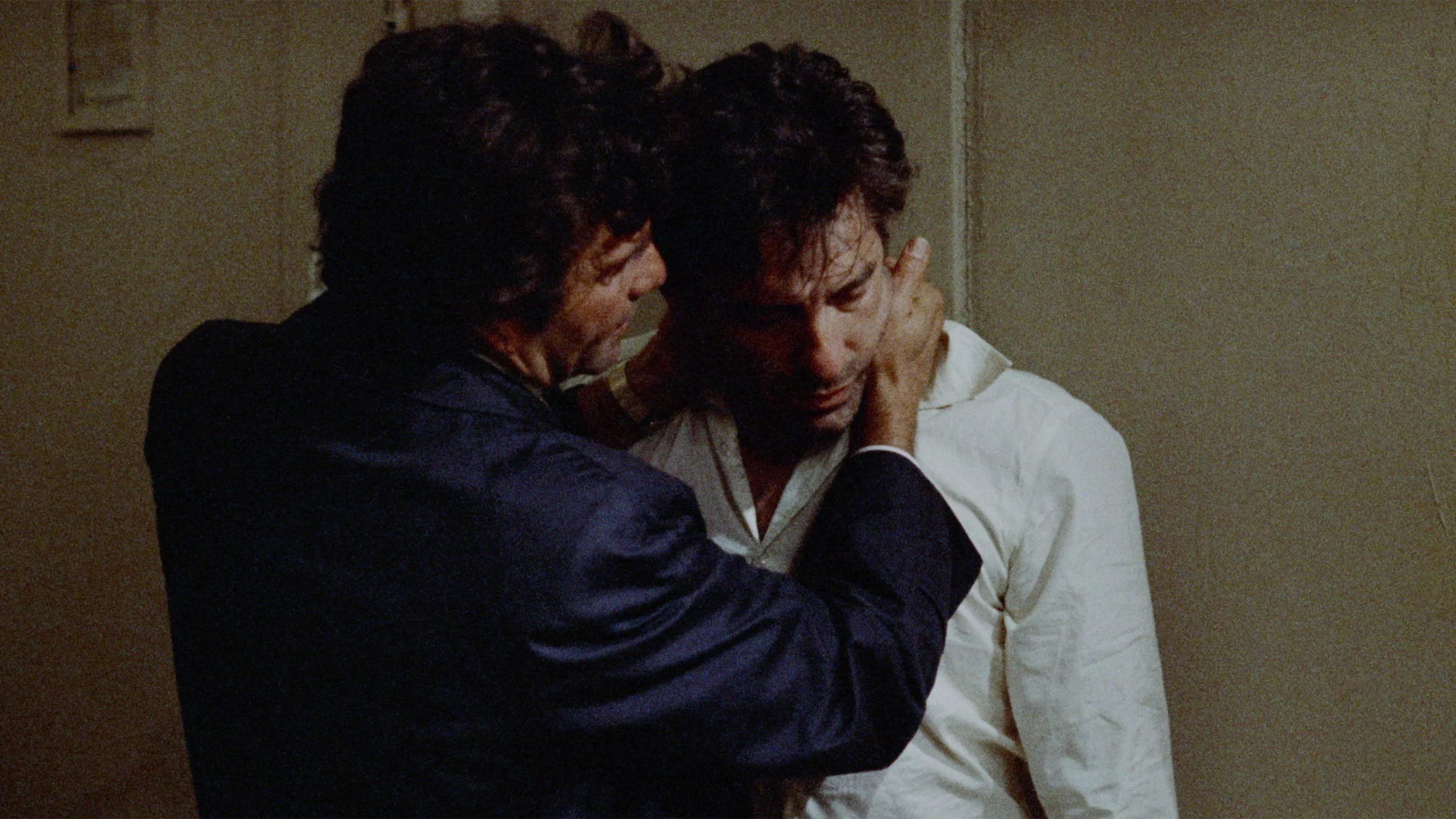
Nicky (John Cassavetes) is on the run from the mob. He and business partner Ed Lipsky stole from big boss Resnick, and Lipsky’s corpse turned up riddled with bullets a couple days prior. Nicky knows he’s next on the chopping block, so he spends his time wallowing in terror and self-pity on the floor of a cheap Philly hotel room. Mikey, (Peter Falk) one of Nicky’s oldest friends and a fellow member of Resnick’s gang, is the only guy who’s willing to help him out. Once he barges through the door, Mikey treats his troubled friend the way a father treats his sick child, forcing him to take medicine by taking a pill himself. As it turns out, Mikey’s the one orchestrating the hit, guiding the gunman, Kinney, to Nicky’s destination.
Nicky’s keenly aware of his impending doom, and never fully trusts Mikey because of it. He constantly questions Mikey’s allegiances, no matter how many near-tenable assurances Mikey gives him. Nicky threatens his friend with a pistol and forces the two to swap clothes in case anyone saw the two together before. After some coaxing, Mikey convinces Nicky to lollygag around Philly, but Nicky refuses to follow Mikey’s lead. Instead, he goes on a greatest hits tour of scumbaggery, picking fights with anyone he looks at, more interested in the prospect of getting beaten up or laid than the guy who dropped all his plans to be there for a friend. None of Mikey’s lies are good enough for him, which introduces us to the real tragedy at play. This paranoid bravado blinds Nicky from realizing that Mikey’s trying to find a reason to save his life. Nicky’s too busy playing it cool, even with the one guy he can really count on, to give him even the slightest reason to mess with Kinney’s plans. With Nicky’s death looming in the background, the tension ultimately comes from the hair-strings holding their fraught friendship together.
It’s all very Cassavetes, which makes it no shock that he greatly inspired May and worked closely with her when fleshing the script out, much like Cassavetes did with Falk and Gazzara on Husbands, though not to the same extent. May’s rare foray into drama is deeply rooted in her connections to the burgeoning New Hollywood scene and some of its most contemporarily recognizable stars. Falk and Cassavetes’s friendship is so famous that film professor Amelie Hastie wrote a chapter for Issue 4 of Celebrity Studies about it. They frequently butted heads while working together on Husbands, their first official collaboration, but quickly realized that they get the best out of one another. After Husbands, they worked together on a few Columbo episodes and the film widely considered Cassavetes’s directorial magnum opus, A Woman Under the Influence.
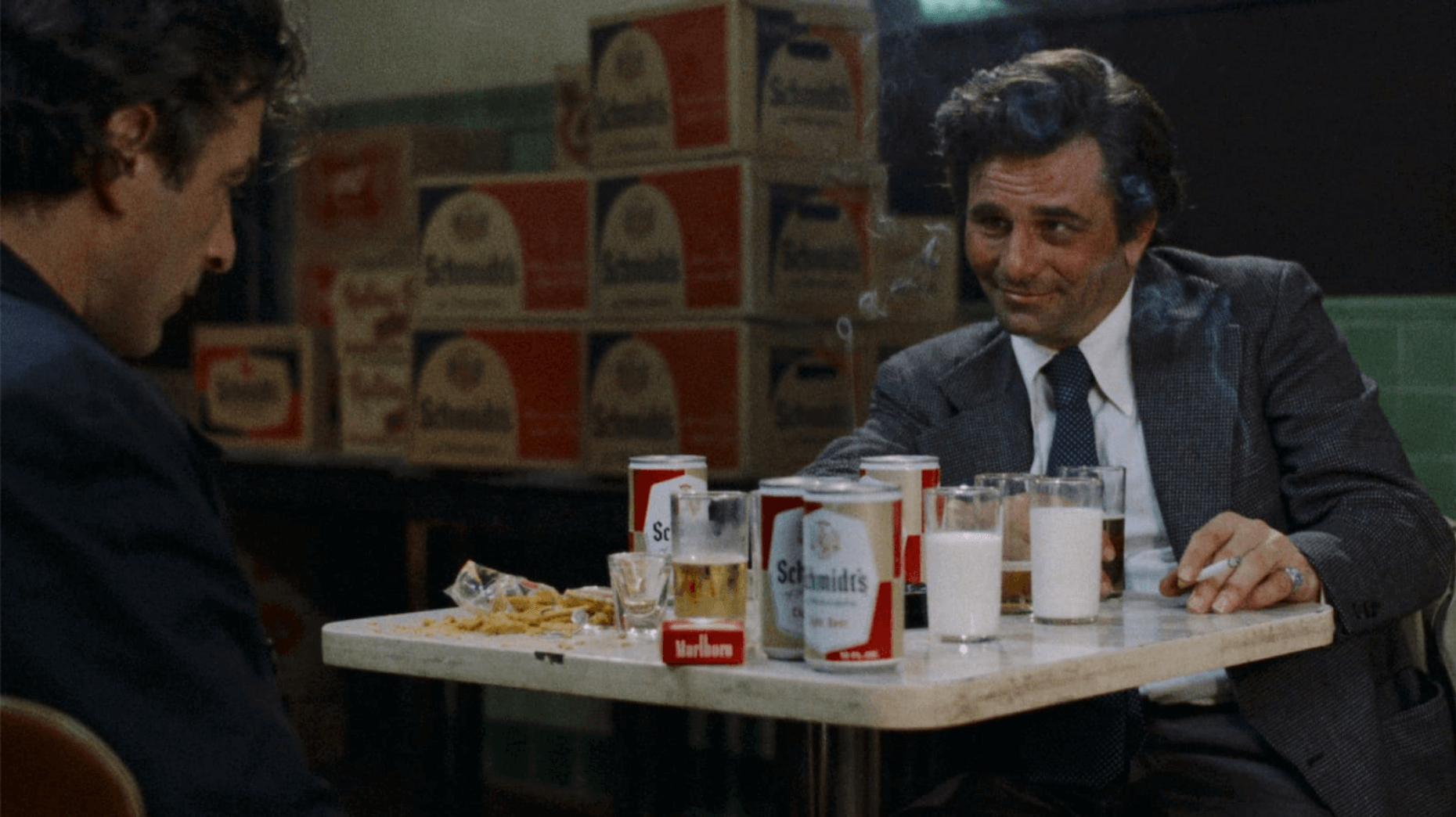
That fruitful, tumultuous working relationship is palpable in every scene these two share. There’s a tangibility to their relationship that can only be forged by years of laughing, bickering, drunken tirades, and paranoid fits. Cassavetes masterfully toes the line between slimy enough to hate and magnetic (or pathetic) enough to see why someone would go to such lengths to keep him alive. Falk plays an endlessly endearing, lived-in Mikey, a weatherbeaten scumbag in his own right whose care for his old friend is always muddied by what we know he’s actually there to do.
Mikey’s insecurities are just as central to his relationship with Nicky as Nicky’s seeming ignorance of those insecurities. You see it in the way Falk’s face contorts any time Cassavetes intentionally or unintentionally one-ups or embarrasses the guy. Nicky doesn’t mean to make Mikey feel small, most of the time at least, but the needle stings regardless of its aim.
The resentment and jealousy curled up in Mikey’s guts finally explode out when he’s rejected by a prostitute Nicky sees regularly, and more importantly to Mikey, for free. Nicky responds by breaking the watch Mikey gave him, the one artifact connecting Mikey to his dead father, an act that ultimately seals Nicky’s fate. The male psyche is a puerile beast at its core, and May expresses this blow-up as the playground fight it is. She lets Falk express Mikey’s inadequacies and trauma in a way many couldn’t actually commit to, picking at old scabs that won’t heal because he doesn’t want them healed. Mikey admits that he knows Nicky calls him ‘The Echo’ when he’s not around due to his propensity for repeating himself. Every past and future dialogue choice is tinged by that one line, as Mikey’s insecurities manifest over and over again, repeating himself even when he doesn’t have to. May gets at that universal insecurity you get when a friend notices or pokes fun at something you don’t notice about yourself, which makes you constantly notice that tic as a flaw that needs to be changed. Sometimes, that instinct is correct, which makes any smaller instance, like Nicky prodding at Mikey’s self-repetition, feel like the deep betrayal it is to Mikey. When he walks off, Mikey isn’t giving himself an excuse to be somewhere else when Nicky dies, he’s done trying to remember why he gave this guy so many chances to begin with.
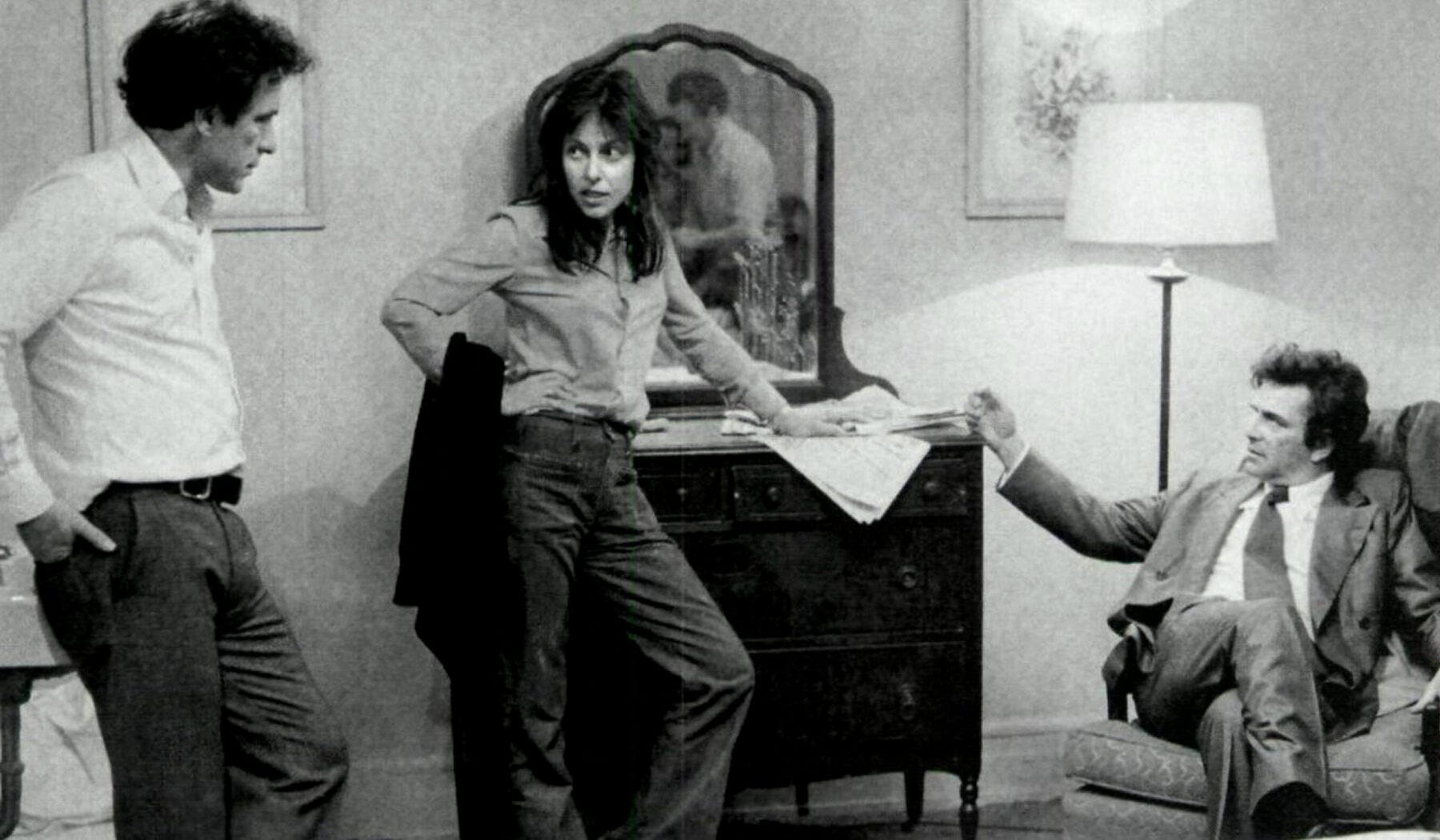
May still finds the time to flex her comedic chops through the tragedy. The name Mikey and Nicky is a wink and nod to her longtime comedic collaborator and friend Mike Nichols, best known for directing Who’s Afraid of Virginia Woolf? and The Graduate. Nichols and May were the progenitors of modern improv comedy, opening the door for groups like SNL and UCB to follow. One of the funniest jokes in the movie is also its most crushing. During his first and only face-to-face conversation with his wife Annie at the very end of the movie, Mikey asks her if he repeats himself a lot. She responds: “What?” And he’s forced to repeat himself yet again. Throughout the next five minutes of Falk’s perfectly meek monologue, we learn that his wife knows next to nothing about him besides his relationship with Nicky, a relationship she helps him end for good.
Nicky’s real fatal flaw was taking Mikey for granted one too many times. He was convinced that Mikey would take him back, no matter how hard they bickered, so sure of himself that you can tell he initially believed that Mikey wasn’t home. Once Nicky realizes the game’s up, his bravado quickly devolves into the groveling desperation we only got a real glimpse of during his paranoid ramblings at the beginning of the movie. Nicky can’t even realize what Mikey’s done for him in his final moments, too caught up in the one time his pal didn’t help him out that he can’t fathom thinking about all the times he tried to. Mikey’s no saint either, he’s an abusive, philandering, entitled piece of work who ignores everyone around him for a guy who derides him behind his back. Despite these flaws, it’s much easier to sympathize with the guy trying to get his old friend back, even though that person might not exist anymore.
When I saw the 50th anniversary of Mikey and Nicky at Film at Lincoln Center, I planned on watching the movie with a couple friends. Both plans fell through due to poor timing, which certainly altered (and likely enhanced) my experience with it. Regardless of the twinge of disappointment I got when I realized I was gonna see a movie about male relationships without any of my guys around, that was the best way to experience it. Forced to consider the times when I’ve been a shitty friend or been there way too long for a shitty friend. Forced to type that paragraph about how you miss a friend you’ve drifted away from just to delete it and ask how they’re doing.
There’s something about this movie that makes people want to talk and write about it. Maybe it’s because that’s easier than telling our friends how we actually feel.
Essays
Tribeca at 25
·
Jul 20

At seventy-nine years old, Robert De Niro became one of the oldest celebrity fathers in recent memory when he welcomed a newborn daughter in April of 2023. For regular citizens just making their way, the astronomical cost of modern childcare — stretching from diapers and formula to daycare and school tuition — has effectively warped parenting into a lux…
No posts
Comments
Nothing yet. Say the first thing.
Sign in to join the conversation.