

FEATURED CONTENT:
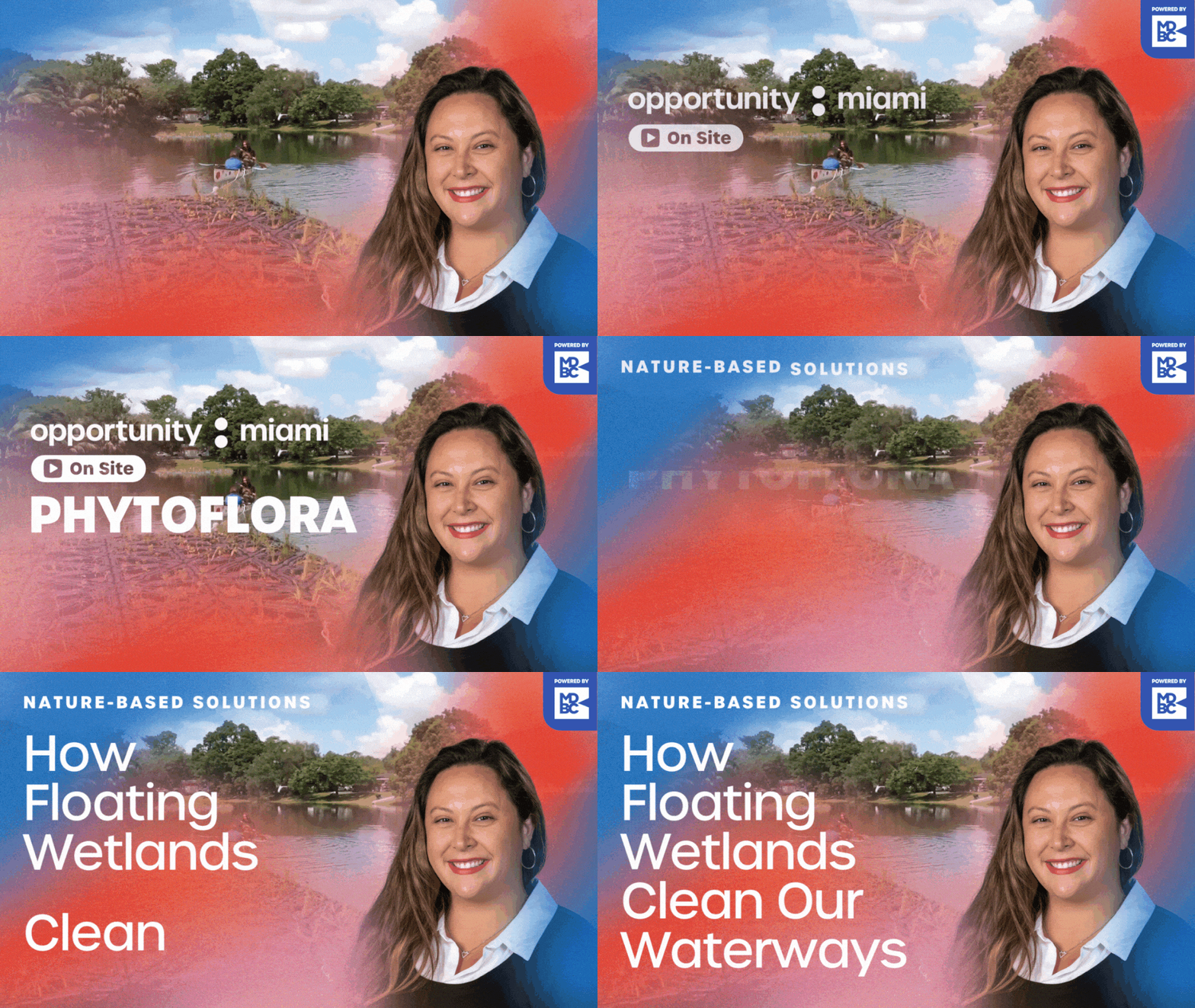
Watch how green infrastructure can help remove pollution from our waterways in our last On Site of the year, featuring Phytoflora by Green Thumb Strategies.
Imagine South Florida more than a hundred years ago: all wetlands that served as a sprawling natural filtration system, cleaning water as it moved across the region.
After decades of development, though, our wetlands have turned into the dense urban landscape we know today. And the impacts are visible in our own neighborhood canals and waterways.
Nutrient pollution from fertilizers, septic tanks, agriculture, and our aging infrastructure essentially blocked the traditional ecosystem’s ability to filter nutrients and other pollutants.
This “invisible problem” carries a very visible cost: fish kills, algae blooms, and degraded waterways, which threaten recreation, tourism, real estate values, and fisheries — industries that are part of the backbone of South Florida’s economy.
One Miami startup is working on a solution that’s both innovative and rooted in nature. Take a look at our latest On Site video featuring Phytoflora by Green Thumbs Strategies.
A Natural Tool to Clean Our Water
“Phytoflora uses productive floating wetlands to help clean water while also creating useful plants for our communities,” explains Jazmin Locke-Rodriguez, a post-doc scientist at Florida International University and founder of the venture that she started in 2023.
These floating islands harness the power of plants to pull nitrogen, phosphorus, and even other contaminants directly from the water. “We can put the power of plants on open water to help absorb these nutrients,” she said, adding: “And the more that we actually harvest these plants, the more we’re removing these nutrients from the water physically.”
It’s a low-infrastructure solution that fights pollution the same way nature once did.
The concept sounds simple…because it is. Plants sit atop the water on buoyant platforms, their roots hanging below like natural filters. “As the roots are hanging in the water, they’re able to clean and remove these pollutants at the same time as these baby plants start to grow, absorb, consume, and bloom,” Locke-Rodriguez said.
As the plants grow, they’re harvested. Each harvest physically removes pollution from the water while producing plants that can then be sold at farmers’ markets, creating an economic loop that keeps the system sustainable. (More on that further below.)
Other contaminants can also be removed by the plants through a process called phytoremediation.
The Village of Pinecrest is part of Phytoflora’s pilot program. The community deals with invasive aquatic plants, which are traditionally sprayed with herbicide. Now, through her partnership with the village and the pilot installation, they monitor how well the plants on the floating wetlands can more naturally mitigate these issues of invasive plants without the toxic sprays.
Preliminary results of the installation will become available by February 2026. Early estimates from just one of three floating wetlands show an approximate annual removal of 1kg of nitrogen and half a kilogram of phosphorus per island.
“Any and all nutrients removed by the plants in these islands are that much less pollutants flowing downstream into the bay,” Jazmin wrote in a follow-up email to Opportunity Miami. “This will also give us a picture of the impact we can make once these are replicated at a higher scale.”
How FIU Research Sparked a New Idea
Jazmin’s idea emerged during her PhD at FIU. While studying “nutrient pollution in our waterways and the various sources of this nutrient pollution and the impacts it has in South Florida,” she realized that the same nutrients damaging our ecosystems are the nutrients that plants depend on to grow.
“Hydroponics typically utilizes these same nutrients. Why can’t we put plants directly on open water and help uptake these nutrients from the water directly?”
That question led her to floating wetlands and to the pilot programs she now leads. As a postdoc, she has been leading the monitoring and data collection on these installations to demonstrate the specific removal rates of these plants so they can be replicated in other communities across South Florida.
“As a scientist, I prioritize really seeing the results and being able to show our communities the impact that we’re having,” she said.
Supporting Local Economies
What makes Phytoflora unique is its dual purpose: environmental remediation and local business creation.
“Let’s grow something that we want to harvest and potentially sell in order to help maintain the system, fund the system, and keep it both environmentally and financially sustainable,” Jazmin said.
These wetlands can also lower maintenance costs for communities that might otherwise be unable to adopt such systems, she noted.
Recreating the Past…to Protect Our Future
In a region where canals, stormwater ponds, and backyard waterways are everywhere, the potential is huge. Floating wetlands don’t require construction, dredging, or major infrastructure changes. They simply slide into the water we already have. (Jazmin notes they can also be any shape and size. The ones in Pinecrest are hexagonal and about 35 m2 each.)
“This is meant to be a model to show other communities how easy we can install these islands into our existing waterways, without having to change the landscape at all,” she said.
What Phytoflora is doing is helping South Florida rediscover what once made it resilient: wetlands.
As Jazmin put it: “I see this as a way to bring South Florida back to its roots, bringing wetlands back to our communities, one floating island at a time.”
PITCH US
If you have a company or an entrepreneur to suggest or an idea to share that relates to building Miami’s future, email us at next@opportunity.miami. We invite you to subscribe to our YouTube channel and follow us on our social media channels. If you were forwarded this newsletter, you can subscribe by clicking here. And if you are new to Opportunity Miami, you can learn about our mission and work here.

~ Opportunity Miami
No posts
Comments
Nothing yet. Say the first thing.
Sign in to join the conversation.