
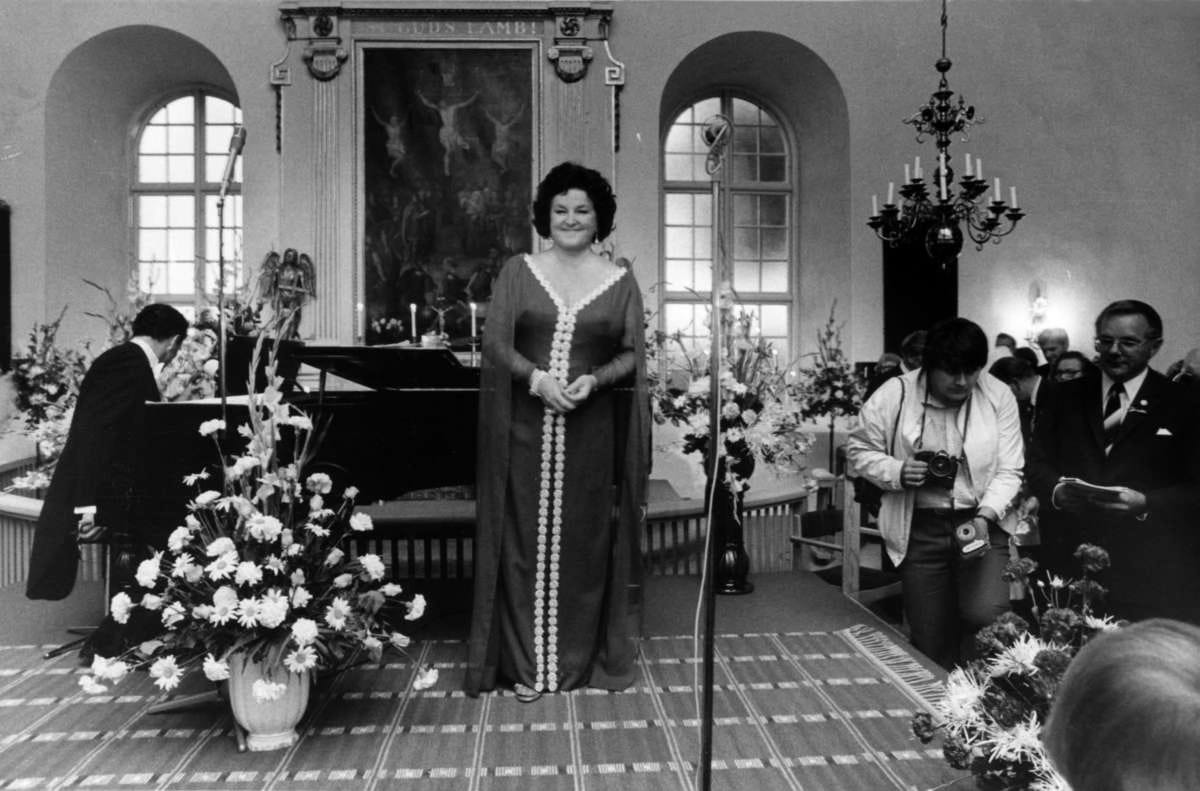
Birgit Nilsson in a late appearance at her parents’ church in Västra Karup Picture © Birgit Nilsson Museum
“Stay close to the earth. Then when you fall down, it won’t hurt so much.” The advice given to Birgit Nilsson by her mother, at the height of the Swedish soprano’s international fame, is today an unwritten motto of the annual Birgit Nilsson Festival, which takes place close to her birthplace in the province of Skåne, between the cities of Malmö and Gothenburg. The family farm is now the Birgit Nilsson Museum, an emblem of her unpretentious origins. The barn where they kept cows, pigs and chickens has been turned into a restaurant.
From those humble origins Nilsson rose to international stardom: she was one of the 20th century’s most imposing opera voices, a true hochdramatische prized for her well-documented performances of Wagner’s Isolde and Brünnhilde, Strauss’s Elektra and Puccini’s Turandot. As the Museum reveals, she first sang most of her roles in Swedish for the Royal Opera in Stockholm. Hers was an old-school career, based not on winning international competitions but on hard graft. At the height of her career, she explained that “Isolde made me famous, but Turandot made me rich”.
Just how rich may not have been immediately evident at the time of Nilsson’s death aged 87 in 2005, but four years later the first Birgit Nilsson Prize, worth a staggering $1m, was announced, with Plácido Domingo its first recipient (as stipulated by Nilsson in her will). Administered by the foundation bearing her name, the prize is not given annually. In the 17 years of its existence it has been gifted only five more times: to conductor Riccardo Muti (2011), the Wiener Philharmoniker (2015), soprano Nina Stemme (2018), cellist Yo-Yo-Ma (2022) and the Aix-en-Provence Festival (2025) - all in acknowledgement of their contribution to international music making.
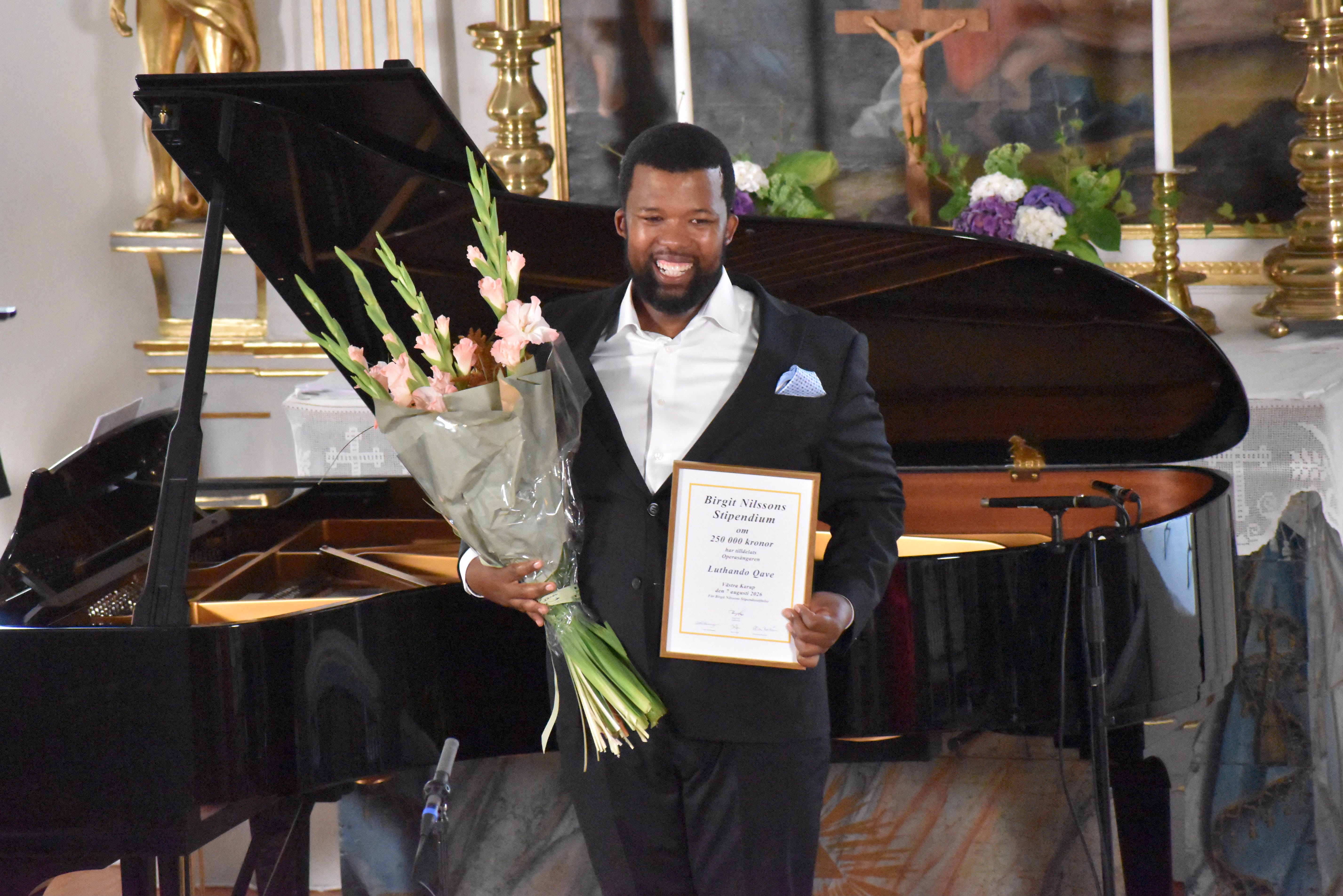
Luthando Qave, the 2026recipient of the Nilsson Stipendium Picture © Gunilla Hövenäs
You could say that none of these artists or institutions needed the money or the accolade, but they serve to throw limelight one of Nilsson’s more enduring legacies, an annual stipend for Swedish singers, now in its second decade, which is already bringing recognition to young Swedish-born or resident artists. At the 2026 Birgit Nilsson Festival in Båstad and its surroundings, three recent recipients were platformed: tenor Tobias Westman (2018), who sang the Steersman In the closing performance of Wagner’s Der Fliegende Holländer at Båstad’s 3,000-seat, open-air Tennis Stadium; Matilda Sterby (2024), who gave a recital in the Birgit-Nilsson-Hall of the Ravinen Kulturhus; and this year’s recipient, the South African-born baritone Luthando Qave, now a naturalised Swede and resident in Malmö.
Qave’s eclectic recital took place in the Church of Västra Karup, where Nilsson sang in public for the first time as a daughter of the congregation (continuing to do so intermittently for the rest of her life). It showcased him and his pianist, Magnus Svensson, in a dizzying array of styles. He began with John Ireland’s ‘Sea Fever’, sung with immaculate English diction, and followed it with Jerome Kern’s ‘Ol’ Man River’ from Showboat. But his programme also featured mainstream song repertoire alongside opera highlights and hit tunes from musicals. Qave already knows how to please a crowd. This is a big, nutty baritone voice, but he can scale it down, as he did in African songs by Phelelani Mnomiya and Sibusiso Njeza. His most touching performance was Gustaf Nordqvist’s ‘Till havs’, a tribute to his adoptive country and greatly appreciated by the Swedish audience.
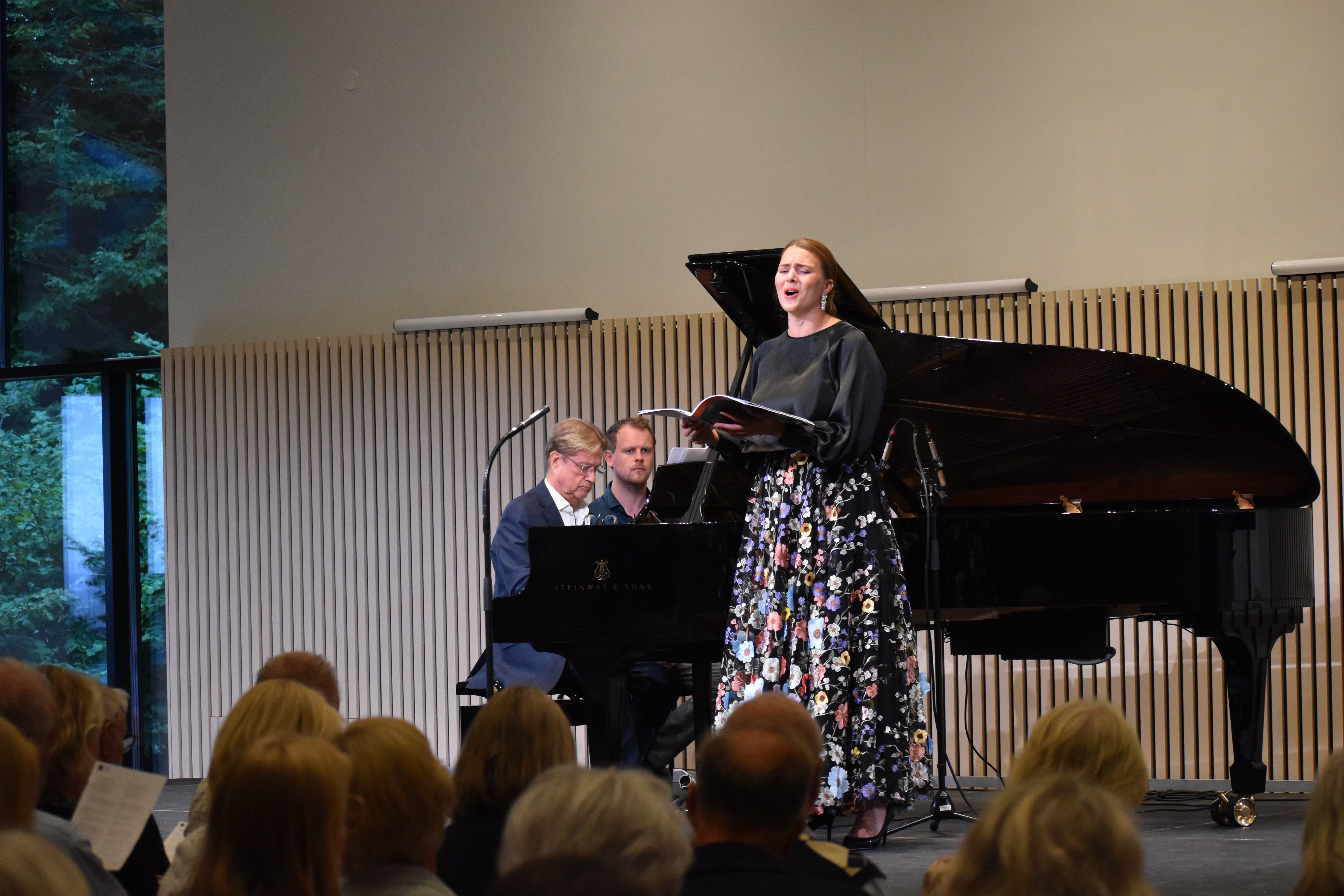
Matilda Sterby, the 2024 recipient in the Birgit Nilsson Recital Hall with pianist Matti Hirvonen Picture © Gunilla Hövenäs
Sterby’s recital at the 150-seat Nilsson Hall, accompanied by Matti Hirvonen, juxtaposed an all-Schubert first half with Nordic songs by Grieg, Gösta Nyström and Sibelius. This young soprano is already making waves outside Sweden - Fiordiligi and the Figaro Countess at Vienna’s Volksoper, her first Marschallin at the UK’s Garsington Opera - and she is a star member of the Gothenburg Opera ensemble, where she has already sung her Mozart roles, Mimì, Ellen Orford and Agathe in Der Freischütz. As yet her Schubert sounds quite operatic, her response to the German text somewhat generalised, but she came into her own in the Norwegian and Swedish songs, communicating the words with a natural, narrative clarity and singing with big, beautiful tone. We will certainly hear more of this gifted young soprano.
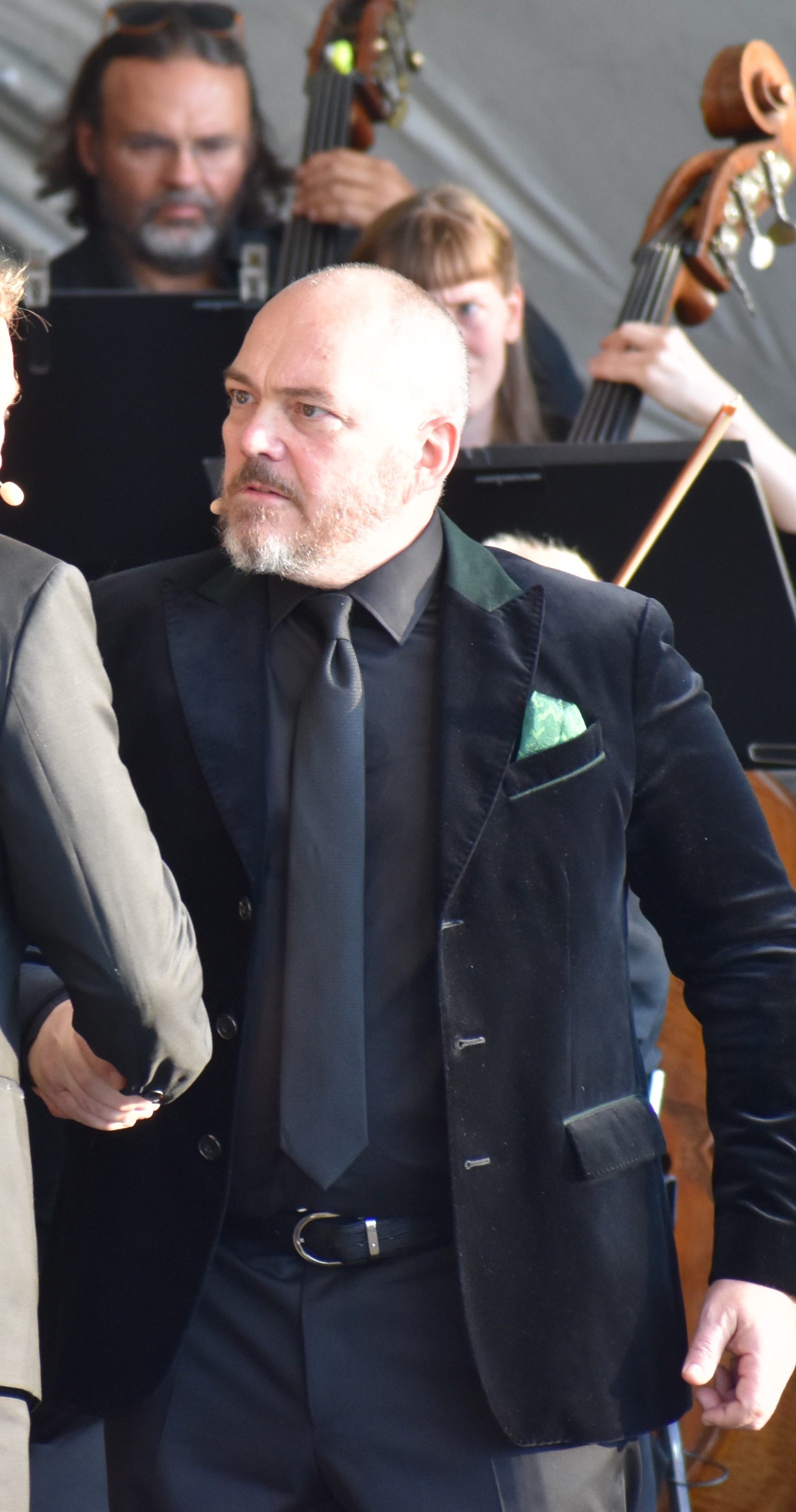
Christopher Maltman’s powerfully sung Dutchman Picture © Gunilla Hövenäs
Tobias Westman may only have sung the Steersman in the festival’s climactic performance of Der Fliegende Holländer - an opera that featured rarely in Nilsson’s international career - but his ringingly sung, clearly articulated account of the sailor’s opening ditty could hardly have been bettered. This was altogether a great Holländer performance for the tenor contingent: Stanislas de Barbeyrac’s Erik invested the music with Italianate glamour - particularly in the Act 1 ‘Dream’ and Act 3 aria - that it rarely gets. A former Mozart tenor, de Barbeyrac recently sang a superb Siegmund in the new Covent Garden Ring, not with a traditionally weighty heldentenor, but a big lyric sound. His first Parsifal there in October is something to look forward to.
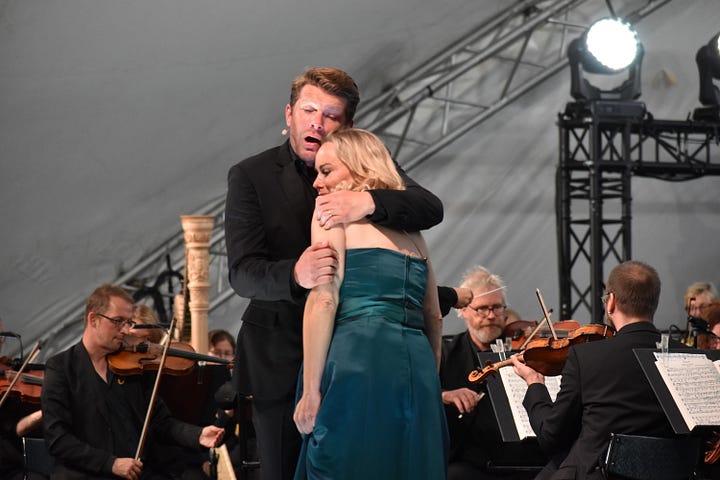
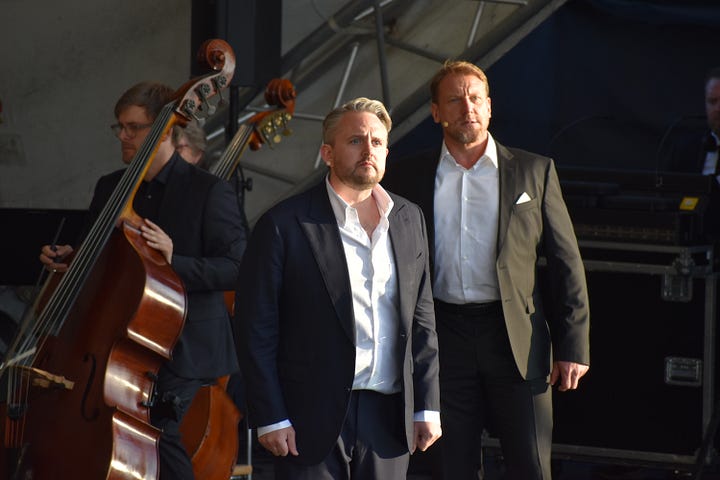
Great night for tenors: Stanislas de Barbeyrac’s Erik (with Elisabeth Strid’s Santa); Tobias Westman’s Steersman (with Guenther Groissböck’s Daland) Pictures © Gunilla Hövenäs
For the semi-staged (and amplified) stadium performance at Båstad he was joined by his London Ring colleagues Christopher Maltman (Dutchman) and Elisabeth Strid (Senta). Strid may not be a dramatic soprano in the Nilsson mould, but her incisive, lyric voice made her a natural foil to Maltman’s powerfully sung, yet textually sensitive anti-hero. Together with Günther Groissböck’s Daland, in more resonant voice than some of his recent performances on the international stage, they made an imposing centrepiece.
Henrik Nànàsi - Strid’s Holländer conductor in London - marshalled the Helsingborgs Symphfoniorchester and church choirs with the skill of a seasoned Kapellmeister. And it was this local element that gave the Nilsson Festival’s Holländer the atmosphere of a community performance — something of which Birgit Nilsson, down-to-earth and rooted in the area, would surely have approved. Her Foundation’s prudent and far-sighted use of her wealth to promote her artistic legacy could hardly be more productive.
Der Fliegende Holländer - Wagner
Conductor Henrik Nánási Semi-staging Anelia Kadieva Jonsson Lighting Creative Technology Chorus Masters Linn Björklund/Irene Janssen/Mats Paulson/Birgitta Roslund
Performance attended 8 August 2026
Dutchman Christopher Maltman Senta Elisabeth Strid Daland Günther Groissböck Erik Stanislas de Barbeyrac Mary Martine Dike Steuermann Tobias Westman
Choirs from Västra Bjäre, Förslov-Grevie, Båstad, Helsingborg, Malmö
Helsingborgs Symfoniorkester
Website birgitnilsson.com
This report first appeared on Oper! Magazin’s website - oper-magazin.de - and is republished here by kind permission of the Editor, Dr. Ulrich Ruhnke
No posts
Comments
Nothing yet. Say the first thing.
Sign in to join the conversation.