
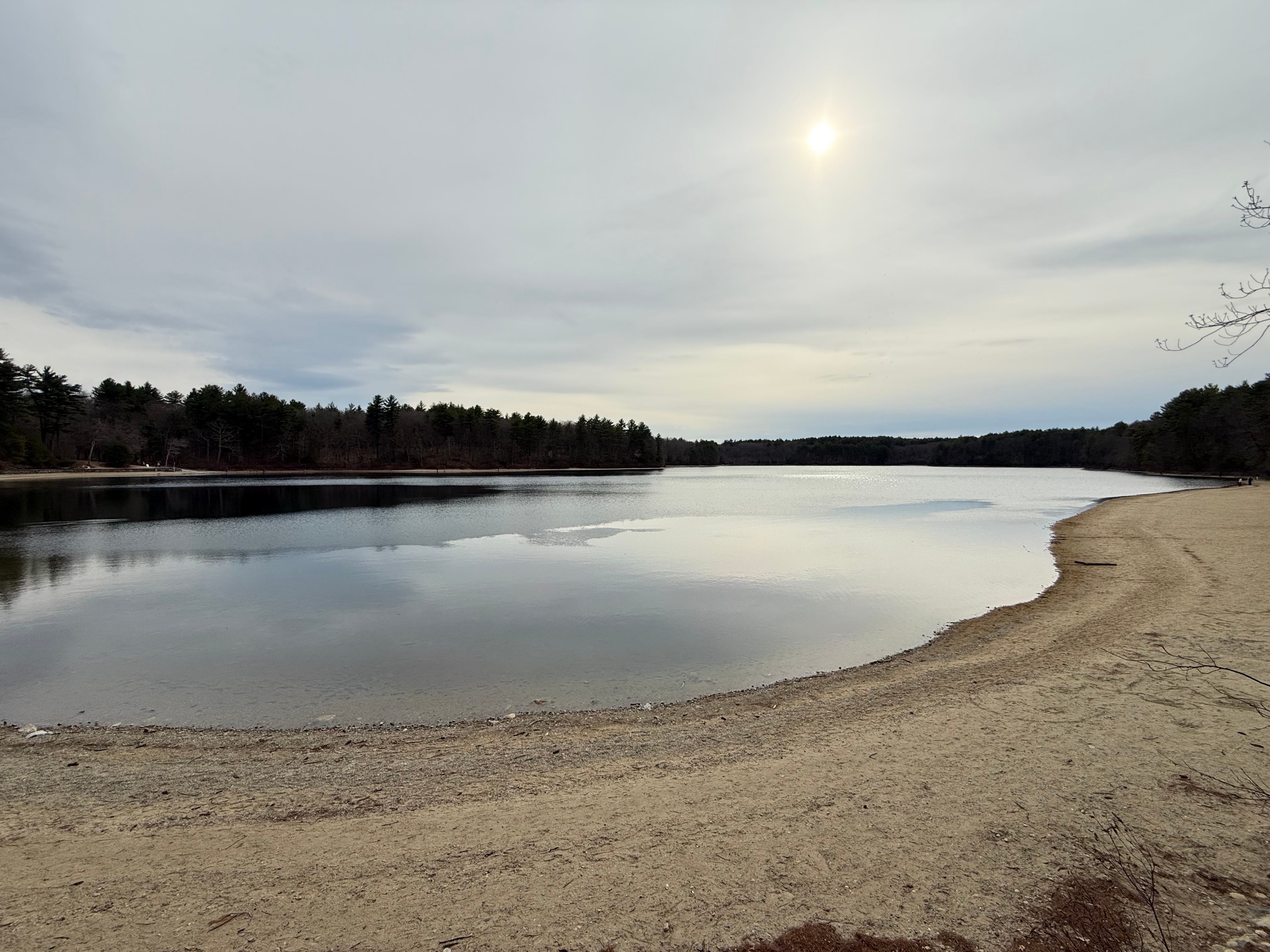
Last Sunday at Walden Pond, I found myself thinking about love.
Not romantic love, and not even primarily the love of friendship. I found myself thinking about the kind of love that begins with simple attention: the love that notices, delights in, and cherishes because of what is there.
Linda and I were near Concord for a parenting workshop and had a little extra time to explore. When I realized we could visit Walden Pond, I jumped at the chance.
During high school, my senior “term paper” examined Thoreau’s reasons for going to Walden Pond. I’m pretty sure I don’t still have a copy of that paper, and I’m also pretty sure that it wasn’t a stellar example of writing. Yet, I’ve remained intrigued by Thoreau’s experiment.
Arriving at the pond, we parked, crossed the street, and headed down a gentle slope to the edge of Walden. It was an unusually warm spring day, and several other people were enjoying the surroundings. Some were hiking, others fishing, and some simply sat and watched the pond and trees. Walden Pond has likely changed in many ways since Thoreau was there 180 years ago, but it still seems to draw people, perhaps for many of the same reasons.
We strolled around the pond, arrived where Thoreau’s cabin once stood, and took in the view from there.
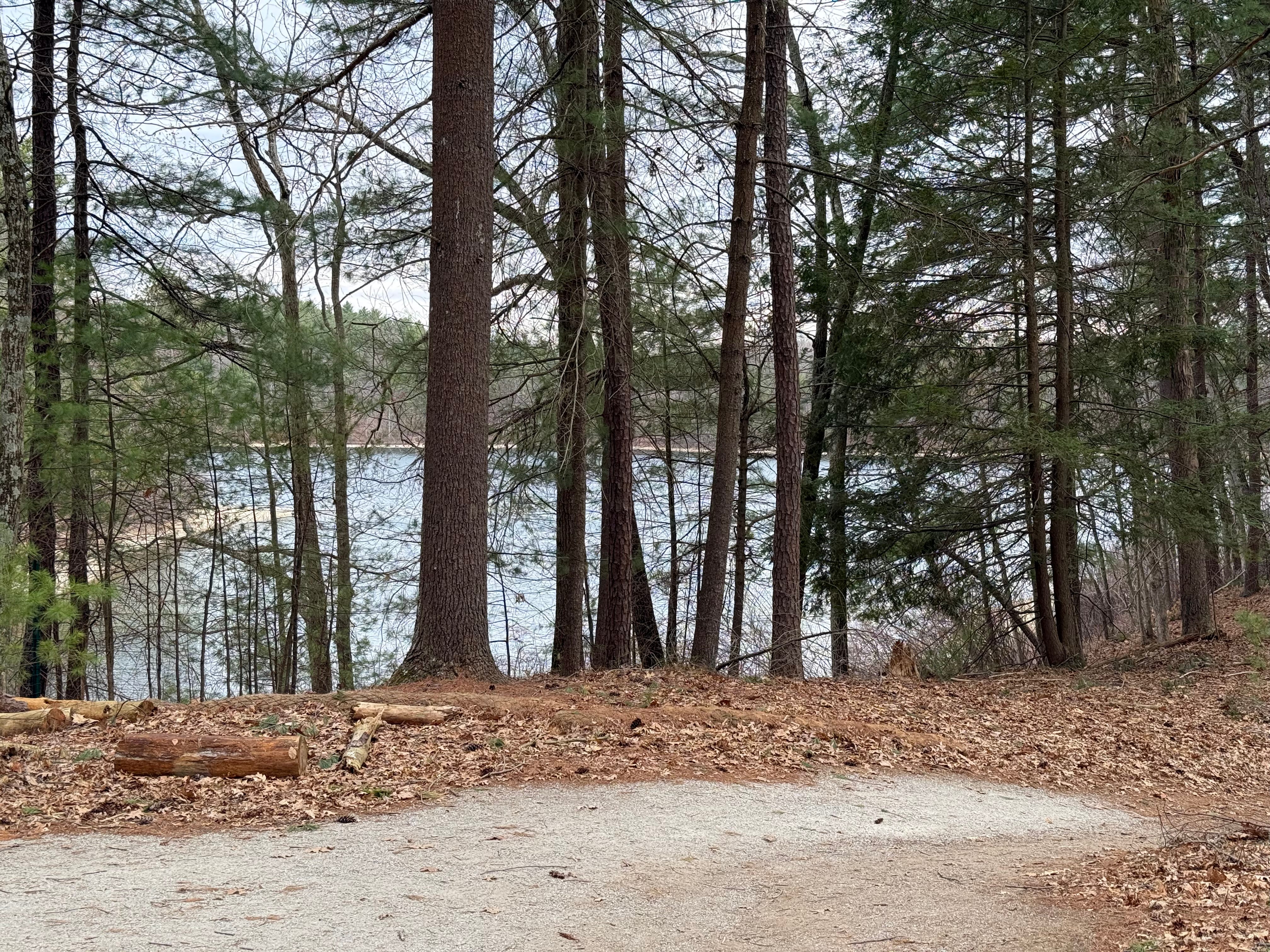
As we walked from the site of his cabin back to the car, we found placards featuring Robert Burleigh’s children’s book, “If You Spent a Day with Thoreau at Walden Pond.”1 Each page imagined what a child might experience with Thoreau at Walden Pond, watching fish swim, ants build, and clouds pass by. Those pages reminded me that part of Thoreau’s experiment was to experience nature and the world in each moment and to love it “because of” what it is.
In his book “Walden,” Thoreau gives detailed descriptions of Walden Pond, including its water, surface, bottom, inhabitants, and winter ice. He describes how he watched snakes, birds, woodchucks, ducks, owls, foxes, and ants. In each moment and in each interaction, he loved them all because of what they are.
When we love something because it is valuable, we are practicing because-of love.2 As parents, we naturally use this type of love when we experience and appreciate our children’s inherent value. We see their first smiles, bites of food, words, and steps. We treasure plaster handprints, watercolor sunsets, and dinosaurs crafted from clay. We love our children because of who they are.
As I walked beside Walden Pond and read the pages of the children’s book, I realized that because-of love exists in a moment. Thoreau loved Walden Pond for its clarity and reflections in the summer, and for its solid ice coating in the winter. He loved the pond’s fish and the beans he grew because of the sustenance they provided. He loved the ants, foxes, and woodchucks as neighbors. He was happy to pause and experience nature moment by moment, loving it along the way.
Later, Thoreau said, “Love must be as much a light as a flame.”3 Love, then, is not only warmth or attraction. It also illuminates, helping us see more clearly. Because-of love may begin in delight, but it doesn’t have to remain there. The warmth of love becomes a light that points to the future, to something beyond the now.
That kind of attention matters in parenting, too. We begin by loving our children because of who they are: their smile, their curiosity, their energy, their uniqueness, their sheer presence in our lives. But parenting asks more of us than admiration. It asks us to let love mature, guiding us toward overall well-being. We do not simply enjoy the child before us; we seek the flourishing of the child who is growing and changing, always in relationship to the well-being of the whole family and the world around us.
Overall well-being includes flourishing, wellness, shalom, health, and happiness. It is not always easy to recognize, and it often requires discernment and wisdom. In parenting, it means considering the needs of each family member and the family as a whole. It will not look the same in every home, because every family is made up of different people with different needs.
As parents, we can let our because-of love point us toward that wider flourishing. From the very beginning, we can attend to a child’s needs and wants while also holding them alongside the needs of the rest of the family. For a newborn, that might mean picking her up, laying her down, or asking someone else to hold her so you can tend to a sibling, prepare a meal, or sit and enjoy much-needed rest. For older children, this may mean actively seeking input on the family’s plans and intentionally explaining the reasons for decisions you make.
We can also teach our children to seek this kind of well-being for others. We can help them learn to consider others around them and the broader world as they make their own choices. That sounds a bit like a wise statement from Jesus, “…do to others as you would have them do to you.”4
Maybe that is what Walden Pond gave me that afternoon: a reminder that love begins in attention. It begins as we notice the worth of what is before us. And perhaps it grows from there, becoming a light that guides us toward the good still lying ahead.
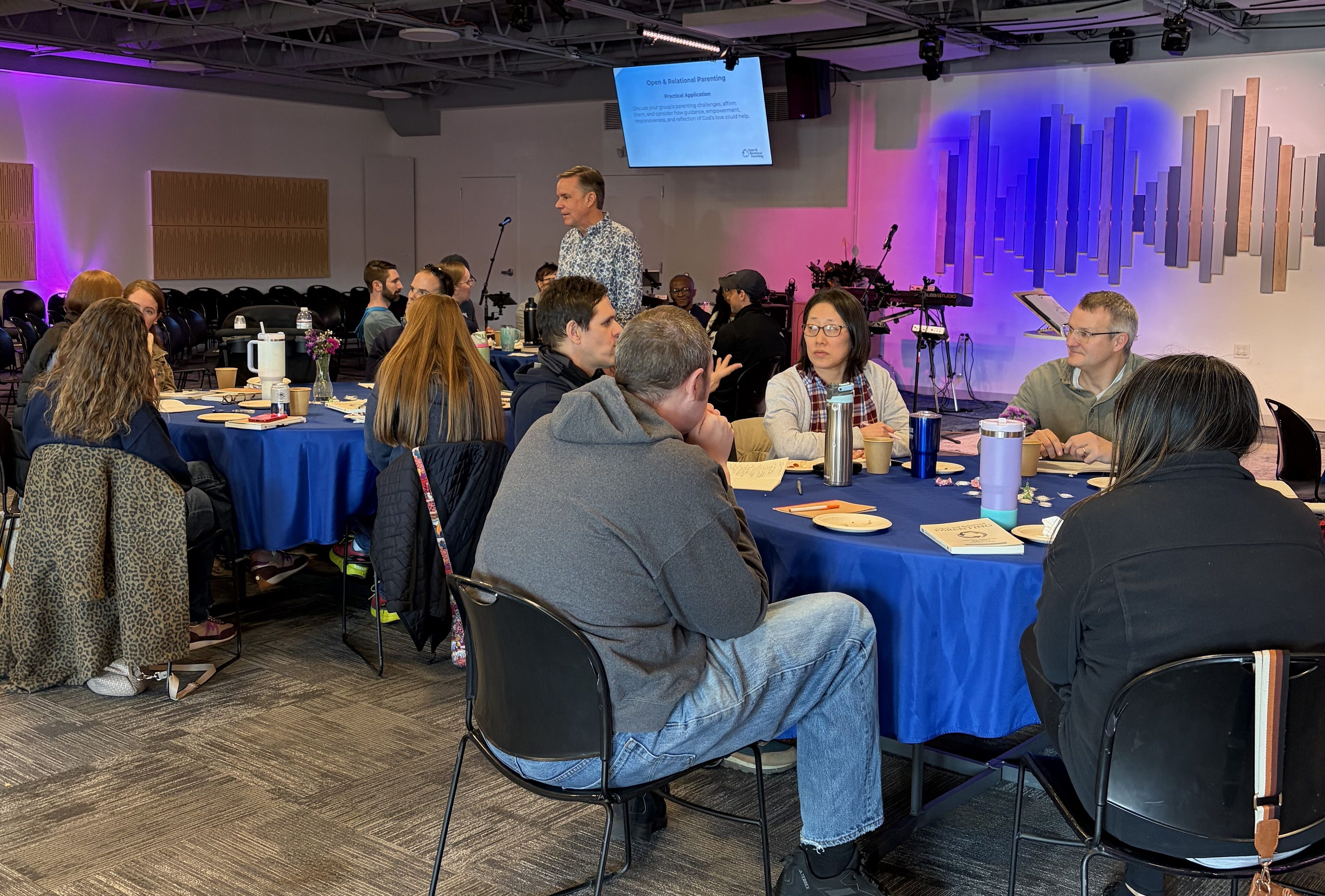
Special thanks to Pastor Willie and my other new friends at Great Road Church in Acton, MA. They were gracious hosts, and I had a wonderful time discussing ways we can reflect God’s love to our children.

Robert Burleigh, If You Spent a Day with Thoreau at Walden Pond, illus. Wendell Minor (New York: Henry Holt and Co., 2012).
I describe because-of love in my book, Open and Relational Parenting, and in my Substack Post, Because-of Love. Also see Thomas Jay Oord, Pluriform Love: An Open and Relational Theology of Well-Being (Grasmere, ID: SacraSage, 2022), 136.
Henry David Thoreau, Familiar Letters of Henry David Thoreau, ed. F.B. Sanborn (Boston: Houghton, Mifflin, 1894)
Mt. 7:12 (New Revised Standard Version Updated Edition).
No posts
Comments
Nothing yet. Say the first thing.
Sign in to join the conversation.