
Every summer seems to bring another record-breaking wildfire season.
Entire towns are evacuated with only minutes to spare. Smoke drifts thousands of kilometers, turning skies orange in cities nowhere near an active fire.
Insurance claims continue to climb, and many homeowners are discovering that preparing for a wildfire isn’t just something people in California or British Columbia need to think about anymore.
If the last few years have taught us anything, it’s this:
Wildfire is no longer just a regional problem. It’s becoming a North American reality.
Whether you live in rural Manitoba, the forests of Ontario, the mountains of British Columbia, or the suburbs of Colorado, Washington, or North Carolina, every homeowner should understand how wildfire risk is changing and what they can do today to improve their odds.
Several factors are converging to make recent wildfire seasons more dangerous than those of previous decades.
Longer periods of hot, dry weather are drying forests and grasslands earlier in the year. Snowpack melts sooner in many regions, extending the fire season by weeks.
Strong wind events spread fires rapidly, while expanding communities continue to push farther into forested areas known as the wildland-urban interface.
Government agencies across Canada have warned that climate change is increasing the frequency of the hot, dry, and windy conditions that fuel extreme fire behavior. (canada.ca)
Researchers are also finding that wildfire seasons are shifting.
In Canada’s boreal forests, fires are starting earlier, while some parts of the United States are seeing fire activity extend later into the fall and winter. (agupubs.onlinelibrary.wiley.com)
The result is simple:
Fire season is becoming longer, less predictable, and more difficult to prepare for if you wait until smoke is already on the horizon.
Many people imagine a massive wall of fire consuming everything in its path.
That certainly happens.
But surprisingly, many homes ignite from flying embers.
These burning pieces of wood and vegetation can travel hundreds or even thousands of feet ahead of the main fire. They land on roofs, decks, gutters, wood piles, and dry landscaping.
One glowing ember is often enough.
That’s why preparing your property before wildfire season begins is so important.
Firefighters consistently recommend creating a buffer around your house where fire has less fuel to burn.
Start with these priorities:
Remove dead grass and leaves.
Clean gutters regularly.
Trim tree branches that hang over the roof.
Move firewood at least 30 feet from the house.
Keep propane tanks away from structures.
Mow tall grass regularly.
Prune shrubs and remove dead vegetation.
Replace combustible mulch beside the home with stone or gravel.
These relatively inexpensive improvements can dramatically reduce the chance that your home ignites.
Your roof is one of the most vulnerable parts of your home.
If embers land in piles of dry pine needles or leaves trapped in gutters, they can ignite within minutes.
Metal roofing and Class A fire-rated shingles provide much better protection than older wood roofing materials.
Even if replacing your roof isn’t realistic, simply keeping it clean throughout fire season makes a significant difference.
Many people hundreds of kilometers from an active wildfire experience hazardous smoke.
Fine particles from wildfire smoke can worsen asthma, heart disease, and respiratory illnesses, and prolonged smoke events have become increasingly common across North America. (The Guardian)
Every family should keep properly fitted N95 respirators available.
A dependable option is the 3M Aura N95 Particulate Respirator
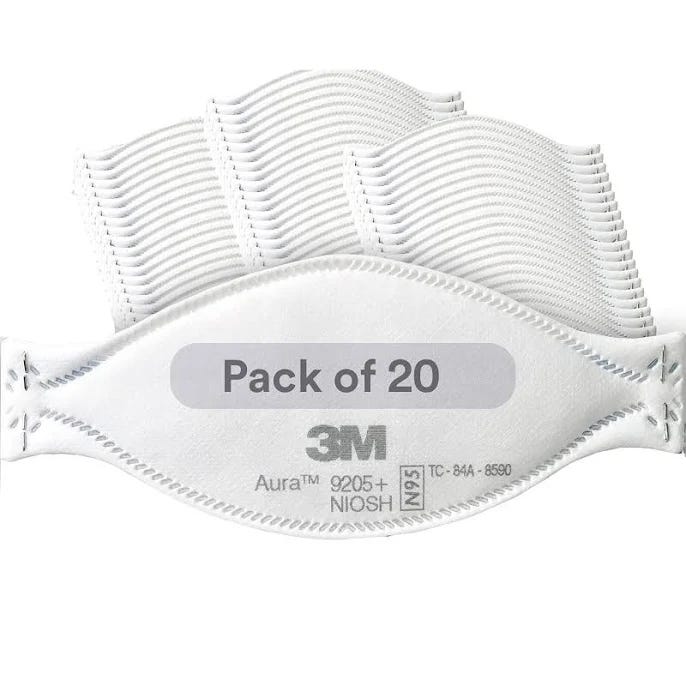
Unlike simple dust masks, N95 respirators filter much of the fine particulate matter found in wildfire smoke when worn correctly.
If evacuation orders arrive, you may only have minutes.
Passports.
Insurance papers.
Property titles.
Birth certificates.
Vehicle ownership.
Rather than searching for paperwork during an emergency, store everything together in a fire-resistant document bag.
One popular option is the Sentry Safe Fire Resistant Document Bag
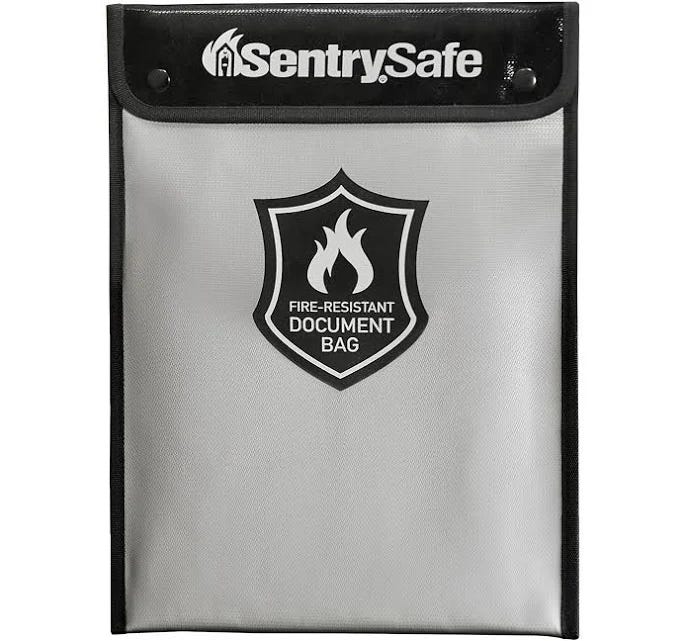
Keep it somewhere easy to grab on your way out the door.
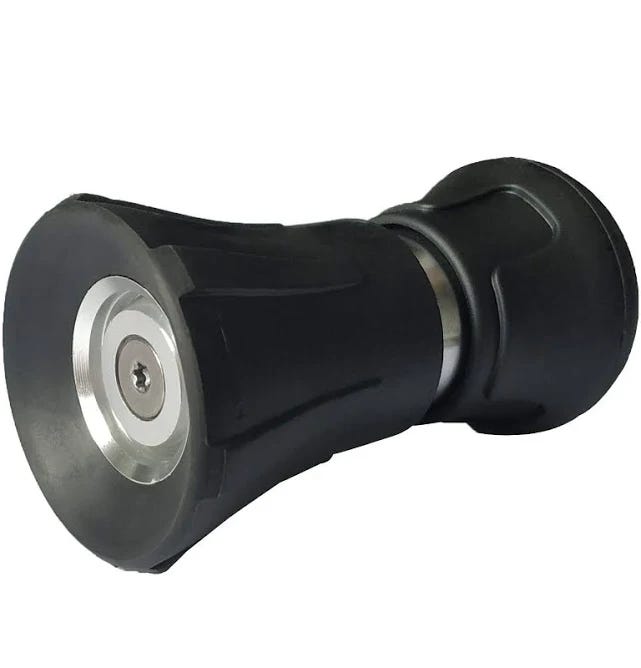
While homeowners should never attempt to fight a large wildfire themselves, having a long garden hose with a quality nozzle allows you to extinguish small spot fires caused by embers before they spread, if it is safe to do so.
A heavy-duty brass fireman’s style nozzle provides excellent water control.
Heavy Duty Fireman Style Hose Nozzle
Remember:
If flames are approaching your property, your priority is evacuation, not defending your home.
Wildfires frequently knock out electricity and cellular service.
A battery-powered or hand-crank emergency weather radio allows you to continue receiving evacuation notices and emergency broadcasts.
A trusted option is the Midland Deluxe NOAA Weather Radio
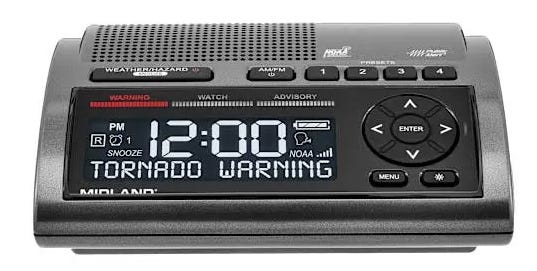
Even in Canada, weather radios can still provide valuable emergency weather information where broadcasts are available, and many models include flashlight, charging, and emergency alert features.
Every household should have an evacuation kit ready before it’s needed.
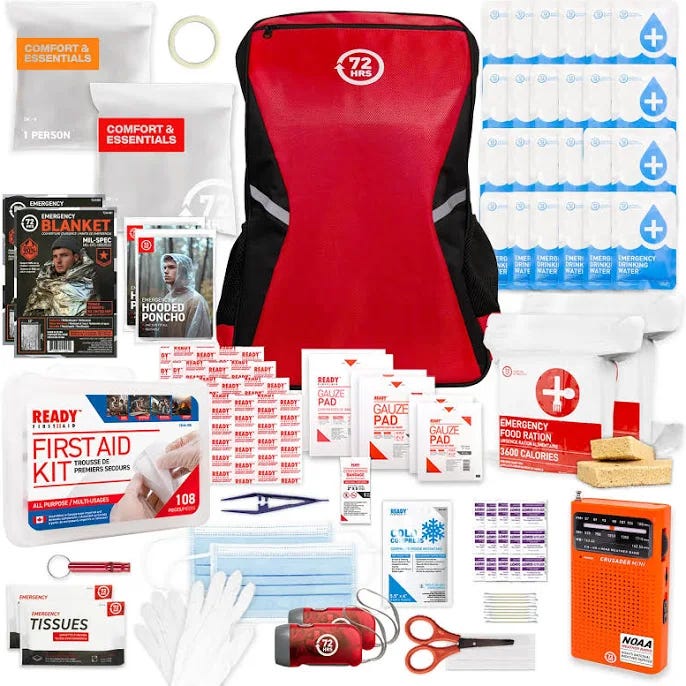
Include:
Three days of water
Non-perishable food
Medications
Flashlights
Power banks
First aid kit
Spare clothing
Pet supplies
Cash
Phone chargers
Copies of important documents
N95 masks
A ready-made emergency kit can also save valuable time.
Check out the 72 Hours Essential Emergency Preparedness Kit
Wildfires are becoming a fact of life across much of North America.
The good news is that many of the most effective protective measures are inexpensive and can be completed over a weekend.
Clear your gutters.
Trim your trees.
Prepare your documents.
Pack an emergency kit.
Know your evacuation routes.
These aren’t signs of fear.
They’re signs of responsibility.
Preparedness isn’t about expecting disaster. It’s about making sure your family has options when everyone else is scrambling.
If wildfire season passes quietly, you’ll be grateful you never needed these preparations.
If it doesn’t, you’ll be glad you took action before everyone else rushed to the store.
No posts
Comments
Nothing yet. Say the first thing.
Sign in to join the conversation.