
There has been a huge swell of deserved protest against Flock, the License Plate Reader Company, which I’ve written about extensively (https://onlinesafety.substack.com/p/lapd-just-dropped-flock). More and more we are seeing cities cancel their contracts with the company because of privacy and mass-surveillance concerns.
However, Flock is laughably small compared to what’s coming with wearable, always-on devices that are recording video and audio of people’s environments. A person wearing one of those devices is basically a walking Flock camera. A town might have 20 Flock cameras, but imagine if even just 10% of the population was wearing these always-on devices? The amount of data collection would be hundreds or thousands of times greater than what Flock has.
And the data collected is available to the companies that make these devices, who can choose to sell it to third parties or comply with legal process to turn it over to governments, or lose it in a hack or through rogue employees.
Unfortunately, this is a reality that’s coming sooner rather than later. First, these devices are already in the market. Second, we are seeing it become increasingly widespread.
For example, Meta filed a patent application for smart glasses that use facial recognition to identify the people around them, read their expressions, decide who is worth filming, and then hand the wearer a highlight reel afterward. The application (US 2026/0238876 A1, “Smart Cameras Enabled by Assistant Systems”) was filed on February 4, 2026, and published on August 13. CNET covered it here: https://www.cnet.com/news/privacy/patent-filing-suggests-metas-facial-recognition-glasses-are-coming/, and 404 Media wrote a good breakdown of the filing itself: https://www.404media.co/meta-patents-ai-glasses-to-use-facial-recognition-to-identify-people-make-highlight-reels-of-your-dinner-party/.
Although a patent doesn’t guarantee a product, Meta's filing suggests they believe securing this intellectual property will provide a competitive advantage. We know other companies are developing similar technologies.
I think this is significant because it signals where we are going as a society with wearable devices & gadgets paired with AI, which has significant privacy implications.
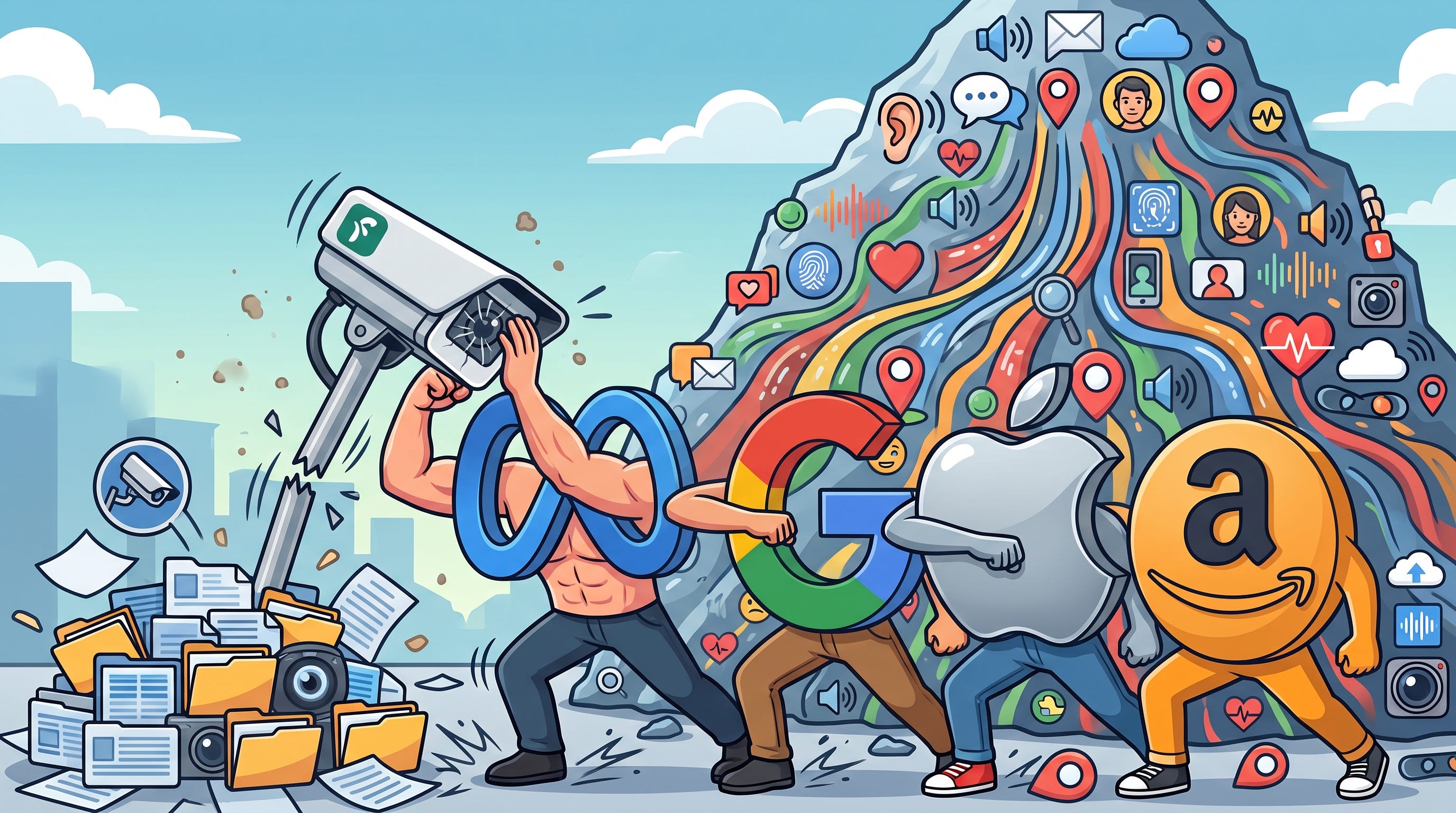
The patent lays out a system that:
Continuously captures the wearer’s field of view via cameras on the glasses.
Detects faces, builds faceprints, and identifies specific individuals.
Reads facial expressions and eye gaze to determine who the wearer finds interesting.
Ranks people by their relationship to the wearer. Meta’s own example is the glasses recognizing the wearer’s wife at a dinner party and prioritizing her over the other guests.
Records clips automatically when a recognized person does something the system decides is worth saving.
Compiles those clips into labeled, searchable memories.
This application is a continuation of earlier filings from 2022 and 2019, so this line of work has been in progress for years. In June, Wired also found unreleased code in Meta’s AI companion App for a feature called NameTag, which was built to turn faces captured by the glasses into biometric signatures and match them against stored faceprints. Meta removed the code and said it was never available to consumers.
The same week the Meta patent was published, a leaked video found in Apple’s macOS 26.7 release candidate appeared to confirm that AirPods with built-in cameras are on the way. TechCrunch has a good write-up: https://techcrunch.com/2026/08/18/why-apples-camera-equipped-airpods-may-not-be-the-pervert-pods-consumers-fear/.
Although Apple appears to be taking a privacy-first approach, some reports say the cameras will not be able to take photos or video at all. Instead, they capture low-resolution visual information so that Siri can answer questions about what the wearer is looking at, and there is reportedly an LED indicator that lights up when visual data is being sent to the Cloud. However, it’s still the always-on recording capability that’s sending data to the Cloud.
There are also devices already on the market that support always-on audio recording, which I wrote about here.
Your face and voice are features that can uniquely identify you. Once your face and voice are matched to your identity and stored in a database, you can be identified anywhere you go. These always-on devices will be extremely valuable for mass surveillance. Once I have a face or voice print of a person I’m targeting, I could theoretically search all of Meta’s data (or any of these companies’ data) for a match, making it almost trivial to find someone anywhere in the world.
Again, this type of capability makes Flock look like a joke by comparison.
I wrote about the audio side of this last year in AI Devices Are Listening (https://onlinesafety.substack.com/p/ai-devices-are-listening). Those devices already record audio, transcribe it, run voice recognition to distinguish speakers, and could store the results indefinitely.
The face side has been technically possible for a while too. Two Harvard students (AnhPhu Nguyen and Caine Ardayfio) demonstrated it in 2024 by pairing Meta Ray-Ban 2s with PimEyes and data brokers to identify strangers on the street in seconds. I covered that in Your Face Is The New Target (https://onlinesafety.substack.com/p/your-face-is-the-new-target-protect-yourself), and I first wrote about facial recognition data brokers like Clearview AI and PimEyes back in April 2023 in Keeping Your Face Private (https://onlinesafety.substack.com/p/keeping-your-face-private).
What is new is that these capabilities are being built into mainstream consumer products by the world's largest companies, which means the distribution and number of people using these devices will be huge.
You cannot control the sensors around you. You cannot stop people from wearing glasses or earbuds with cameras, and you cannot realistically avoid every device that is listening.
The best defense right now (although it’s probably a losing battle) is to make it as difficult as possible for your identity information to be matched with a face or voice. In general, keeping your face, voice, and other identity attributes, including your address, phone, and email, out of as many commercial databases as possible is the best privacy defense here.
Opt out of data brokers. See Doxxing Is A Serious Threat (https://onlinesafety.substack.com/p/doxxing-is-a-serious-threat-remove-your-info-from-databrokers).
De-link your address from your name. My post on this is here: The Critical Privacy Threat, Your Address (https://onlinesafety.substack.com/p/the-critical-privacy-threat-your-address).
Opt out of facial recognition services—step-by-step instructions for PimEyes, Clearview AI, and FaceCheck.ID are in Your Face Is The New Target (https://onlinesafety.substack.com/p/your-face-is-the-new-target-protect-yourself).
Use secondary phone numbers and email addresses so it is harder to tie records together. Here is my guide: https://onlinesafety.substack.com/p/use-a-secondary-phone-number-and-email-address-to-protect-privacy-and-security.
Set your social media profiles and photos to private, and be selective about who you connect with so your face isn’t available everywhere.
Limit where images of your face appear next to your name. This is also why I recommend not posting photos of children publicly. Let them make that decision for themselves later.
Stay Safe!
Tate
If you didn’t know, I’ve founded a scam protection company that protects people like you and your family from scams. We have built a simple App that works on Macs, Windows, Android, and iOS that alerts you when it recognizes a scam. Think of it as antivirus, but for scams. Check us out at hellojacana.com and follow our Substack.
Comments
Nothing yet. Say the first thing.
Sign in to join the conversation.