
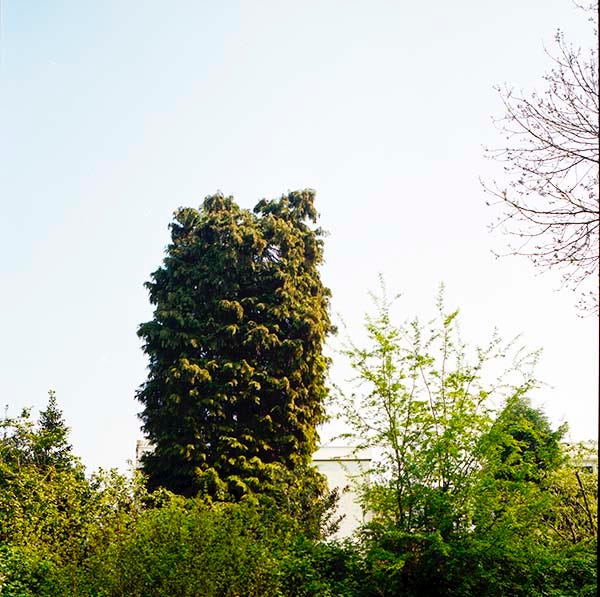
“Only in emptiness can the real essence be found.”
In The Book of Tea (1906), Kakuzō Okakura explains the concept of emptiness through one of Lao Tzu’s favourite metaphors:
“The usefulness of a water jug lies in the emptiness where the water is placed, not in the shape of the jug or the material from which it is made.”
Okakura was a Japanese scholar and art critic with a deep interest in Eastern art. Outside Japan, his ideas influenced figures as diverse as Martin Heidegger, Ezra Pound, and Charlotte Perriand.
For architect and designer Perriand, The Book of Tea became a lasting source of inspiration. The notion of emptiness became a guiding principle in her work. As she put it: “Le vide est tout-puissant, parce qu’il peut tout contenir.” (“The void is omnipotent because it can contain anything.”) For Perriand, this was not an abstract concept but a practical one, expressed through functional designs created to support everyday life.
In photographer Jean-Marc Bustamante’s Tableaux, emptiness is present in a different way. Made between 1978 and 1982 on the outskirts of Barcelona and in various locations in Provence, these photographs depict what Bustamante himself described as places “without qualities.” Neglected sites at the edge of the city. Anti-landscapes.
The photographs were conceived for the museum wall and printed at a monumental scale. Bustamante used an 8×10 camera, resulting in images of extraordinary detail. Everything is rendered with the same precision. Everything appears equally important. As a consequence, the eye finds no obvious point of focus. The viewer scans the image, searching for something to hold on to.
But there is more at work here. What is depicted does not invite the imagination to wander further. There is no story unfolding, no event waiting to be discovered. Nothing spectacular happens in these images. In fact, nothing seems to happen at all. Bustamante presents a fragment of reality, yet the gaze struggles to establish a relationship with it. Paradoxically, the large format and sharpness of the photographs do not draw the viewer into the scene. They create distance. The viewer is not included, but excluded. The viewer is left to decide what the image means and how to respond to it.
At the beginning of my photographic practice, I became fascinated by the idea of emptiness. I was working full-time in the corporate world while studying photography. Through my work, I met many CEOs and companies, and gradually became disillusioned with the culture of ambition and endless growth that surrounded me.
I withdrew into my artistic practice.
I wanted to photograph nothing.
Instead of searching for the extraordinary, I chose what was small and everyday. It was a form of quiet resistance to the constant demand for the grand, the spectacular, and the exceptional.
Thanks for reading one photo! This post is public so feel free to share it.
Comments
Nothing yet. Say the first thing.
Sign in to join the conversation.