
Both. As long as it is on the wall as an installation, and not simply something pleasant to hang above the couch. As the artist and photographer Kyungwoo Chun remarked during Photobook Aarhus in 2014:
“In a way, a photobook could be interpreted as a photo exhibition in transfer. Because if you cut up a book and spread out all its pages, you will have a very long line of pages taking up an equally long line of space. The thought that you can have a large exhibition in your pocket is fascinating.”
Gerhard Richter and Sigmar Polke approached this idea from the opposite direction. They turned the catalogue of a joint exhibition in Hanover in 1966 into an artist’s book: polker/richter. At first glance, the book resembles a standard exhibition catalogue, formatted like those typically produced by galleries. But instead of the usual essays by art critics and reproductions of artworks, the book contains statements by the artists themselves, excerpts from science-fiction comics, and fragments of pulp fiction. In an interview with Hans Ulrich Obrist, Richter recalled that both he and Polke were reading a German pulp science-fiction series at the time; literature widely regarded as vulgar. That series became the inspiration for their catalogue as an artist book.
For Wolfgang Tillmans, the catalogues of his exhibitions are themselves entirely artist’s books. For the catalogue accompanying his exhibition at Tate Britain in 2003, he used a catalogue from 1987 from the Neues Gemälde Museum Dresden as a template. The catalogue had been produced in the former GDR and followed a rigid structure, which Tillmans deliberately adopted. For the exhibition he revisited his archive, which contained an enormous number of photographs. He selected every image that meant something to him in one way or another. In doing so he raised a simple but essential question: when does an image belong to the oeuvre? When is it part of the work and when is it not?
In 2025, for the catalogue of his exhibition at Albertinum museum in Dresden, he copied pages from both the 1987 catalogue and the 2003 publication. These copies became the background for the Albertinum catalogue, turning it once again into an artist’s book.
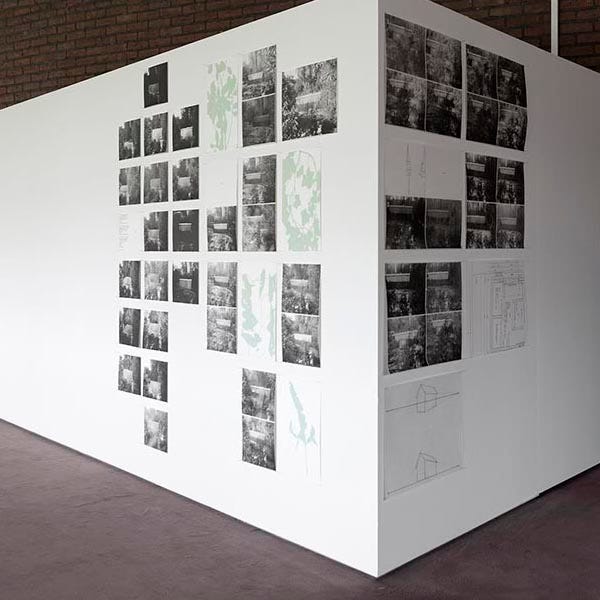
I make books in small editions that function as exhibitions or collections in book form. When I exhibit my work, I use pages from my books and attach them to the wall with pins. This is how I presented my work Arcadia in Hasselt (BE) in 2019.
Comments
Nothing yet. Say the first thing.
Sign in to join the conversation.