
When we moved to rural France, I came with a list (I’m American, so of course I had a list). I knew about the long lunches and the good cheese and the August where the entire country simply leaves. I had been warned about the paperwork (correctly) and the dinners that start at 10pm (also correctly) and the heat waves with no air conditioning (we’ll get to it).
What nobody warned me about were the small things. The ones you can’t find on a “Moving to France” checklist because they’re too specific, too odd, too subtly wonderful to make the official briefing.
About a month ago I wrote about ten small French things that still feel like magic, and you loved it, which tells me I'm not the only one collecting these. Here are ten more that snuck up on me, the ones too specific for the official briefing.
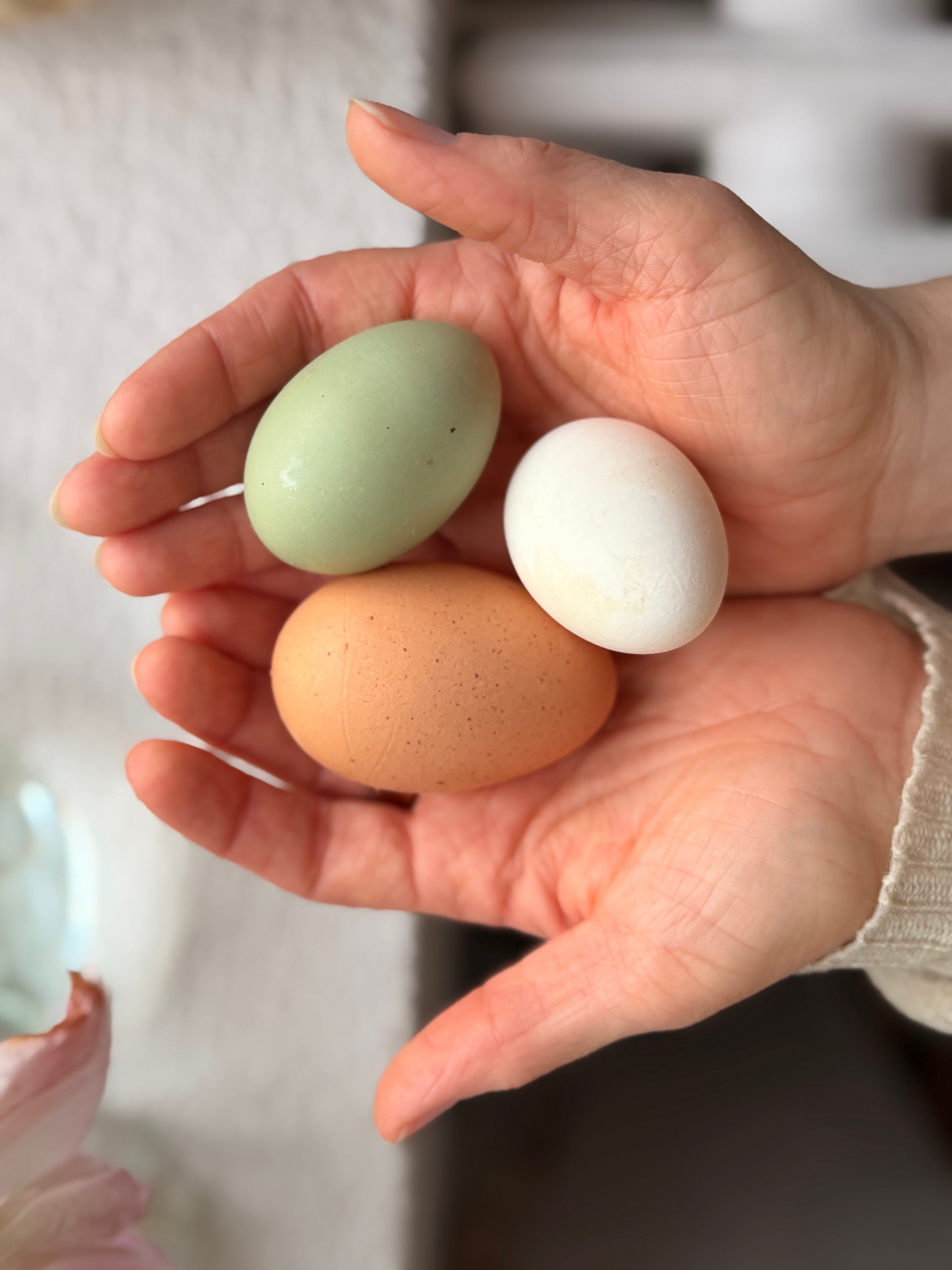
1. The eggs are not in the refrigerator. Anywhere.
The first time I reached for eggs at the grocery store and found them sitting on a regular shelf, room temperature, next to the flour, I assumed something had gone terribly wrong. A power outage. A forgetful stock boy. A French health-code situation I did not want to be a part of.
No. The eggs here just aren’t refrigerated, because they’re fresh enough and unwashed enough that they don’t need to be. We have our own chickens now, so most days this is a non-issue (the eggs come from approximately forty meters away). But every so often we hit a baking streak, or company arrives, and I find myself buying a carton off a warm shelf like a local (which I apparently am now).
2. You’re allowed to keep the bread that’s already going stale, and the moldy berry is your problem.
In Los Angeles, we did Whole Foods deliveries for a while. Once I opened a carton of raspberries and found exactly one with a spot of mold on it. I reported it (to Amazon, because that’s who we placed the orders through) and received a full refund for the entire carton. The whole thing took four minutes and felt like justice.
Here, the bread you buy in the morning is a rock by the day after tomorrow, because there’s nothing in it pretending otherwise. You buy it, you eat it same day or the next, that’s the arrangement. And the berries? I once carried a half-moldy carton of blueberries up to the man at the boutique organic shop here in our little French village, pointed at the offending berries, and waited for my apology.
He looked at me, and then looked at the berries. “Oui, c’est normal,” he said. Yes. Normal. Toss the bad ones, eat the rest with your lunch, why are we still talking, madame?
I’ll get there.
3. The pharmacy is where you go to be taken care of, not just to pick up your meds.
Early on, my son had a cold, so I did what any prepared American does: I googled the French equivalent of Tylenol Cold, marched into the pharmacy, and asked for Doliprane like I was ordering at a drive-through.
The pharmacist did not hand me a box. She asked - what was it for? A cold. What were the symptoms? I listed them. How old was my son? I told her. Then she went off down the aisles and came back with three different things, one for each symptom, and walked me through every one in a low, calm voice that made the whole exchange feel less like a transaction and more like a small ASMR consultation. A saline spray for his nose. An herbal cough thing. Liquid Doliprane for the fever.
And the boxes are small. Five to seven days’ worth, because the assumption is that you will get better. No Costco bottle of 500 tablets. France gives you a little, because a little is what a passing thing requires. They do this with food too, among other things.
4. The stone walls are the air conditioning.
Our first canicule (the gloriously medieval-sounding French word for heat wave), I panicked and ordered one of those ugly portable A/C units off Amazon, the kind with the elephant-trunk tube you wedge out a window. The temperature climbed into the 90s. We ran errands, came home sweaty and braced, and I walked through the door of our 300-year-old farmhouse fully prepared to crank the thing to maximum.
It was cold inside. Truly cold. I asked Sean if he’d turned the unit on before we left. He hadn’t. We checked. It wasn’t on.
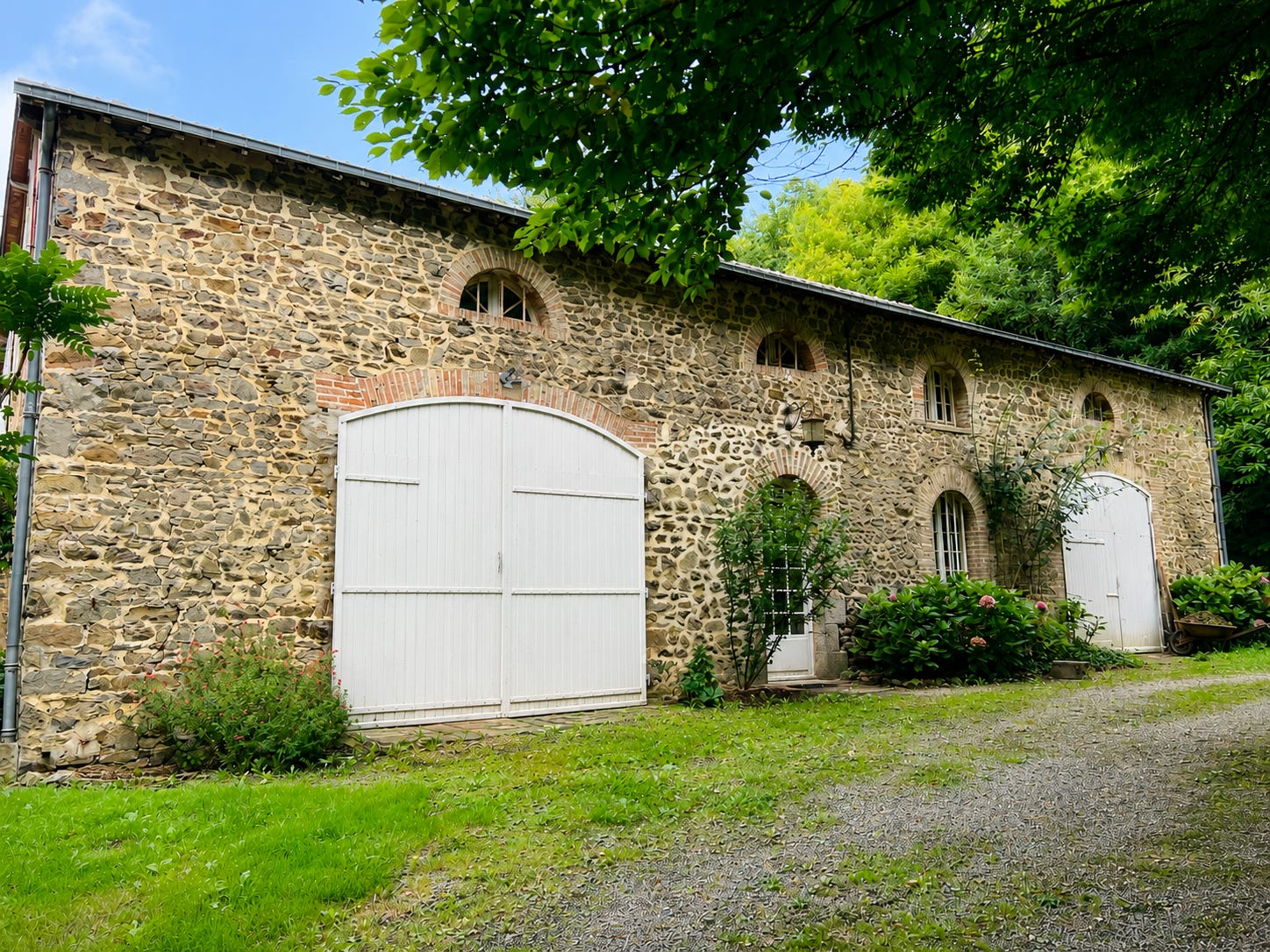
The walls are that thick. They just hold the cool the way they’ve held it for three centuries. (Winter is a different conversation, and we survive it, barely.) Just last week I stepped into the coach house we’re getting ready to rent, it was 91 degrees outside, and within a few minutes I was putting on a wool sweater. In June. Inside.
5. In autumn, the men with guns are a scheduled event.
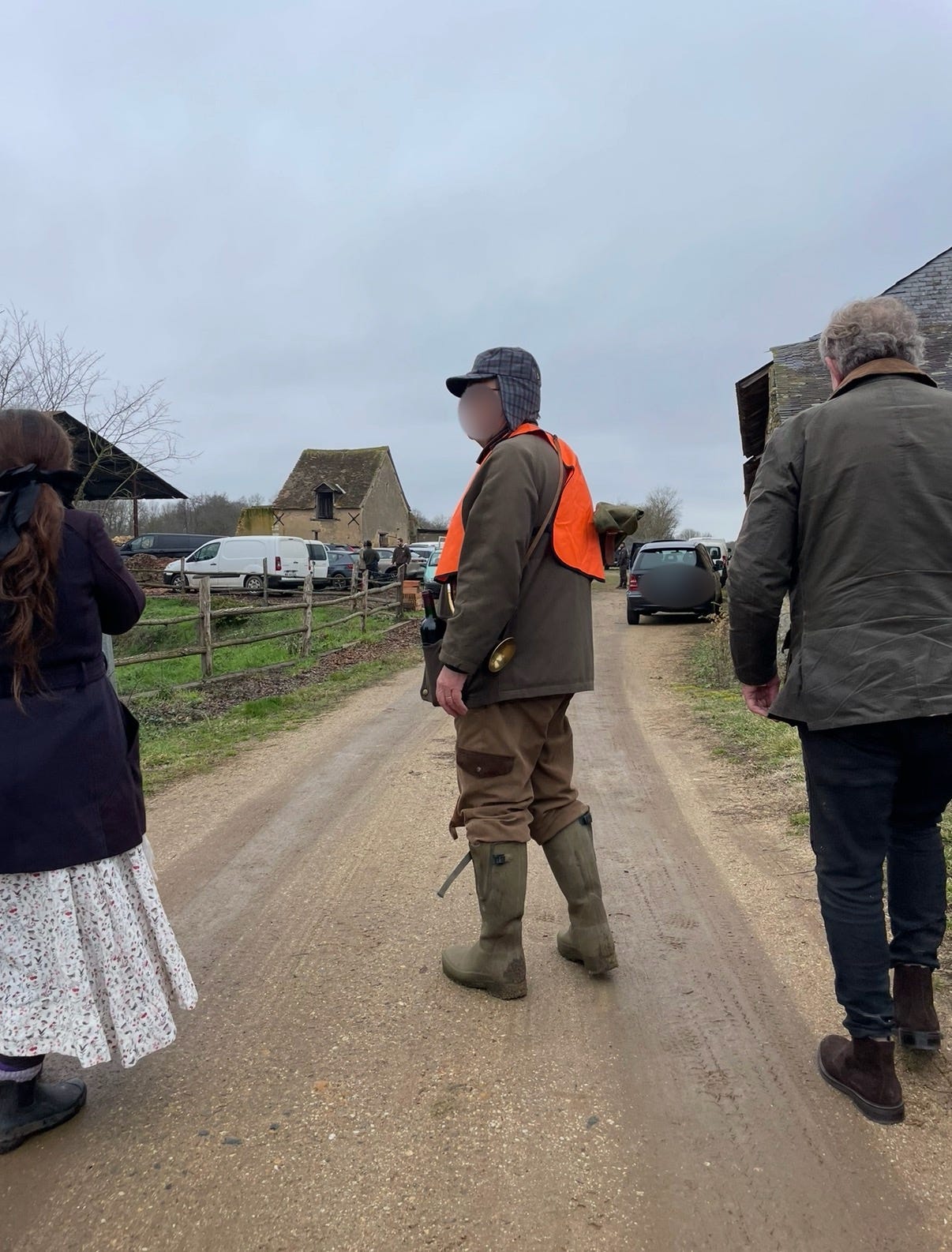
We arrived in August. By September, a text came from our landlord: Don’t walk in the forest today. It’s La Chasse. Shortly after, gunshots. I called, mildly alarmed, and learned that a group was hunting wild boar on the property, which is both a sport and a public service here, since the boar are everywhere and they destroy crops and agricultural land.
Later I looked outside and saw several men in full orange regalia, hats and vests and serious faces, with hunting dogs, parked directly next to our car. La Chasse is its own institution, taken very seriously by the people who do it, down to the last button of the costume. When La Chasse is on, you stay inside, you don’t wander into the trees, and you certainly don’t interrupt. Nobody warns you that “stay out of the forest, the hunt is on” will become a normal autumn text in your phone, right between the school schedule and the boulangerie hours.

If you're enjoying the small strange wonders, there's a new one in your inbox every week. Subscribe free and don't miss the next batch.
6. The cow manure is a love language.
We live surrounded by fields and pastures. Before we moved, I really wondered how I’d feel about that, and I’ll be honest: sometimes, depending on the season and which way the wind is going, you smell it. The manure. Spread across the crops.
But here’s what I didn’t understand until I’d spent a few seasons downwind. None of this is waste. The manure goes back into the soil to grow the enriched feed for the animals, around and around, and the whole countryside runs on these small exchanges. The farmer comes and mows your field and keeps the hay to feed his horses through winter. Someone brings their sheep to graze a neighbor’s overgrown patch, and now the sheep are fed and the field is mowed and no money changed hands. Farming here isn’t the industrial machine I knew of from back home. It’s family-owned, everywhere you look, deeply respected, and woven into daily life without a single strange connotation attached. So yes. Sometimes it smells. I’ve made my peace, and then some.
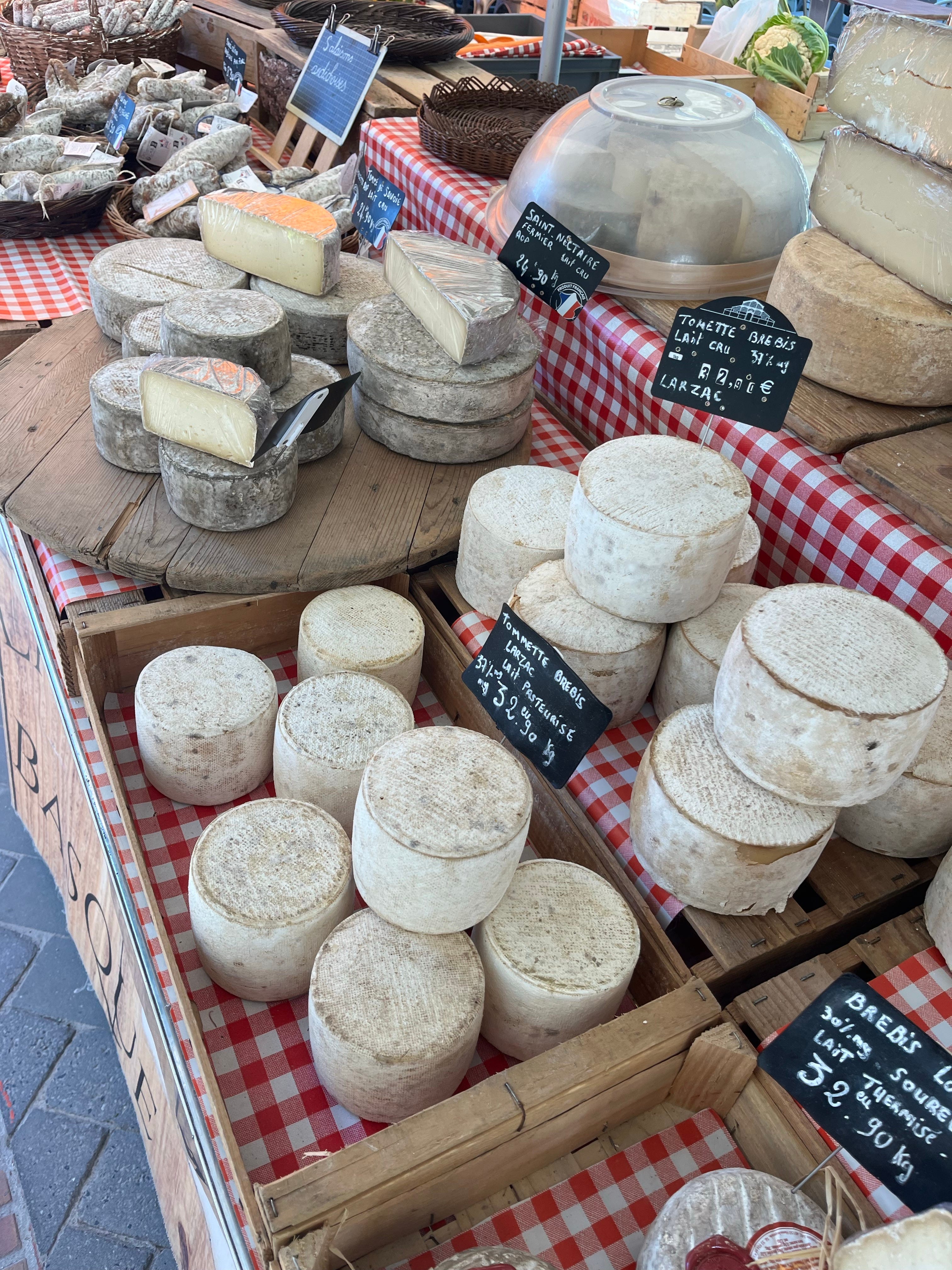
7. Cheese is dessert, and I owe my mother’s friend an apology.
When I was about eleven, a friend of my mother’s took me to a fancy restaurant for my birthday. At dessert she said, “Oh, I’ll order,” and proceeded to order a cheese log. A cheese log. I was a child raised on orange cheddar and string cheese, sitting there having pictured a slice of New York cheesecake or, at minimum, a fancy cookie, and instead a wheel of cheese arrived to mark the happy end of our meal. I was devastated. I remember it vividly, the betrayal of it.
Well, I get it now. In France, cheese is sometimes the treat, the thing you close the night with, treasured enough to stand in for the sweet. I still love a crème brûlée. But every so often it's a small thrill to end the night the way that once horrified me at 11. The cheese log finally has my full respect. It just took twenty-some years and moving to France.
8. The dark stays dark, and you can see everything.
I knew the countryside would be dark, with no light pollution, and the whole sky alight with stars each night - the type of dark where you tip your head back standing at your own front door.
What’s specifically different here, at least in our village, is that the streetlights run on a timer. In the depths of winter they don’t come on until 8:30 in the morning, which means you can stand outside at 8:15, in a village, under a full sky of stars, waiting for the school bus.
I don't know why they're set that way. Energy savings, maybe, or nobody's bothered to change them since 1994. Whatever the reason, it buys you a few more minutes of stars before the day starts, and it makes the school run feel faintly like a night mission.
9. The property has a night shift, and we’re not on it.
Some of this isn't French so much as rural, and I know that. A remote corner of the world with enough trees and dark will hand you wildlife wherever you are. But I came from Los Angeles, where the wildlife was coyotes eating small dogs and a raccoon that once held our trash cans hostage. So when the night-vision camera we set up out of pure curiosity gives back a full parade of magical woodland creatures (foxes, deer, badgers who look exactly as ridiculous and adorable as you'd hope, owls, rabbits going about their rabbit business at 3am), I take it personally, as a gift.

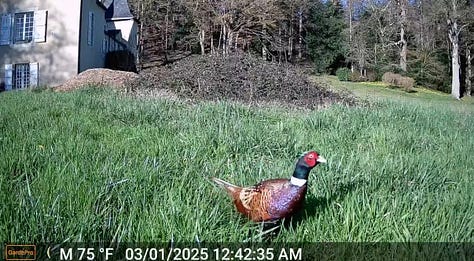
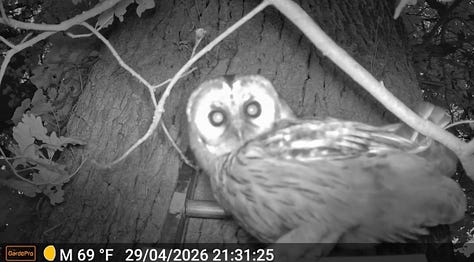
And then there are the things that simply grow here without anyone’s permission. There’s a cherry tree down by the river that I’m about 98% certain no one planted, and it’s strong as ever, tall and entirely self-made. We didn’t put any of this here. It was here. We’re just lucky enough to get to watch it, and now care for it.
10. Going from vous to tu is a graduation, and you don’t get to set the date.
This one undid me a little. French has two words for “you,” the formal vous and the familiar tu, and when we arrived I was baffled by the whole system. When do you switch? How do you know? Is there a ceremony?
What I’ve learned is that the switch means something, especially for us (the obvious outsiders). Moving from vous to tu tells you exactly where you stand in someone’s life, how much warmth, how much familiarity, how much you’ve slowly become part of things. We almost never make the jump ourselves, because we still don’t feel qualified to know the moment. But when someone does it to us, it lands like an achievement. Like a door opening.
It can happen with anyone, and faster than you’d think. We brought our former postman, Olivier, a fresh pain au chocolat from the kitchen now and then in our first months, and stopped to chat whenever he came by, and within weeks we were on tu. And just after we moved into the château, a neighbor we’d never met came to the door to tell us when we’d be coming to her house for our introductory visit (also not optional, also wonderful). The next time we saw her, she told us to use tu.
We did. We do.
À bientu,
Kamille
This is the free side of the château: the eggs, the stars, the man unbothered by my blueberries. There's also a paid side, where I go deeper into the renovation itself, what's breaking, what it costs, what we've found behind the walls. Either way, I'm glad you're here. Subscribe free below, or upgrade if you want the whole unfiltered story.
Comments
Nothing yet. Say the first thing.
Sign in to join the conversation.