
Summer is the perfect time to pick up a new skill, and this year we’ve put together a training lineup we’re genuinely proud of. Whether you’re a student looking to break into bioinformatics, a researcher wanting to get hands-on with omics data analysis, or someone switching into computational biology, there’s a program here built for where you are right now.
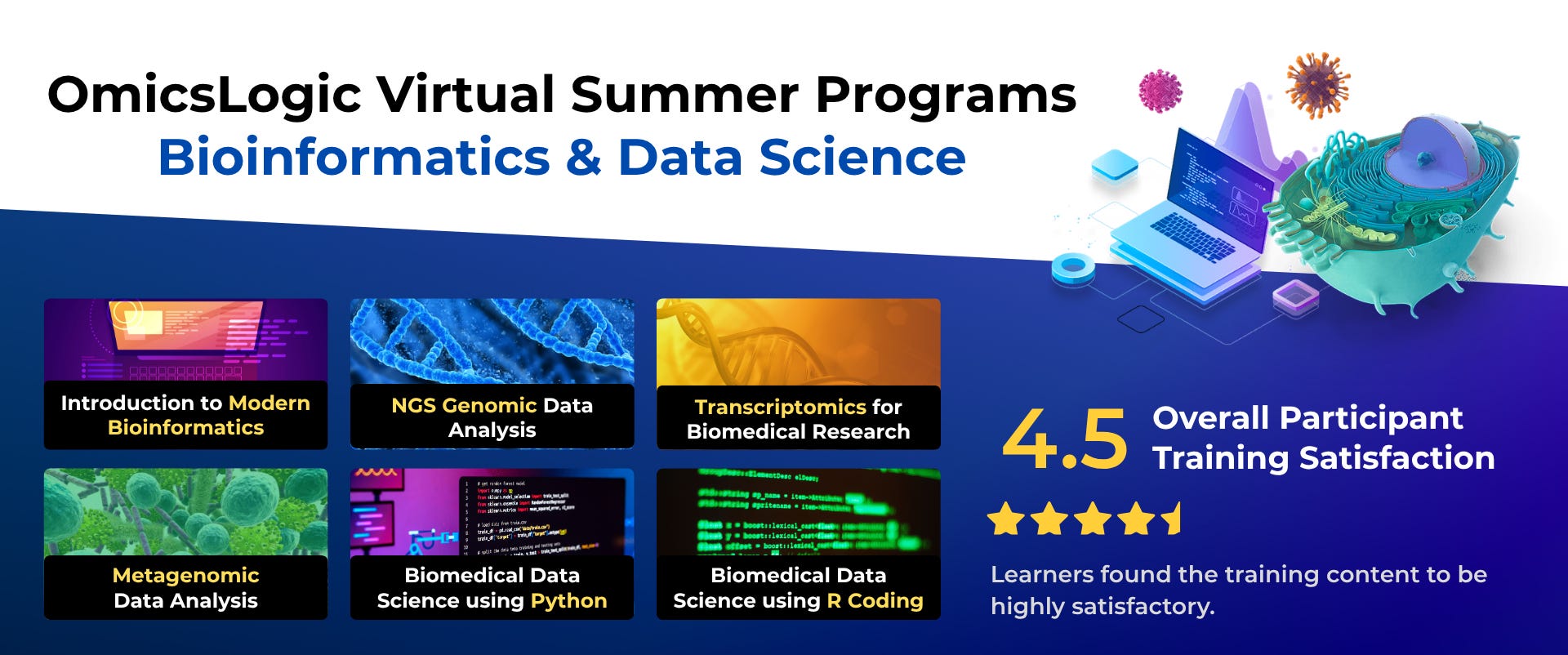
Here’s what’s included in every program:
✅ Fully Online and Self-Paced: Follow the curriculum on your own schedule without missing live sessions or working around time zones.
✅ Three Levels of Learning: Choose from Beginner, Intermediate, or Advanced so the material is always pitched at the right level.
✅ Curated Courses and Example Projects: Structured courses alongside real-world example projects for practical experience with actual data.
✅ Open Source Tools and Scientific Software: All tools are open source, reflecting what is actively used across research institutions and industry.
✅ Industry-Relevant Technologies: Curriculum covers data analysis methods directly applicable in both academic research and industry settings.
✅ Lifetime Access to Google Colab Notebooks: Hands-on practicals built around notebooks that remain yours to keep long after the program ends.
✅ Email and Technical Support Throughout: Dedicated support available to help you work through questions at any point during the program.
✅ Course and Program Certifications Upon Completion: Earn individual course certificates alongside an overall program certification.
🎁 One more thing: We’re giving readers 60% off any training level with coupon code SUM60 at checkout.
Ready to make this your most productive summer yet? Check out our full program lineup below 👇

What You’ll Learn:
Understand the foundations of modern bioinformatics, including the Human Genome Project, genomic technologies, and sequencing methods.
Work with sequencing data file formats, and navigate bioinformatics databases covering sequences, structures, gene expression, variants, and pathways.
Apply sequence alignment, variant and haplotype analysis, and phylogenetic tree construction in genomics workflows.
Perform genomics analysis on Linux, including quality control, read alignment, variant calling, and functional annotation using GATK.
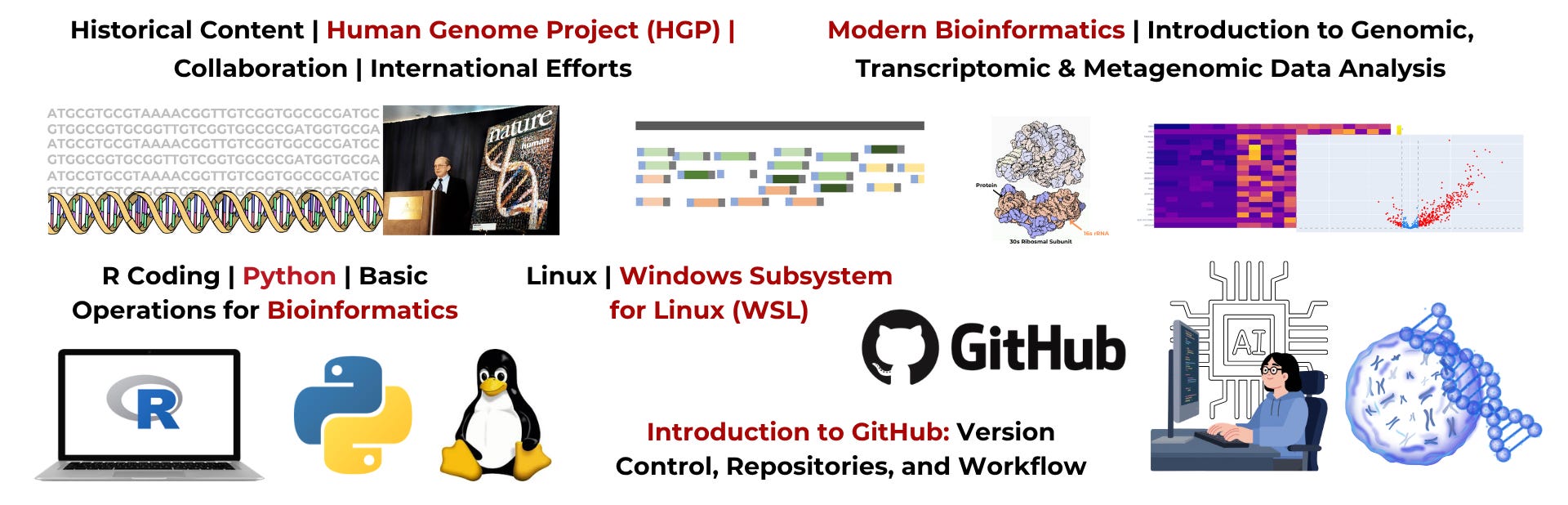
Conduct RNA-seq analysis, including trimming, alignment, and count matrix generation for downstream expression analysis.
Carry out metagenomic analysis using QIIME 2, including quality control, ASV generation with DADA2, diversity analysis, and taxonomy assignment.
Perform single-cell RNA-seq analysis using Cell Ranger and Seurat, covering clustering, dimensionality reduction, and cell annotation using SingleR.
Build data analysis skills in R and Python, including data manipulation, descriptive statistics, and visualization.
Use AI coding assistants and GitHub for bioinformatics coding, prompt engineering, version control, and automated workflows.
✅ Ready to Get Started? Explore the full program structure, curriculum, and pricing at: https://omicslogic.com/programs/introduction-to-modern-bioinformatics
🎁 BONUS! Use coupon code SUM60 at checkout to get 60% off any training level you choose to enroll in.

What You’ll Learn:
Understand DNA structure, genetic variation, and the role of genomic data in biomedical research, Pharma R&D, and agriculture.
Retrieve genomic datasets from public repositories, and work with file formats such as FASTA, FASTQ, SAM/BAM, and VCF.
Perform quality control and preprocessing of raw NGS data using FastQC, Fastp, and GATK tools.
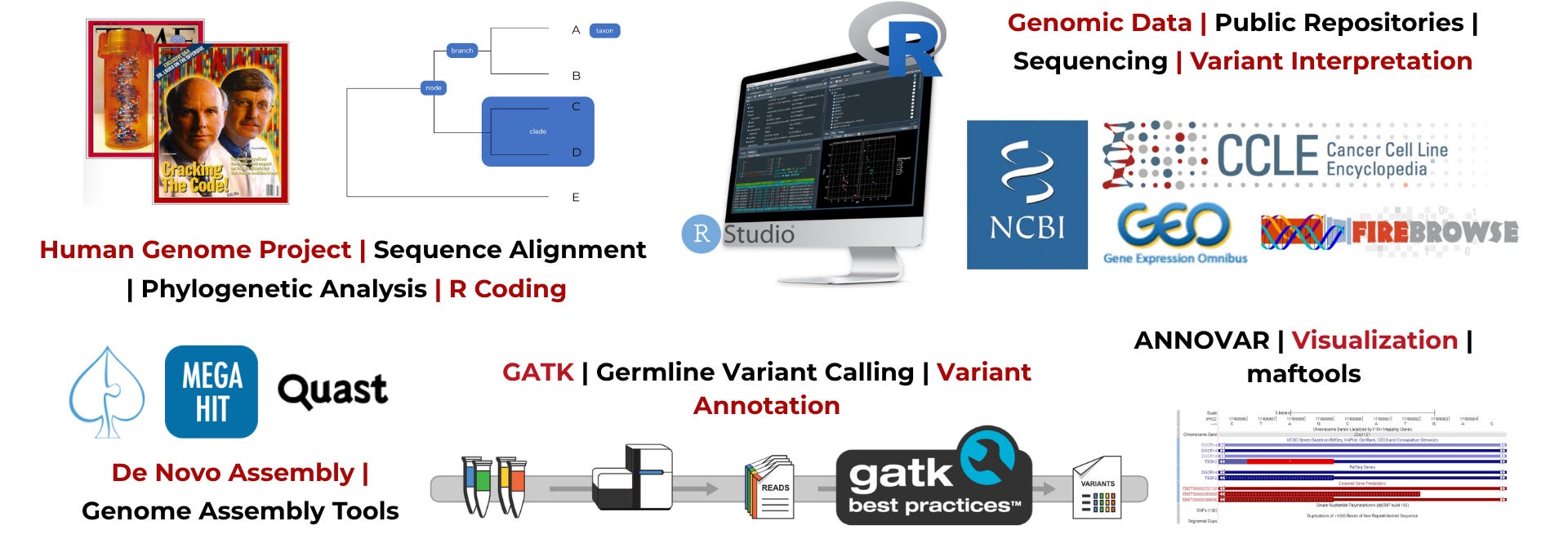
Conduct sequence alignment and phylogenetic analysis applied to real-world case studies.
Execute de novo and reference-based genome assembly workflows, including assembly evaluation with QUAST and genome annotation with Prokka.
Perform germline variant calling using GATK HaplotypeCaller, including SNP and INDEL filtering with VQSR.
Annotate and interpret variants using Annovar and VEP, integrating databases such as ClinVar, gnomAD, and RefSeq.
Classify variants using ACMG’s five-tier classification system and 28 evidence-based criteria.
Visualize and explore NGS data to inspect aligned reads, variants, and genomic annotations.
✅ Ready to build real genomic data analysis skills? Explore the full program structure, curriculum, and pricing at: https://omicslogic.com/programs/ngs-genomic-data-analysis
🎁 BONUS! Use coupon code SUM60 at checkout to get 60% off any training level you choose to enroll in.

What You’ll Learn:
Navigate public databases including NCBI GEO, SRA, ENA, and GDC to search, filter, and download RNA-seq datasets.
Execute the RNA-seq workflow from raw data preprocessing and alignment to generating gene count matrices for downstream analysis.
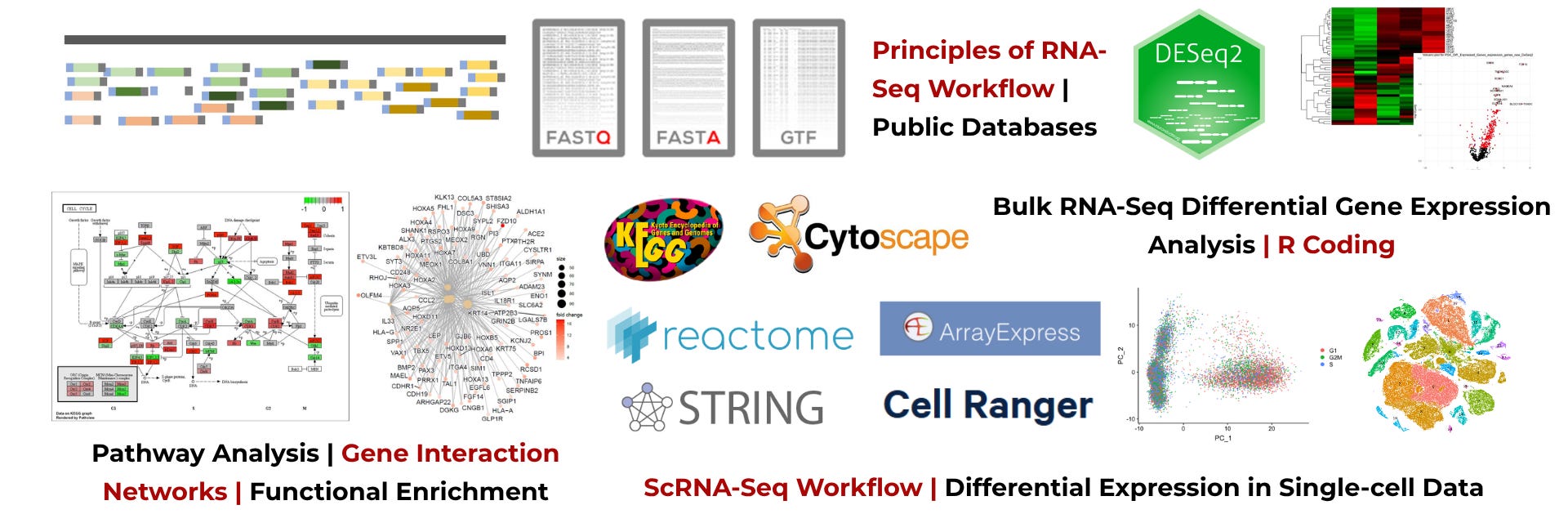
Apply normalization and dimensionality reduction techniques to explore and visualize gene expression data.
Perform differential gene expression analysis using DESeq2 and statistical methods, and visualize results with volcano plots and heatmaps.
Conduct pathway enrichment analysis and interpret results in the context of biological pathways and GO terms.
Build and analyze protein interaction and gene regulatory networks.
Apply unsupervised machine learning including k-means and hierarchical clustering to identify patterns in gene expression data.
Process single-cell RNA-seq data using Cell Ranger and Seurat, from QC and clustering to cell type annotation using SingleR.
✅ Ready to get started? Explore the full program structure, curriculum, and pricing at: https://omicslogic.com/programs/transcriptomic-data-analysis-for-biomedical-research
🎁 BONUS! Use coupon code SUM60 at checkout to get 60% off any training level you choose to enroll in.

What You’ll Learn:
Learn the foundational steps of generating metagenomic data, from sample collection and DNA extraction to library preparation.
Navigate and retrieve metagenomic datasets from public repositories.
Apply the DADA2 algorithm for denoising raw sequencing data and preparing sequence tables for biological analysis.
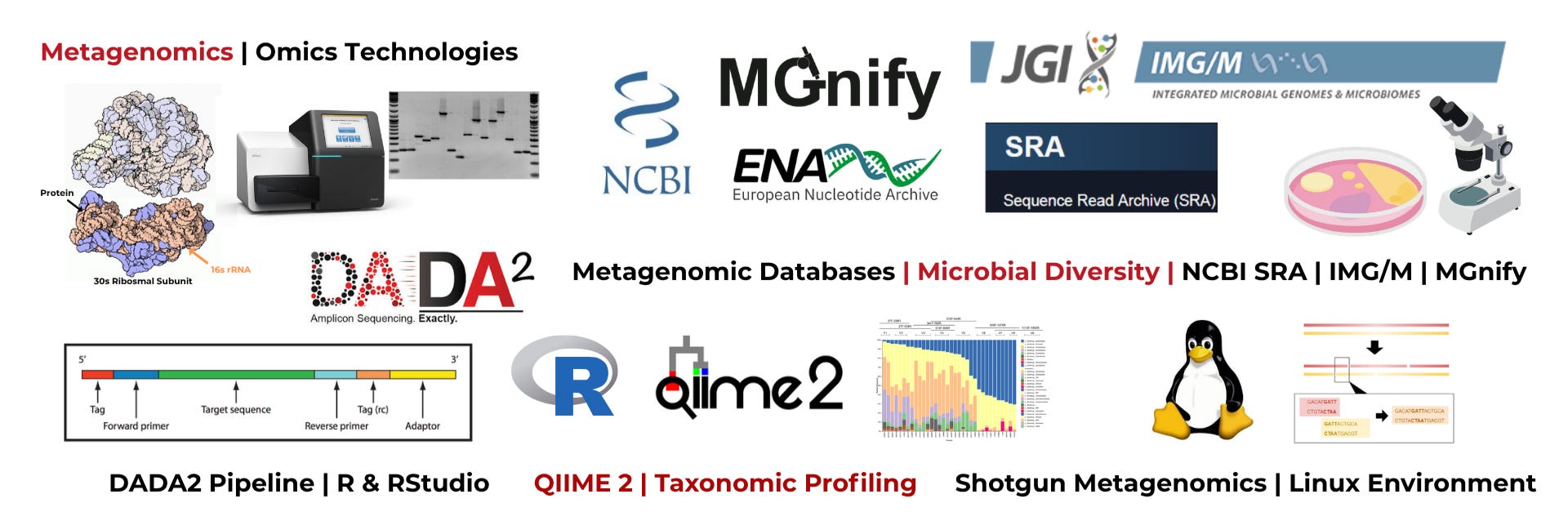
Perform taxonomic classification and microbiome visualization to identify key microbial players across different health conditions.
Conduct alpha and beta diversity analysis to interpret biological differences between microbial communities.
Use QIIME 2 workflows to process raw sequencing data through denoising, diversity analysis, and taxonomic classification.
Profile microbial functions and predict metabolic pathways using PICRUSt2 and HUMAnN3 in shotgun metagenomics workflows.
Perform statistical analysis and create visualizations for microbial data using R programming.
✅ Curious to learn more? Explore the full program structure, curriculum, and pricing at: https://omicslogic.com/programs/metagenomics-data-analysis
🎁 BONUS! Use coupon code SUM60 at checkout to get 60% off any training level you choose to enroll in.

What You’ll Learn:
Understand biomedical data science fundamentals covering omics, sequencing technologies, and applications in drug discovery and disease research.
Build a Python programming foundation covering data types, functions, exception handling, and object-oriented programming.
Use NumPy and Pandas for data manipulation, filtering, grouping, and aggregating biological datasets.
Apply data wrangling and preprocessing techniques to handle missing values, normalize data, and prepare gene expression datasets for analysis.
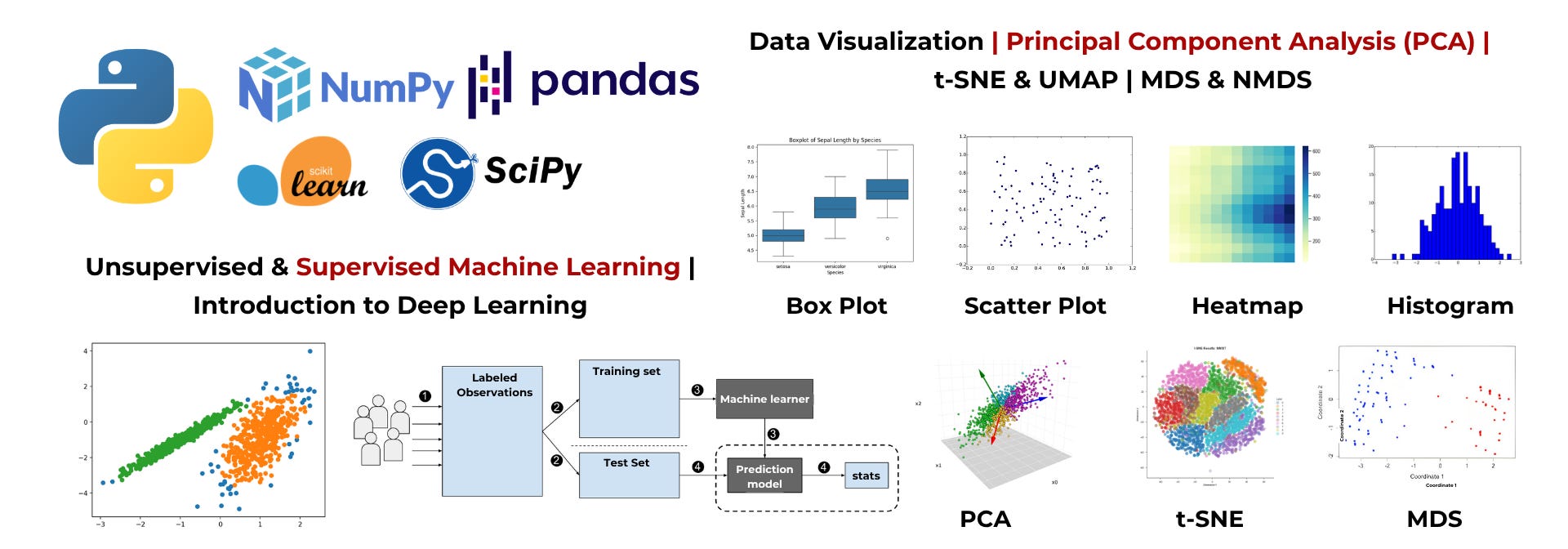
Create visualizations including heatmaps, box plots, scatter plots, and histograms.
Perform dimensionality reduction to explore structure in high-dimensional omics data.
Apply unsupervised machine learning including K-Means, Hierarchical Clustering, and DBSCAN, with model validation using K-fold cross-validation and silhouette scores.
Build and evaluate supervised models including Random Forest, SVM, Logistic Regression, and KNN for biomedical classification tasks.
Get introduced to deep learning using Keras and TensorFlow, including autoencoders and predictive neural network models on gene expression data.
✅ To learn more about the program structure, curriculum and pricing, visit: https://omicslogic.com/programs/biomedical-data-science-using-python
🎁 BONUS! Use coupon code SUM60 at checkout to get 60% off any training level you choose to enroll in.

What You’ll Learn:
Set up R and RStudio, navigate the interface, and run R code in Google Colab for hands-on biomedical data analysis.
Work with R data types including vectors, matrices, data frames, and lists, and apply dplyr functions to filter, clean, and reshape biological datasets.
Create data visualizations including bar plots, histograms, box plots, heatmaps, and scatter plots to explore and interpret gene expression data.
Apply dimensionality reduction techniques including PCA and t-SNE to simplify and visualize high-dimensional omics data.
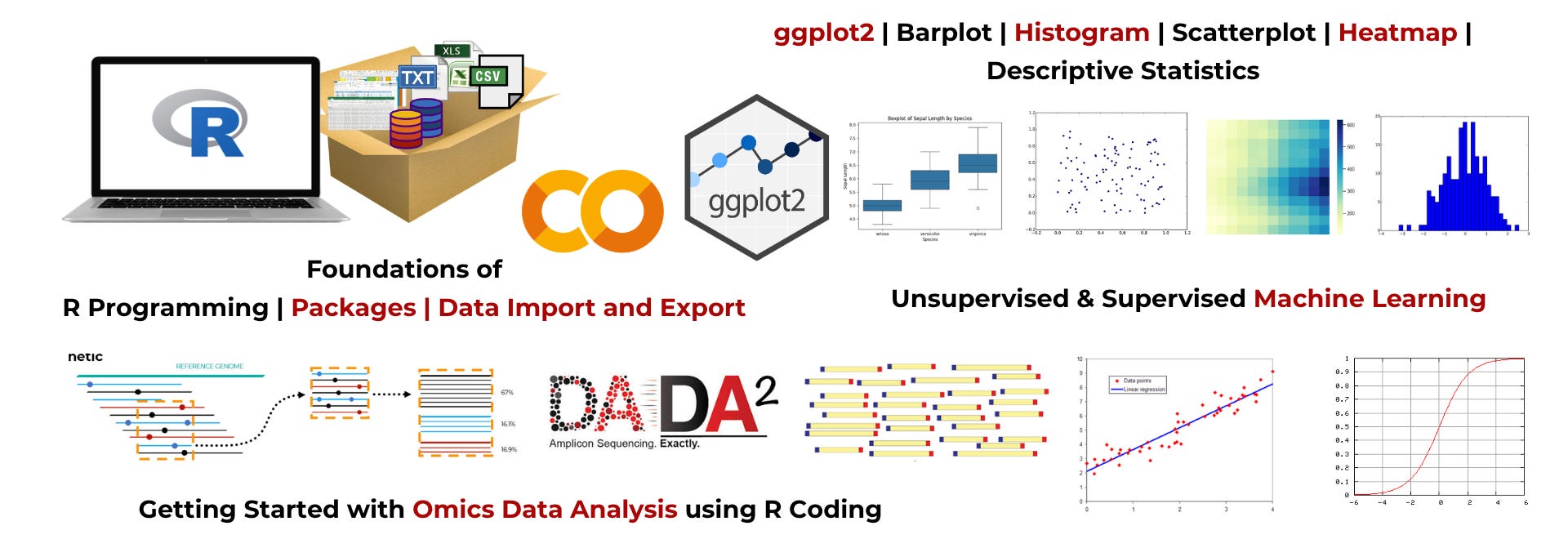
Perform sequence alignment, phylogenetic analysis, and VCF file processing with variant annotation using R.
Analyze 16S metagenomics data using the DADA2 pipeline, perform taxonomic classification, and calculate alpha and beta diversity metrics.
Conduct differential gene expression analysis using DESeq2 and visualize results through volcano plots and heatmaps.
Perform single-cell RNA sequencing analysis using Seurat, including quality control, normalization, clustering, and cell type annotation using SingleR.
Apply machine learning algorithms including logistic regression, decision trees, random forests, and SVM for biomarker discovery and classification of omics data.
✅ Ready to Enroll? Visit https://omicslogic.com/programs/biomedical-data-science-using-r to explore the full program structure, curriculum, and pricing.
🎁 BONUS! Use coupon code SUM60 at checkout to get 60% off any training level you choose to enroll in.
If you have any questions about which program is the right fit for you, feel free to reach out to communication@omicslogic.com. We’re happy to help you find the best starting point. Here’s to a productive summer. See you in the program!
No posts
Comments
Nothing yet. Say the first thing.
Sign in to join the conversation.