Presentation Night is a ~monthly event I host here in Ithaca. It’s a series of 5 minute talks — I often describe it as an “open mic, but with slides”.
At yesterday’s event I gave a little keynote about what makes a GOOD pres night talk. It’s something I’ve been thinking about for 2 years now, and I think I finally got it.
I introduced this “grading scheme”: A, B, or U.
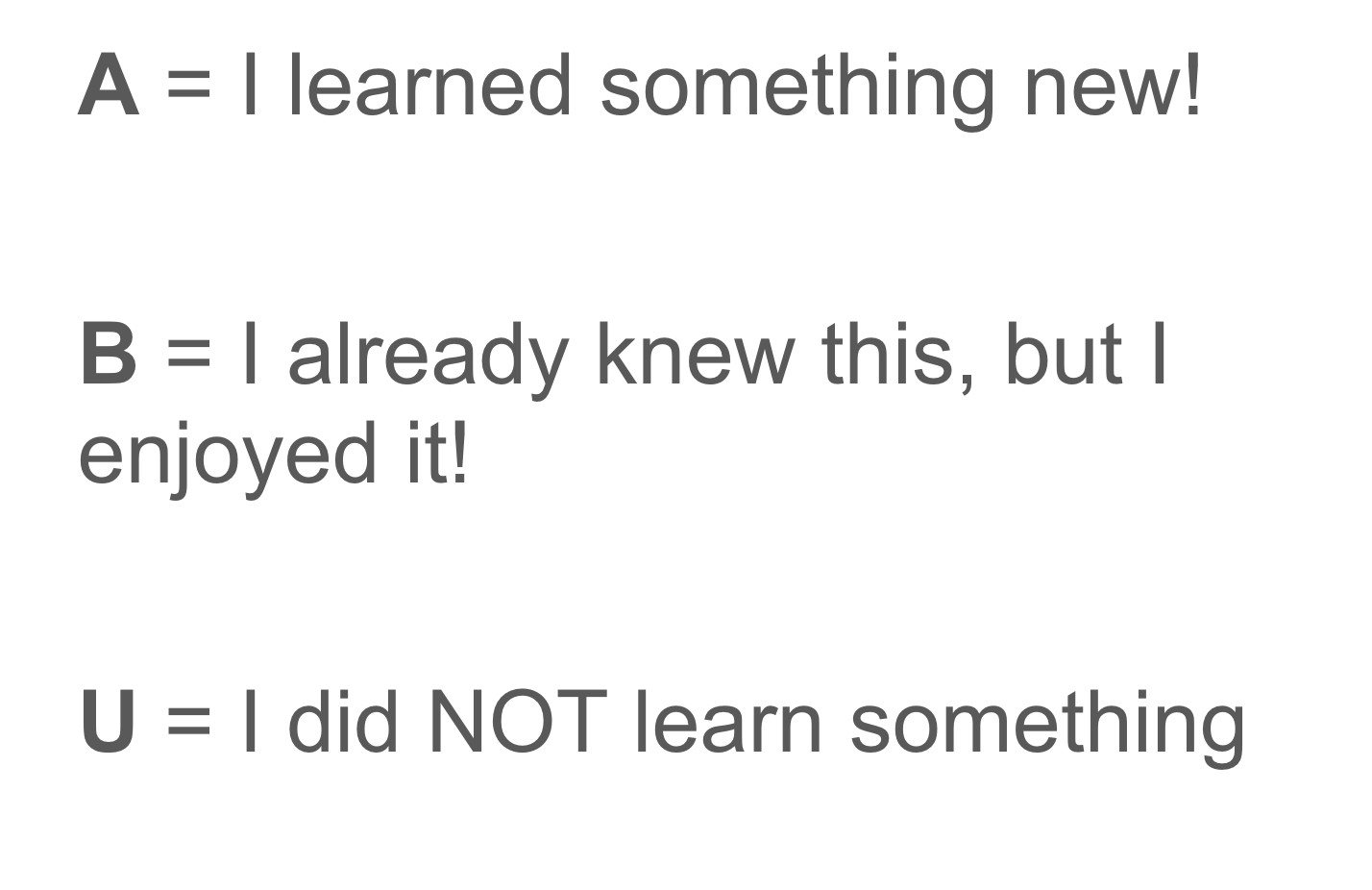
The purpose of presentation night is for the speakers to come with THEIR A’s. Things that they have recently learned.
The audience then receives this either as A, B, or U.
✅ It’s good if most of the audience receives it as an A, you taught them something new!
✅ It’s also good if most receive it as a B - that means they recognize the thing you’re talking about as true & useful. You did a good job explaining it!
⁉️ U is not bad, it’s “unknown”. They didn’t pick it up, but we don’t know why
This is designed to be a NON HIERARCHICAL system - each of these categories surfaces feedback that is useful to both sides.
The “U” in this language is often “silent” (if no one says anything / asks questions, we take that to be a U)
Here were the two examples I gave for how this system works.
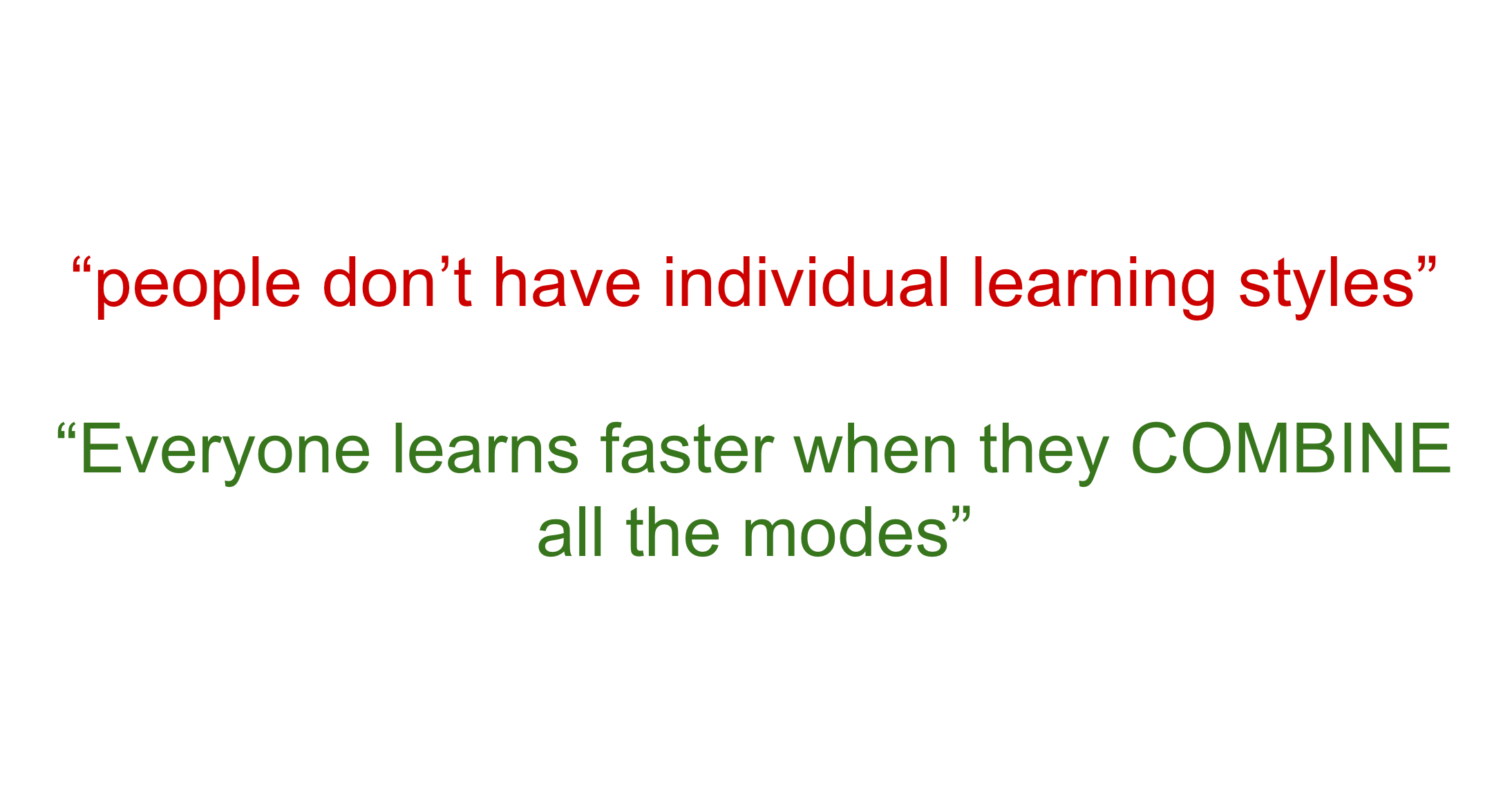
At a previous pres night, Laura Colket explained something she recently learned about how humans learn: that the idea that people have “individual learning styles” is a myth1
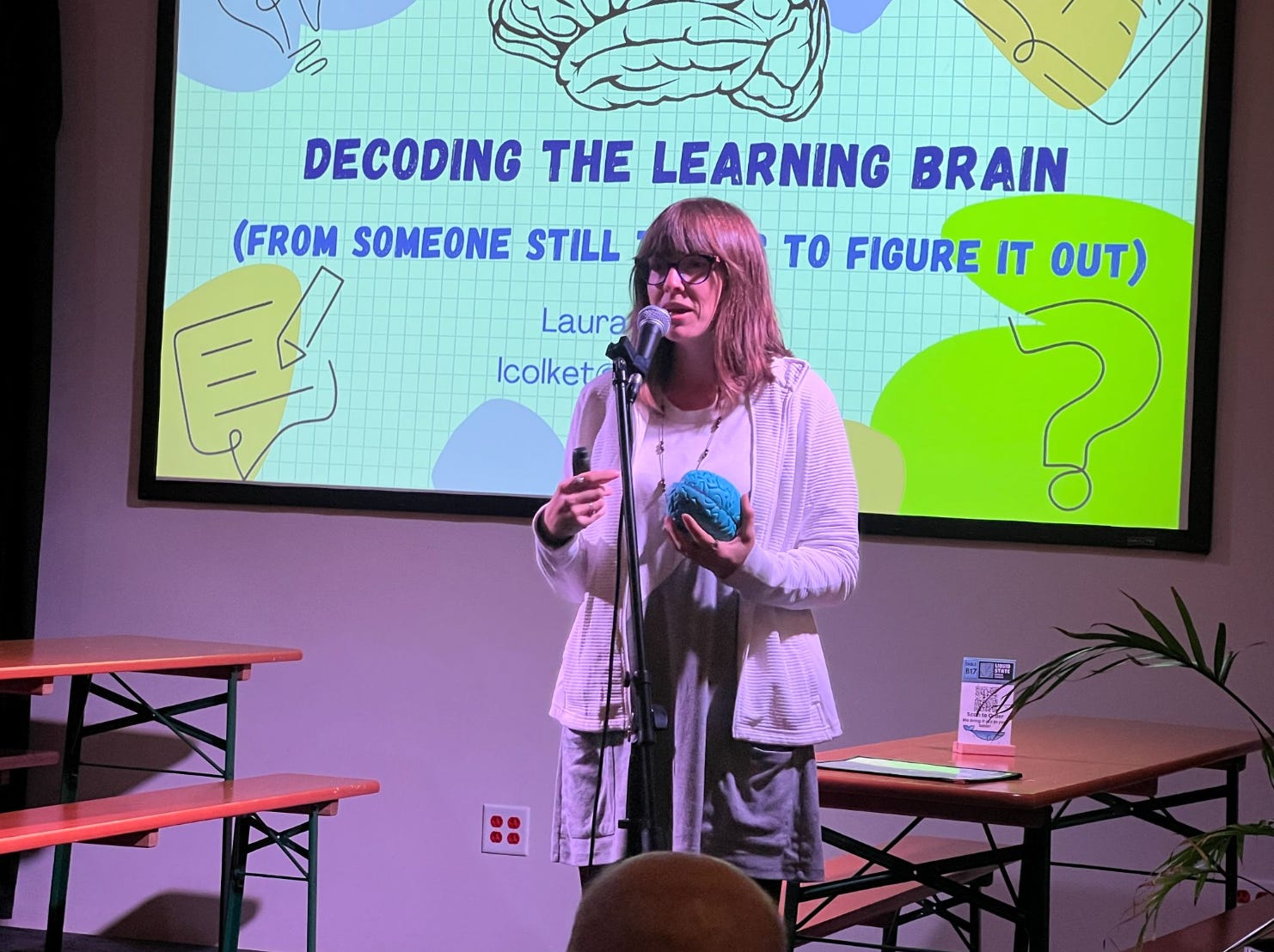
I then showed what I think the audience reaction was to Laura’s talk. In the figure below:
she is the speaker in the top hat presenting her A
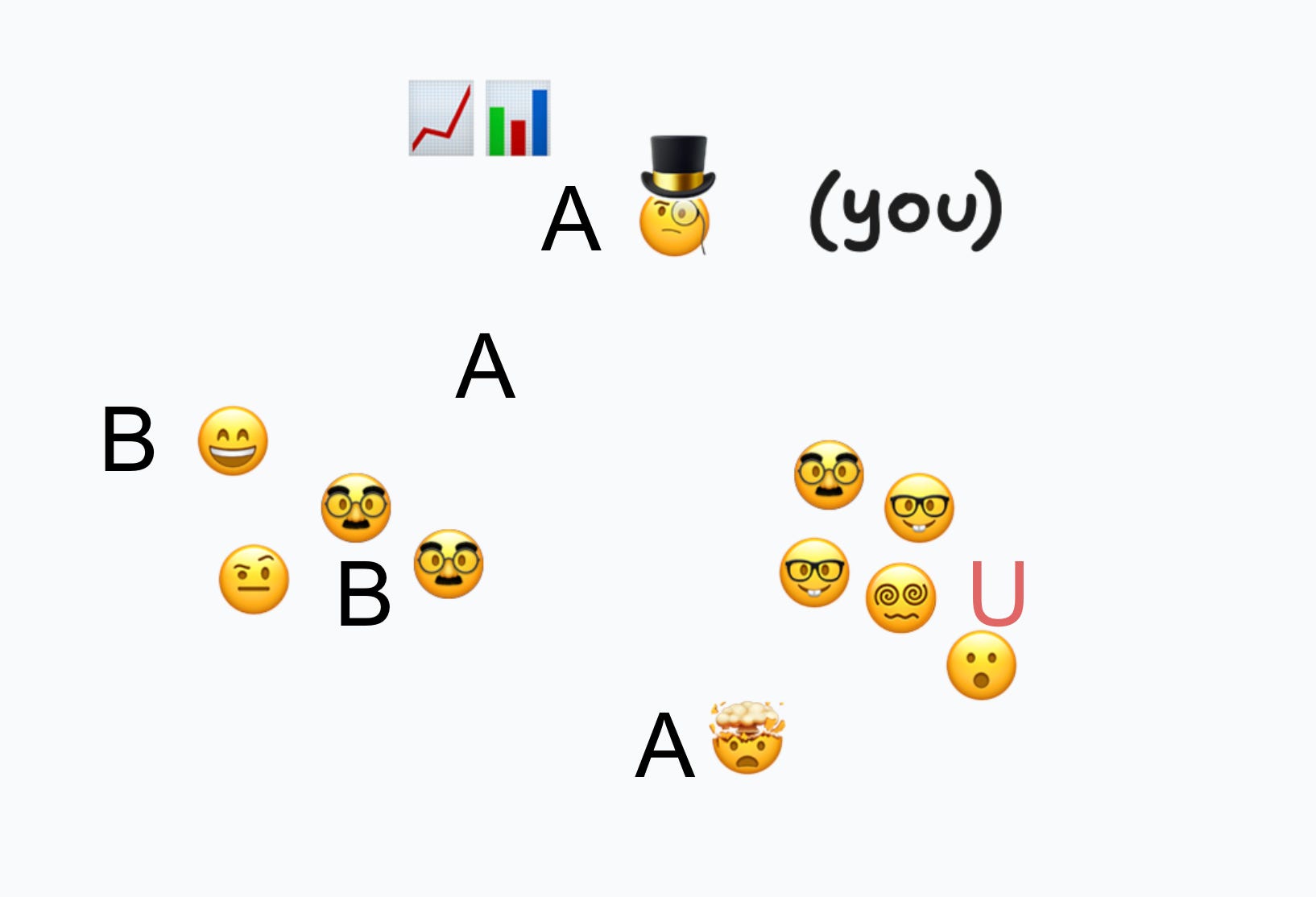
this was a new concept, A, for a bunch of people (blew one guy’s mind in the back of the room)
it was a B for a few folks - you could tell because they were BUILDING on top of it. They made comments like “there’s a book that explains this really well” or “if you’re this kind of learner, you can test it in this way or that way, it really worked for me”
It was a U for a couple folks - maybe because they weren’t paying attention, or it was going too fast for them. OR that it just didn’t seem true in THEIR experience - maybe they tried combining learning modes and it made things worse for them?
The second example was a more spicy one, and it’s a case where a speaker presents something that is an A for them…but is not actually true. What happens in that case?
That presentation was about the “aether” - the idea that reality is not made out of atoms, but some medium that we’re all swimming in, and atoms are just “clumps” in that medium.
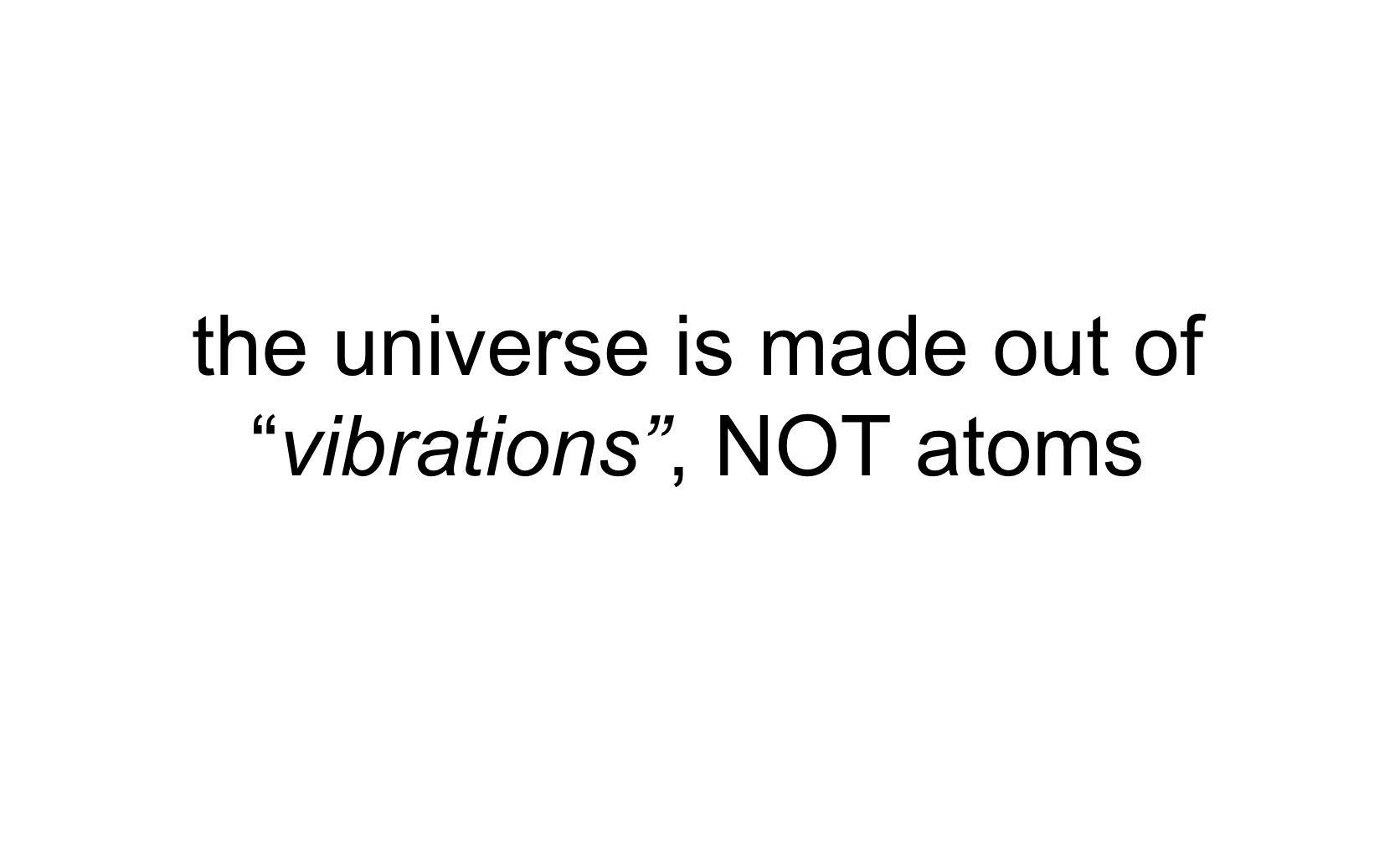
Here is my visual illustration of the audience’s reaction to Trevor’s talk on this:
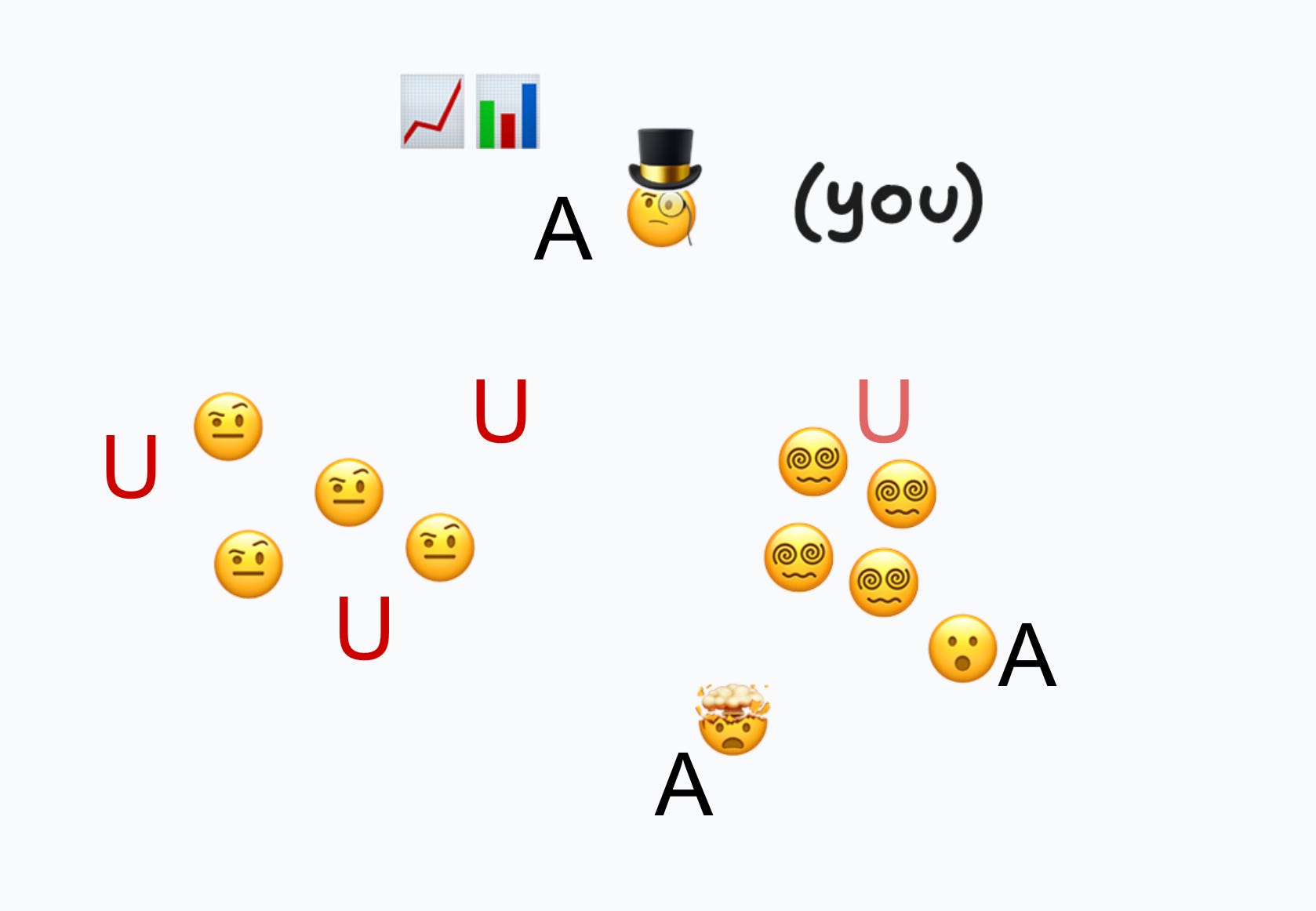
Most people received it as a U. A few people received it as an A.
Trevor may have had more A’s than Laura’s talk, but the lack of B’s makes it kind of sus!
When I caught up with Trevor a few weeks after that, he had changed his mind. The aether idea transformed into a U for him.
This made me think about the vulnerability of presenting your A’s at an event like this, and about the benefits of broadcasting it (if it’s actually wrong, it’s better to find out sooner than later! And if the thing you just learned is a B for everyone in the room - that implies maybe someone in the room has more B’s that would be A’s for you, and maybe that will inspire them to come on stage next time / or just connect with you).
⭐️ The takeaway was: as an audience member, if you received an A from someone, you should tell them!
One sign that something is really an “A” is if you find yourself using it/building on it in the days & weeks to come. A professor friend was recently telling me that there’s a specific pres night talk he thinks a lot about, given by Barbara about her journey learning to draw. She talked about a technique where you draw with your left hand, or upside down, with the idea being that you make it so you EXPECT it to be bad. And doing that unlocks your ability to try, and you get better very quickly. This professor said that this has been very useful for him & he regularly applies this technique. That is a solid A!
You can see A/B/U as a way to talk about your “world model”. If you give me a piece of information, and I give it a U, it does NOT necessarily mean that it’s not true, or that I don’t get it. It could just be that I don’t know what to do with it.
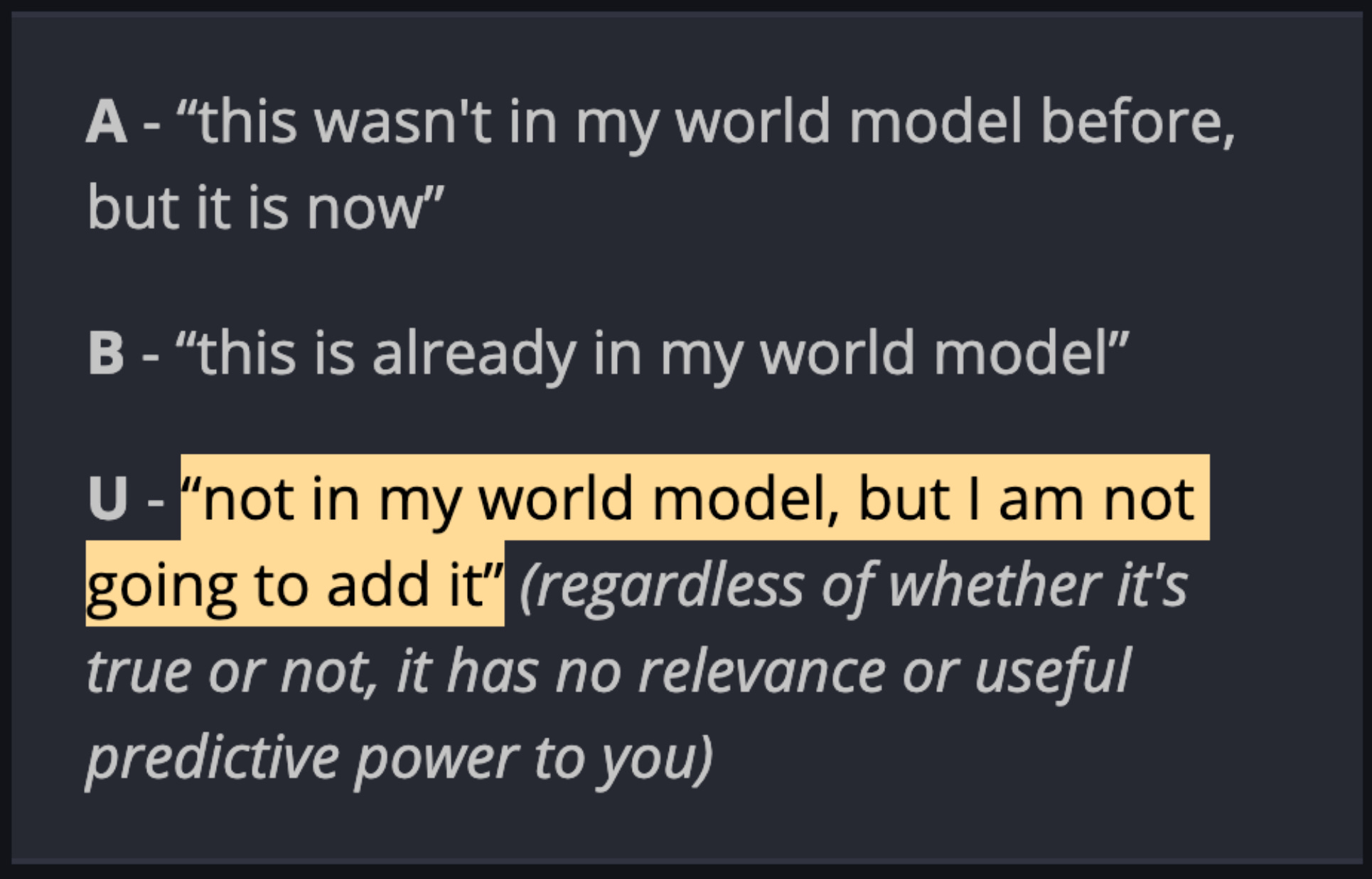
The example I gave for that is: I learned yesterday that there are penguins in Africa. I didn’t know that. But I also don’t know what that tells me about the world. My world is not any different before & after learning this fact. That’s what makes it a U for me.
The final point I want to stress is that RECEIVING U IS NOT A BAD THING. What it is, is useful information.
An example of a GOOD U is: your talk was too advanced, the audience couldn’t follow. This means you’re “ahead”, you should slow down/break it down more.
If you give a talk and it’s a U for everyone except 2 people: maybe it’s because the three of you care very much about this thing, and now you guys can connect!
Most importantly, and I think this resonated with people last night because I saw a lot of head nodding when I said it: the U is NOT a property OF your talk. It is a property of the RELATIONSHIP between the receiver & your talk.
The U really is not about you!
So don’t be shy about giving out U’s - whether the speaker is a Cornell professor or a random townie. It is the assumed default rating unless you explicitly give out an A or a B.
In the sense that if you think you learn best by sticking to one learning mode (like visual learning), you should find that if you alternate & combine modes, that you will learn even faster.
No posts
Comments
Nothing yet. Say the first thing.
Sign in to join the conversation.