

In 2024, one of the coalitions that carried Donald Trump back to political relevance was one he once appeared destined to lose: Latino voters. Republicans treated that shift as proof of a realignment. Two years later, Texas may be where that assumption is tested.
In both 2016 and 2020, Trump struggled mightily with this bloc. Hillary Clinton won 66 percent of Latino voters, while Barack Obama carried 71 percent in 2012, improving on his historic 2008 performance. Joe Biden, too, carried a clear majority of Latino voters in 2020. In fact, Only in Florida was Biden’s margin among Latino voters less than 2 to 1.
For nearly two decades, Latino voters were treated as a Democratic inevitability, particularly along the border, where margins once felt immovable and strategic investment often followed that assumption.
Then came 2024.
Trump won 48 percent of Latino voters nationwide, a shift large enough to upend assumptions about partisan loyalty, and nowhere was that disruption more dramatic than in South Texas.
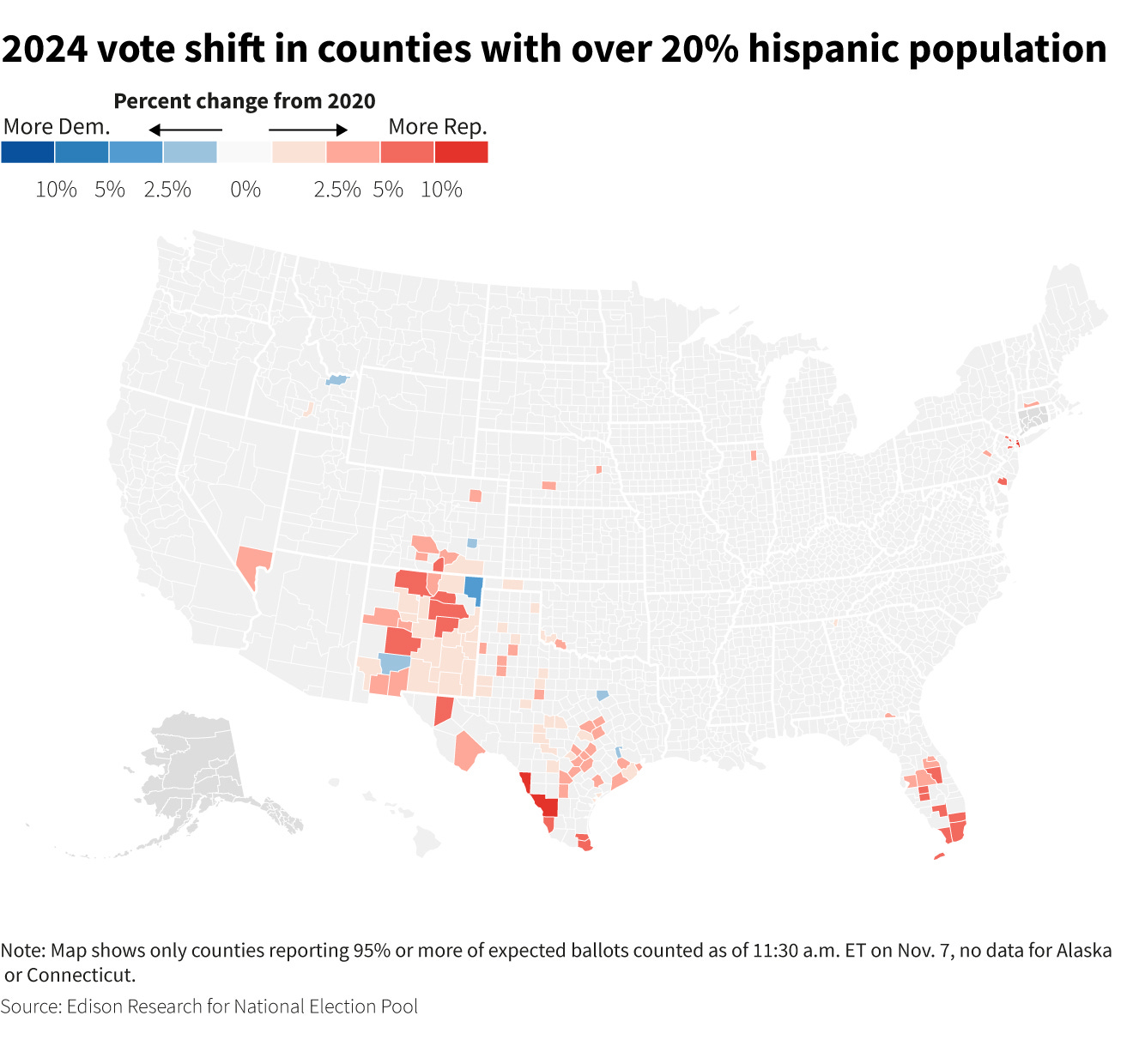
Along the border, the map buckled. Trump carried 14 of the 18 counties within twenty miles of Mexico, doubling his 2020 performance and exposing how brittle political assumptions had become. He swept the Rio Grande Valley just eight years after earning only 29 percent of the vote. Starr County, 97 percent Latino, voted Republican for the first time since 1896, snapping a century of Democratic continuity. Even El Paso County, a fortress Democrats treated as permanent, saw its margins erode in ways unseen in decades.
The shift did not stop at the top of the ticket. Republicans consolidated gains throughout the region. Monica De La Cruz, a Republican from Edinburg, held onto a key House seat rooted in the Valley. The GOP flipped a state Senate seat, the first time a Republican has held that seat since reconstruction, and two state House districts Democrats had long assumed were safe. Ted Cruz, reelected with majority Latino support, called the results “generational change.”
Texas Republicans did not just celebrate these margins. They built their 2026 strategy atop them, mistaking a moment for a mandate. It did not take long for the foundation to begin to fracture.
By mid-2025, reports emerged that Governor Greg Abbott was facing pressure from Trump’s orbit to pursue mid-decade redistricting, a rare maneuver typically undertaken for partisan advantage. The goal was to draw five new Republican-favored congressional seats ahead of the 2026 midterms. The message was unmistakable. Only months into Trump’s second term, his Washington operation was already anxious about the electoral consequences of his sinking popularity, particularly in districts Republicans had just begun to claim as newly competitive.
After months of quorum-breaking, protests, and parliamentary combat, the Republican-controlled legislature rammed through new congressional maps aimed squarely at five Democratic incumbents. The lines followed 2024 like a compass point, drawn in the belief that Trump’s Latino surge was not a fluke but a fixture.
That assumption is beginning to fray. As incumbents and challengers in South Texas adjust their posture, the margins that once emboldened Republicans are softening.
Texas will host some of the most consequential races of the midterms, including three U.S. House contests and a Senate race whose outcome could shape not only the chamber’s balance of power but the down-ballot map across the state. TX-15, TX-28, and TX-34 are all majority Latino districts and all newly competitive. TX-28 is represented by Democrat Henry Cuellar. TX-34 is held by Vicente Gonzalez. TX-15, a swing seat Republicans flipped in 2022, remains in the hands of Monica De La Cruz.
Two of those seats, TX-15 and TX-28, have become the races where both parties are holding their breath.
In late 2025, Trump unexpectedly pardoned Cuellar, who had been indicted in May 2024 on federal corruption charges involving bribery and unlawful payments. Cuellar and his wife were awaiting trial, scheduled for April 2026, after the primary election. The prevailing assumption was that the case would eventually collapse. Trump intervened to ensure it never reached that point.
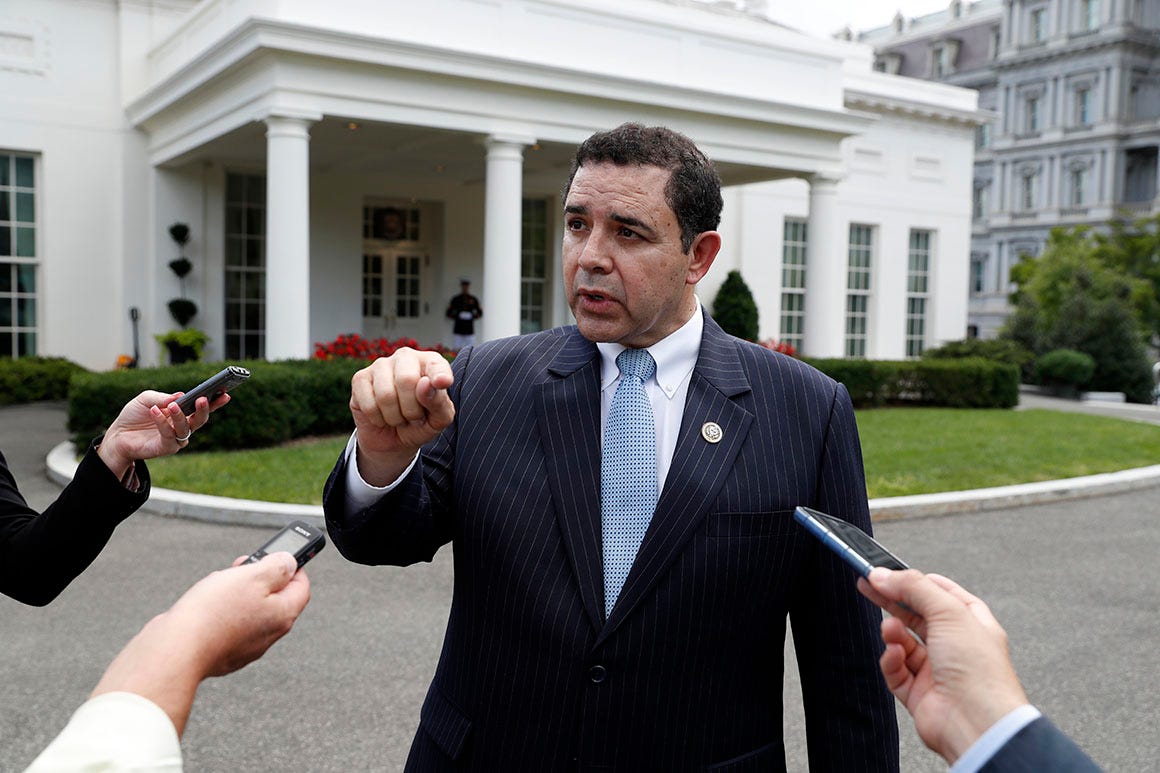
Cuellar is a conservative Democrat, the last self-described pro-life member of the party in the House and a longtime irritant to progressives. In 2022, he narrowly survived a primary challenge from Jessica Cisneros, a young progressive whose candidacy alarmed Democratic leadership. Speaker Nancy Pelosi and Whip James Clyburn campaigned for Cuellar, reflecting fears that ideological purity could backfire in a district defined less by party identity than by pragmatism.
Trump’s pardon ignited immediate speculation. Would Cuellar cross the aisle?
He did not. Cuellar thanked Trump publicly, called the pardon a clean slate, and made clear he would remain a Democrat.
Trump did not take kindly to the refusal. Casting the pardon as a rebuke of what he called a weaponized Biden Justice Department, he accused the “RADICAL LEFT” of ingratitude and scolded Cuellar for his “lack of LOYALTY.” Not long after, Trump endorsed Cuellar’s Republican challenger, Bexar County Judge Tano Tijerina, adding that he had never assumed Cuellar would run again, certainly not as a Democrat.
Republicans were caught flat-footed. The pardon stripped them of their cleanest line of attack and complicated efforts to frame the race as a referendum on corruption. What had been a liability was suddenly erased, giving Cuellar an unexpected aura of bipartisan credibility.
TX-28 is not alone. Across South Texas, incumbents are beginning to put daylight between themselves and Trump.
In TX-15, Monica De La Cruz has begun to break from the administration. She has questioned ICE enforcement tactics, warning that chaotic raids have left workers afraid to show up for their jobs.
She has gone further, proposing a special visa program for construction workers modeled after the H-2A agricultural visa, an implicit rebuke of Trump-era immigration restrictions. “TX-15 elected me to be their voice,” she said, “even when that means pushing back against the Trump administration.”
The shift is striking. In 2024, De La Cruz praised Trump effusively, spoke at the Republican National Convention, and cast herself as the granddaughter of Mexican farmworkers chasing the American Dream. That she now keeps Trump at arm’s length underscores just how precarious those margins have become.
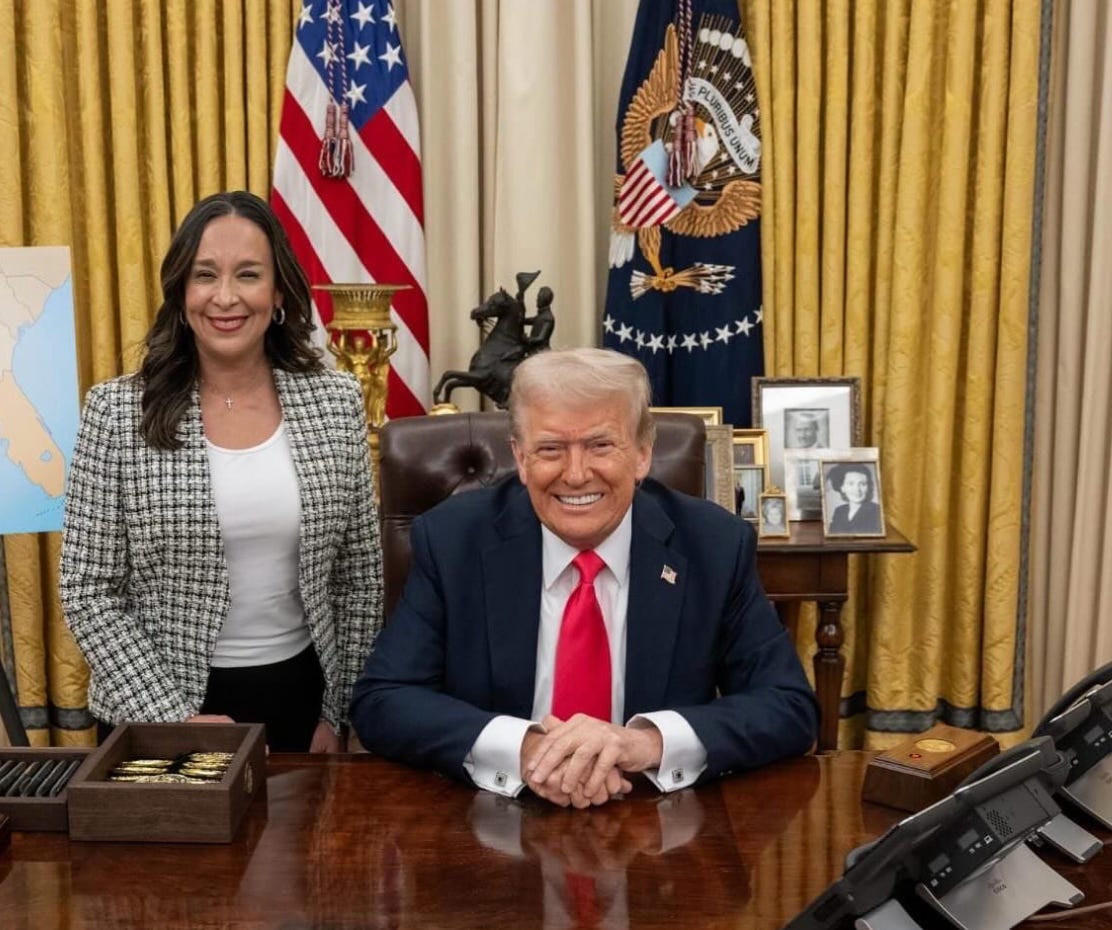
De La Cruz cruised to victory in both 2022 and 2024. This cycle, however, she faces a far more formidable challenger: Bobby Pulido, a Tejano music star with deep cultural roots and regional credibility. A five-time Latin Grammy nominee and 22-time Tejano Music Award nominee, Pulido enters the race with instant name recognition, fundraising muscle, and fluency in the political and cultural language of South Texas, assets that directly challenge De La Cruz’s claim to cultural proximity.
Pulido has also aligned himself closely with Democratic Senate hopeful James Talarico, who has made Latino outreach central to his campaign and has been buoyed by polling showing a strong advantage with Latino voters. Talarico has held events in McAllen, Brownsville, and Weslaco, earning Pulido’s endorsement along the way. In a competitive primary against Rep. Jasmine Crockett, those relationships could prove decisive, not only for the Senate race but for Democrats fighting uphill House battles across the state.

Pulido’s partnership with Talarico reflects a broader calculation that the top of the ticket may ultimately determine the fate of South Texas Democrats.
Republicans in Washington appear to agree. The NRSC has acknowledged efforts to lure Crockett into the Senate race, betting she would be a weaker general-election candidate whose vulnerabilities could depress turnout and reshape down-ballot outcomes. Now the NRCC is running ads against Cuellar tying him directly to Crockett, claiming, “Cuellar votes with crazy Jasmine Crockett 80 percent of the time.”
Once again, South Texas is setting the temperature for both the Senate race and the national mood, and the heat is rising as the March primaries approach.
Trump’s fixation on Cuellar, De La Cruz’s recalibration, and Democrats’ renewed investment in the region all point to the same conclusion: Texas is reclaiming its role as a political bellwether. Whether these counties ultimately recoil from Trump or embrace him again remains an open question. What is not in doubt is who will decide it. Latino voters will deliver the verdict quietly and locally, guided less by party labels than by proximity, credibility, and turnout operations, with consequences that stretch far beyond the border.
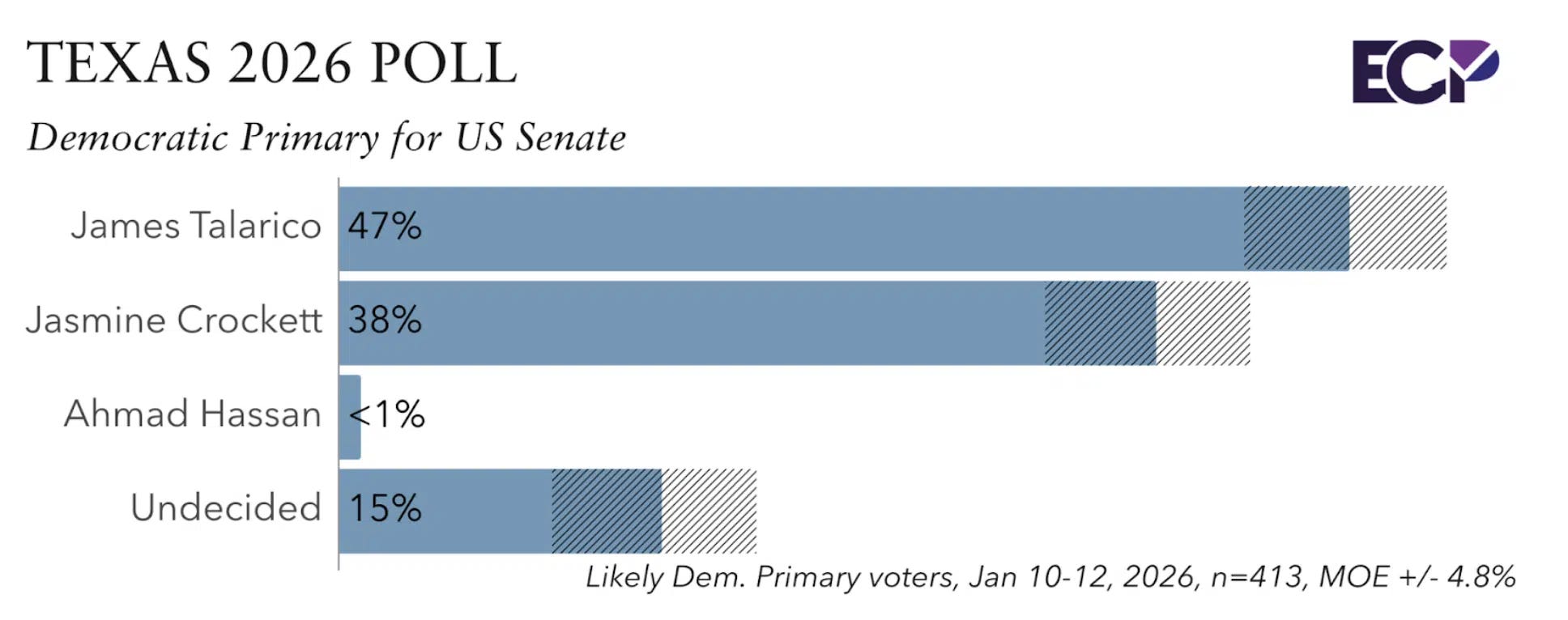
The same dynamic is shaping the Texas Democratic primary. Both Talarico and Crockett are polling well with different segments of the electorate, but Talarico has shown particular strength with independents. That advantage may matter little in other states. In Texas, with its open primaries and volatile electorate, it could make all the difference.
As it so often does in Texas, ideology makes the speeches, but turnout delivers the verdict. Republicans know this better than anyone, which is why the ground they once treated as settled now feels unsteady beneath them.
Congresswoman Jasmine Crockett and Representative James Talarico will face off in a Democratic primary debate on January 24 in Georgetown, Texas, during the AFL-CIO’s COPE convention. The debate will be livestreamed on the KXAN+ streaming app, available on Roku, Apple TV, and Amazon Fire, and will also air live on the KXAN website and mobile app.
Comments
Nothing yet. Say the first thing.
Sign in to join the conversation.