
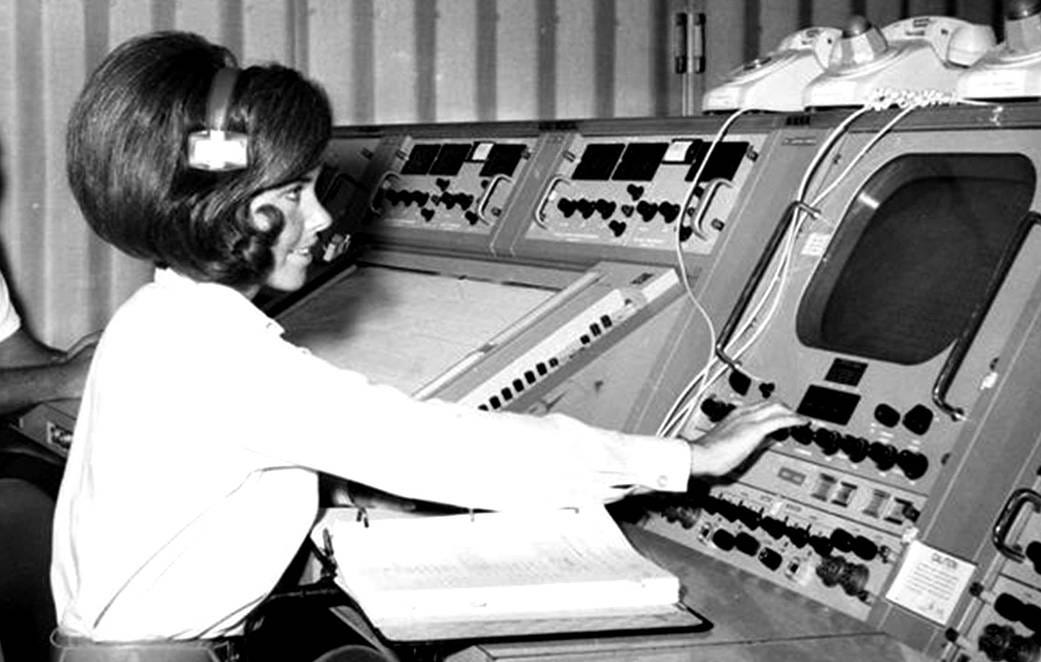
It was hearing President John F. Kennedy speak about the need for more people to go into science and engineering that inspired young Judy Sullivan to pursue this path. She became a biology major, minoring in chemistry and math, at Jacksonville State College in Alabama. In her chemistry class, there was only one other woman. Judy graduated second in her class. She would’ve liked to go on to attend medical school, but she couldn’t afford it. After a year teaching high school science and math, she decided she was ready for a different sort of challenge.
“I have a strong sense of adventure and I wanted to do something more,” she told Good Morning America. She’d been fascinated by space ever since she heard about the first space launch in 1957 — Sputnik — when she was 15 years old. So in 1966 at age 23, she decided to reach for the stars and apply for a summer job at NASA in Cape Canaveral, Florida. When she applied, she qualified as an aerospace technologist.
In the late 1960s, only 17 percent of the staff at NASA were women, with most holding secretarial positions. The woman who interviewed her warned, “They’ll give you every reason in the world why they can’t have a woman over there. They’ll even tell you there are no female bathrooms.”
Despite this systemic sexism, she got the job. The role involved checking engines to ensure they were in safe working order. This temp seasonal work turned out to be one of the few ways for a woman to get a foot in the door at NASA. She did all she could to prove she was worthy of a permanent position. Thankfully, NASA soon realized her expertise, educational background, and natural ability were a perfect match for NASA. She became the first woman engineer hired to Spacecraft Operations when she was hired as a biomedical engineer for the Gemini XII mission, the tenth and final crewed flight of NASA’s Gemini program.
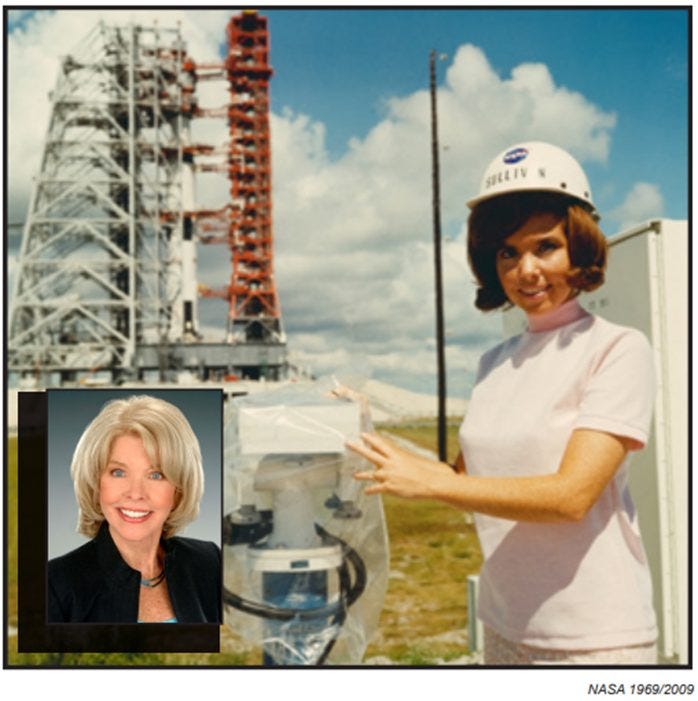
She was the only woman on her team, but her colleagues were largely supportive. Higher-up, though, could be another story. “I heard a section chief say, ‘What do they expect of me? I’ve got a woman,’” she told GMA. “When you’re in a position like that, it made me more determined to be good, to do a good job and fit in. That’s how you get accepted.”
This is the mindset of many women trailblazers: feeling held to a higher standard than their male counterparts and that they mustn’t ruffle any feathers if they ever wanted to feel they belonged. They had to be amenable and ensure any harassment or sexism with a smile if they didn’t want to be perceived as difficult. They recognized they carried the unreasonable burden of representing their gender: their behavior must be above reproach and they must be seen to excel to ensure more women would get hired in the future. If a woman performed poorly, the institute might conclude women weren’t capable of doing such jobs.
Sullivan truly was exceptional. She worked on the Apollo 8, 9, and 10 missions. By the Apollo 11 mission, she was appointed lead engineer in charge of the biomedical systems. To prepare for the mission, Sullivan helped assess the astronauts’ breathing rates via sensors while they underwent stress testing. “I would monitor the equipment as a surgeon tested the astronauts to make sure they were healthy enough to go into space,” Sullivan said.
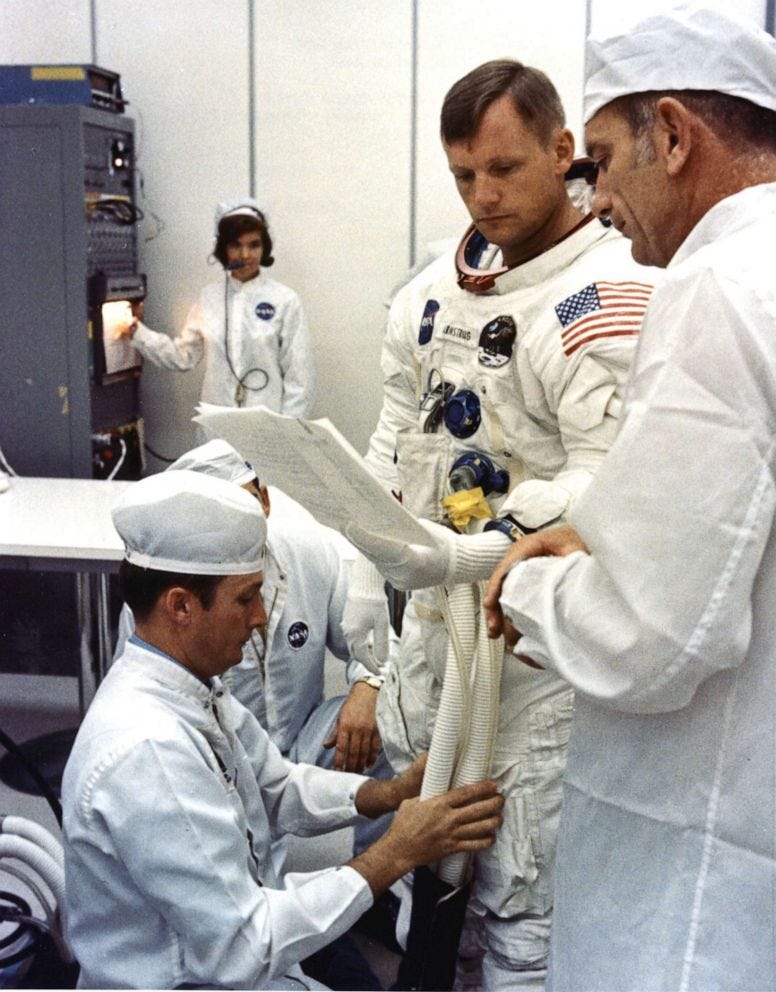
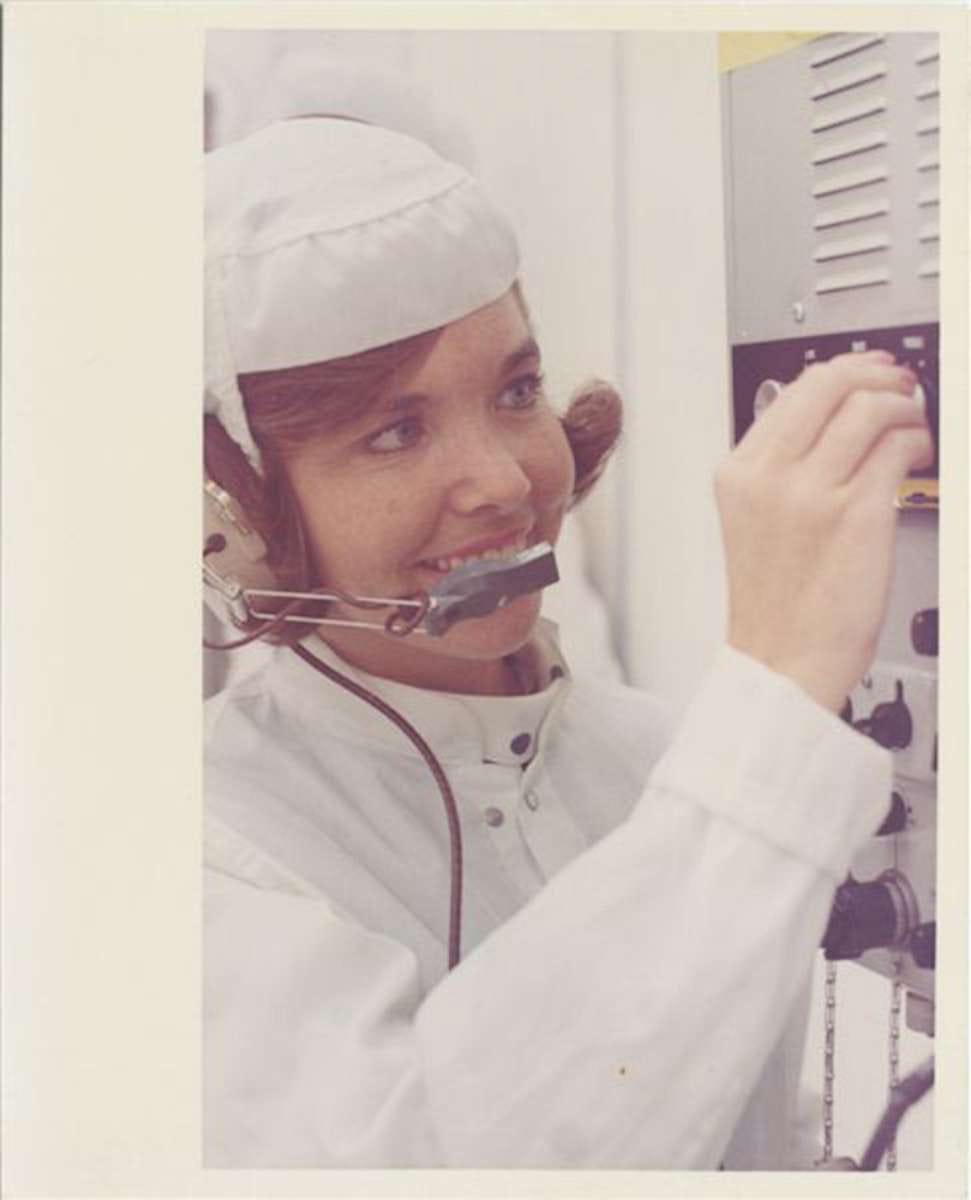
One of her career highlights was helping Neil Armstrong suit up for the Apollo 11 launch. During the launch, Sullivan was at the heart of it all: in the control room monitoring the ship’s biomedical systems. Her job was to maintain the medical telemetry devices the astronauts wore and monitoring their readings. She could feel, though not see the launch: “My seat rumbled and you knew something powerful was going on,” the later recalled.
Her contributions sparked interest from several local papers. “Lady Engineer Keeps Tabs on the Astronauts,” read The Miami Herald headline, with subheads, “If Judy Goofs, Everyone Knows,” and “Only Female Voice on NASA Channels.” Out of 212 voices. “Hers, the voice to unite crewmen and launch vehicle on the big day,” the reporter mused. It seems even reporters recognized that she was representing her gender.
The newspaper Florida Today featured Sullivan on the top of its Family Today section with the headline “A Girl Engineer for NASA.” She was 26 years old at the time.
Sullivan was invited to represent NASA on game show, “To Tell the Truth.” The celebrity panel was ultimately unable to identify her as the real biomedical aerospace engineer out of the three women, meaning she won the game. “Miniskirts were in fashion so they shortened my hemline, and I wore ruffles. They were totally fooled. I won $500 and had a great time seeing New York City,” she remembered.
It’s exciting to think about all the kids who are being inspired today by Artemis II. I’m pleased that my kids got to see a woman astronaut participate in such a perfectly executed, highly buzzworthy mission. My youngest son, 10, helped me research and write this piece on “Take Your Kid to Work Day” last week. It was his idea to feature someone from NASA history, and between our recent trip to Arizona’s planetarium and the Artemis II mission, he’s currently deep in a space obsession. He also likes to regularly remind me that we are also currently in space while simply being on Earth.
The way kids’ brains work is incredible. I’m excited to see how today’s inspired youth will envision space travel as adults.
“Women reflect on Apollo,” by Debra Werner. Aerospace America, July 1, 2019.
“Right Stuff, Wrong Sex: America’s First Women in Space Program,” by Margaret A. Weitekamp. Johns Hopkins University Press. 2005.
My son and I listened to a particularly intriguing podcast interview with Weitekamp: Smithsonian, Side Door. “Right Stuff, Wrong Sex.” Season 11. February 19, 2025. By the end, I was livid thinking about what might have been!
Olivia Campbell is a New York Times bestselling author. Her latest book, Sisters in Science: How Four Women Physicists Escaped Nazi Germany and Made Scientific History, tells the story of four women who fought sexism to become brilliant physicists, only to be fired by the Nazis, and how they helped each other flee the country.
A seasoned science journalist and essayist, Campbell is a regular contributor at National Geographic. Her work has also appeared in The Atlantic, Vanity Fair, The Guardian, Washington Post, New York Magazine, People, Smithsonian Magazine, Scientific American, Boston Globe, The Wall Street Journal, Aeon, and History.com, among others. Find out more on her website.
No posts
Comments
Nothing yet. Say the first thing.
Sign in to join the conversation.