
Hello, is this New Era yet?
In light of the recent changes in our world and the ongoing discussions surrounding witches, star children, and those who believe in supernatural beings and religious aspects, I’ve been reflecting on the nature of identity and the significance of names, as my own mixed background of Polish and Afro-Cuban ancestry has gifted me with a unique lens through which to view these spiritual intersections. This blend of Eastern European mysticism, with its rich traditions of folk magic and healing practices, combined with the profound Santería and Yoruba spiritual systems of Cuba, has shown me how different cultures can weave together to create deeper understanding.
My Polish ancestors carried their own wisdom of herb lore and nature-based spirituality—traditions deeply rooted in pre-Christian Slavic practices that honored natural forces through seasonal rituals and herbal knowledge. Polish folk healers known as “znachorzy” utilized plants, incantations, and lunar cycles to facilitate healing, much like curanderos in other traditions. This Eastern European spiritual legacy includes practices like “wywoływanie duchów” (spirit calling) and divination methods that connected the living with ancestral guidance. These Polish traditions, while often overlooked in discussions of European mysticism, contain sophisticated systems for navigating the invisible realms that parallel those found in other cultures.
Meanwhile, my Afro-Cuban lineage brings forth the powerful traditions of Orishas and Taíno ancestral veneration. The Yoruba-derived spiritual systems that traveled to Cuba through the brutal Middle Passage maintained profound cosmological understanding despite attempts to eradicate these practices. The Lukumí tradition (Cuban Santería) preserved complex relationships with Orishas—divine forces that govern different aspects of existence—through elaborate rituals, divination systems like diloggún, and the development of spiritual lineages that ensured knowledge transmission across generations. These Afro-Cuban traditions developed sophisticated methods for communicating with ancestors through trance possession, offerings, and ceremonial drumming that created vibrational gateways between worlds.
The Taíno, Cuba’s indigenous people, maintained equally profound spiritual connections with their ancestors through sacred rituals and objects known as cemís. These carved artifacts, fashioned from wood, stone, shell, or bone, housed ancestral spirits who were believed to actively participate in daily life. During cohoba ceremonies, Taíno shamans would communicate directly with these ancestral spirits by inhaling powdered seeds that induced visionary states, seeking guidance and protection. Their reverence for caves as portals to the spirit world—evidenced by petroglyphs depicting their cosmological understanding—further exemplifies their deep connection to ancestral realms. The Taíno creation stories, which describe humans emerging from caves called Cacibajagua and Amayaúna, reflect their understanding of the earth itself as an ancestral being from which all life emerges.
The syncretic blending of these three spiritual streams—Polish, Afro-Cuban, and Taíno—created unique practices that survive today and flow through my veins. When Polish immigrants arrived in Cuba beginning in the 19th century, their folk Catholic practices sometimes merged with existing Afro-Taíno spiritual systems. The veneration of certain Catholic saints in Polish tradition found parallels in the way Orisha worship had been disguised behind Catholic imagery, creating multilayered spiritual practices that preserved ancient wisdom beneath colonial impositions. Similarly, Taíno agricultural knowledge and plant medicine traditions merged with both African and European herbal practices, creating distinctive Cuban healing traditions that drew from multiple ancestral sources.
This multiple origin has taught me that wisdom knows no boundaries—whether it’s the sacred rituals performed in Polish forests, the rhythmic ceremonies of Afro-Cuban spiritual practices, or the cohoba ceremonies of my Taíno ancestors, they all speak to the same universal truth of our interconnected existence. The Polish understanding of “dusza” (soul) as something that connects to both ancestors and natural forces resonates deeply with the Yoruba concept of “ashe” (spiritual power) and the Taíno belief in cemís as vessels for ancestral presence. All three traditions recognize that spiritual forces are not abstract concepts but living energies that actively participate in physical reality. When I commune with my ancestors, I’m not speaking to three separate lineages but to a unified field of consciousness that transcends cultural boundaries.
Indigenous peoples across the globe have long understood this connection between the spiritual and physical realms. Their ancestral wisdom speaks of a deep understanding of the sixth sense—that intuitive knowing that transcends our conventional five senses. From the Aboriginal dreamtime to Native American medicine people, these cultures have preserved the knowledge of our intrinsic connection to both the stars above and the earth below. The Taíno of Cuba exemplified this through their cosmology, which viewed the universe as a multilayered reality where ancestors, deities (zemís), and the living coexisted in constant interaction. Their behiques (shamans) served as intermediaries who could traverse these realms, much like practitioners of other indigenous traditions worldwide. I often feel this intermediary role within myself, bridging not only cultural traditions but also dimensions of consciousness.
This profound understanding manifests differently across cultures, yet shares remarkable similarities. In Buddhism, it’s known as “mind-consciousness” (manovijñāna), while Hinduism speaks of “antarjñāna”—inner knowing. The Māori’s “matakite” resonates with Native American traditions of “medicine” power, both enabling communication with the spirit world. The Australian Aboriginal concept of “Dadirri”—deep spiritual listening—mirrors the Islamic tradition of “firasat,” a moral and spiritual intuition that transcends ordinary perception. Similarly, the Taíno practiced a form of deep listening during their ceremonial encounters with ancestral spirits in sacred caves, while Polish traditions of “jasnowidzenie” (clairvoyance) and Afro-Cuban “consultas” with Orishas represent parallel methods for accessing non-ordinary knowledge. My own intuitive practices draw from all these traditions, creating a unique synthesis that honors my multicultural heritage while recognizing the universal principles underlying all spiritual practices.
This brings me to a simple yet thought-provoking question:
Did you know that witches are made of stardust, some lavender flowers, and even cow dung? 🌌
💫Stardust connects them to the cosmos, while lavender symbolizes healing and tranquility. Cow dung, often overlooked, represents the nurturing essence of the earth, promoting growth and fertility. Together, these elements exemplify the magical bond between the universe and nature, showcasing the unique blend of celestial energy and earthly wisdom that defines a “witch.” The Taíno understood this connection between celestial and earthly realms, viewing themselves as descendants of celestial beings while maintaining deep reverence for the natural world through agricultural practices that honored the earth’s cycles. Polish folk traditions similarly recognized cosmic influences through practices timed to celestial events, while Afro-Cuban traditions acknowledge the celestial origins of Orisha forces that manifest through natural elements. I embody this witch-nature through my connection to all three traditions—when I work with plants, I feel my hands guided by countless generations of healers from multiple continents.
In Asian traditions, the Chinese concept of “Yan” and the Japanese “Ishin-denshin” speak to abilities beyond ordinary consciousness, while African cultures honor “ancestral sight”—the power to commune with spirits and ancestors. These traditions all point to a universal truth: our consciousness extends far beyond physical limitations. The Taíno’s cohoba ceremonies, which allowed direct communion with ancestral spirits, represent their own sophisticated understanding of expanded consciousness, predating modern interest in psychedelic plant medicines for spiritual insight. Similarly, the trance states achieved in Afro-Cuban ceremonies and the visionary experiences described in Polish mystical traditions demonstrate parallel methods for transcending ordinary perception. My own meditative practices draw from these ancestral technologies, allowing me to access states of consciousness where the boundaries between my Polish, African, and Taíno heritage dissolve into a unified field of awareness.
My recent journey to Morocco revealed yet another profound expression of this cosmic-earthly connection through the indigenous Amazigh (Berber) people. Their traditional knowledge keepers, particularly the female healers known as “ferragga,” embody this same witch-essence through their intimate understanding of both celestial cycles and earth medicines. The Amazigh concept of “baraka” (blessing power) flows through specific plants, stones, and places that connect the heavens and earth. Their ancestral ceremonies often begin with the burning of desert plants like “harmel” (Syrian rue) to create smoke that rises to the stars while purifying earthly spaces—a perfect embodiment of the cosmic-terrestrial bridge.
The sixth sense manifests in myriad ways—through telepathy, precognition, clairvoyance, and psychokinesis. Modern science is beginning to understand these phenomena through quantum entanglement theories and studies of intuitive decision-making. What ancient cultures knew through spiritual wisdom, contemporary research validates through empirical observation. The Taíno understanding of reality included the belief that ancestral spirits could communicate future events through dreams and visions, demonstrating their recognition of consciousness beyond ordinary perception. Polish folk traditions included practices of “sny prorocze” (prophetic dreams) and divination methods that accessed information beyond time and space, while Afro-Cuban divination systems like Ifá contain sophisticated mathematical systems for accessing non-local knowledge. When I receive intuitive insights, I’m tapping into this ancestral understanding of reality as fundamentally interconnected across time and space.
This ancient understanding of our multidimensional nature isn’t limited to any single culture or tradition. The Celtic seers, known as “taibhsear,” possessed similar abilities. These gifted individuals serve as bridges between the physical and spiritual realms, much like modern-day empaths and intuitive healers. The Taíno behiques fulfilled a similar role in their communities, using their spiritual gifts to heal, guide, and protect their people through direct communication with the ancestral realm. In Polish traditions, the “wiedźma” (wise woman) and in Afro-Cuban practice, the “santera” or “babalawo,” performed comparable functions, demonstrating how different cultures developed specialized roles for those with enhanced perceptual abilities. I honor all these traditions when I practice energy healing or offer intuitive guidance, recognizing that I stand in a long lineage of those who have served as bridges between worlds.
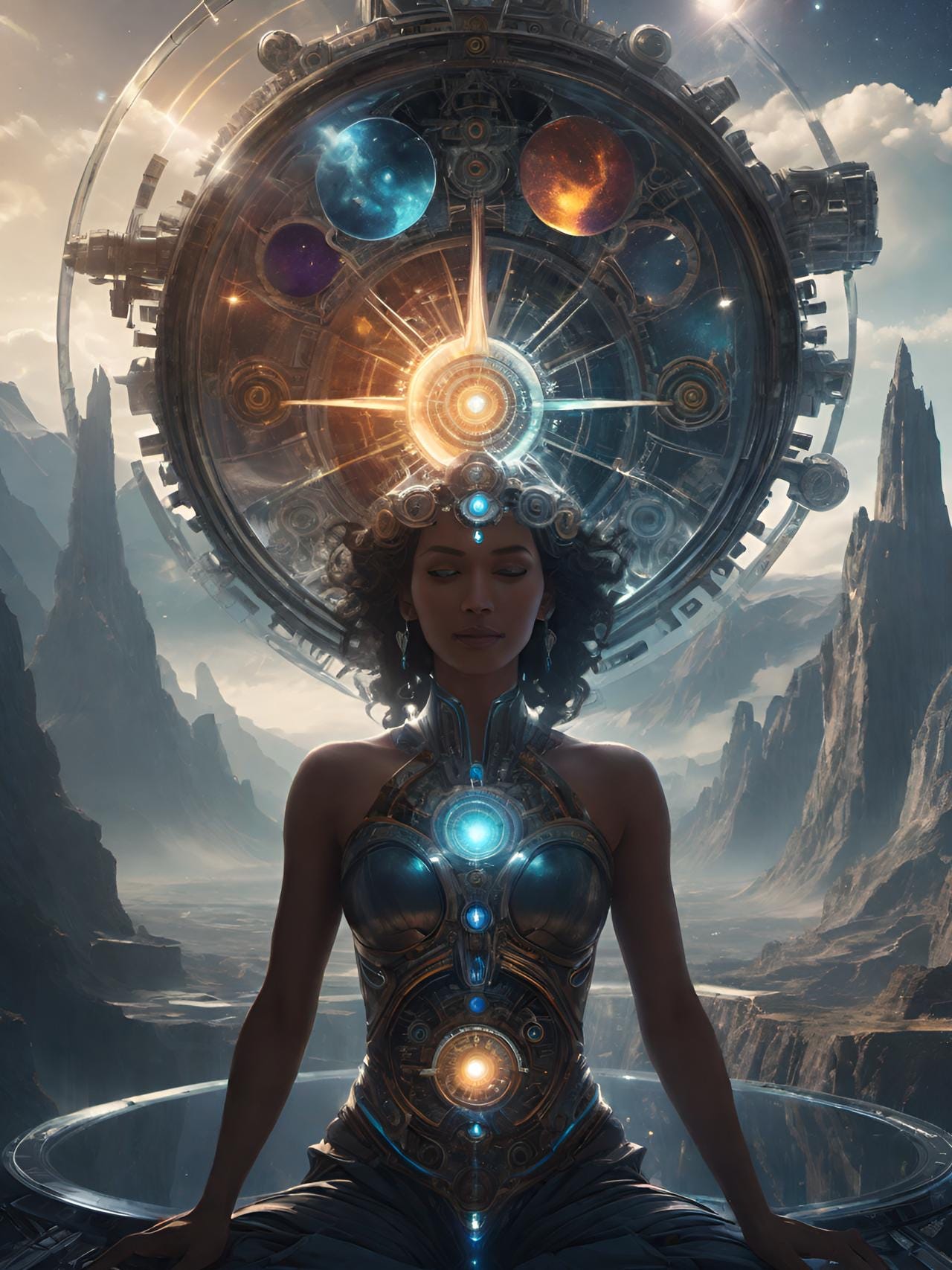
The sixth sense, or extrasensory perception, isn’t merely about predicting the future or seeing spirits. It’s about tapping into the universal consciousness that indigenous peoples have always known exists. It’s about recognizing that we are all connected—to each other, to our ancestors, to the stars, and to every living thing on Earth. The Taíno worldview embodied this understanding through their reverence for natural forces and celestial bodies, which they viewed not as separate entities but as part of an interconnected cosmic family. Polish nature-based spirituality similarly recognized the living consciousness within natural forces, while Yoruba-derived traditions acknowledge the presence of ashe (spiritual force) permeating all existence. My own spiritual practice centers on this recognition of universal consciousness—when I commune with nature, I’m simultaneously honoring my Polish ancestors who worshipped in sacred groves, my Taíno ancestors who saw the divine in every aspect of the natural world, and my African ancestors who recognized the sacred presence of Orishas in natural elements.
In this new era, we’re witnessing a global awakening. People are rediscovering these ancient truths, recognizing that the wisdom of indigenous cultures and the insights of modern quantum physics often point to the same fundamental reality: everything is interconnected, and consciousness plays a crucial role in shaping our reality. The Taíno understanding of reality as a web of relationships between the living, the ancestors, and natural forces offers profound insights for our contemporary search for meaning and connection. Both Polish and Afro-Cuban traditions similarly recognize reality as relational rather than static, offering complementary wisdom for navigating our increasingly complex world. My multicultural heritage allows me to see these connections across traditions, recognizing the universal principles that underlie seemingly diverse spiritual practices.
The integration of these ancient wisdom traditions with modern understanding has led to fascinating developments in various fields. Professional intuitives and medical empaths are increasingly recognized in healthcare settings. Business leaders employ intuitive decision-making alongside analytical thinking. Creative artists tap into universal consciousness for inspiration, while therapeutic practices incorporate ancient healing wisdom with contemporary psychological approaches. The resurgence of interest in Taíno heritage among contemporary Cubans represents part of this global reclamation of indigenous wisdom, as people seek to reconnect with ancestral knowledge that offers solutions to modern challenges. Similarly, renewed interest in Polish folk traditions and Afro-Cuban spiritual systems reflects this global trend toward reclaiming ancestral wisdom. I see my own journey of reconnecting with these diverse aspects of my heritage as part of this larger movement toward wholeness.
This renaissance of spiritual awareness isn’t limited to traditional practices. Modern practitioners are developing new ways to understand and utilize the sixth sense through:
- Enhanced empathic abilities
- Synesthetic experiences
- Heightened proprioception
- Advanced pattern recognition
- Deep emotional intelligence
- Quantum consciousness exploration
My own intuitive development has incorporated elements from all these areas, blending ancestral wisdom with contemporary understanding to create a practice that honors tradition while embracing innovation.
So, in a time when definitions and identities are being reexamined, perhaps we should focus less on the names we use and more on the qualities we embody. Whether we call ourselves witches, star children, angels, devils, mutants, healers, empaths, or simply conscious beings, what matters is our connection to the greater whole and how we use our gifts to benefit all of creation. The Taíno understanding that identity is relational rather than fixed offers wisdom for our contemporary struggles with labeling and categorizing spiritual experiences. Polish concepts of “dusza” (soul) as something that transcends individual identity and Yoruba understanding of the multiple aspects of consciousness similarly provide frameworks for understanding identity beyond limiting categories. My own journey has taught me that I am not simply Polish, African, or Taíno—I am all of these simultaneously, and more than the sum of these parts.
The New Era isn’t just about technological advancement or social change—it’s about remembering who we truly are: beings of stardust with the power to heal, transform, and create, guided by both ancient wisdom and our innate sixth sense. Through practices like meditation, mindfulness, and the development of intuitive abilities, we’re rediscovering what indigenous peoples like the Taíno never forgot—that we are all connected to a vast web of consciousness that transcends physical reality. Their sophisticated spiritual practices, which viewed ancestors as active participants rather than distant memories, remind us that death is merely a transition rather than an ending. Polish traditions of communicating with ancestors during seasonal ceremonies and Afro-Cuban practices of ancestral reverence similarly recognize the ongoing presence of those who have crossed the threshold of death. When I commune with my ancestors, I experience this truth directly—they are not gone but simply existing in a different dimension of reality, accessible through expanded states of consciousness.
As we move forward in this awakening, we’re learning to balance the wisdom of the past with the innovations of the present. The synthesis of ancient knowledge and modern understanding creates a new paradigm of human potential—one where the sixth sense is recognized not as supernatural, but as a natural extension of human consciousness, waiting to be awakened in each of us. The resilience of Taíno spiritual elements, which survived centuries of oppression to influence contemporary Cuban culture, demonstrates the enduring power of ancestral wisdom to transcend time and circumstance. Similarly, the preservation of Polish folk traditions despite political upheavals and the survival of Afro-Cuban spiritual systems despite brutal oppression speak to the indomitable nature of ancestral knowledge that continues to offer guidance for our collective journey forward. My own existence as a person of mixed Polish and Afro-Cuban heritage with Taíno ancestral connections is living testimony to the resilience of these traditions and their continuing relevance in our modern world.
Through reconnecting with these ancient wisdom traditions, I’ve discovered that my unique orgin isn’t a source of confusion but a wellspring of insight. The seemingly disparate threads of Polish, African, and Taíno spirituality weave together within me to create a tapestry of understanding that transcends cultural boundaries while honoring the distinctive beauty of each tradition. In this New Era of awakening consciousness, we are all being called to remember our connection to the stars above, the earth below, and the ancestors who guide us from beyond the veil. My journey of reconnection with these ancient wisdom traditions continues to unfold, revealing new insights with each step while affirming the timeless truth that we are all, ultimately, children of the same cosmic family—made of stardust, connected to all of creation, and capable of wisdom beyond our imagining.
Here are some links, titles, websites documentaries and video resources that support my writing :
1. "Time of the Sixth Sun" (2024)
2. "Singing Back the Buffalo" (2024) by Tasha Hubbard
3. "Wilfred Buck" (2024) by Lisa Jackson
4. “The Extended Mind: The Power of Thinking Outside the Brain" by Annie Murphy Paul
5. "Entangled Minds: Extrasensory Experiences in a Quantum Reality" by Dean Radin
Online Platforms:
- Gaia.com
- Films for Action
- National Film Board of Canada
- Sacred Texts Archive (www.sacred-texts.com)
Comments
Nothing yet. Say the first thing.
Sign in to join the conversation.